



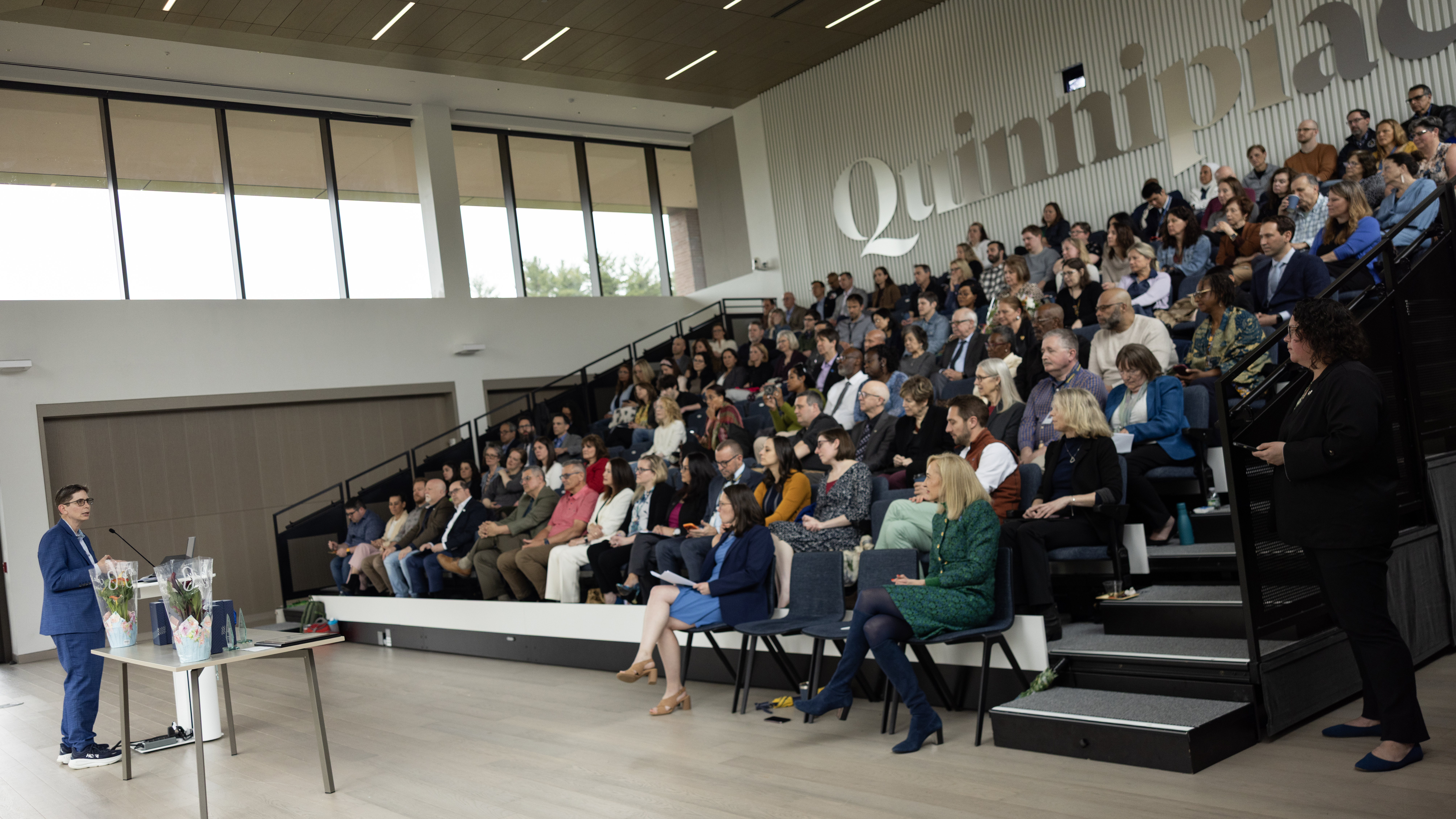
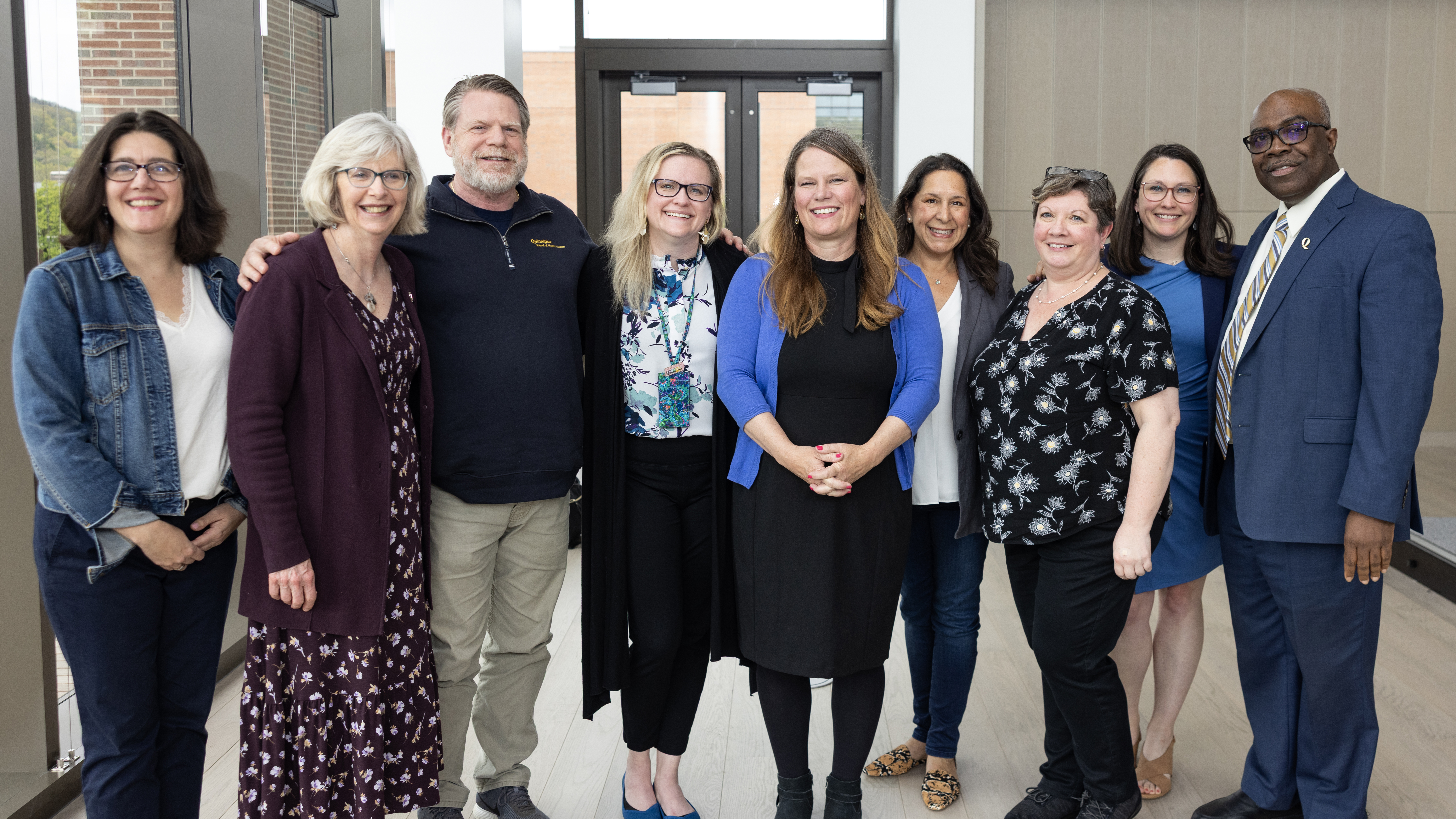
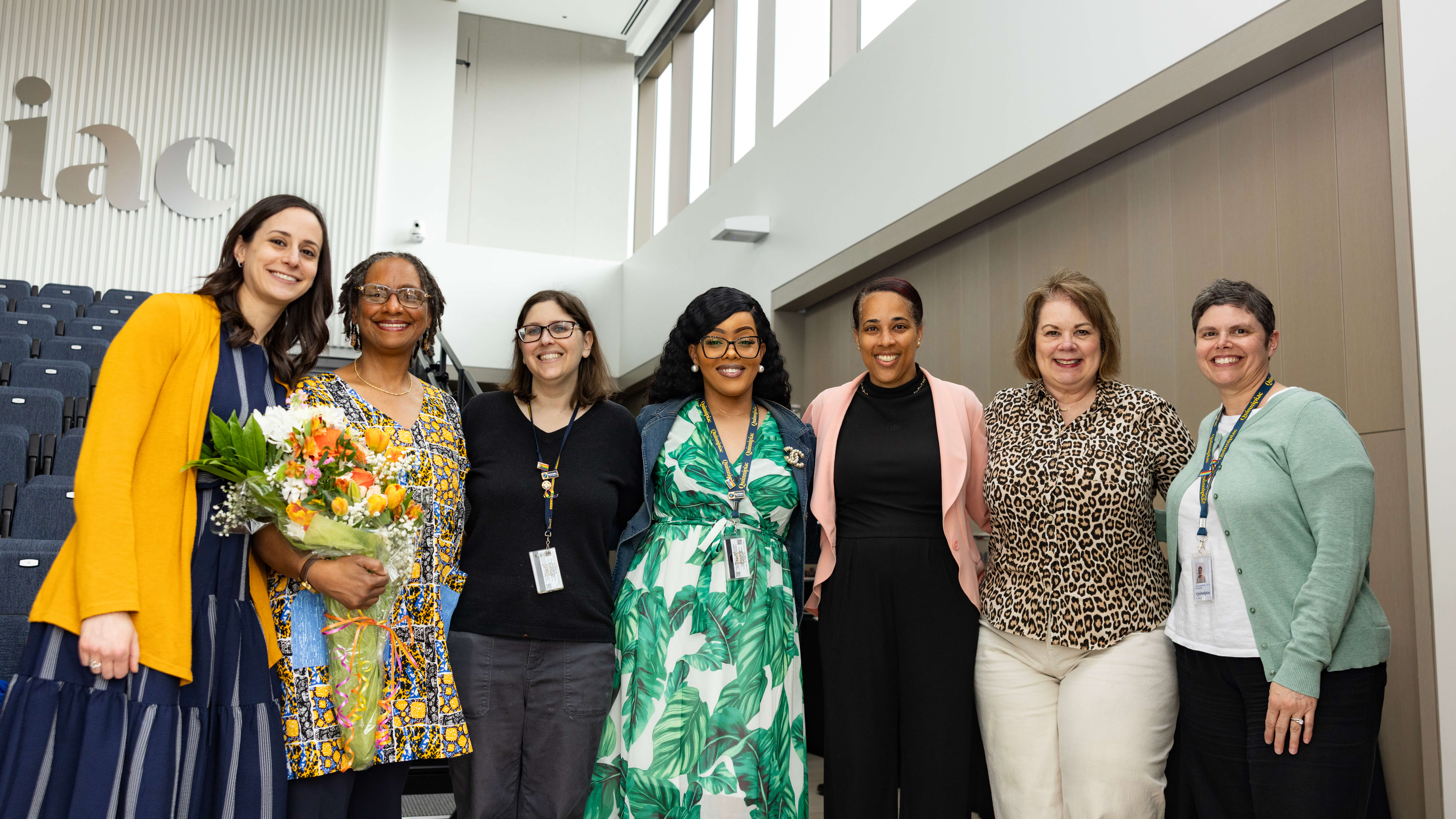
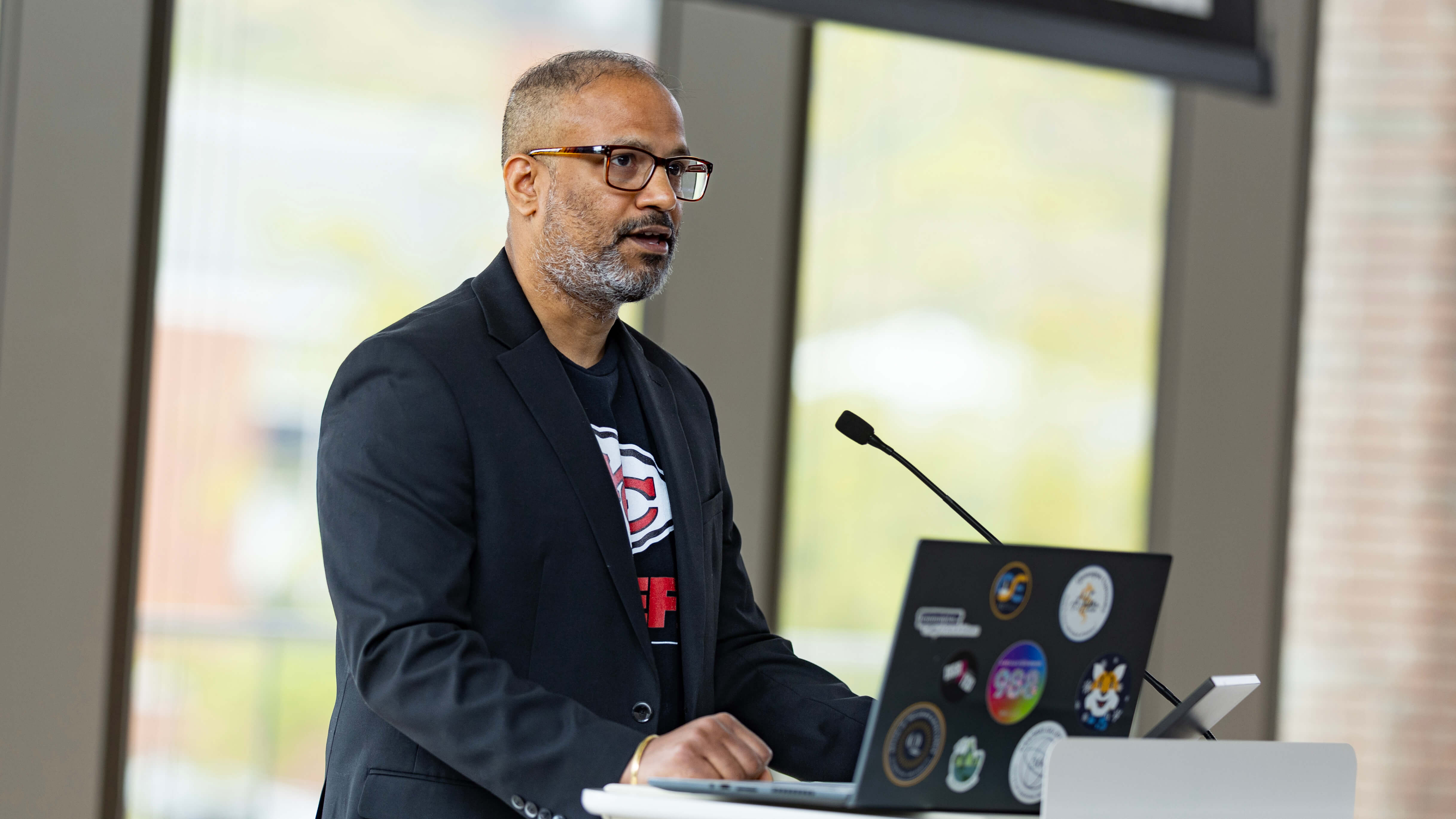
Caitlin Hanlon, faculty senate chair and associate professor of biology, encouraged everyone to lean into the spirit of camaraderie and appreciation that fueled the celebration in the School of Business Auditorium on Thursday.
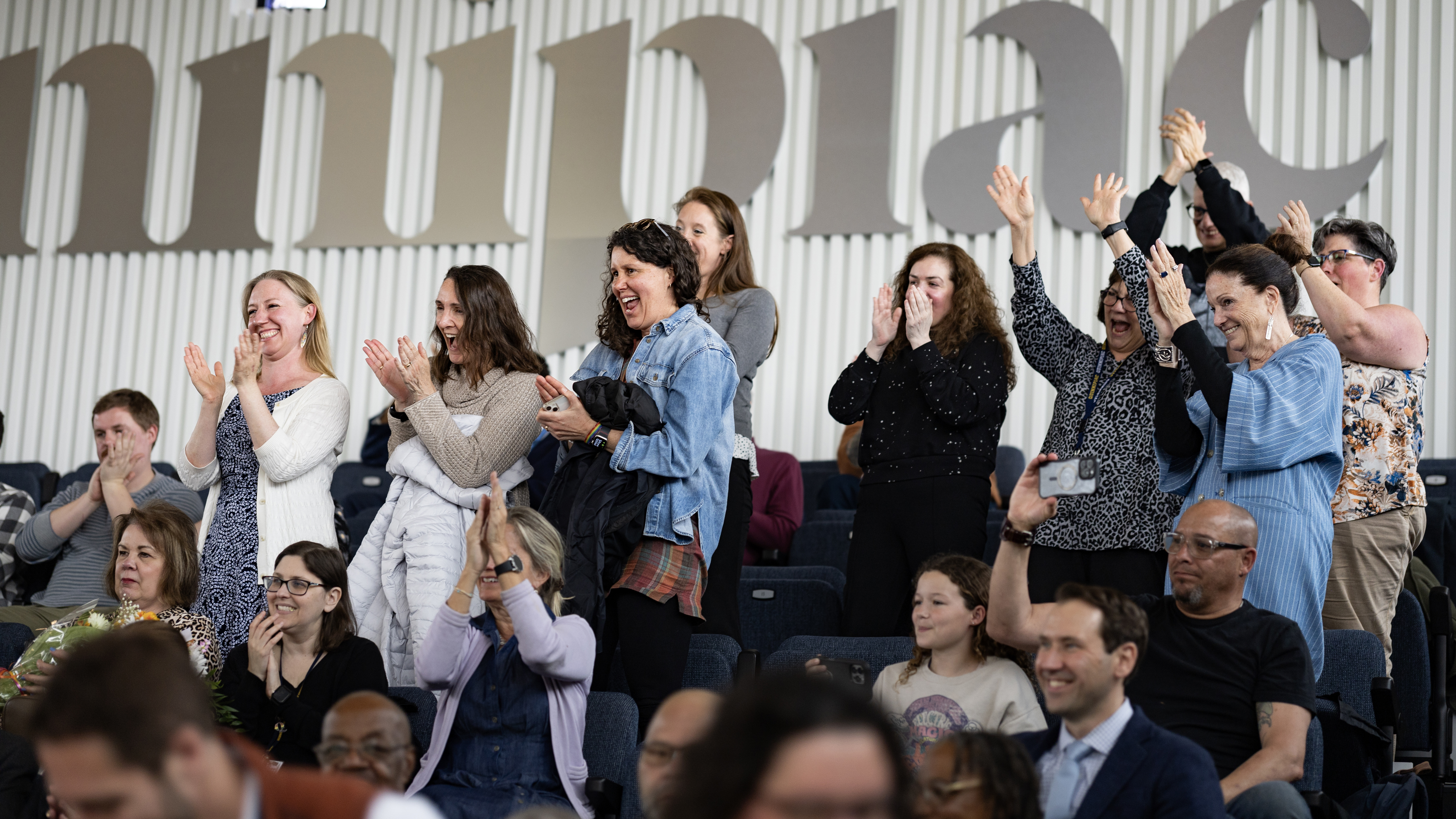
“I urge you today to be ready to clap, to be ready to hoot and holler. Because in doing so and in raising our voices, we reaffirm our belief in the importance of celebrating, in the importance of honoring each other, and in sustaining excellence together,” Hanlon said.
President Marie Hardin said she has waited all year for this event.
“Today we’re going to be honoring those who’ve put in the work in service, teaching or scholarship in a way that inspires all of us. We hold them up as exemplars to inspire us to be better in our own work,” said Hardin.
Hardin also reflected on American educator Freeman Hrabowski’s inspiring view of higher education and its “collective why.”
“We hope students fulfill their dreams while we work side-by-side with them to create new knowledge and to solve problems,” said Hardin. “In doing that, we touch eternity through our work with students because our impact lasts for generations. It is infused with hope that we can leave the world better than we found it. So our work is a great act of optimism, and this ceremony celebrates that optimism. I know that I’m going to be uplifted and motivated today. I’m going to be reminded of my why, and I’m going to leave inspired by yours.”
Provost Debra Liebowitz said the awards reflect the many impactful contributions made by Quinnipiac’s faculty, which continue to resonate in the future.
“For me, today is about the acknowledgement and honoring of individual contribution, but with the recognition that with that individual contribution comes the rings of impact that you can never know,” Liebowitz said. “All of you are already creating those rings.”
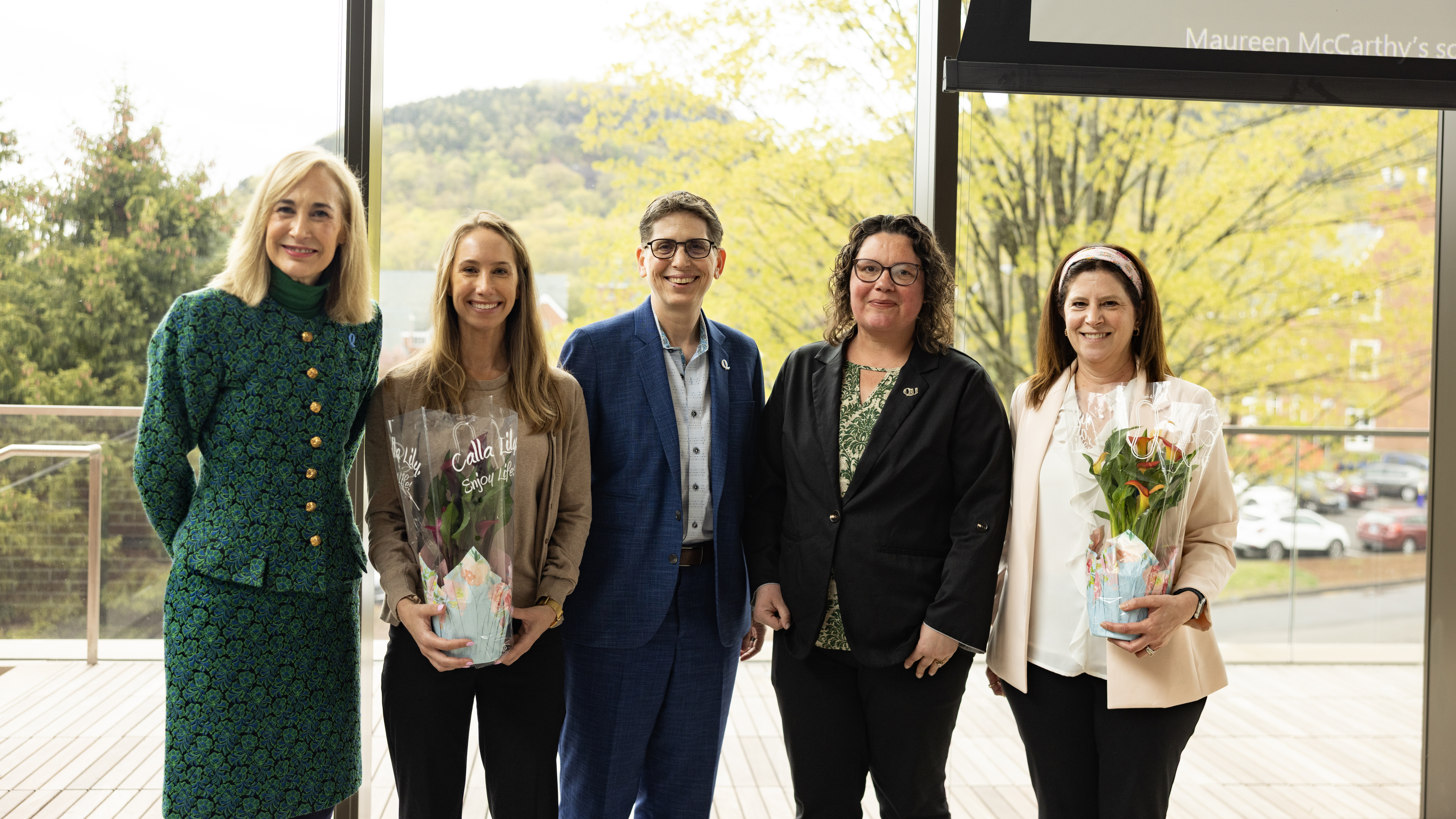
Sara Rzeszutek, director of faculty advancement in teaching excellence, recognized Saulnier Family Scholarship recipients Karen Majeski OTD, associate professor of occupational therapy and Stephanie Miller, associate professor of accounting. The scholarship supports faculty participation in teaching and learning conferences and initiatives.
Majeski co-presented “A Participatory Action Approach to IPE for Young Adults with Disabilities Transitioning to Adult Life” at the annual Association of Schools Advancing Health Professions conference in Indianapolis, Indiana in October 2025.
Miller’s peer-reviewed publication, “Conversations About Equity in Accounting Classrooms: Five Examples from Current Events” was presented at the Academy of Business Research Conference in Marathon, Florida in October 2025.
Four Faculty Scholar Awards recognized faculty with outstanding scholarship or creative work, nominated by their school or college.
“This cohort of awardees represent the incredible depth and breath of scholarship at Quinnipiac University,” said Hanlon.
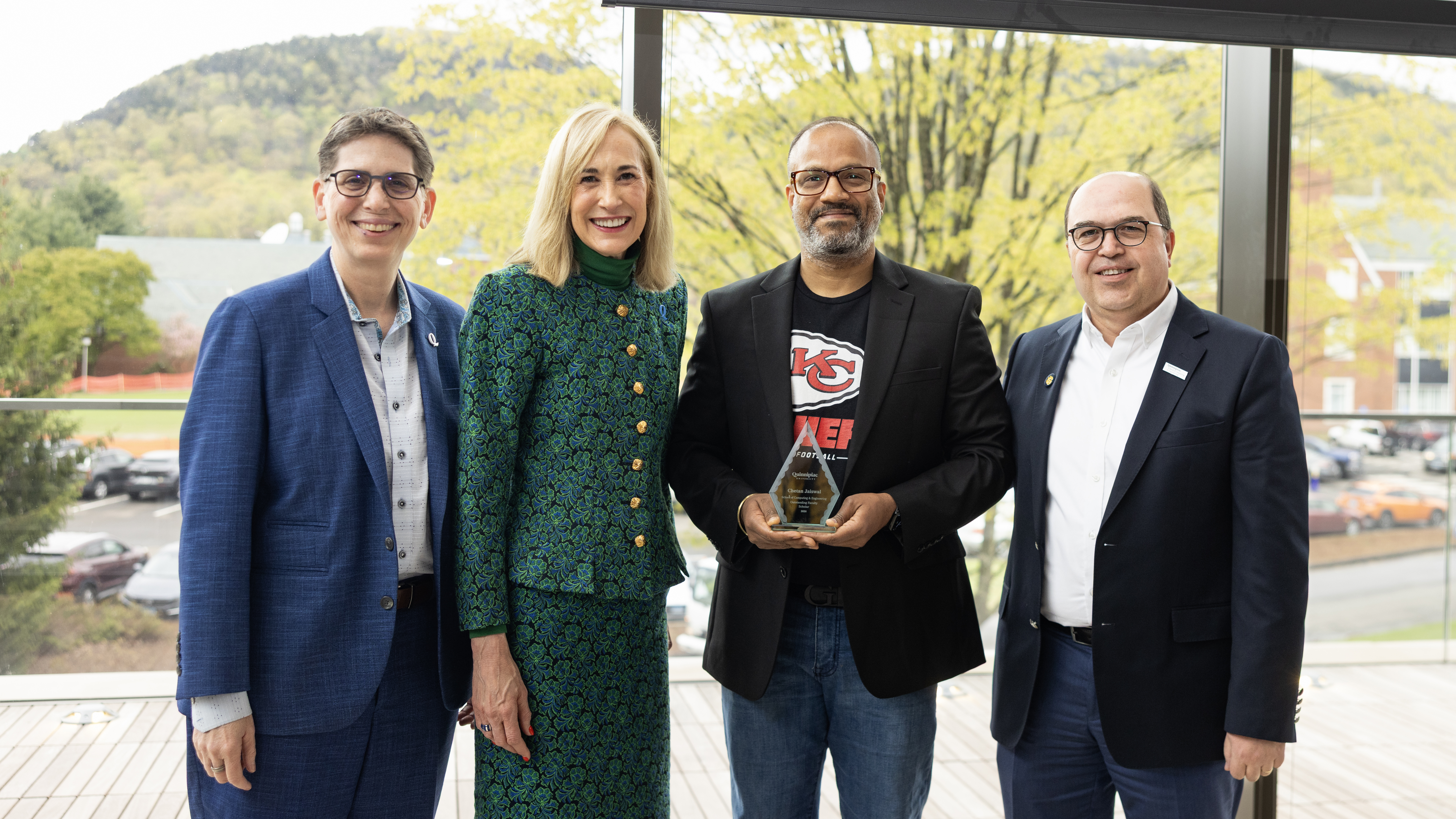
Taskin Kocak, dean of the School of Computing and Engineering, presented the Faculty Scholar Award to Chetan Jaiswal, associate professor of computer science and associate chair for computing.
As an AI and cybersecurity expert, whose work combines technical depth with a strong commitment to human impact, Jaiswal focuses on artificial intelligence, cybersecurity, machine learning, privacy and connected systems. He also mentors interdisciplinary projects that translate advanced computing into practical solutions. Jaiswal’s research, collaborative and innovative projects as well as public scholarship span cyber defense, offensive security, AI systems and emerging technologies that improve how people communicate, work and live.
“His work reflects the best of Quinnipiac – innovative teaching, meaningful research and a deep commitment to student success,” said Kocak. “Notably, he led the development of AccessiMove. This innovation earned Quinnipiac its first US patent.”
Patented in November 2025, AccessiMove is a software-only, hands-free mobility and communication tool powered entirely by facial gestures and AI. Jaiswal and his student team developed AccessiMove to increase independence for individuals with limited mobility.
“Dr. Jaiswal truly embodies the spirit of Quinnipiac — innovative, collaborative and student-centered,” Kocak said.
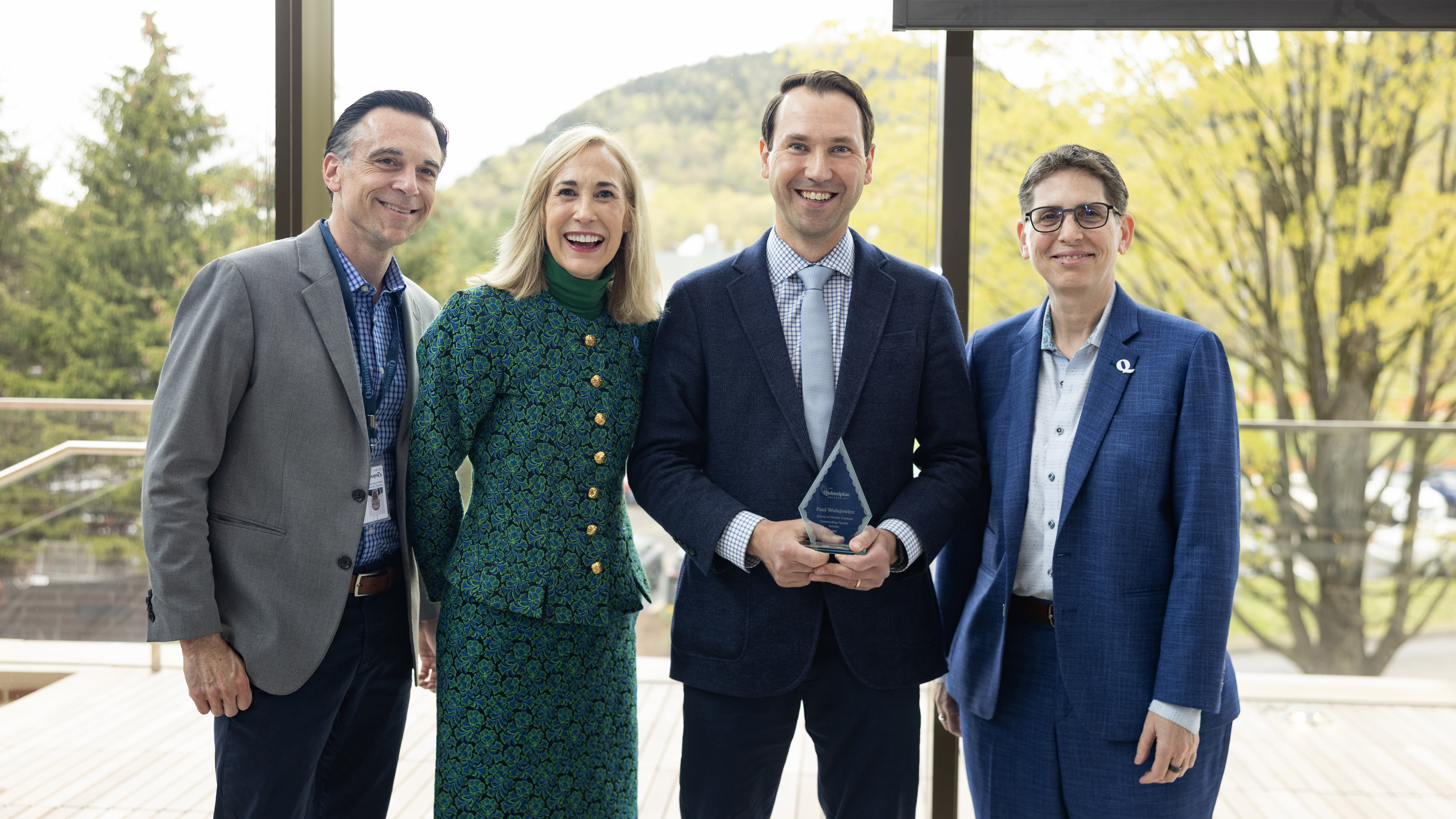
School of Health Sciences Dean Trenton Honda presented the Faculty Scholarship Award to Paul Wolujewicz, assistant professor of biomedical sciences.
Through his teaching, mentorship and research, Wolujewicz is committed to preparing students for careers in biomedical research, data science and translational science through training in modern experimental and computational methodologies. The Wolujewicz Lab integrates computational genomics, biomedical data science and machine learning approaches to investigate the genetic architecture of complex neurological and neurodevelopmental disorders, including neural tube defects. The Wolujewicz Las also develops metagenomic strategies for vector-borne pathogen detection and public health surveillance.
Honda said Wolujewicz’s publications in leading journals have moved the field by translating complex data into meaningful biology. The work is matched by his strong record of grantsmanship, institutional impact and growing national visibility through the work of conferences and external collaborations. At Quinnipiac, Wolujewicz is fostering an environment that launches students into their scientific careers.
“For his innovative, collaborative and student-centered scholarship and for the impact that he has already had on Quinnipiac School of Health Sciences, it’s my honor to recognize Dr. Paul Wolujewicz with the Faculty Scholarship Award,” said Honda.
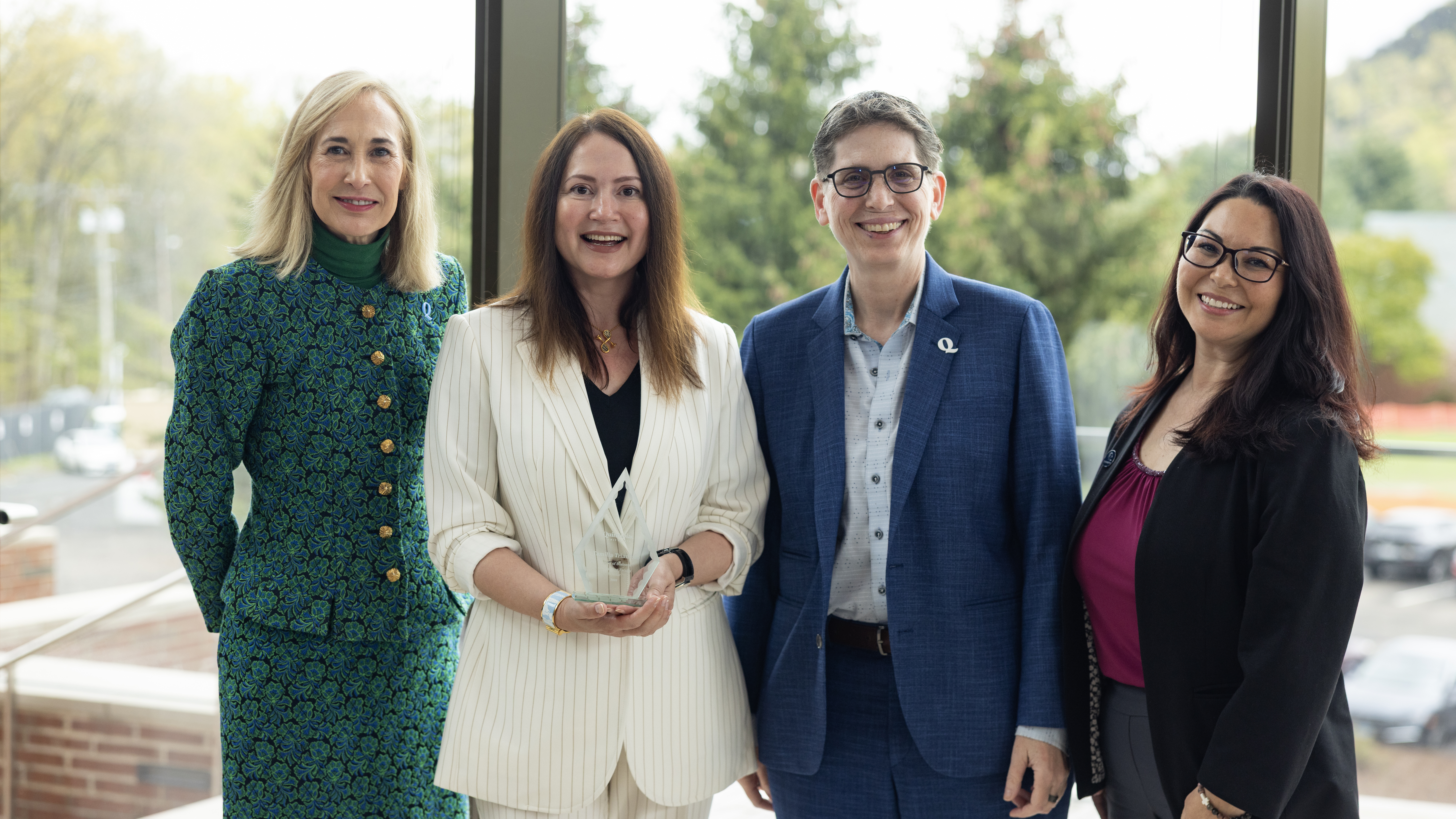
Interim Associate Dean of Faculty Affairs Kiku Jones presented the School of Business Faculty Scholarship Award to Tamilla Triantoro, associate professor of business analytics and information systems.
Triantoro's research focuses on human-AI collaboration, decision-making and the Future of Work. Her scholarship examines how people interact with intelligent systems and how emergent technologies are reshaping professional judgement, organizational processes and workplace well-being. She is the co-author of “Converging Minds: The Creative Potential of Collaborative AI," which explores how human intuition and AI's strengths can complement each other. Her scholarly contributions have earned national and international recognition. Her research has appeared in leading peer-reviewed journals, and she is deeply engaged in international research collaborations as well as serving as a presenter at leading US and European universities.
“Having worked very closely with Dr. Triantoro as a colleague and department chair, I can say with confidence that her distinguished scholarship is matched by her commitment to professionalism, collegiality and generosity. This award reflects the quality, reach and impact of her work,” said Jones.
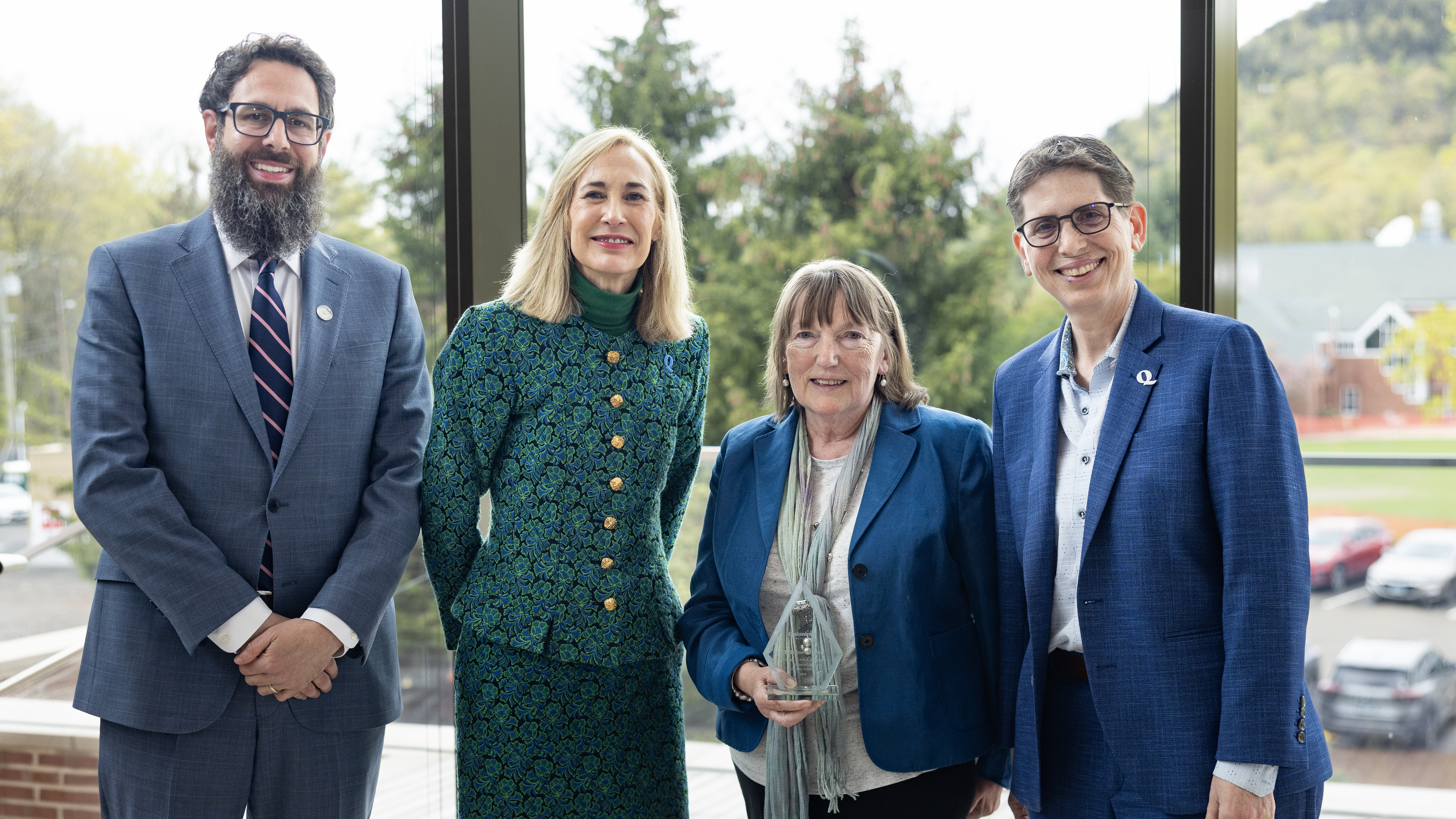
Adam Roth, dean of the College of Arts and Sciences, presented the Faculty Scholar Award to Christine Kinealy, professor of history and founding director of Ireland's Great Hunger Institute at Quinnipiac.
As a graduate of Trinity College in Dublin, Ireland, Kinealy has published extensively on Ireland's Great Hunger and, more recently, her trilogy of work on the Irish Abolition movement and its transatlantic dimensions. In addition to academic papers, she has written nearly 40 books published through leading university, academic and international presses including the award-winning, foundational “This Great Calamity: The Irish Famine 1845–52.” Other works include, “Frederick Douglass and Ireland: In His Own Words,” and a graphic novel, “The Bad Times” or “An Drochshaol.”
As a Director of the African American Irish Diaspora Network, her research and publication of the “Black Abolitionists in Ireland” led to the creation of Frederick Douglass Walking Trails in Belfast, Cork and Dublin. Named one of the top educators in Irish America, Kinealy was inducted into the Irish America Hall of Fame in 2014. In 2017, she won an Emmy for the documentary “The Great Hunger and the Irish Diaspora.”
“The scale and impact of her work is truly extraordinary. It’s humbling to be in her presence,” Roth said. “Arguably, she might be one of the most prolific and impactful scholars that we have ever had at Quinnipiac.”
This semester, Roth and a group of 24 students and faculty members traveled with Kinealy to the Consulate General of Ireland in New York City, where Kinealy gave a presentation about North American Indigenous aid to Ireland during the Great Hunger at an event honoring her research and work.
“She brings such extraordinary distinction to Quinnipiac and the College of Arts and Sciences, and I’m delighted to honor her with our version of an Emmy,” said Roth.
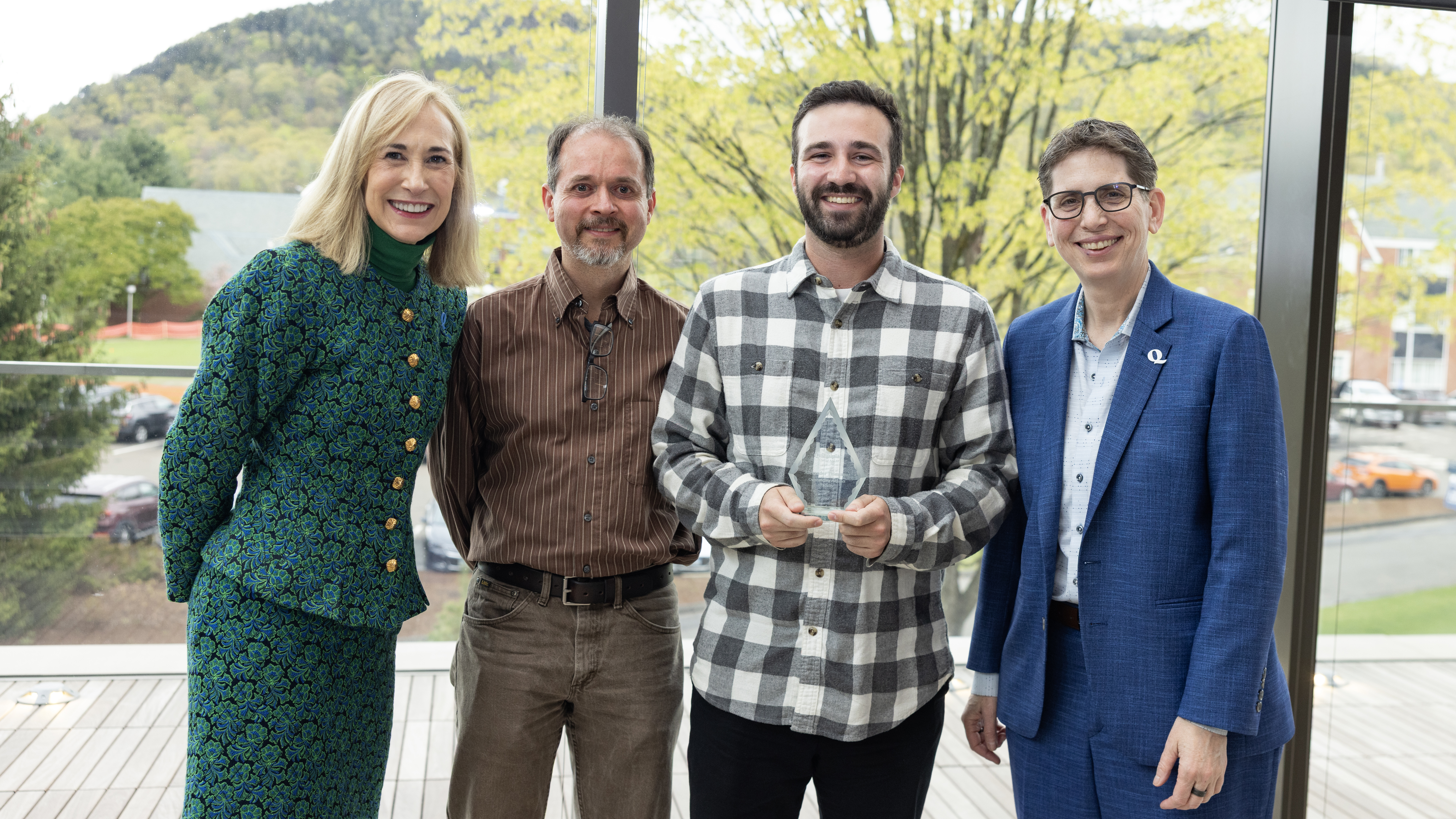
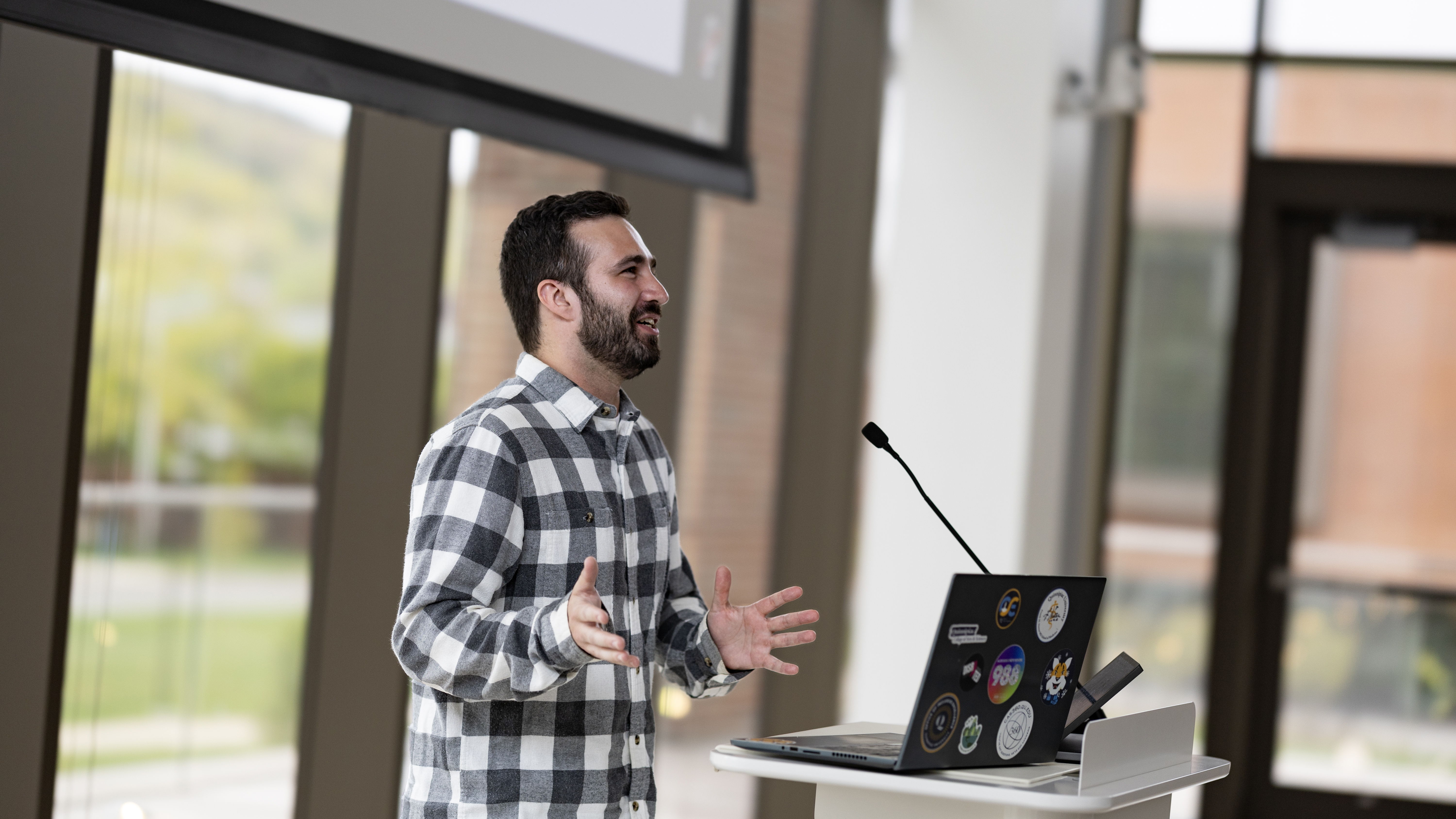
Christian Duncan, professor of computer science and chair of computing, presented the Outstanding Adjunct Faculty Award to Alexander Thimineur ‘16.
Duncan said Thimineur exemplifies outstanding classroom teaching, innovative course design, meaningful student engagement, effective use of technology and exceptional mentoring, together with Quinnipiac’s commitment to preparing students for the demands of the 21st century while fostering an inclusive and supportive learning community.
“Professor Thimineur embodies all those qualities in a way that is both impactful and inspiring. A graduate of our own program in the fall of 2016, he returned to Quinnipiac in 2018, not just as an alumnus, but as an educator deeply committed to giving back. In the fall of 2022, he took over one of our department’s core courses in software development. What was already a strong course, has now become one of the most popular courses in our school’s computer programs. Students consistently praise the real-world, hands-on nature of the course and how it has prepared them for the work environment they will encounter in their career,” Duncan said. “In every sense, he advances our mission, preparing students for successful careers, building community and fostering lasting connections.”
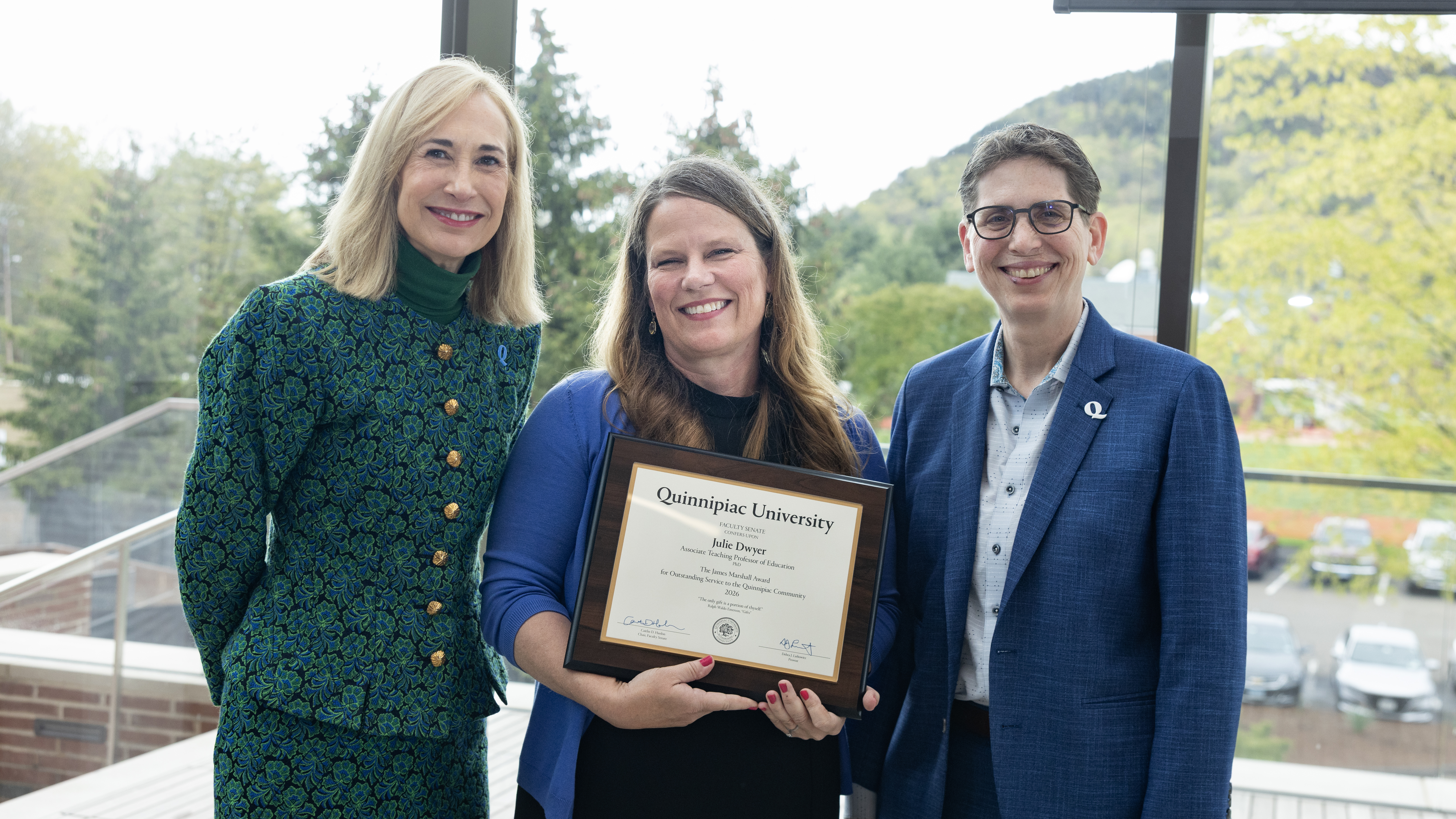
Hanlon presented the James Marshall Award for Service to the Quinnipiac Community to School of Education faculty member, Julie Dwyer, associate teaching professor of education and chair of education. The award honors a faculty member who exhibits the late Marshall’s qualities of unselfish service and dedication to the Quinnipiac community.
“When you look over the names of the past winners, you see names of people who have made deep and lasting impacts to Quinnipiac University and continue to do amazing things,” Hanlon said.
Hanlon said Dwyer’s contributions are best exemplified in a comment shared by Julia Giblin, professor of anthropology: “Julie has a way of making impossibly thorny issues approachable and manageable. Her calm and curious presence, coupled with a commitment to research and evidence-based solutions, has been an invaluable asset.”
This year’s ceremony also introduced a new honor, the Leadership Award. The award celebrates departmental or program leaders exemplifying innovation, integrity and fostering academic excellence.
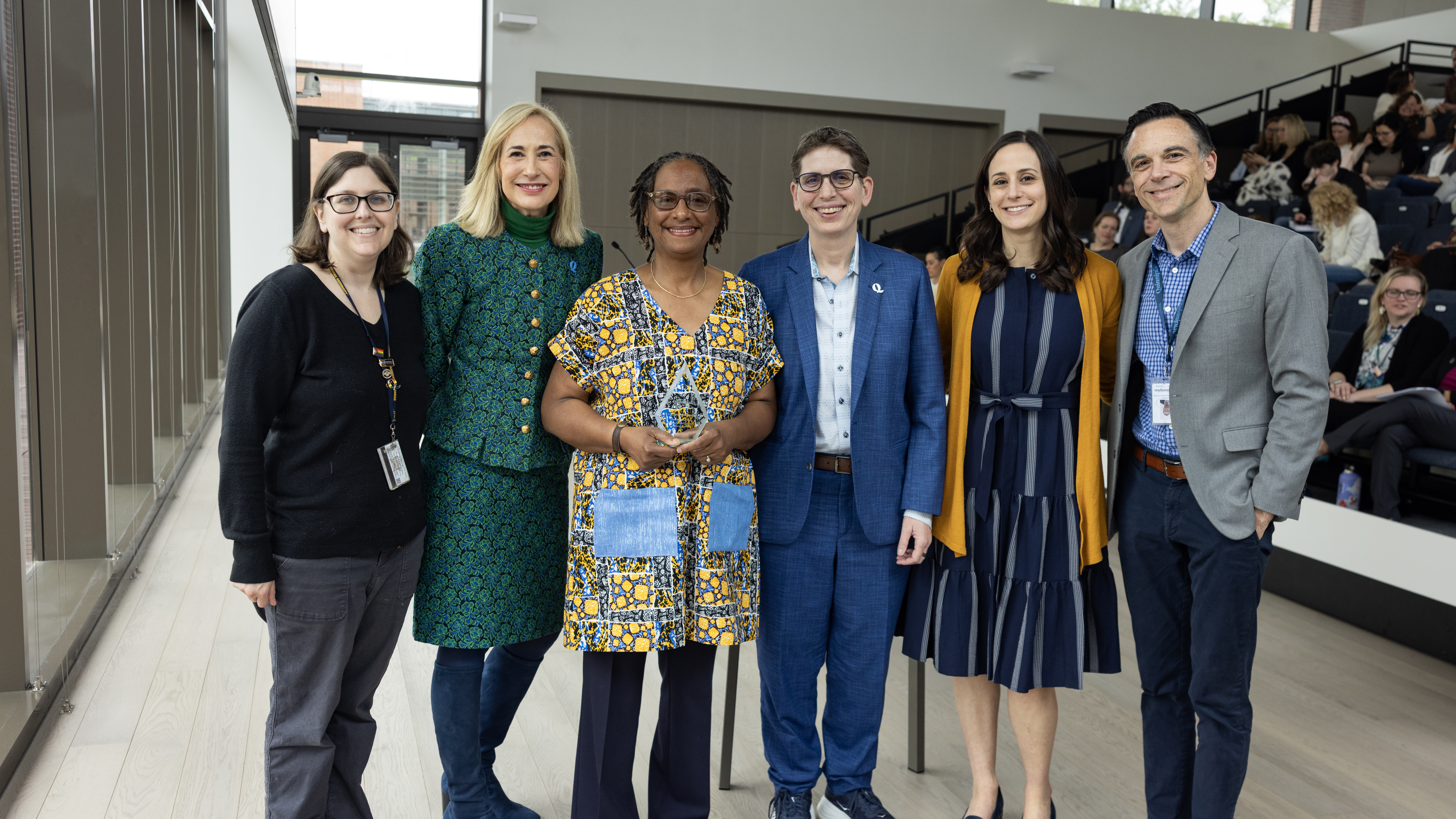
Liebowitz said it was an honor to present the inaugural award to Carol Awasu, chair of the Social Work department, director of the Master’s in Social Work Program and professor of social work.
“For an inaugural year, the strength and the breadth of the nominations that came in were inspiring which speaks to the incredible leadership of so many at this institution. I am incredibly please to recognize Dr. Carol Awasu as the first award winner,” said Liebowitz.
Liebowitz shared a comment from Emily McCave, professor of social work and one of many nominators for Awasu’s award.
“She has strengthened the department through her vision for program growth, meeting market demands while also focusing on increasing student success in the MSW through her advocacy related to lowering our tuition, to advocating for resources needed to deliver a high-quality online program option that retains our relational student-centered focus,” McCave shared. “I’m fortunate to have been mentored by her in my role as the associate chair in the program, and grateful that she approaches every decision with intention, positivity and grace.”
At the School of Health Sciences, Honda said the respect Awasu commands from her students, faculty, peers, department chairs and the dean’s team is unexcelled.
“Carol Awasu could teach a master class in department leadership,” said Honda.
“Carol’s leadership stands out,” Liebowtiz said. “She is in a program, in an area, in a field where there is tremendous need for social workers, especially clinical practitioners. She has taken that to heart and transformed the program.”
In Focus














In this Article
- College of Arts & Sciences
- School of Business
- School of Computing & Engineering
- School of Education
- School of Health Sciences
- Ireland’s Great Hunger Institute
- Adam David Roth
- Caitlin D Hanlon
- Carol R. Awasu
- Christian A. Duncan
- Christine Kinealy, Ph.D
- Debra J Liebowitz
- Dr. J Jaiswal
- Emily McCave
- Julie Dwyer
- Kiku Jones
- Marie C Hardin, Ph.D.
- Paul Wolujewicz
- Sara Rzeszutek
- Tamilla Triantoro
- Taskin Kocak
- Trent Honda
Read This Next












Stay in the Loop
Quinnipiac Today is your source for what's happening throughout #BobcatNation. Sign up for our weekly email newsletter to be among the first to know about news, events and members of our Bobcat family who are making a positive difference in our world.
Sign Up Now