

Airbus North America CEO urges business, computing and engineering graduates to invest in themselves, each other
School of Business and School of Computing & Engineering Undergraduate and Graduate Commencement 2026
School of Business and School of Computing & Engineering Undergraduate and Graduate Commencement 2026
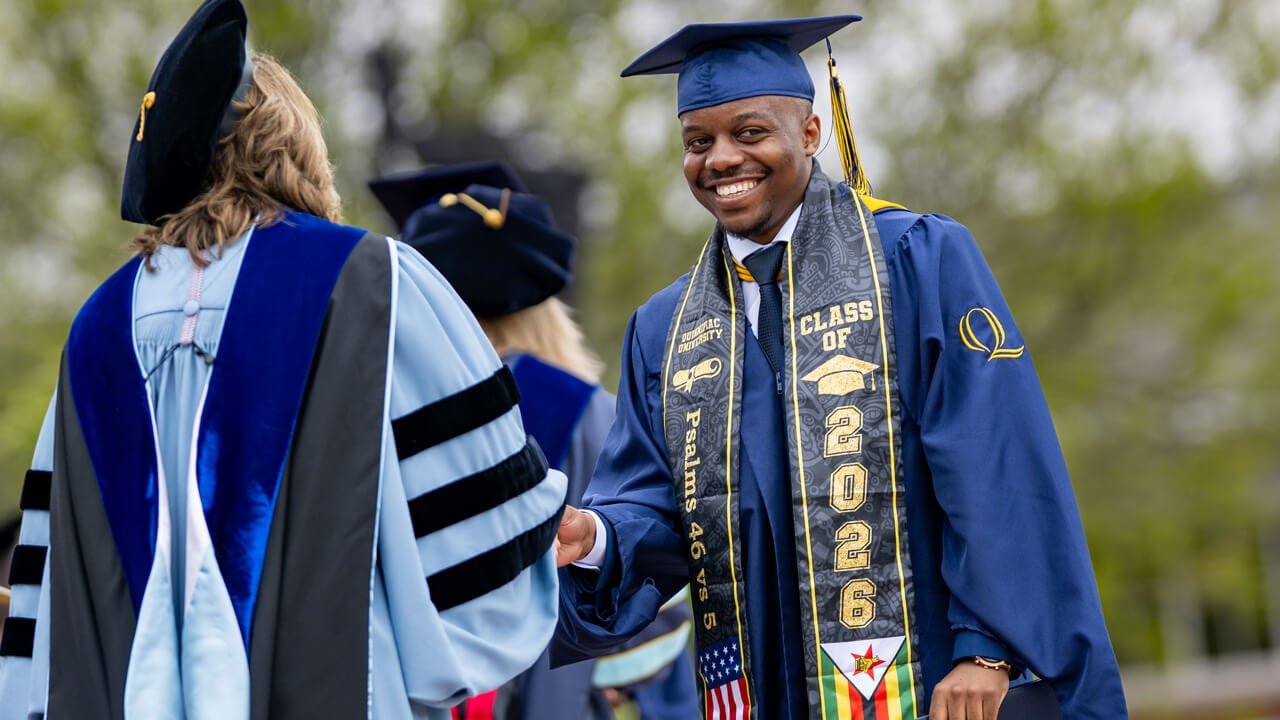
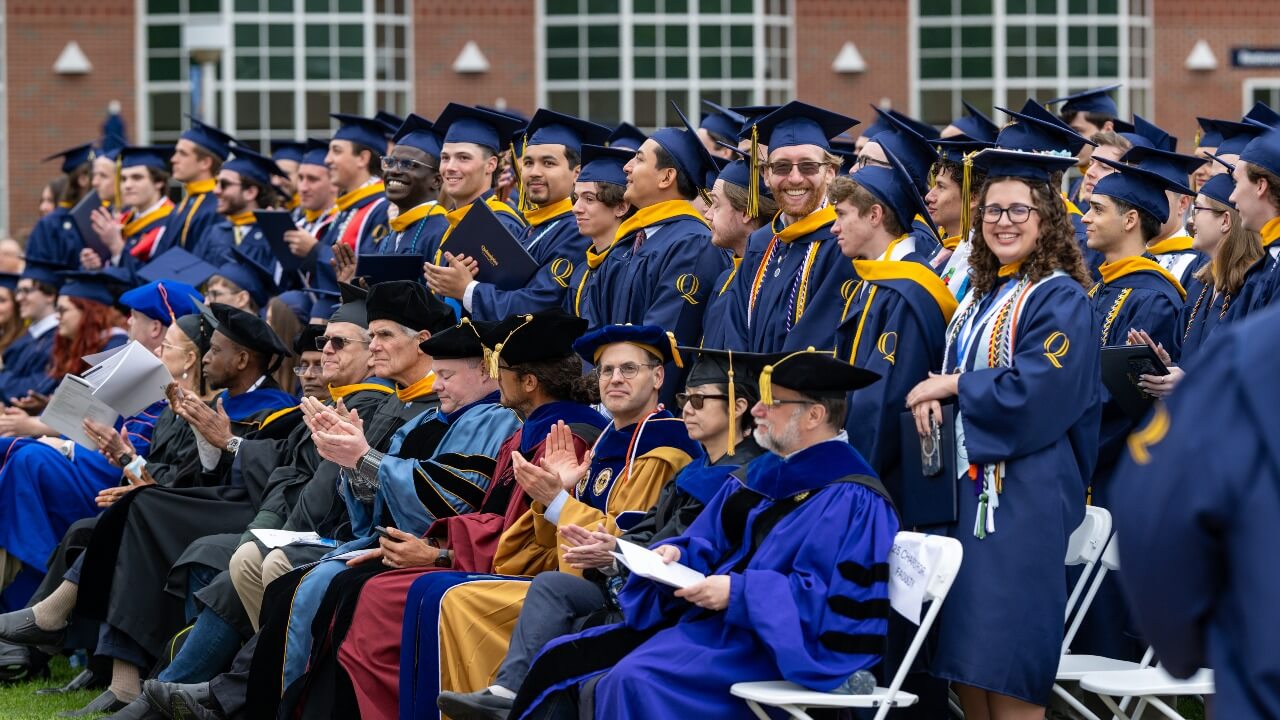
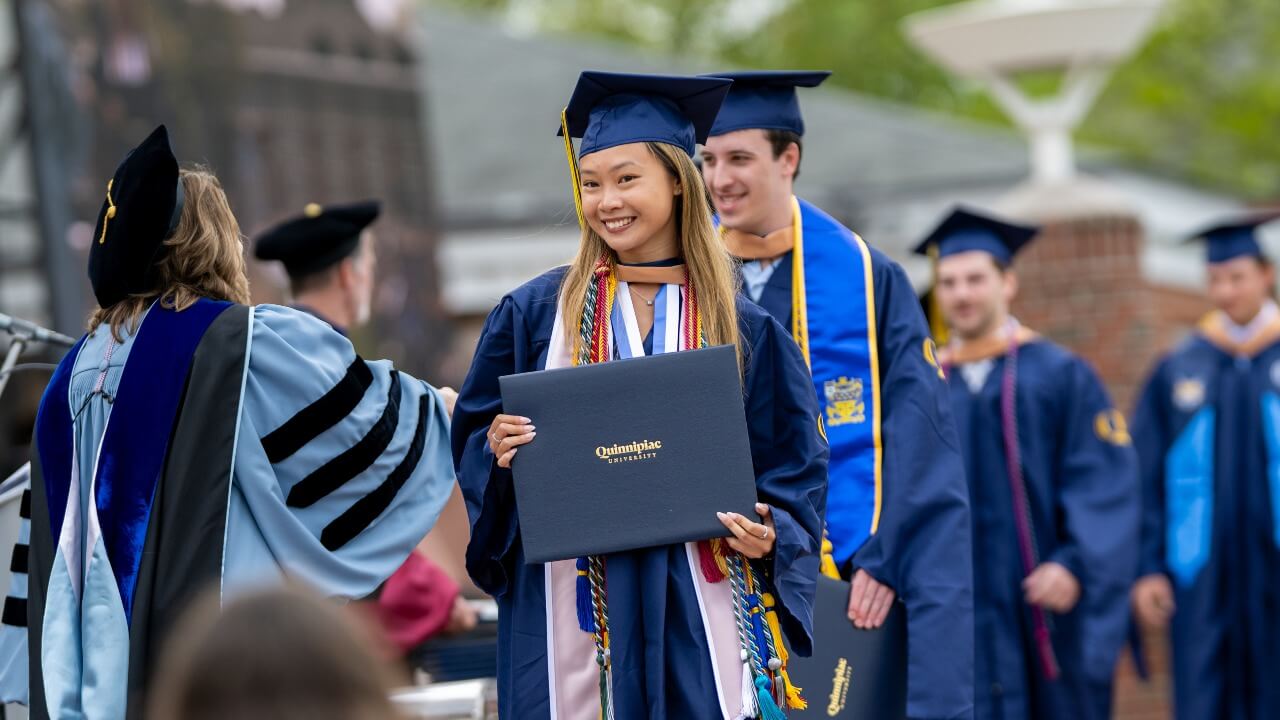
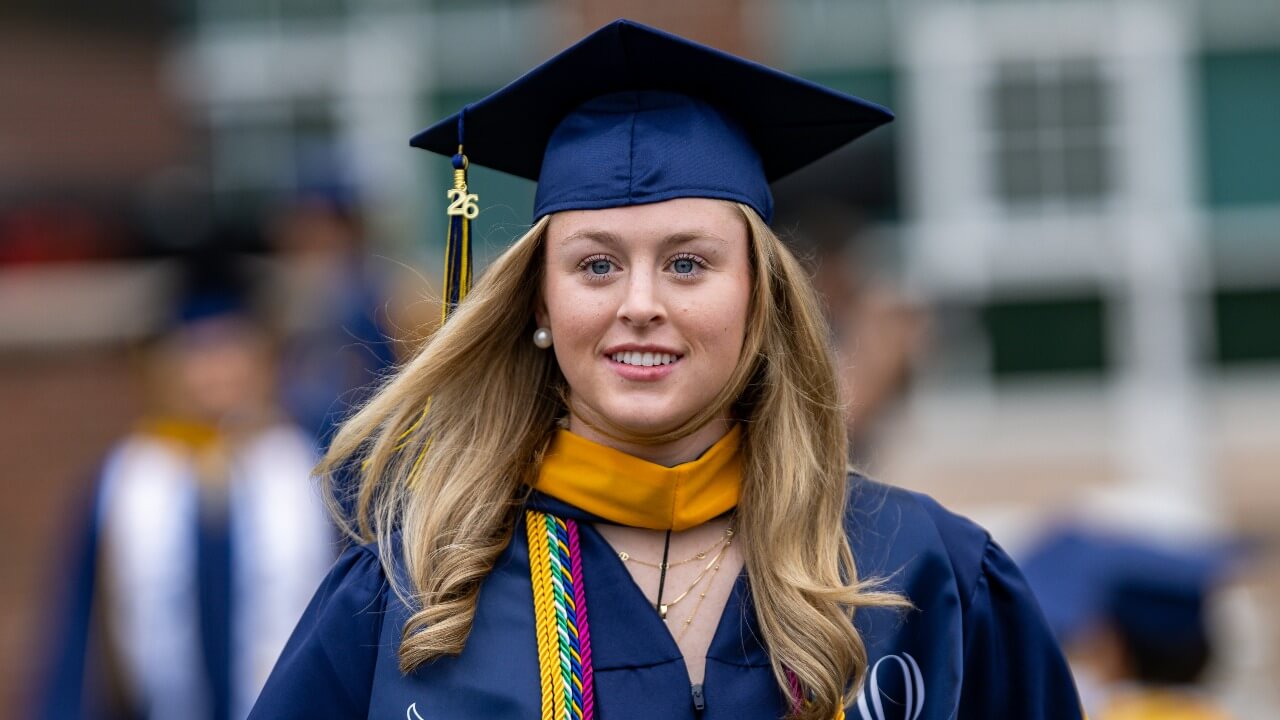
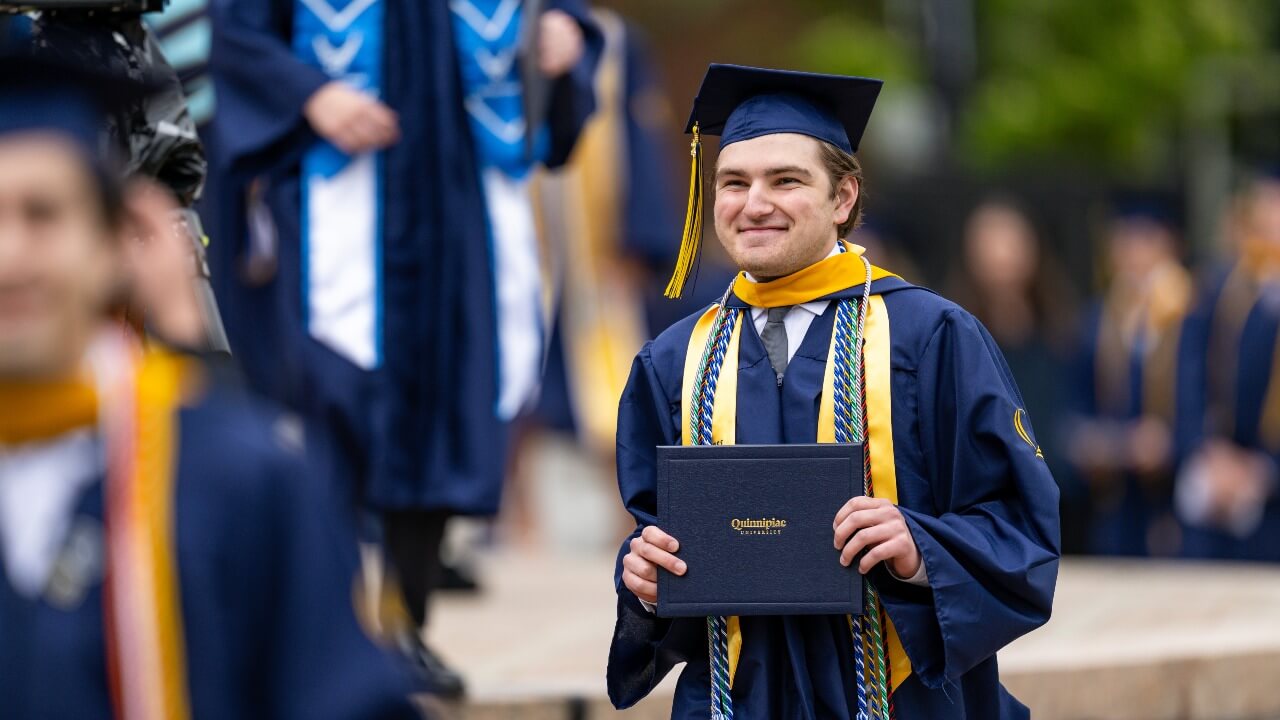
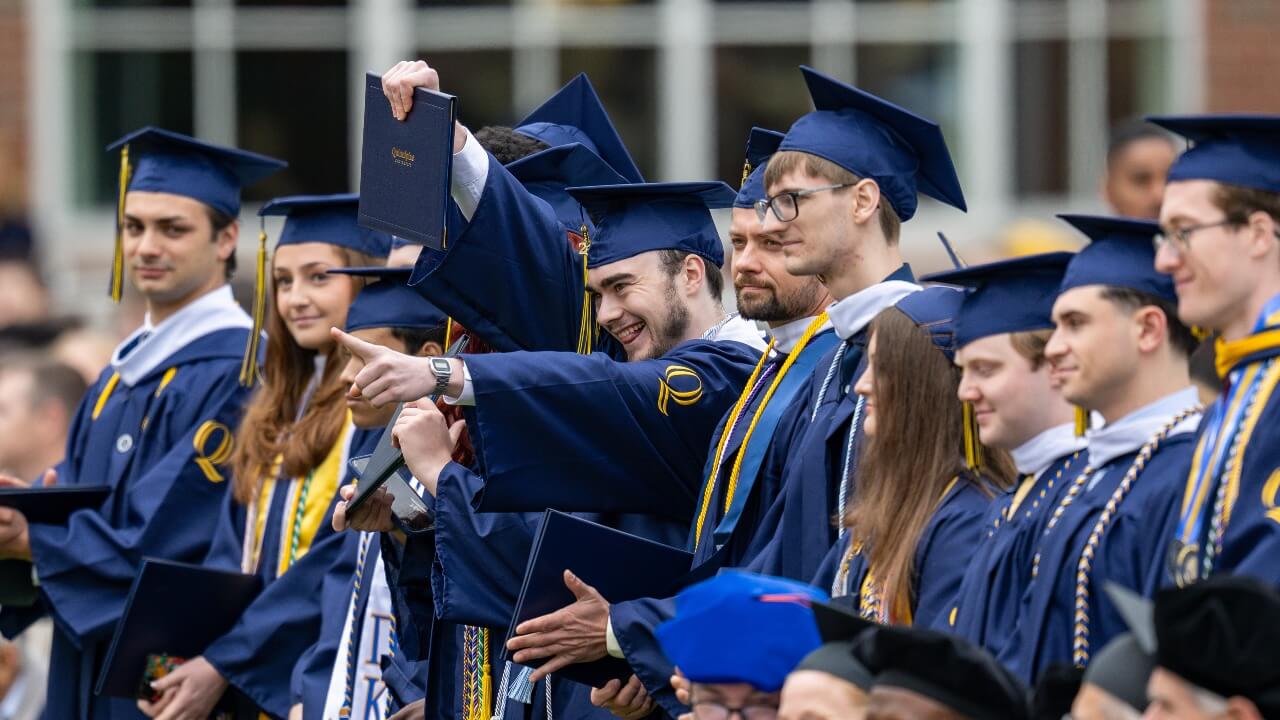
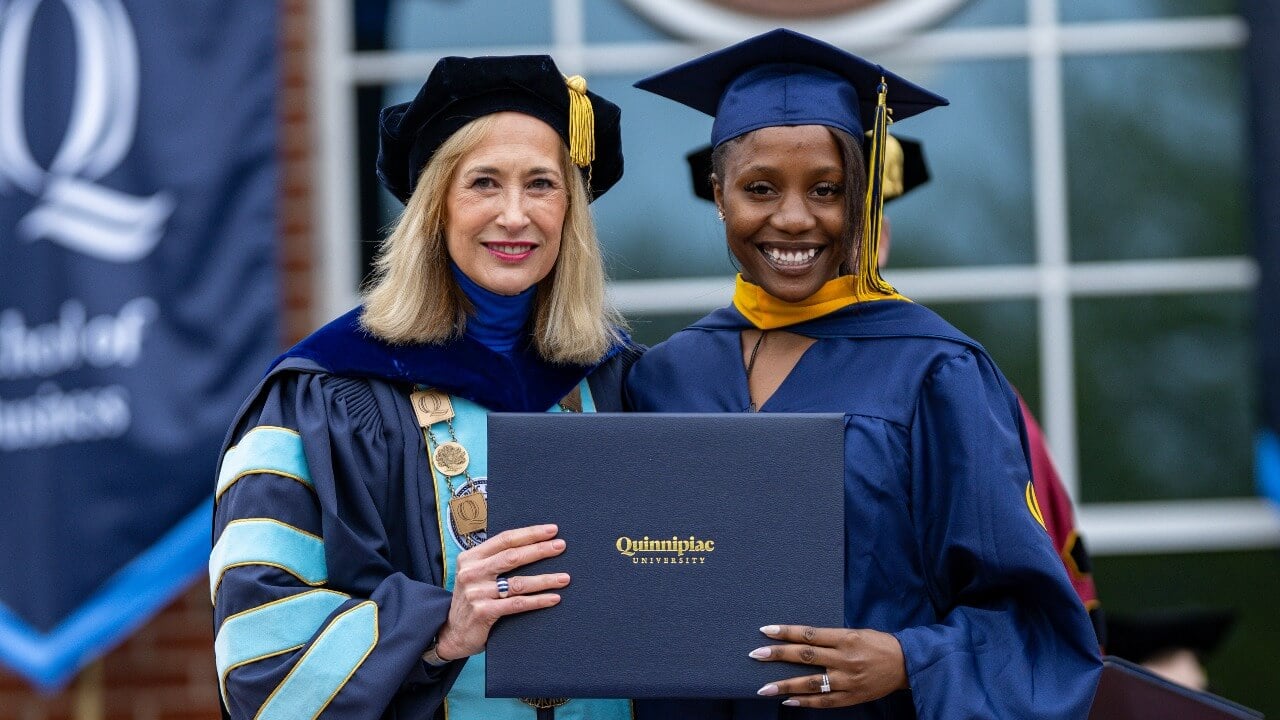
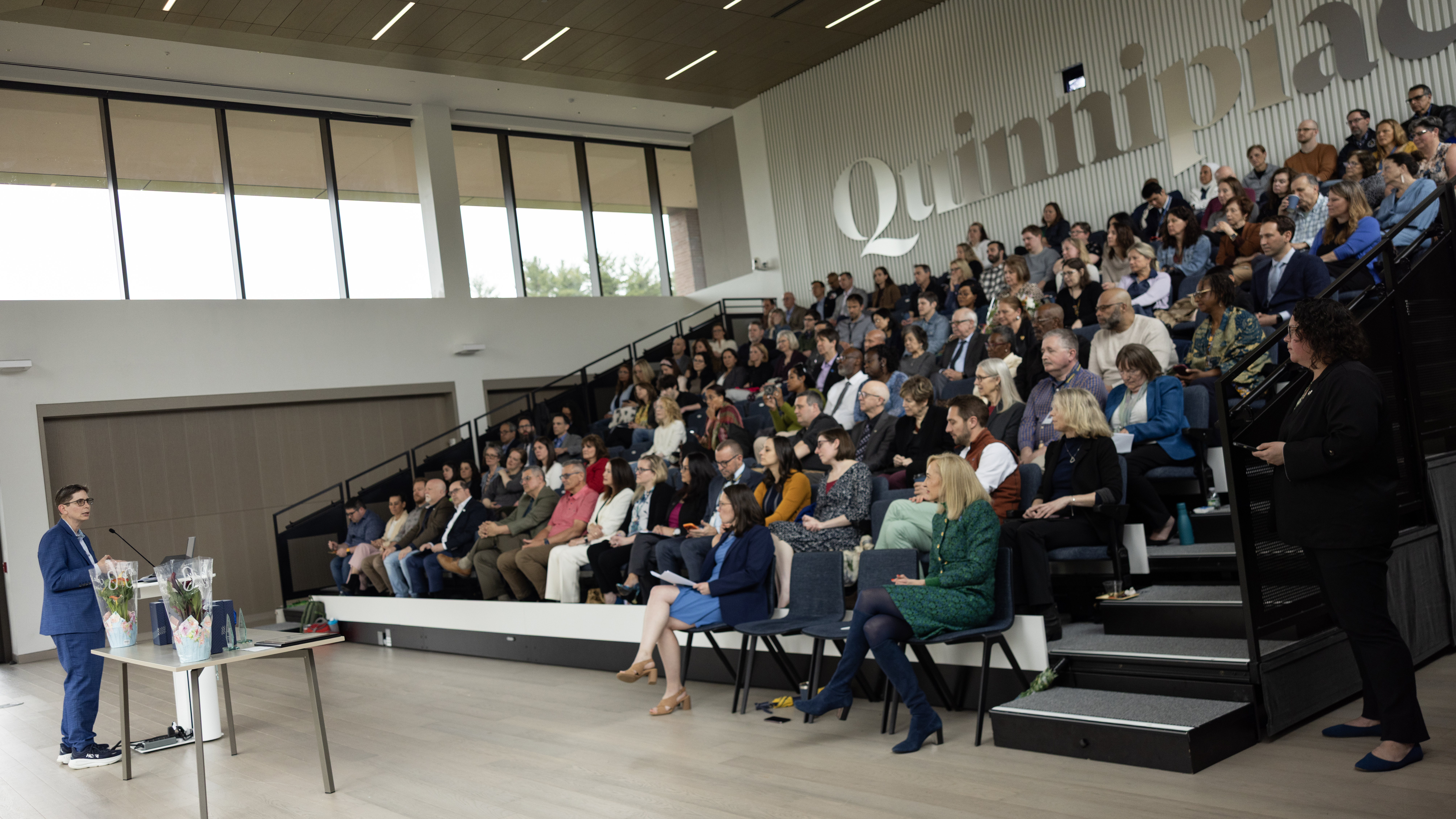
Hayes, the chairman and CEO of Airbus North America, called on the 787 graduates of the School of Business and the 216 graduates of the School of Computing & Engineering to fuel their futures with resilience, patience and friendships.
Over the years, Hayes has guided Airbus through the 9/11 terrorist attacks, the COVID-19 pandemic, the financial crisis, surging oil prices and more. Each moment required a thoughtful, considerate approach.
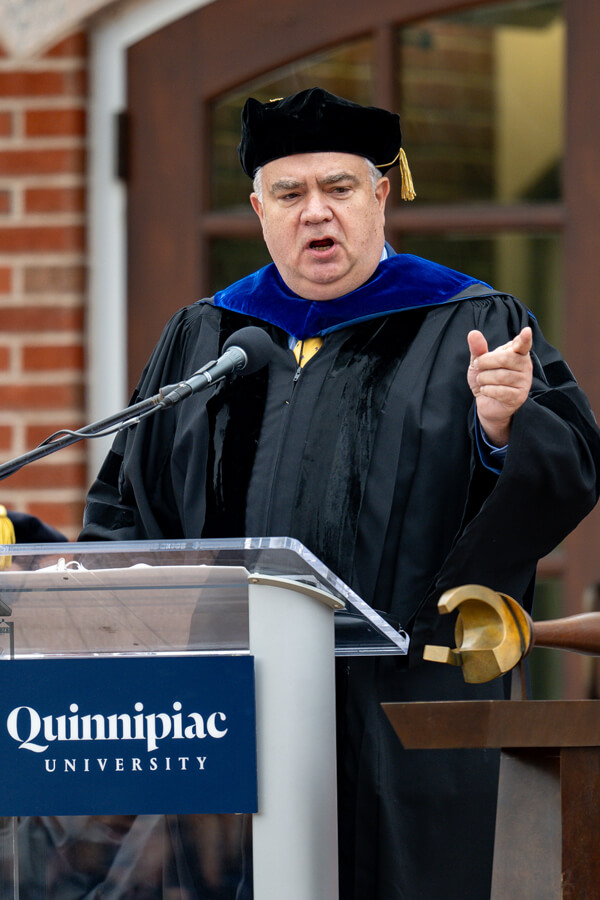
“Every job in every industry has those moments of ups and downs — and resilience is the key,” said Hayes, a public member of the Quinnipiac Board of Trustees. “And as you enter the workplace, remember there will be some very difficult days ahead. But I’m here to say that resilience will get you through.”
But resilience doesn’t exist in a vacuum. It becomes cumulative and durable based on a person’s total experiences. Hayes, who grew up in England, told graduates that they should work to nurture their college relationships in the years ahead.
Hayes studied at the University of Bath, about 100 miles west of London, when his own college years unfolded and those friendships were forged.
“Back then, there was no Facebook or (mobile) phones. You had to go to a phone box and call somebody,” Hayes said. “And we’ve been meeting every year for the last 38 years with the exception of COVID. I ask you to consider making the same commitment with a group of friends so you can march through life with an army at your side.”
Hayes also stressed the value of patience.
“For most of us, patience is a virtue,” Hayes said. “Some of you will be leaving here with your dream job offer. Some of you will have a job, but not be quite sure it’s what you want to do. And some of you will wonder, perhaps, if a job will ever come? Be patient. It will. And it will all work out.”
And when it does — just like the day when students become alumni — gratitude is always part of the equation and part of the growth.
"I know that each of you comes to this moment thankful,” President Marie Hardin told the graduates. “You know that the remarkable milestone we recognize today for each graduate is one that requires a supporting cast — of expert and caring teachers and mentors, family and friends to provide support, and an institution that, I trust, you will be proud to remember as your alma mater.”
“I, too, come to this ceremony grateful,” she added. “As president of this great institution, I have had a chance to meet many of you and to observe you in action. Your dean and your faculty have talked about you many times to me.”
For Hardin, the call to service — to help others shine, to help them soar — is integral to Quinnipiac’s mission.
“I am moved by your eagerness to help others succeed. You haven’t been ambitious only for yourself,” Hardin said. “Whether through local service, research focused on solving problems or simply being there for your classmates, you have demonstrated a deep commitment to the idea that your success is reflected in that of others.”
Gavin Grim ’26, who earned a bachelor’s degree, offered a profound message of his own. Grim represented the School of Computing & Engineering as its student speaker.
“Not all treasure is silver and gold,” Grim said, quoting a line from Captain Jack Sparrow in the “Pirates of the Caribbean” movie. “But it’s more than just that. It presents an unusual philosophy to challenge the idea of morality and personal values that were standardized in society.”
“It is a reality that in each of our lives, we’re about to face pressure to accept these same societal standards,” Grim added. “We’re moving on to the next step of life, whether it be with jobs, graduate degrees or something else.”
For Margaret Gachau ’26, who earned a master’s in business analytics, the message was one of discovery. Gachau spoke on behalf of her classmates in the School of Business.
“When we first began our journey here at the Quinnipiac School of Business, many of us came with different expectations,” Gachau said. “Some came to sharpen technical skills, some came to grow professionally, and others came simply searching for what might be possible next. But along the way, we discovered something deeper than coursework. We discovered community.”
After Provost Debra Liebowitz began the proceedings with the call to Commencement, Addison Prunier, a student at North Haven High School, sang the National Anthem before thousands of Quinnipiac parents, family members and friends.
At the conclusion of the ceremony, Pam Martinez ’86 welcomed the Class of 2026 into an alumni community of more than 70,000 members around the world, with a reminder that a Quinnipiac education is a relationship that lasts a lifetime.

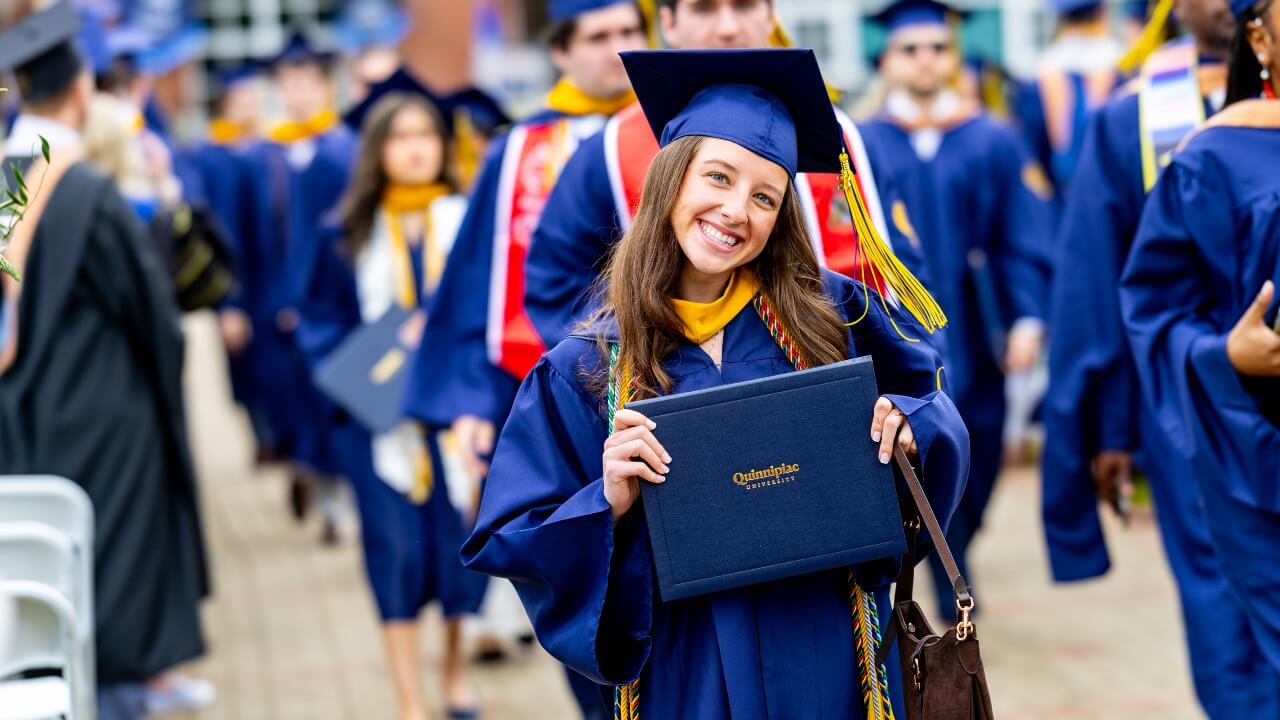
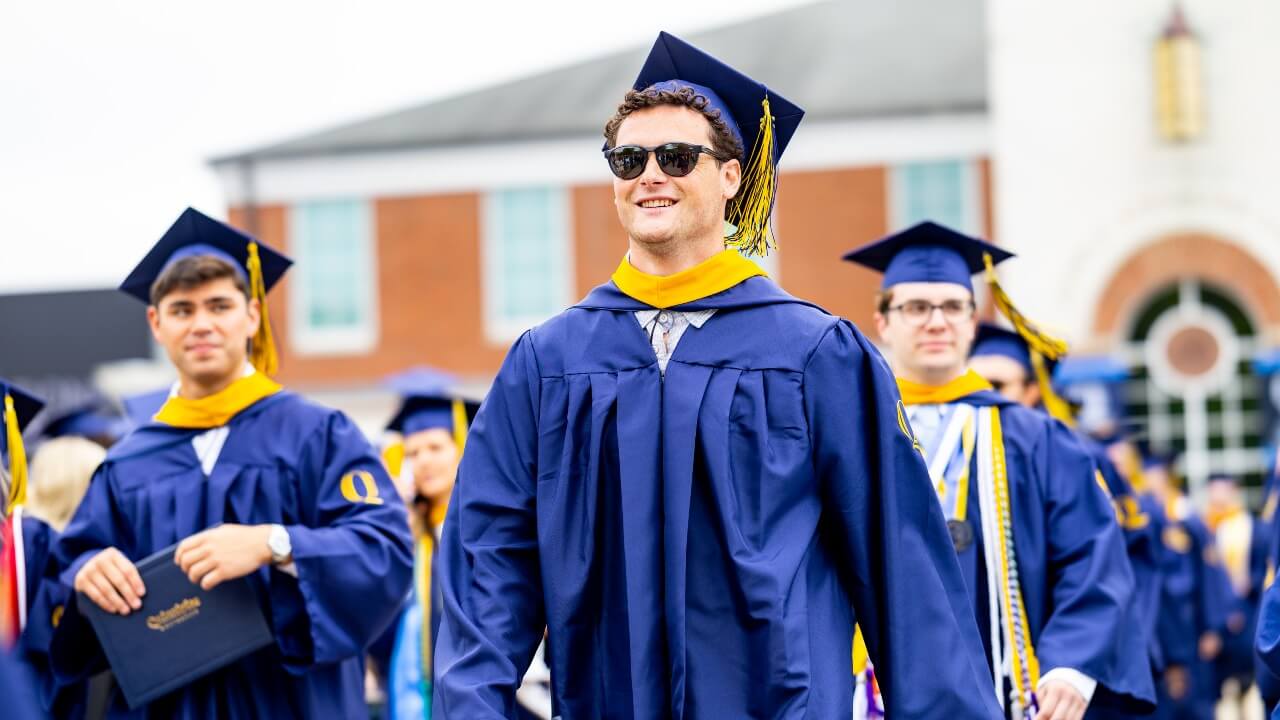

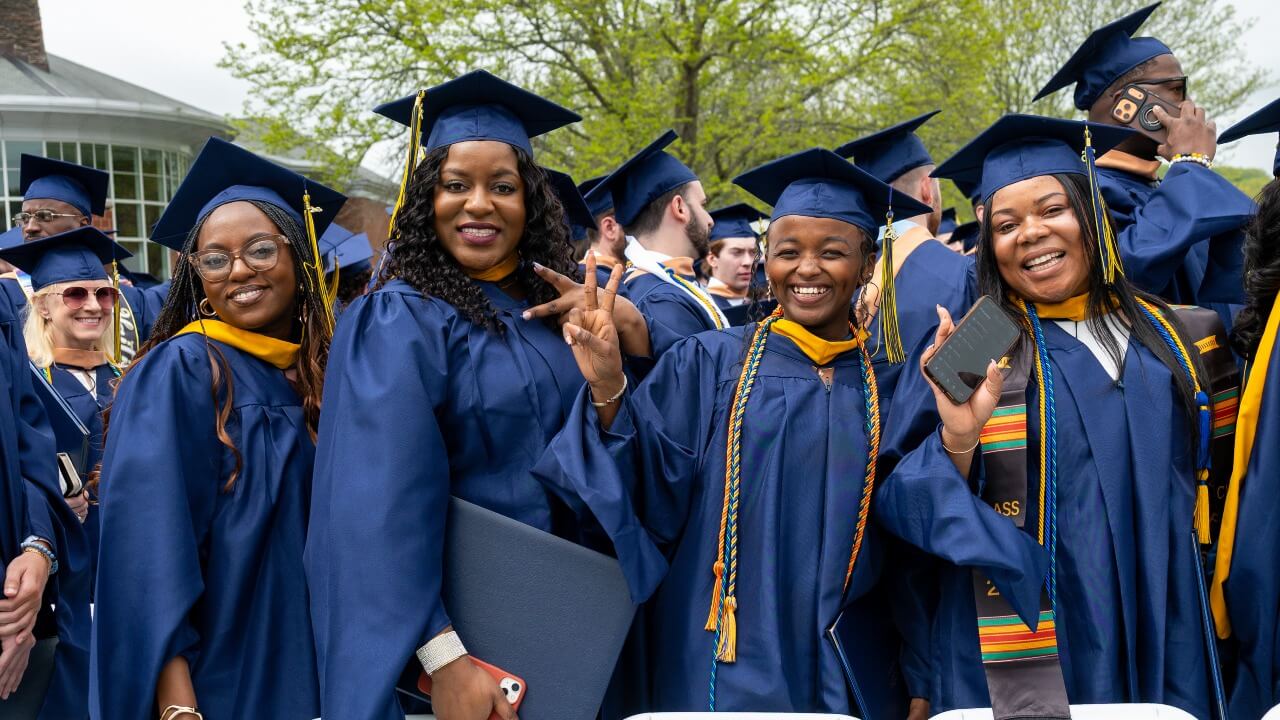

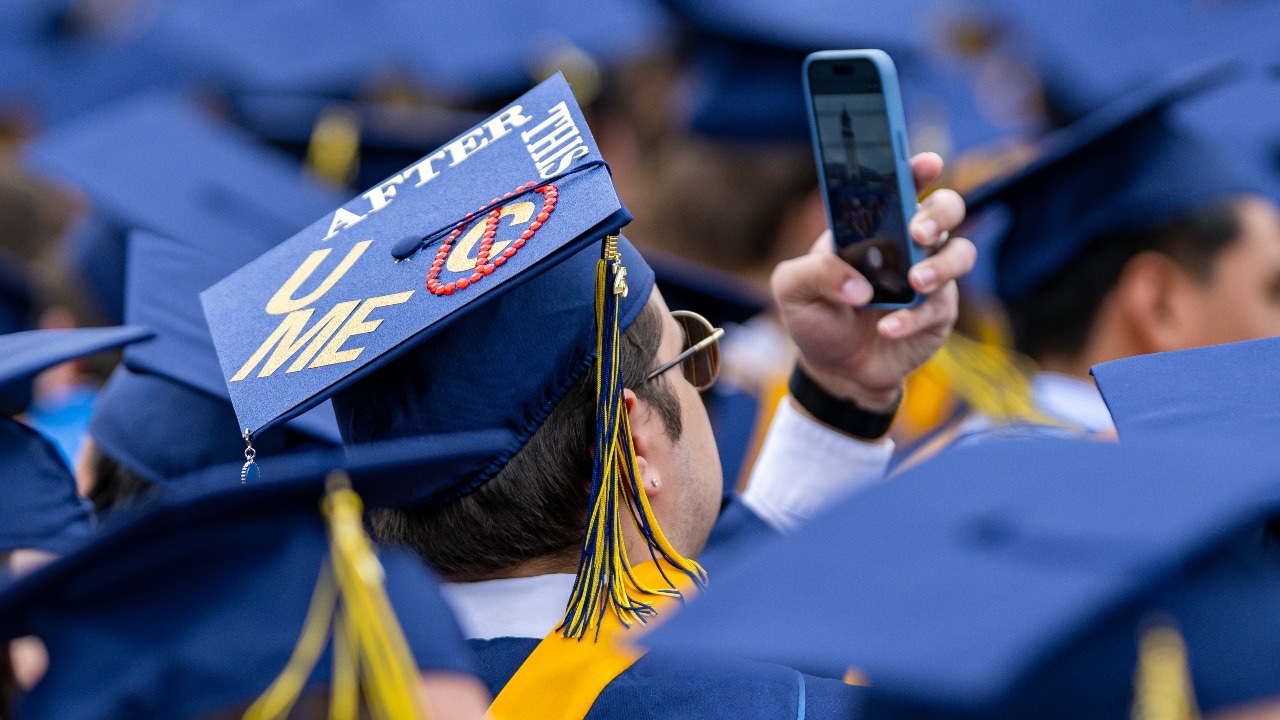
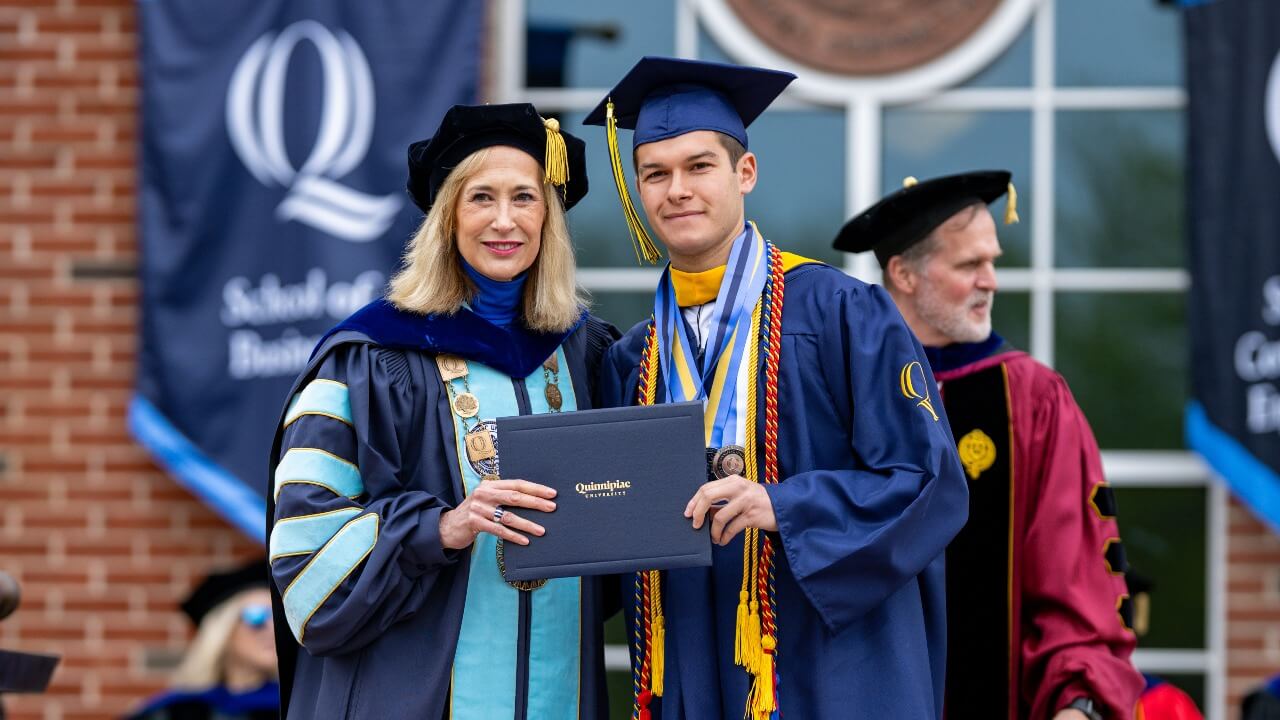

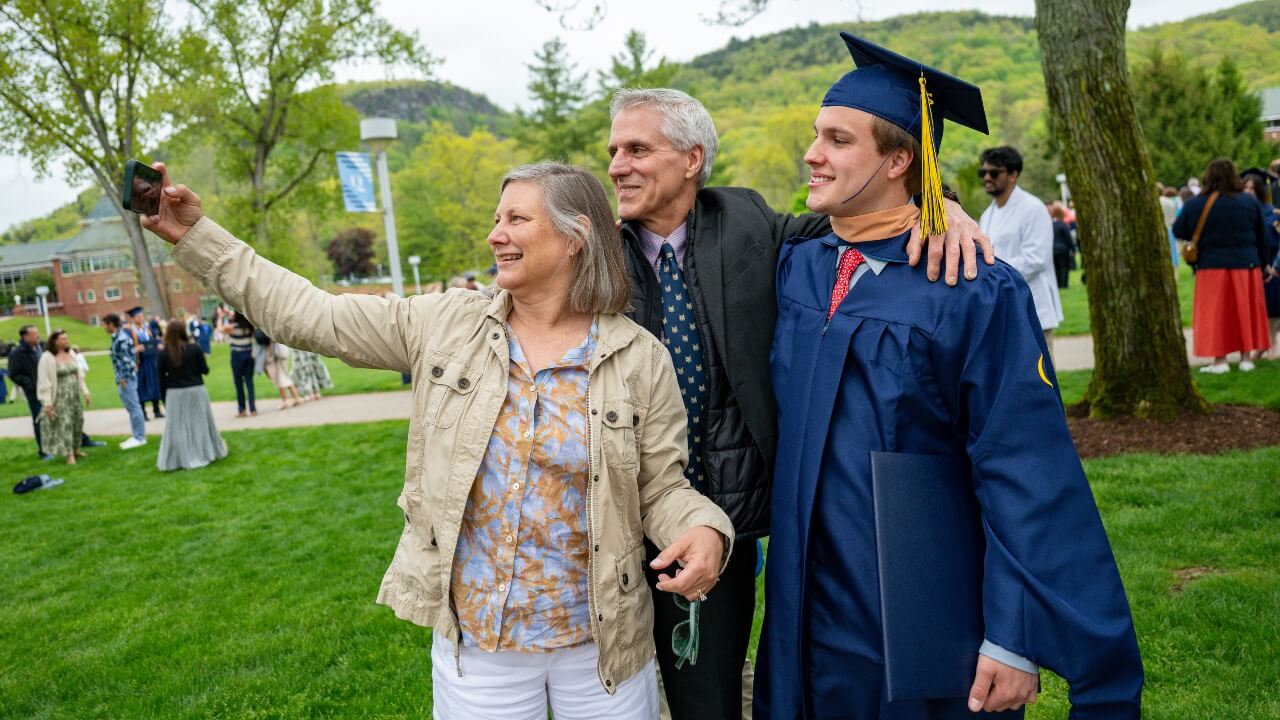
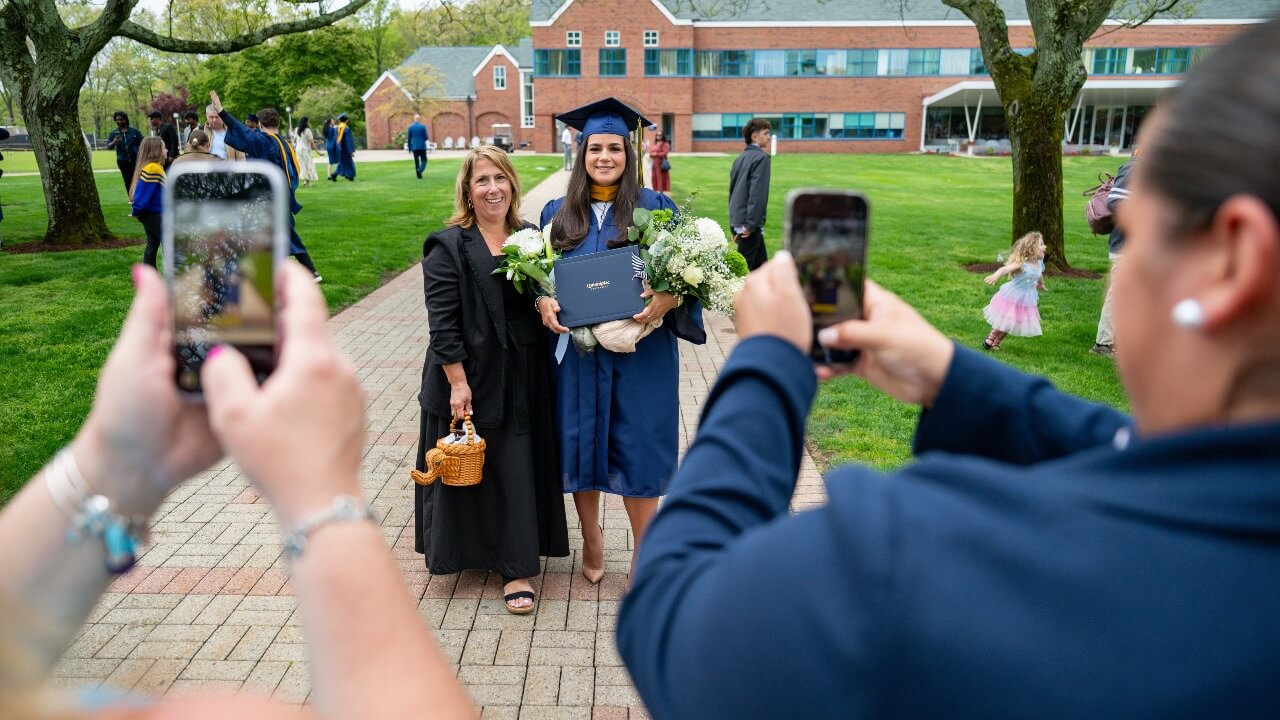
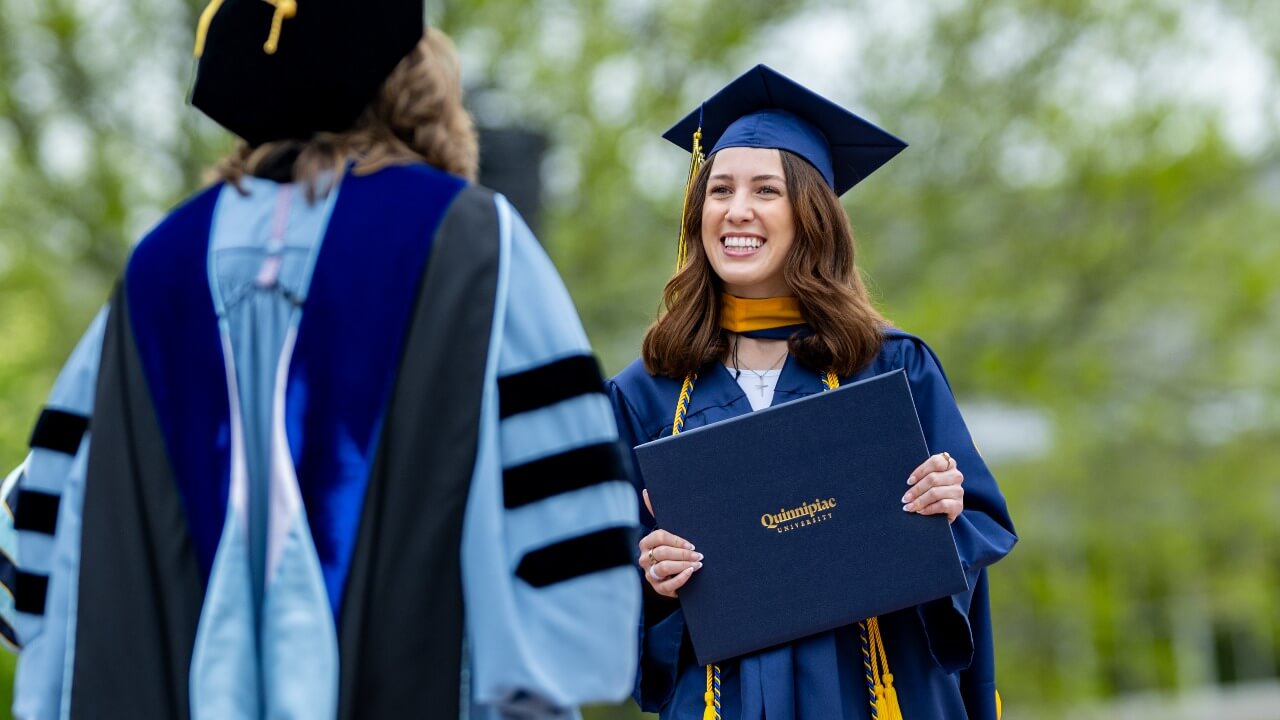



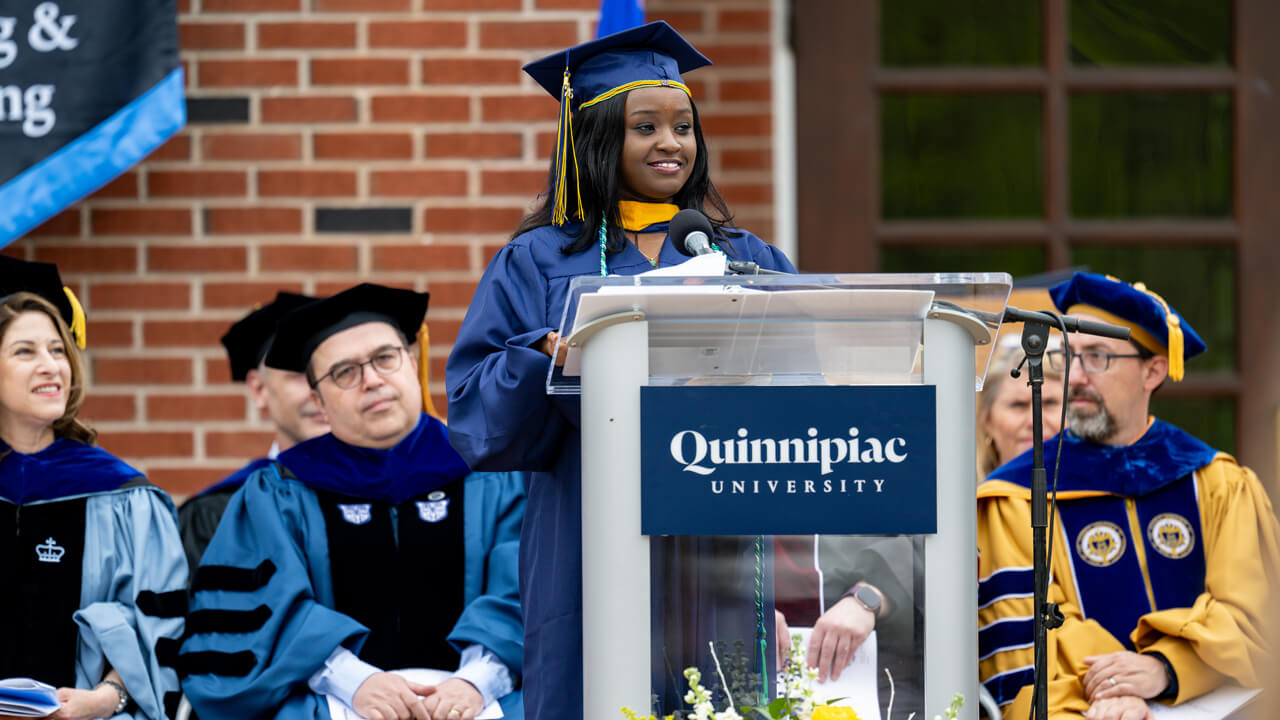
Margaret Gachau, MS '26, provided remarks on behalf of the graduating class from the School of Business.
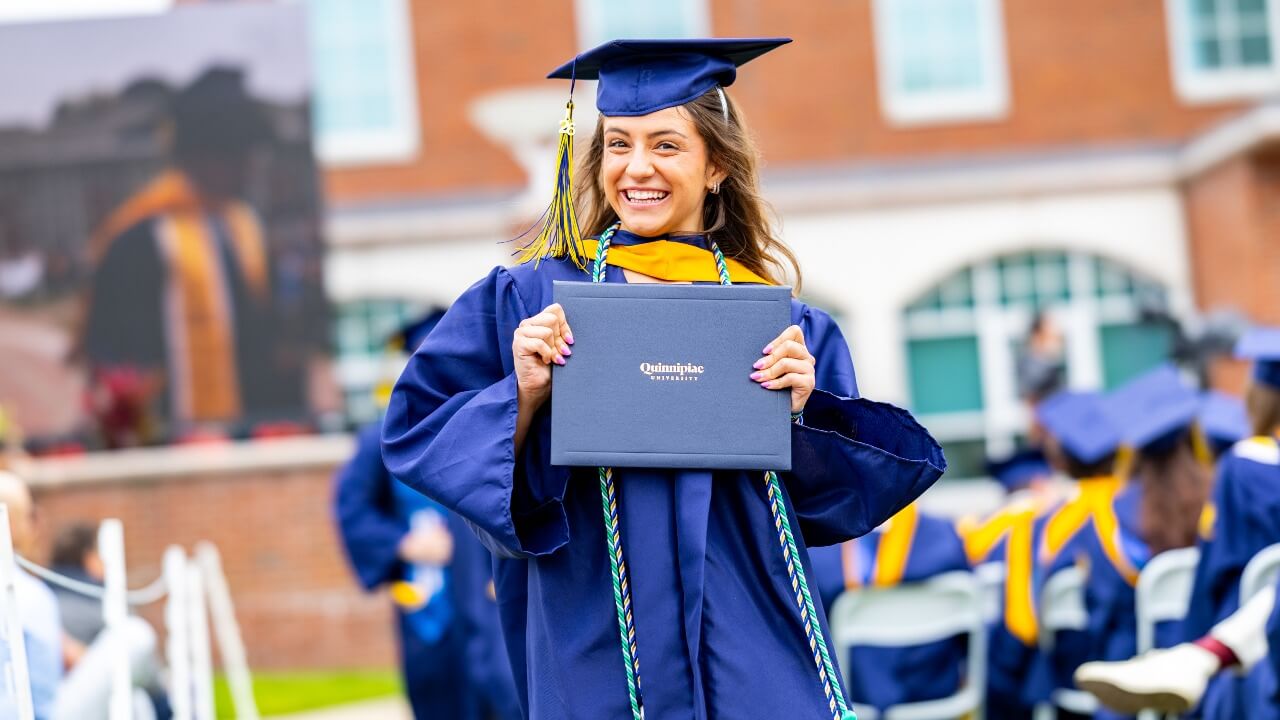

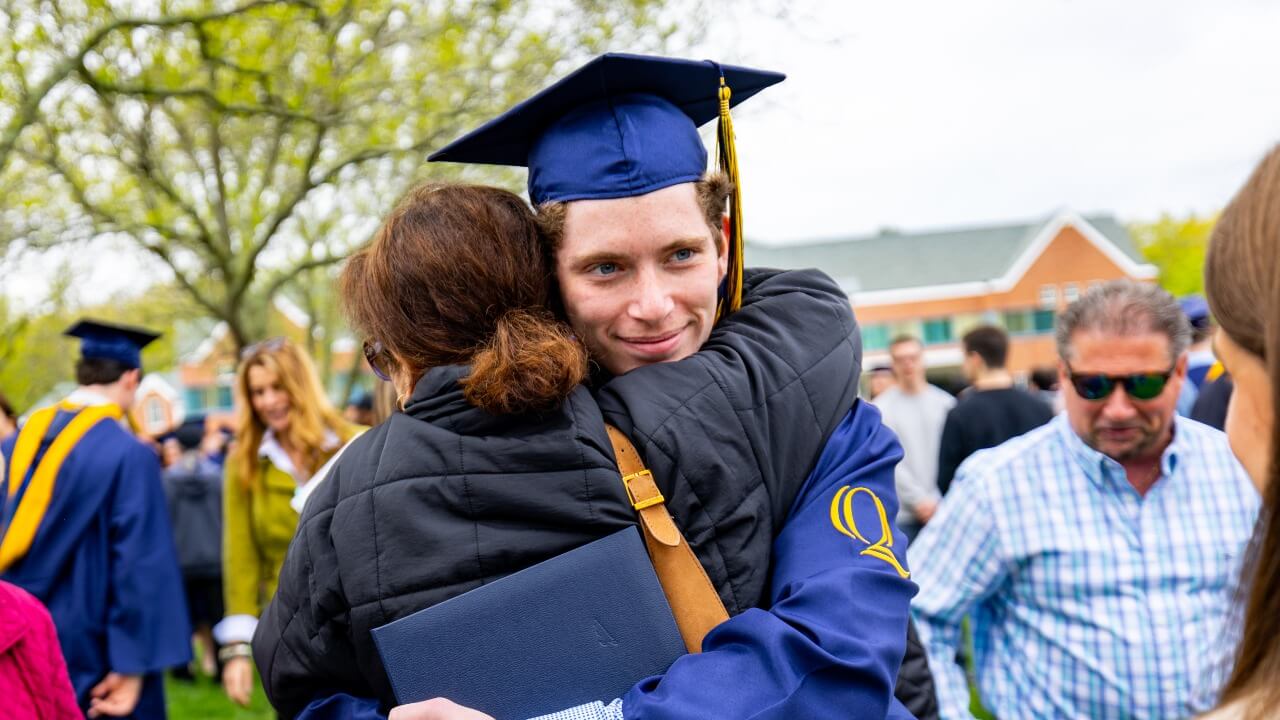
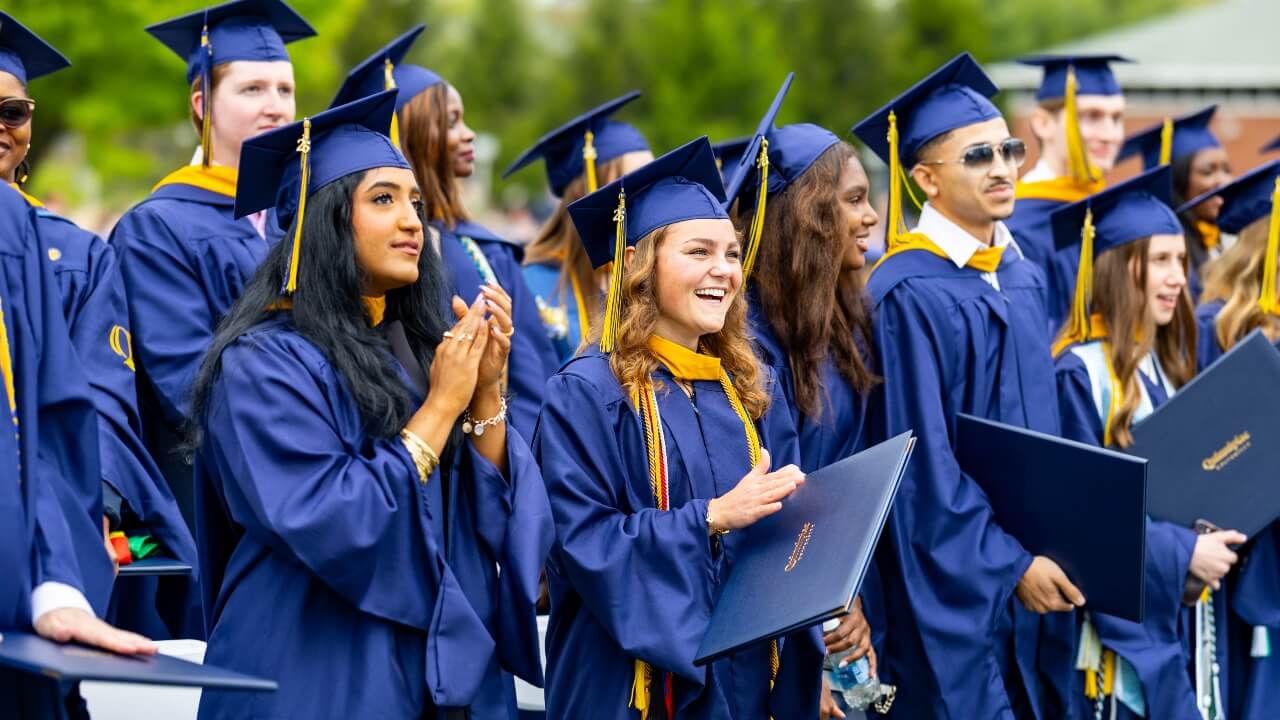

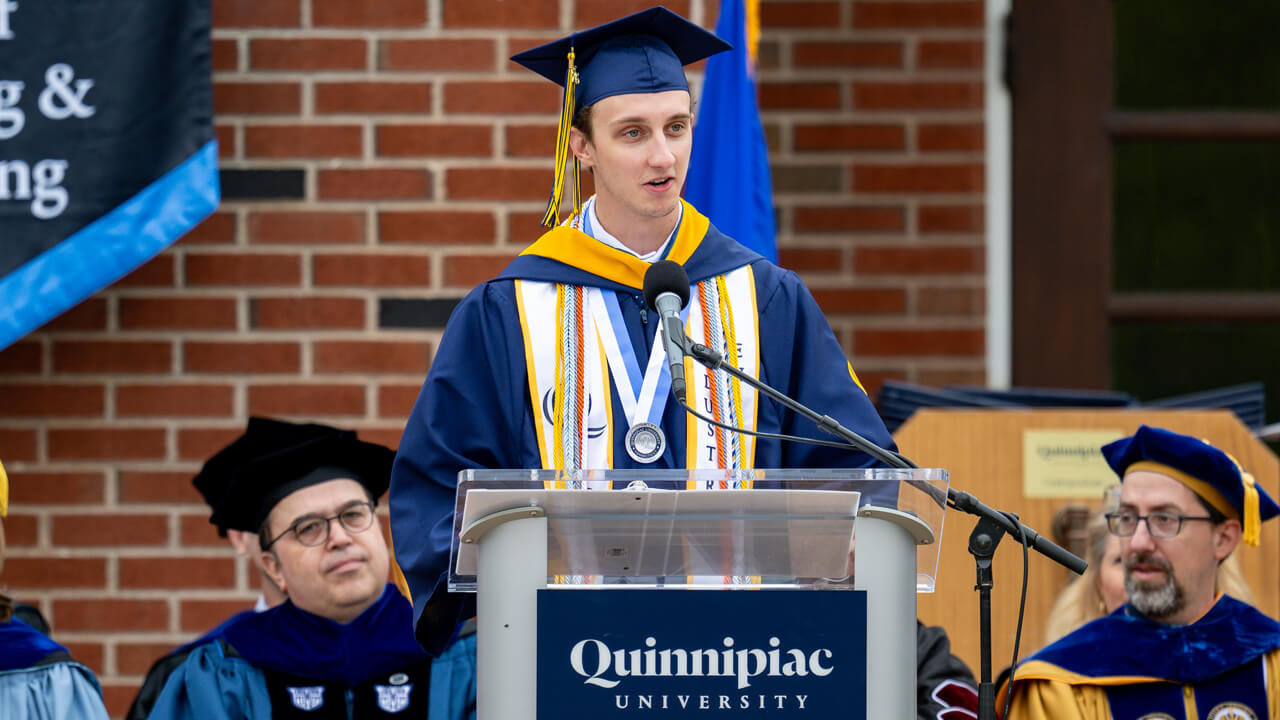
Gavin Grim '26 provided remarks on behalf of the graduating class from the School of Computing & Engineering.

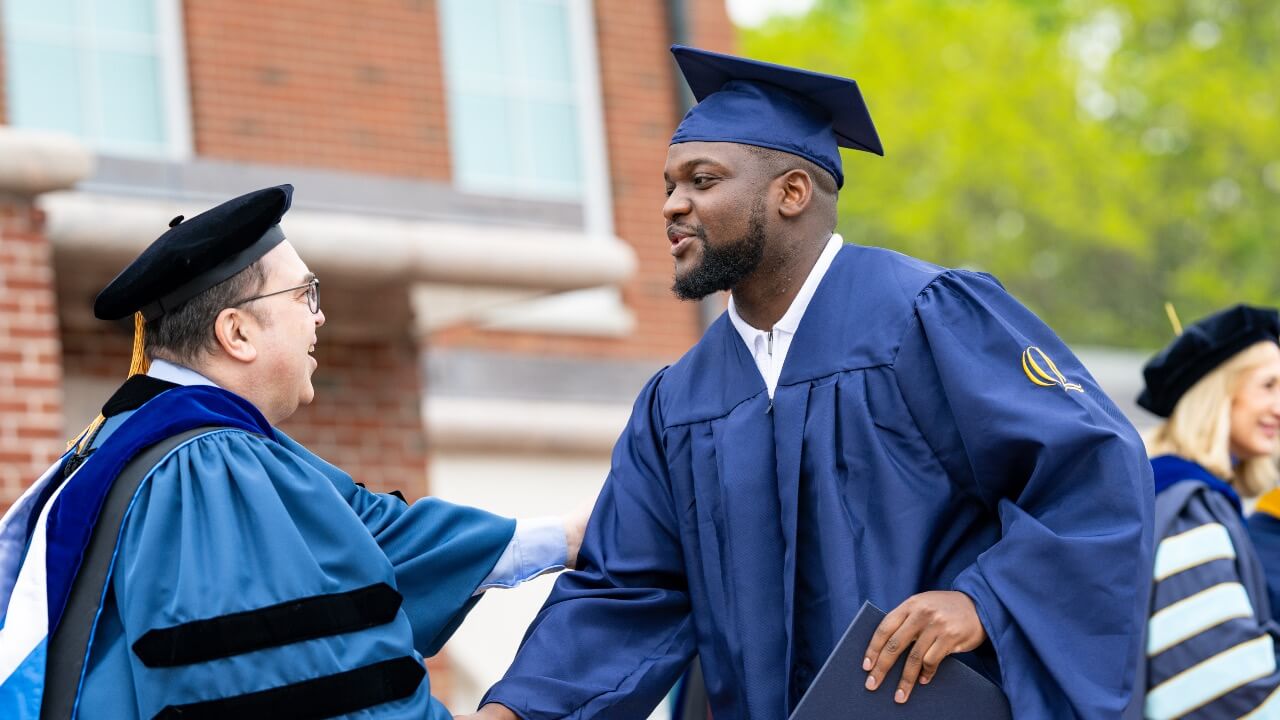
Taskin Kocak, dean of the School of Computing & Engineering, addressed the graduates.
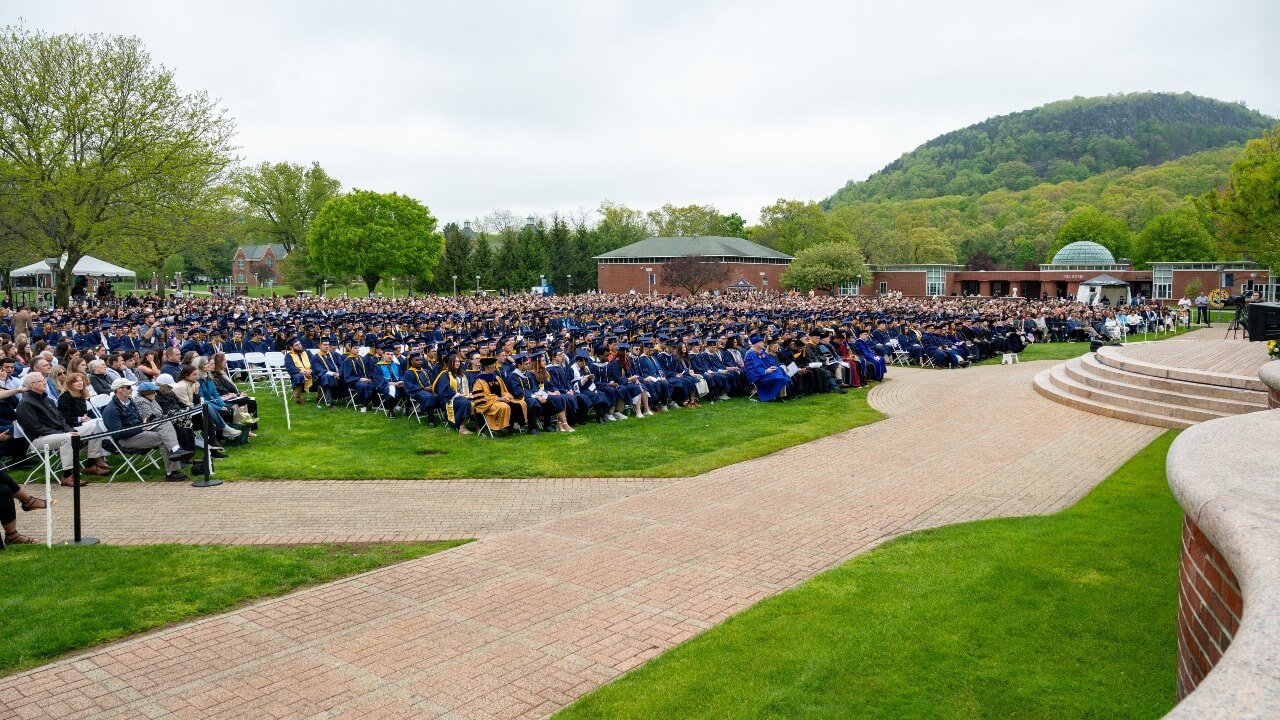


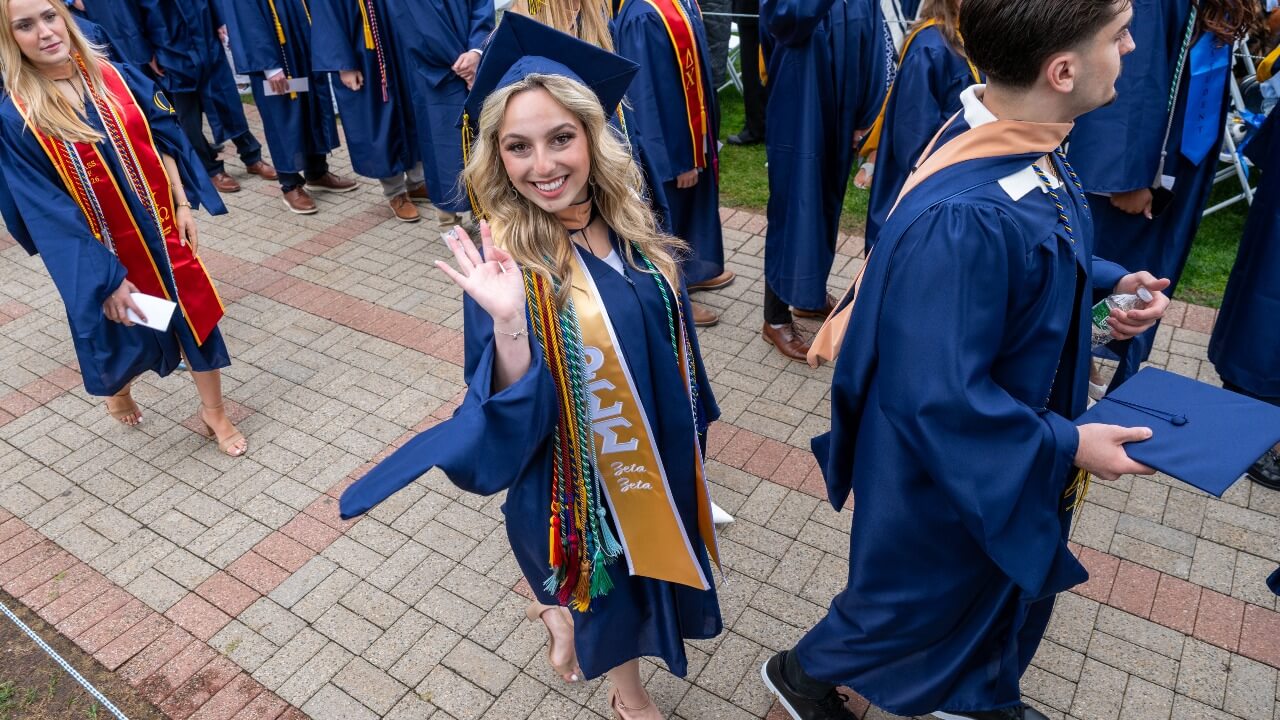

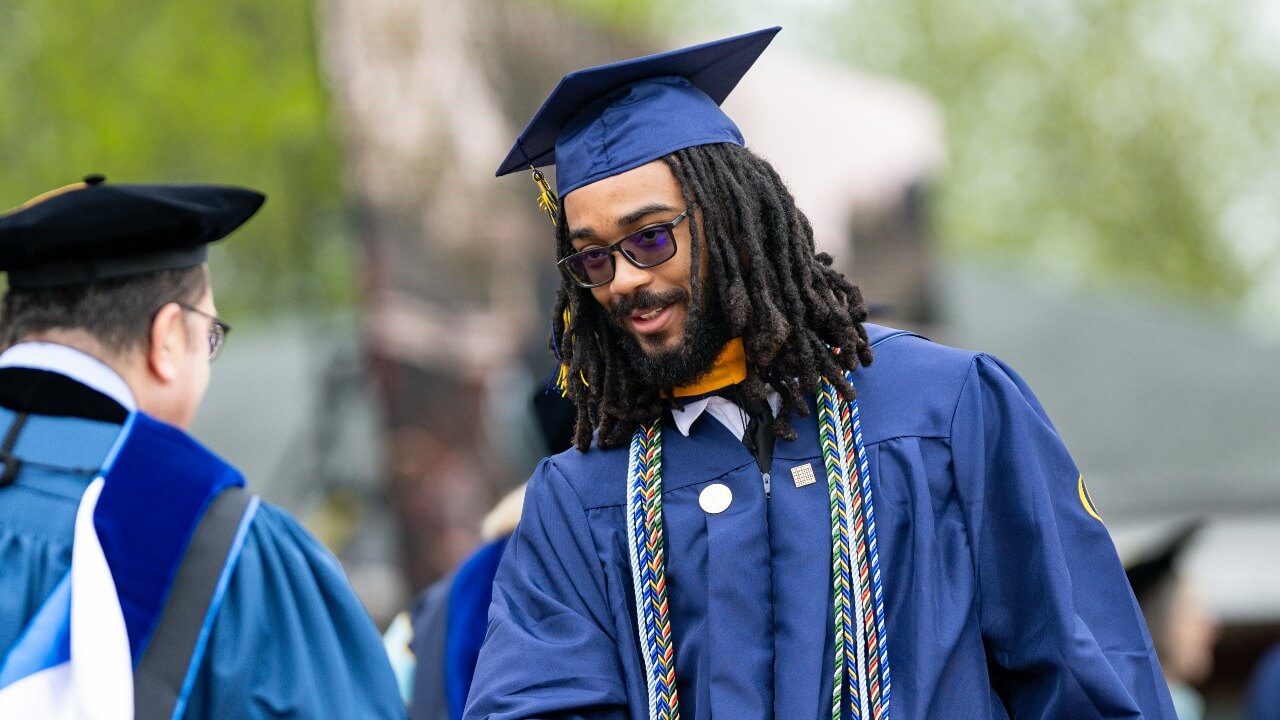


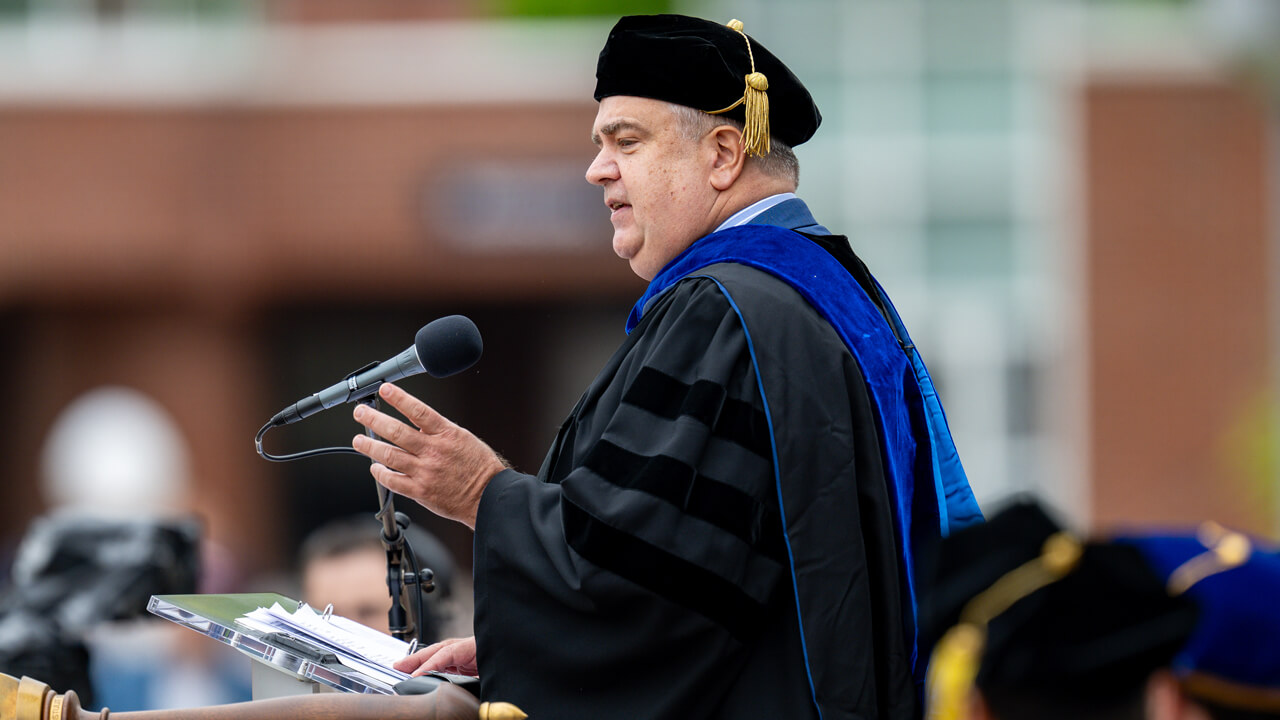
Robin Hayes delivered the keynote address.
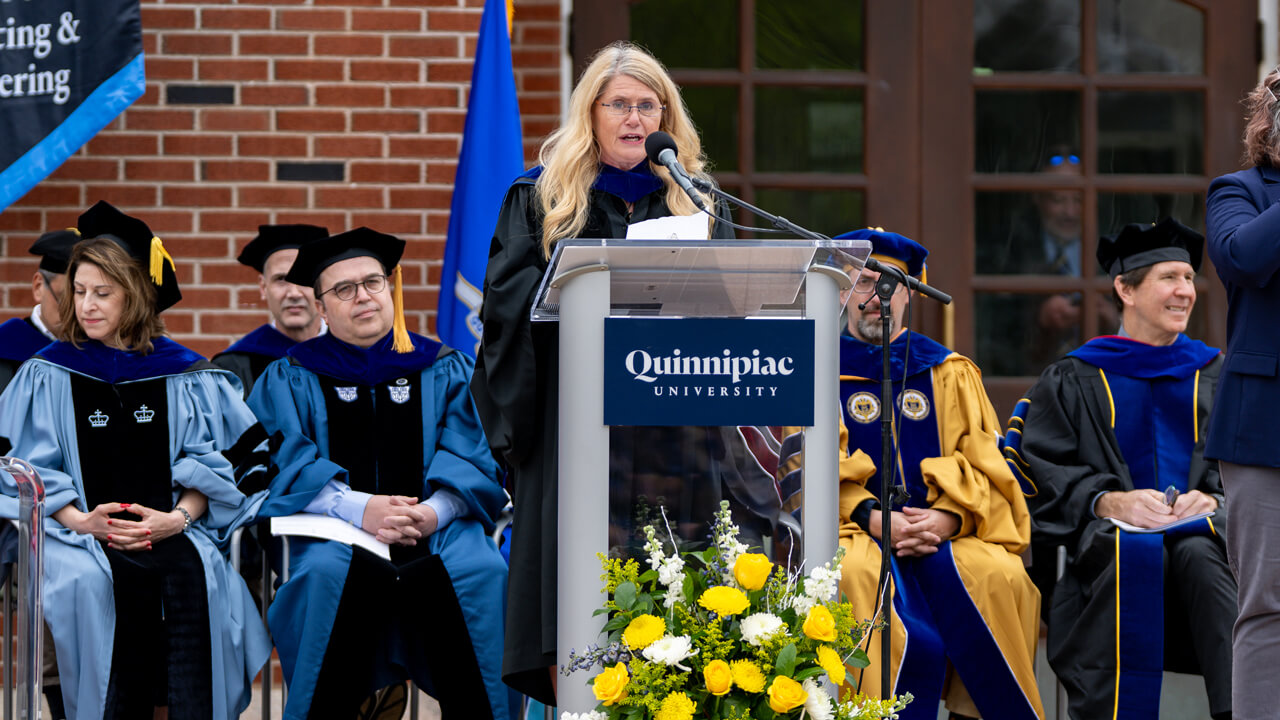
Pam Martinez ’86 welcomed the new class of graduates on behalf of the alumni community.

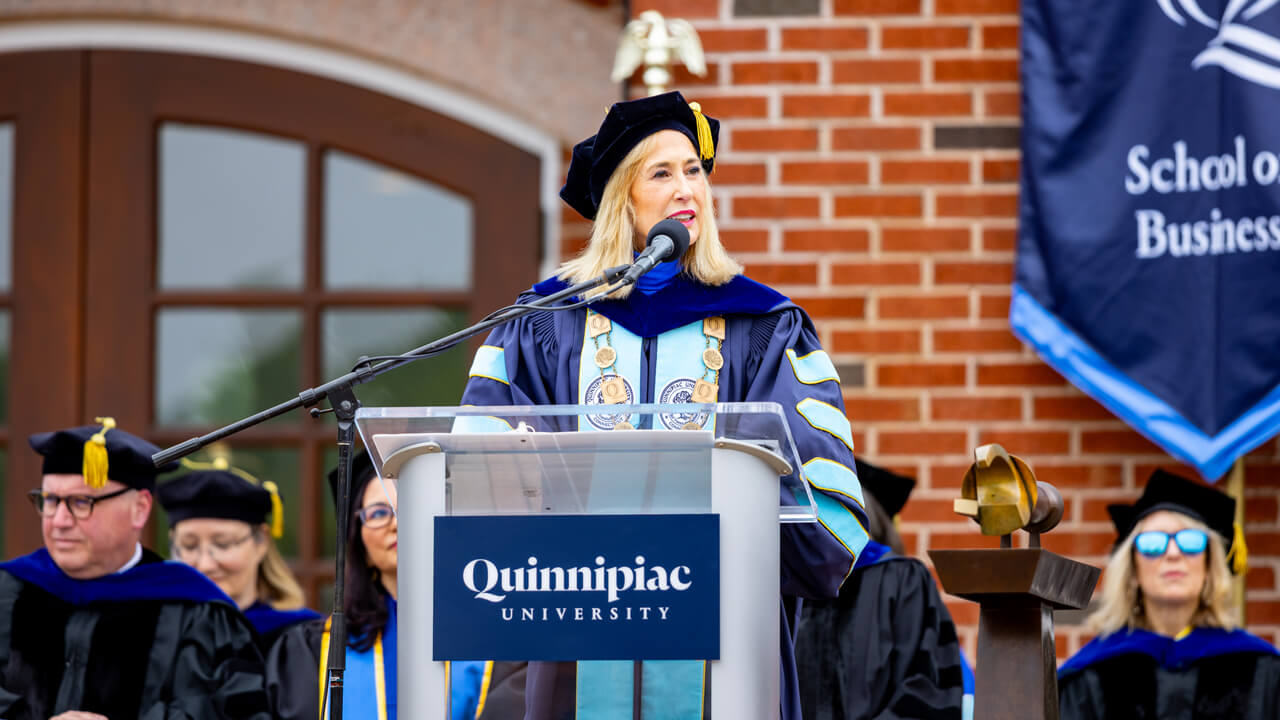
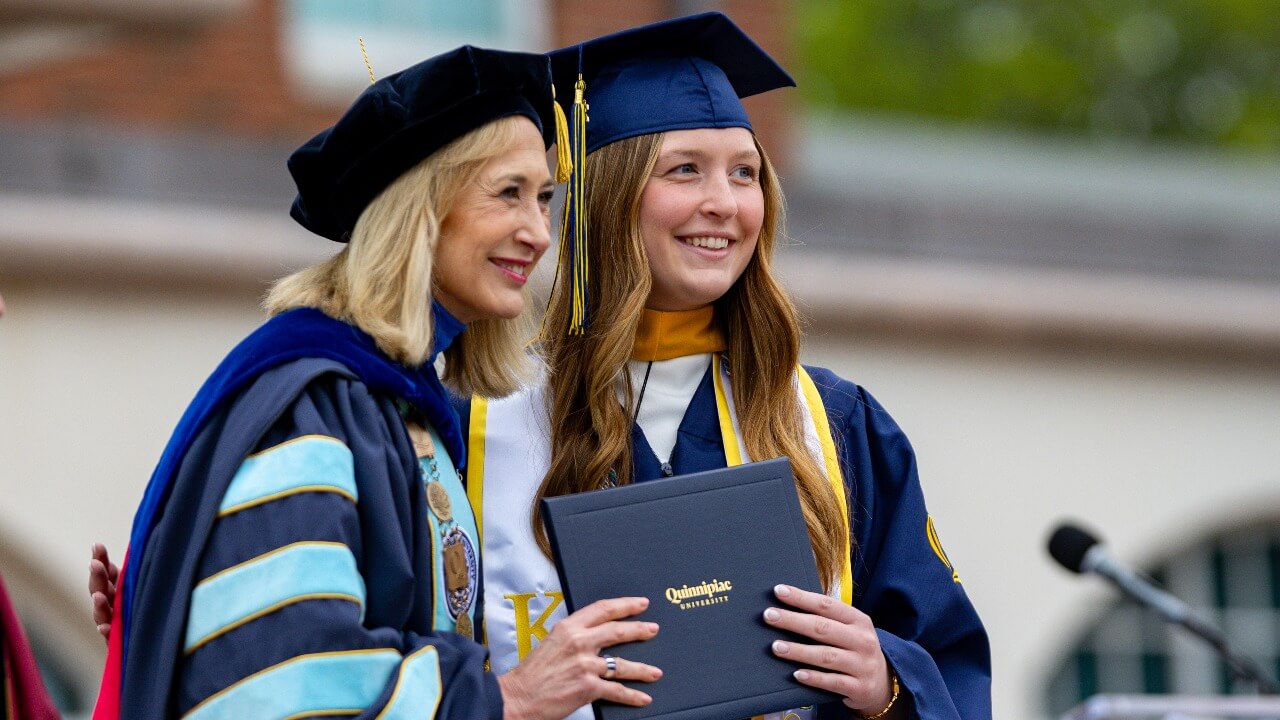
President Marie Hardin delivered remarks during the Commencement ceremony.
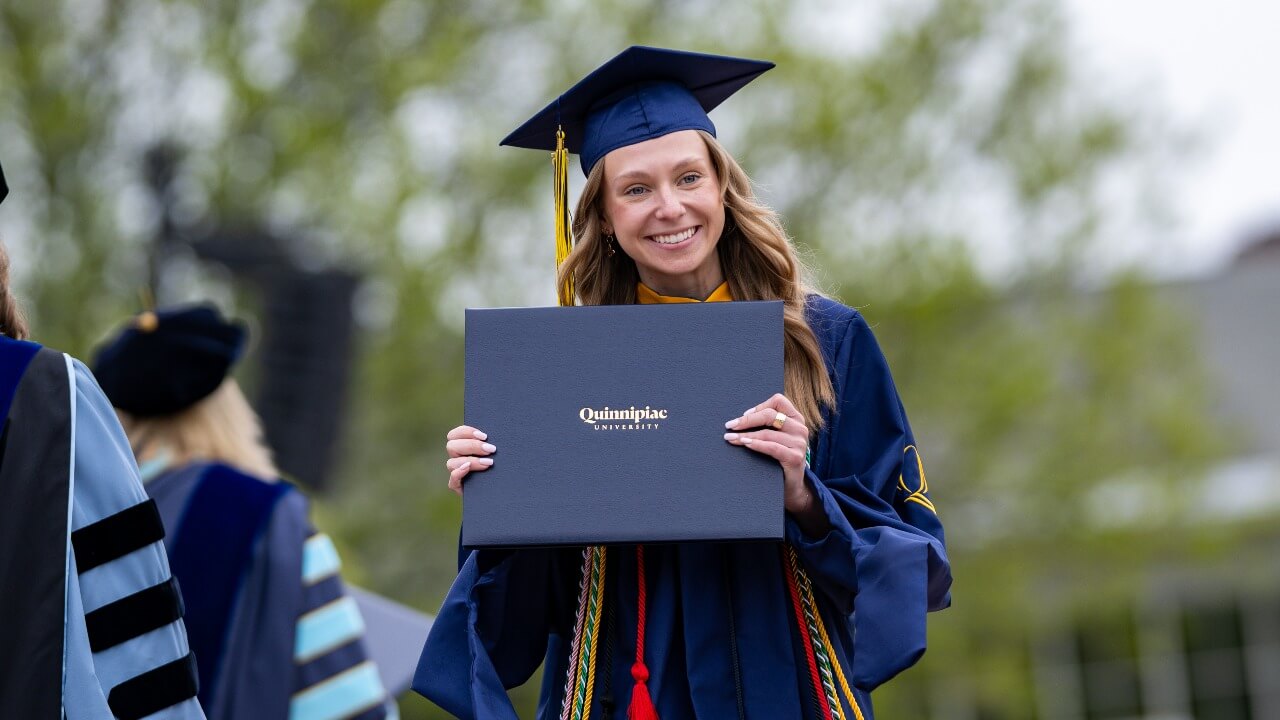
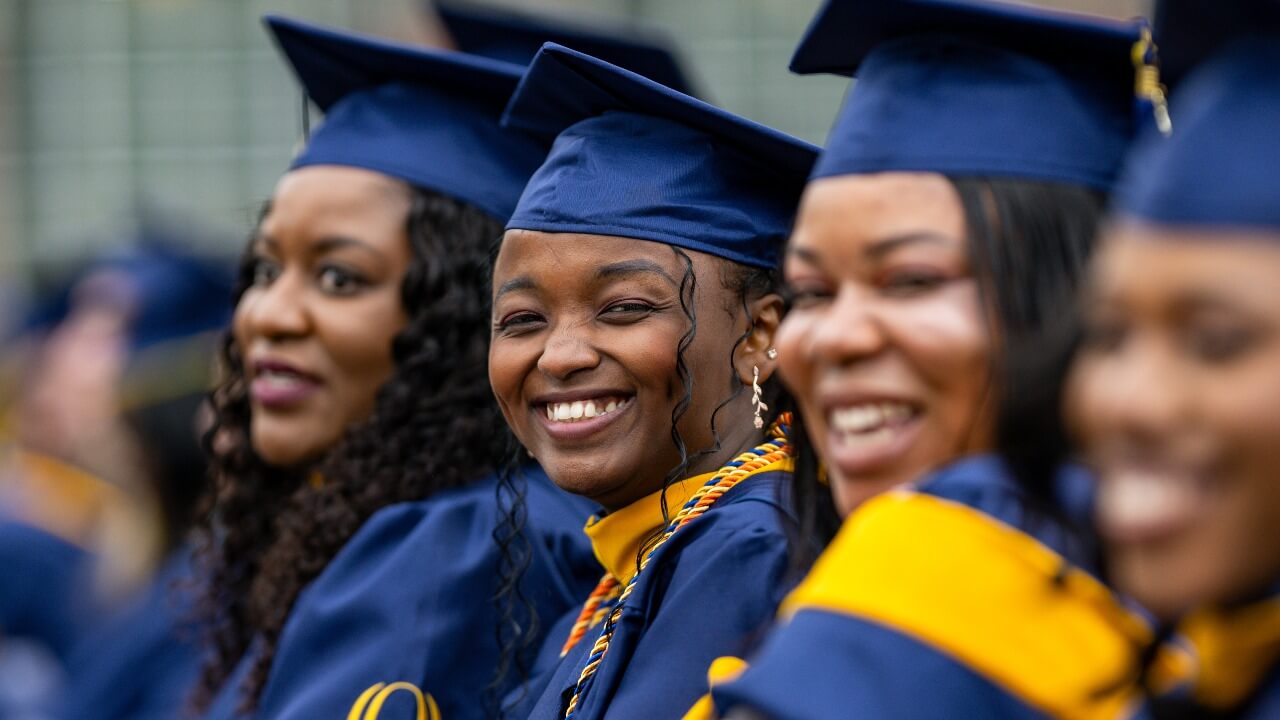
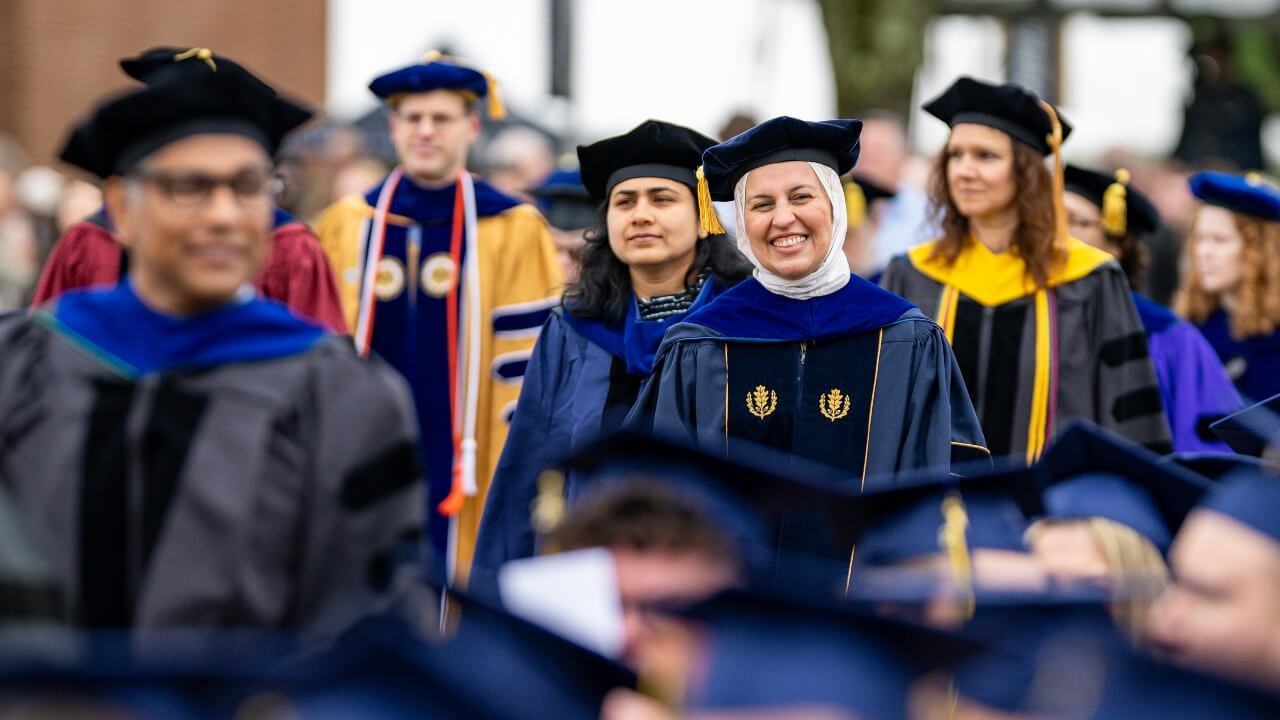
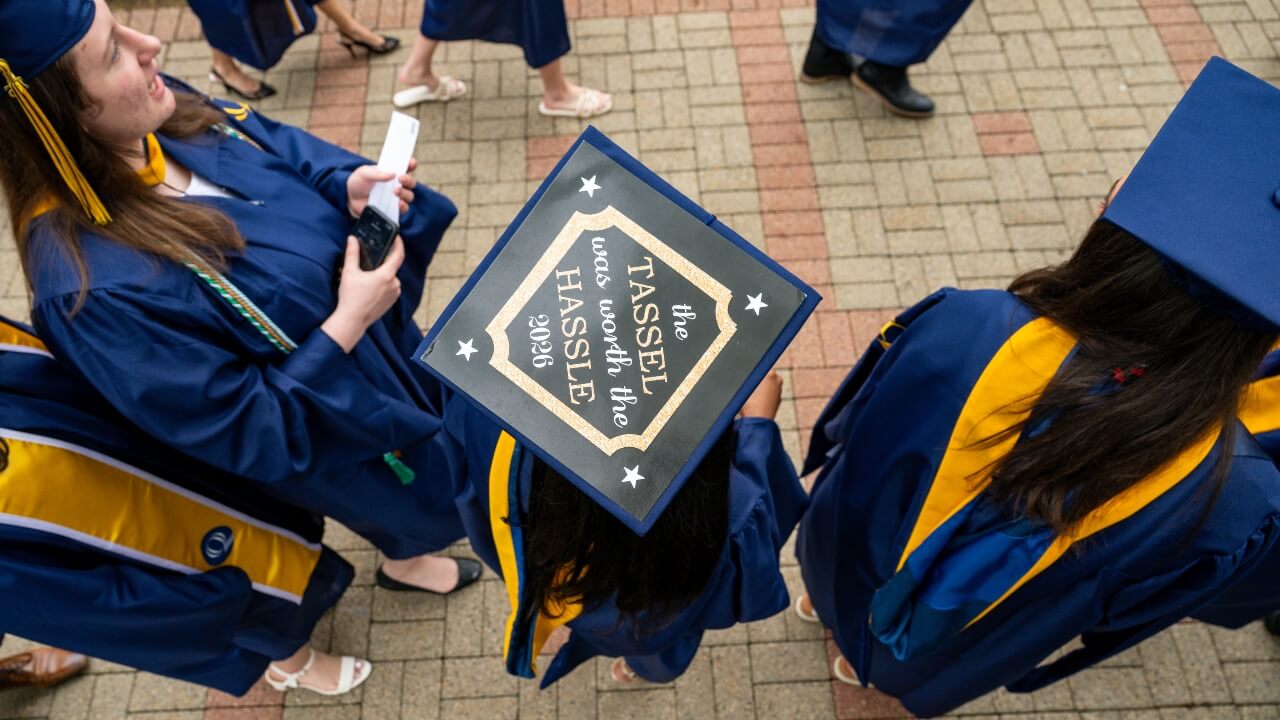

Addison Prunier performed the National Anthem.
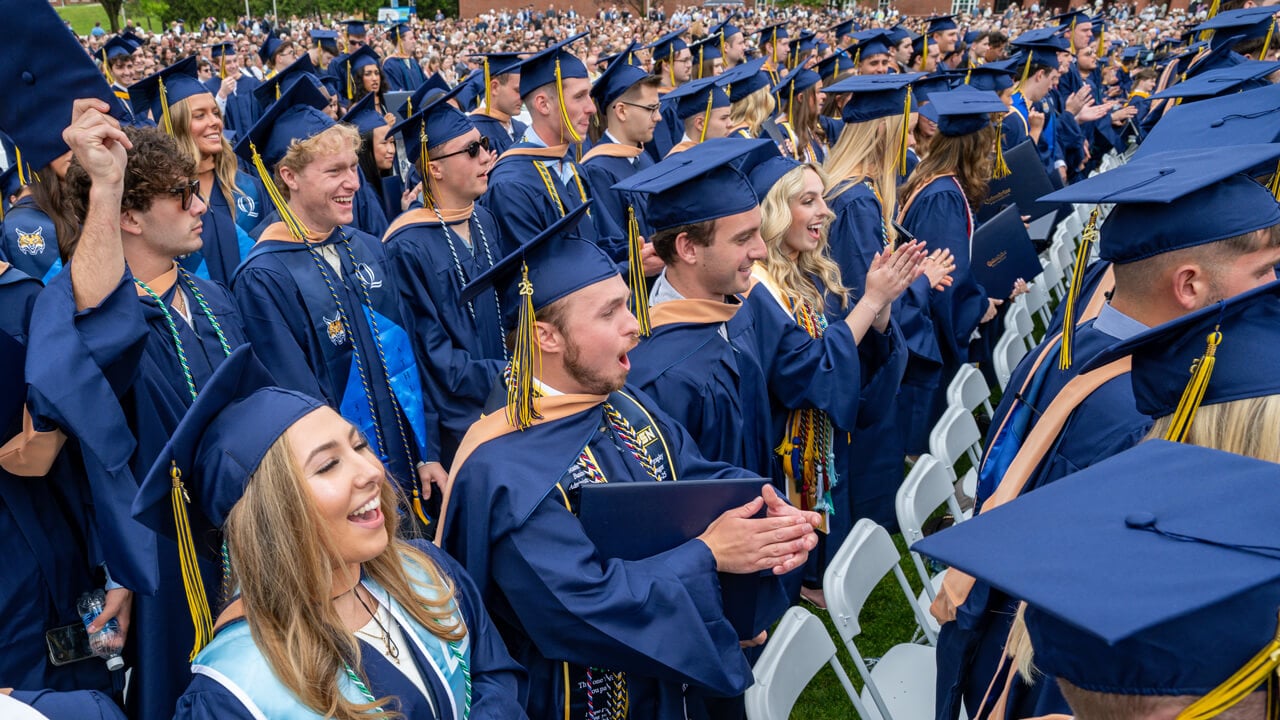
Watch the livestream of the School of Business and School of Computing & Engineering Undergraduate and Graduate Commencement.
Pomp and Circumstance, Sir Edward Elgar
Debra J. Liebowitz, PhD
Provost
Addison Prunier
Marie C. Hardin, PhD
President
School of Computing & Engineering: Gavin A. Grim
School of Business: Margaret Wanjiku Gachau
Brian O’Neill
Associate Dean, School of Computing & Engineering, Associate Professor of Computer Science
Robin Hayes
Chairman and Chief Executive Officer, Airbus North America
School of Computing & Engineering: Taskin Kocak, PhD, Dean
School of Business: Holly Raider, PhD, Dean
Marie C. Hardin
Pam Martinez ’86
Alumni Association Board
Chairman and CEO, Airbus North America and Public Member, Quinnipiac University Board of Trustees
School of Business and School of Computing & Engineering Commencement | Sunday, May 10, 9 a.m.
As chairman and CEO of Airbus North America, Robin Hayes is responsible for Airbus’ commercial aircraft and commercial services businesses throughout the Americas, as well as coordination with Airbus Helicopters, the company’s market-leading helicopter business, and Airbus U.S. Space & Defense.
Prior to his role with Airbus North America, Hayes served as CEO of JetBlue Airways Corporation for nine years. He joined the airline in 2008, serving as the company’s executive vice president and chief commercial officer until becoming president of the airline in January 2014. He was appointed as JetBlue’s third chief executive officer in February 2015.
Before JetBlue, Hayes spent 19 years at British Airways, where he ascended to the position of executive vice president for the Americas. From 2020-22, he was the chairman of IATA’s Board of Governors, where he championed the air transport association’s commitment to achieve net-zero carbon emissions by 2050.
Hayes serves as a public member on the Quinnipiac University Board of Trustees, and the Board of Directors for KeyBank and Make-A-Wish Connecticut. He is a graduate of the University of Bath, where he earned a bachelor’s degree in engineering and a master’s degree in electrical and electronic engineering.
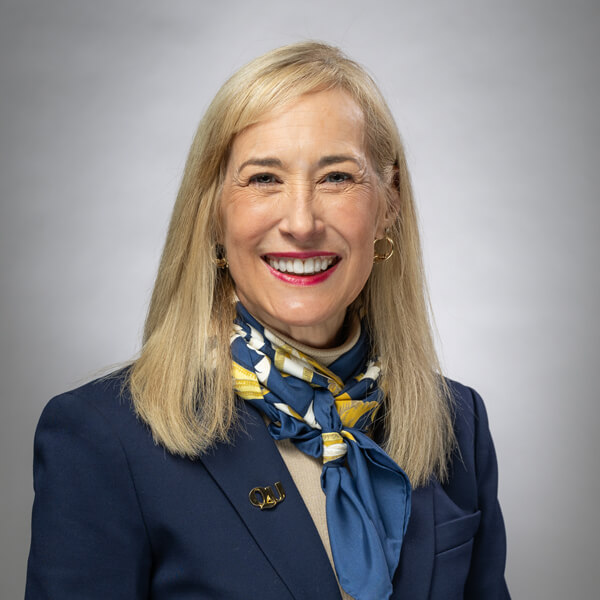
Congratulations to the Class of 2026 as we celebrate you for achieving this transformative milestone. You are well positioned to continue your journey as the leaders and professionals who will impact the workplaces of the future and the communities you call home.
We are confident you will apply your education, your talent and your purpose to make the world a better place. Your values embody all that it means to be a Bobcat. You have been taught and uplifted by a distinguished faculty and a committed staff. Together, they have watched you become the epitome of human flourishing and the stewards of tomorrow.
Please stay connected with us as a member of our Quinnipiac family. Cherish the many memories you have made here. But also remember those who have cheered for you and supported you along the way — your families and friends. They, too, deserve applause and hugs on this most special day.
So enjoy this moment, Class of 2026. Take lots of pictures. Soak it all in. You’ve earned it!
Warmly
Marie C. Hardin, PhD
The mace — a symbol of authority — has antecedents in both Roman and Medieval history. The Roman mace (fasces) was carried by a lictor before the chief magistrate of the city, as well as before the legions. During the Middle Ages, the mace (mateola), a weapon of war, became first a symbol of victory and then a symbol of authority. The mace emblazoned with the Great Seal of England became a symbol of authority in Parliament by the end of the 13th century. It is this form of the mace that was the prototype of those symbols of authority, not only of legislative bodies, but also of cities and universities.
In 1246, following some 20 years of strife, the University of Paris was finally conceded the right to its own common seal. Since then, the use of the seal engraved on the mace has come to symbolize the authority of the academic community. In July 2000, Quinnipiac commissioned the noted sculptor Robert Meyer of Westport, Connecticut, to design and execute a new mace for Quinnipiac University. Cast in bronze, the mace incorporates elements of the university seal.
The medallion (medal of office), like the mace and the seal, is also a symbol of authority. It is possible that its roots may be traced back to the Roman “bulla” (a gold amulet of honor). The obverse of the medallion shows the seal of the office the wearer holds — in our case, the seal of the university. Not infrequently, the reverse would show the personal seal or coat of arms of the bearer. Since the High Middle Ages, the medallion has been worn by such officials as the chancellors of England, mayors of cities, and rectors of universities, and came to signify the high personal position such figures occupied in their respective governments. During the Renaissance, medallion design reached unique artistic heights, and in certain portraits the medallion was given particular prominence. The medallion is worn by the university’s president. The Quinnipiac medal showcases the university seal, sculpted in relief and cast in bronze.







Quinnipiac Today is your source for what's happening throughout #BobcatNation. Sign up for our weekly email newsletter to be among the first to know about news, events and members of our Bobcat family who are making a positive difference in our world.
Sign Up Now