



Playbill executive encourages arts & sciences and communications graduates to value connection and community
College of Arts & Sciences and School of Communications Undergraduate and Graduate Commencement 2026

College of Arts & Sciences and School of Communications Undergraduate and Graduate Commencement 2026
Commencement Speaker Alex Birsh ’11, a 2011 Quinnipiac journalism graduate, encouraged students to embrace uncertainty, trust their instincts and remain open to unexpected opportunities.
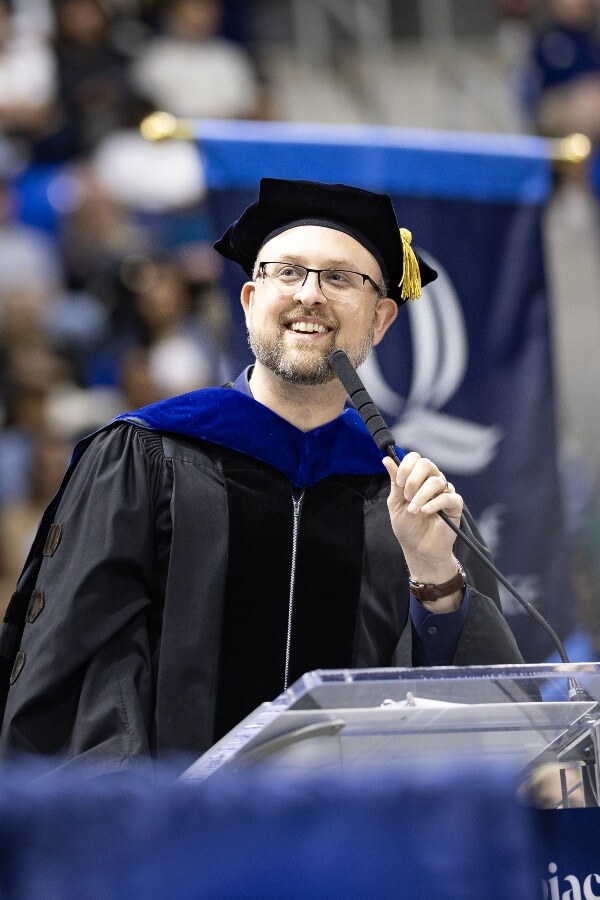
Birsh serves as senior vice president and chief operating officer of Playbill, the iconic publication for Broadway and Off-Broadway audiences, where he has helped expand the company’s digital presence and audience reach while building a career that spans media, publishing and live entertainment.
A third-generation member of the Birsh family to work at Playbill, Birsh drew from his own career journey in media and entertainment to remind graduates that meaningful opportunities are often found in unfamiliar spaces. Reflecting on the pressures many students feel to have their futures fully mapped out, he encouraged graduates to view uncertainty, not as a weakness, but as a source of curiosity, adaptability and growth in an ever-changing world.
“If you are feeling uncertain about what first steps you should take from this point, that feeling is not a great flaw; if you let it, it can be your greatest weapon,” Birsh said. “Because it arms you with the ability to be curious, agile and open for the only thing that is guaranteed in this life — and that is change.”
Birsh addressed the rapidly evolving influence of technology and artificial intelligence, encouraging graduates to embrace innovation while continuing to value creativity, critical thinking and authentic human connection. Drawing from his work in live entertainment, he emphasized the enduring importance of storytelling, community and shared experiences in a world increasingly shaped by digital spaces.
“Do not let it think for you. Do not let it rob you of your creativity and ability to problem solve,” said Birsh while discussing artificial intelligence. “Do not let it take away your shine and what makes you brightest and stand out.”
Birsh concluded his remarks by encouraging graduates to confidently pursue opportunities, create meaningful connections and trust in their own potential as they move into the next phase of their lives.
“Fans of Broadway aren’t found. They are made,” Birsh said. “Just like fans of you and your potential and what you bring to the table, they are not found; they are made. Go make them, my fellow Bobcats, and let them hear you roar.”
During the afternoon ceremony, the university conferred 403 degrees within the College of Arts & Sciences and 291 degrees within the School of Communications, across a wide range of undergraduate and graduate programs.
Provost Debra Liebowitz opened the ceremony by welcoming graduates, families and friends to the celebration. Following the national anthem by Rebecca Huyck ’26, President Marie Hardin praised graduates for pairing ambition with compassion, highlighting the ways members of the Class of 2026 supported one another, challenged themselves academically and contributed to the Quinnipiac community. She encouraged graduates to carry forward the kindness, collaboration and sense of purpose they demonstrated throughout their time at the university.
“I have seen your ambition. You have pushed the boundaries of your academic pursuits with your goals. You’ve led student organizations with energy and vision and you’ve refused to accept the status quo,” said Hardin. “You have inspired me, Class of 2026, to do more than utter my thanks to you, but to live by what I have learned from you. To combine ambition with kindness, to prioritize helping others. I hope that as you leave, you will not forget us. Because we will not forget you.”
Representing the College of Arts & Sciences, Angelina Marinko ’26 encouraged graduates to embrace change and trust themselves as they step into unfamiliar experiences and new opportunities beyond Quinnipiac.
“Coming to college is a lot like standing at the edge of a pool,” said Marinko. “You hesitate, you wonder if you’re ready but eventually you jump. Four years ago, every one of us did exactly that. We jumped. We left home, took a chance on something new and jumped into an experience we couldn’t fully predict. ”
Marinko reminded graduates that growth often comes from moments of uncertainty and urged classmates to continue taking chances as they move into their next chapter.
“The edge of the pool will always feel safe and comfortable. But the best moments of your life will never happen standing on the edge,” said Marinko. “They happen when you jump. So, take the risk. Take the opportunity you’ve been dreaming about. And if the water feels a little cold at first, just remember: It’s not hard. It’s just new.”
Representing the School of Communications, Lindsey Dilapi, MA ’26, spoke about the support, encouragement and sense of belonging she and her classmates found throughout their Quinnipiac experience, encouraging graduates to trust themselves even when their paths look different from others.
“Through our programs in the School of Communications and the College of Arts & Sciences, we didn’t just learn theory,” said Dilapi. “We learned how to collaborate, how to think critically and how to use what we’ve learned to make a real impact in this world.”
Dilapi also highlighted the lasting impact of the relationships and experiences graduates will carry with them beyond Quinnipiac.
“That’s what makes Quinnipiac so special. It’s not just about what you learn, it’s how you’re understood,” Dilapi said. “As we move on to this next chapter of our lives, we leave with something even stronger: confidence in who we are, in what we can accomplish and in our ability to overcome adversity and face challenges even when they feel bigger than us.”
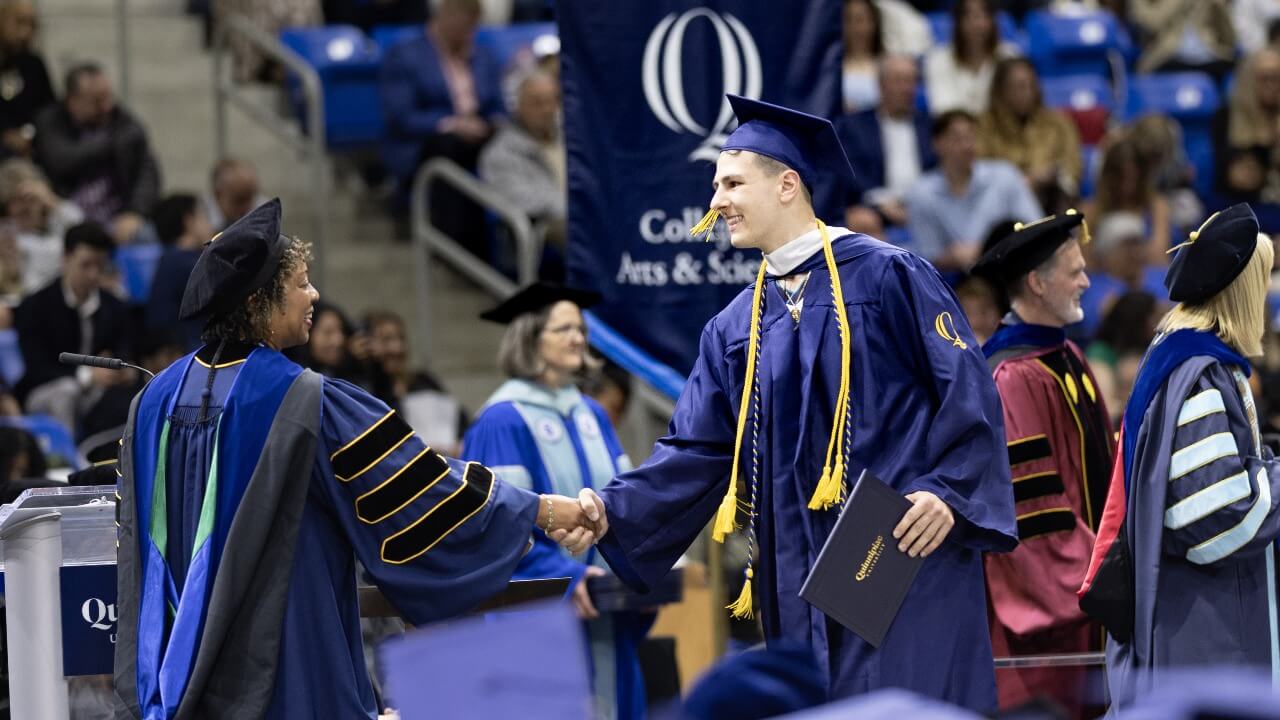
Dean Adam Roth, of the College of Arts & Sciences, and Dean Nadine Barnett Cosby, of the School of Communications, joined Hardin in recognizing graduates as they crossed the stage to receive their diplomas.
As the ceremony concluded, alumni representative Jennifer Lepore '13, JD '16 officially welcomed graduates into Quinnipiac’s alumni community before the university’s newest alumni moved their tassels from right to left, marking the transition from students to lifelong Bobcats.


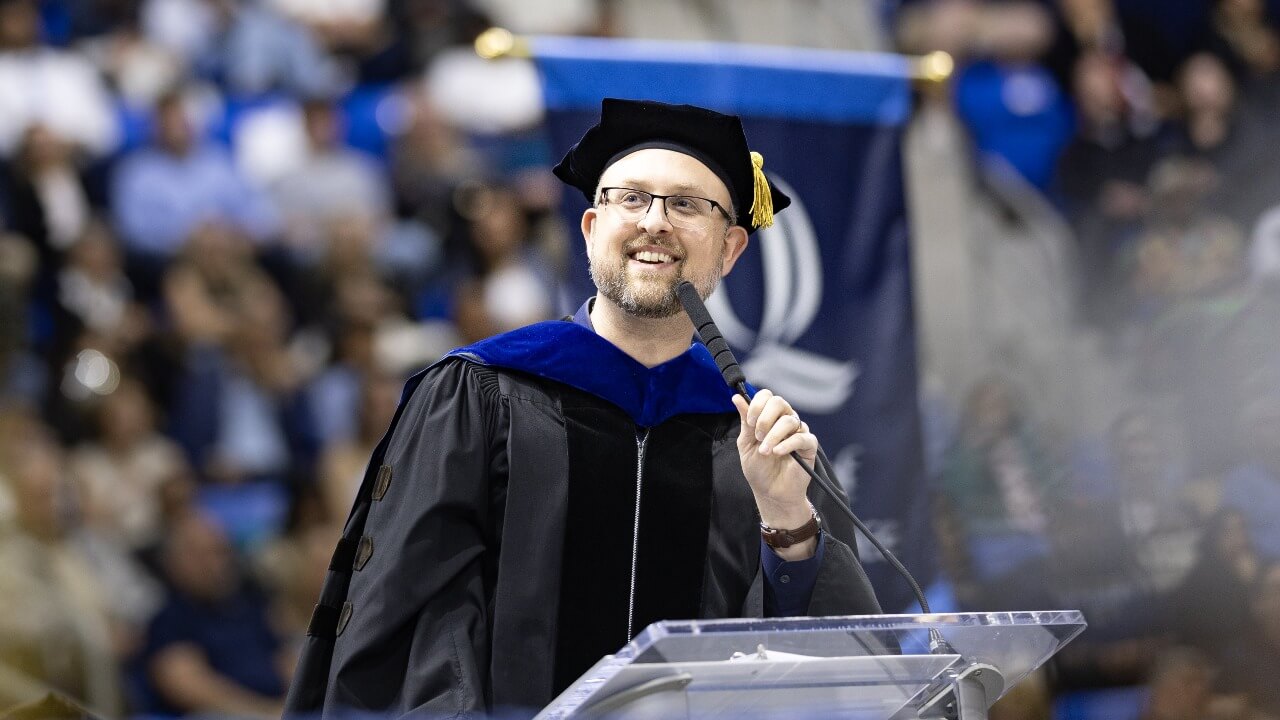
Alex Birsh ’11 delivered the keynote address.
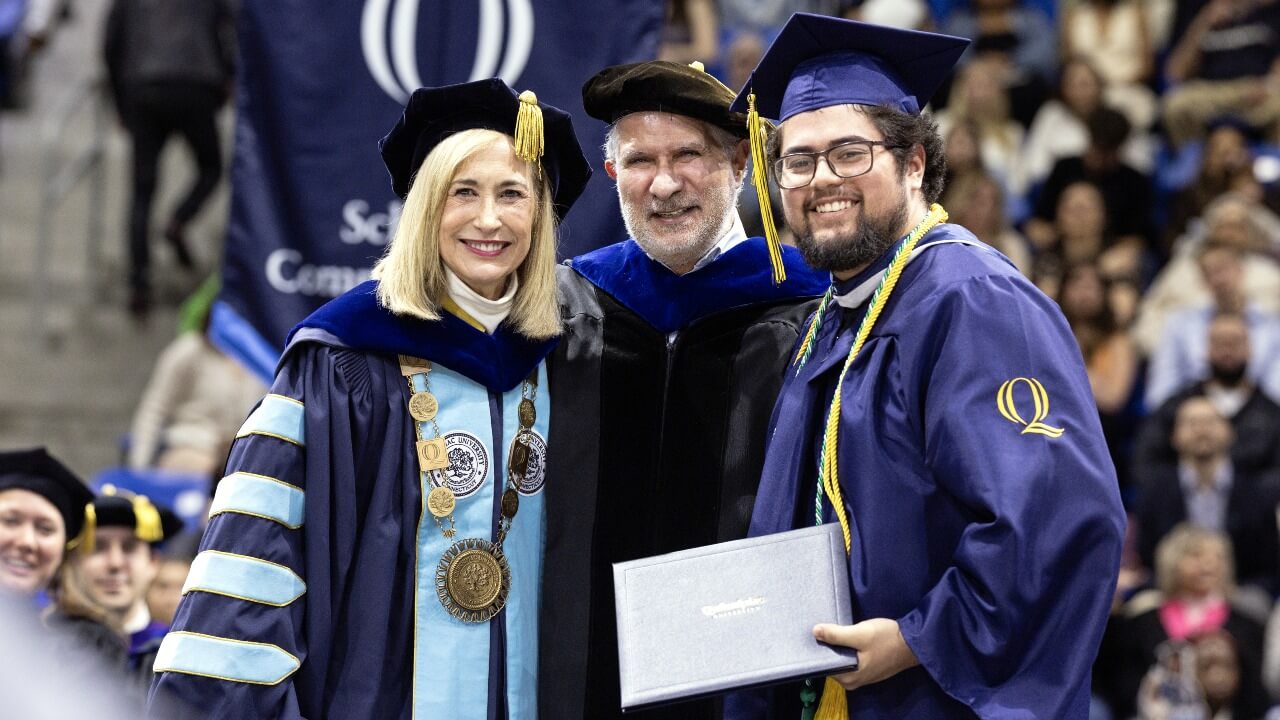


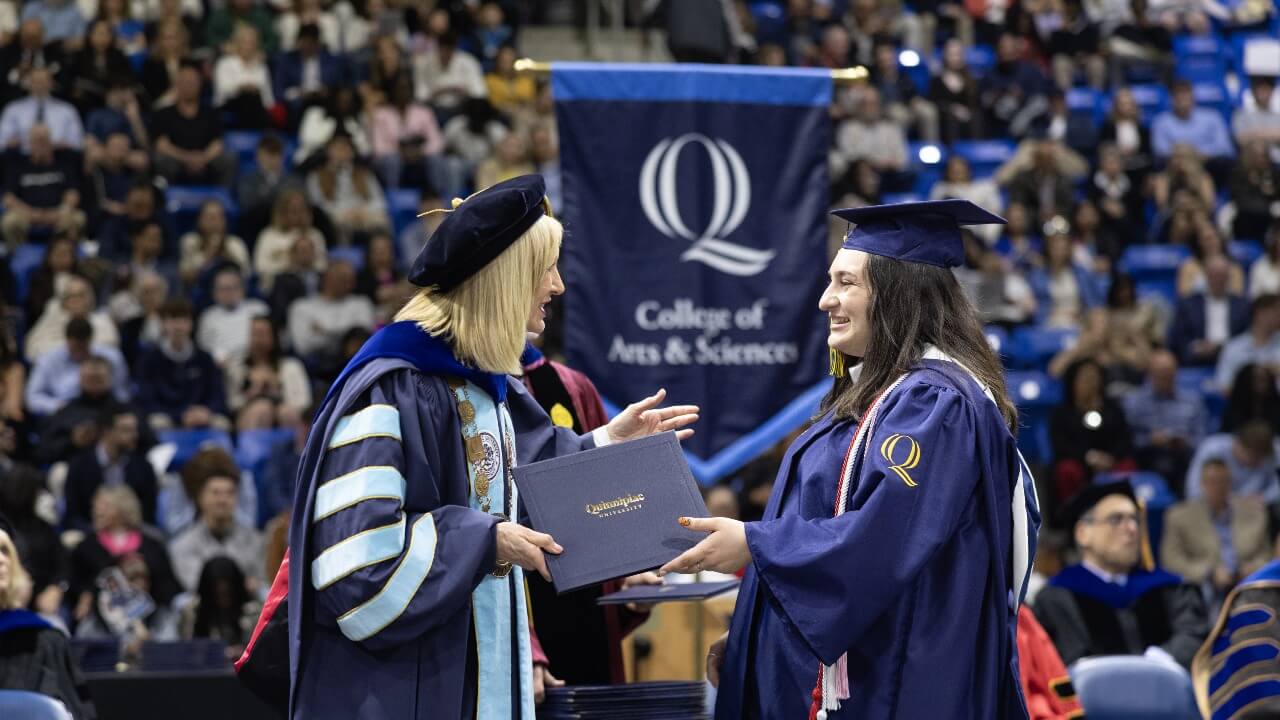
President Marie Hardin delivered remarks during the Commencement ceremony.











Jennifer Lepore ’13, JD '16, welcomed the new class of graduates on behalf of the alumni community.






Lindsey Dilapi '26 provided remarks on behalf of the graduating class from the School of Communications.







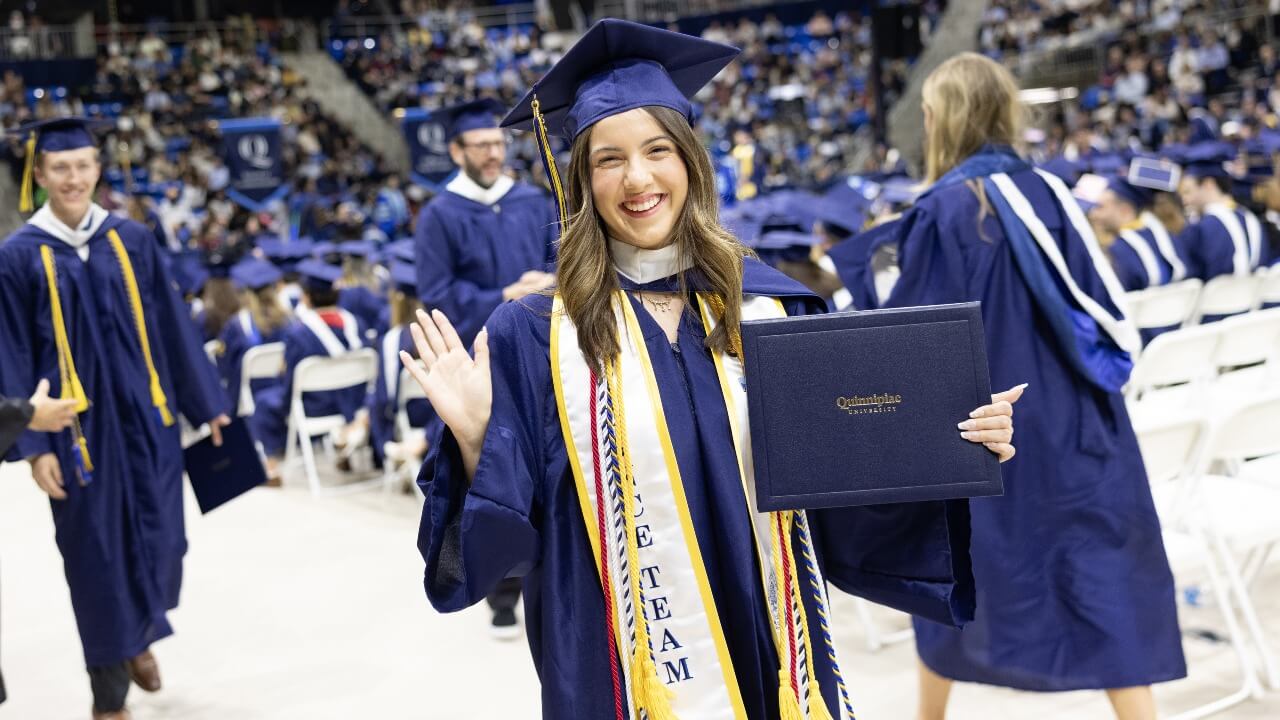












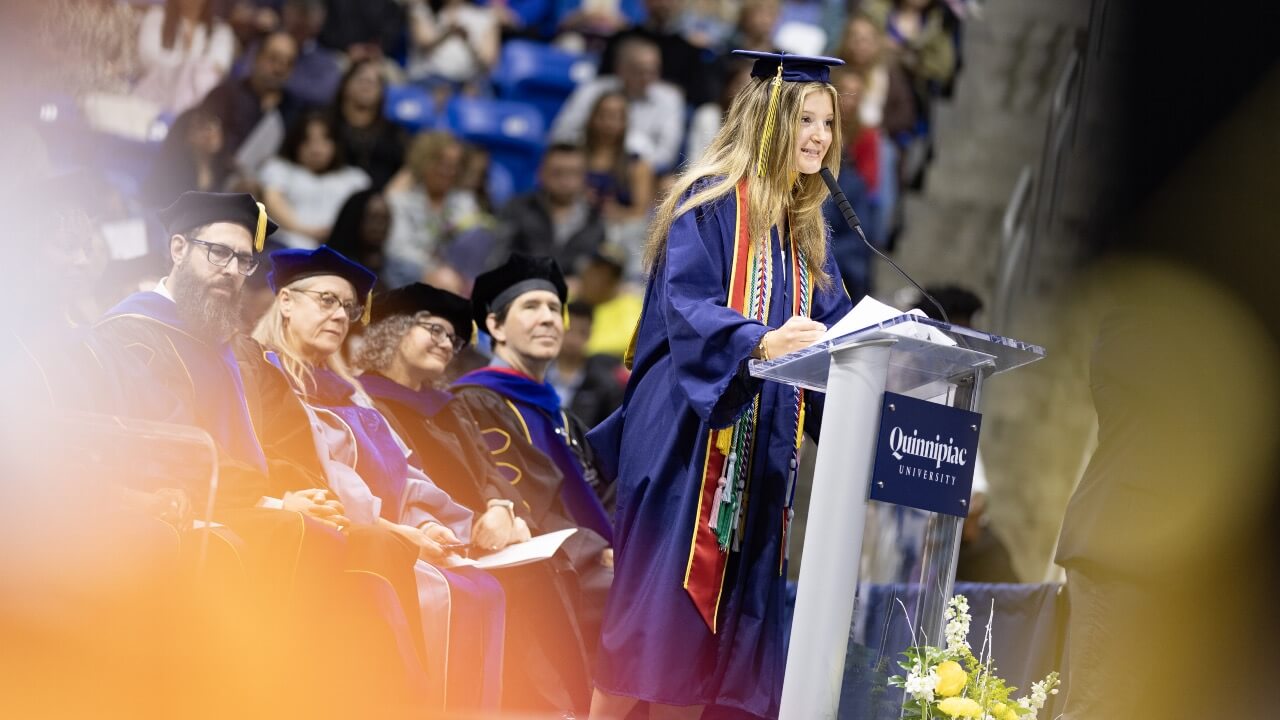
Angelina Marinko '26 provided remarks on behalf of the graduating class from the College of Arts & Sciences.








Rebecca Huyck ’26, MAT '27, performed the National Anthem.

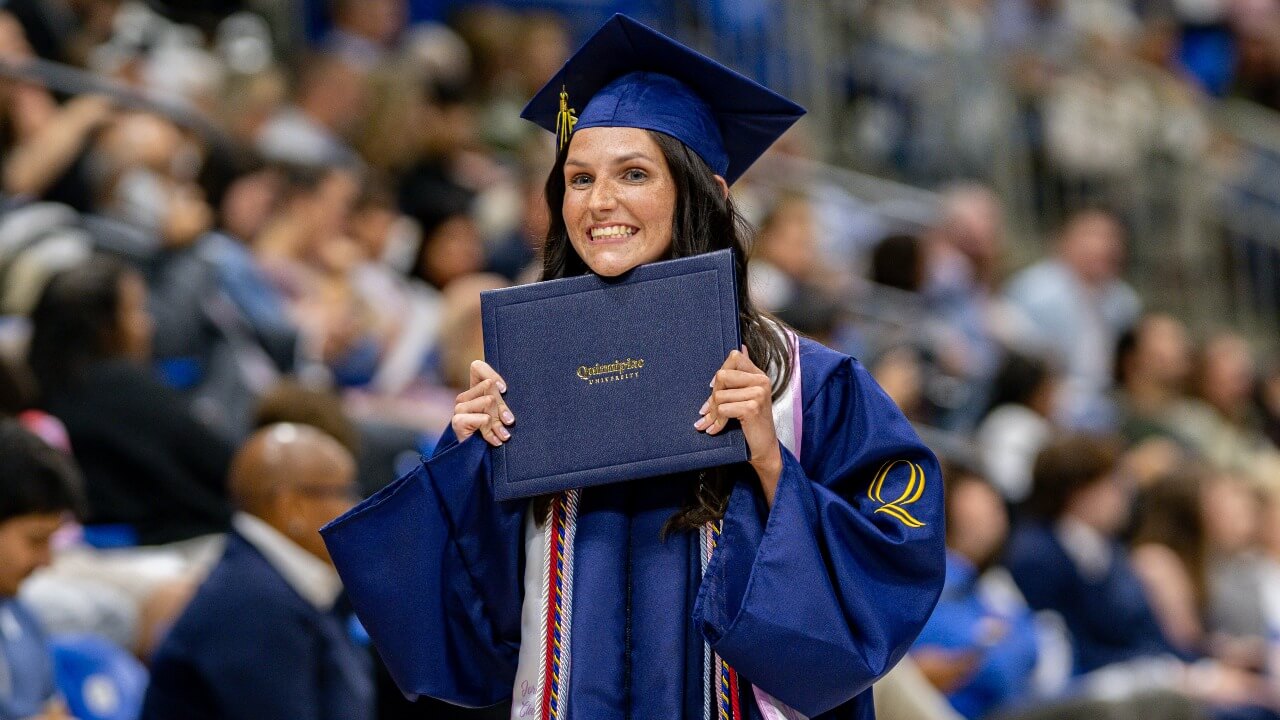



Watch the livestream of the College of Arts & Sciences and School of Communications Undergraduate and Graduate Commencement.
Pomp and Circumstance, Sir Edward Elgar
Debra J. Liebowitz, PhD
Provost
Rebecca Huyck ’26
Marie C. Hardin, PhD
President
College of Arts & Sciences: Angelina Ann Marinko
School of Communications: Lindsey Jade Dilapi
Margarita Diaz
Associate Professor of Journalism
Alex Birsh ’11
Senior Vice President and Chief Operating Officer, Playbill
College of Arts & Sciences: Adam Roth, PhD, Dean
School of Communications: Nadine Barnett Cosby, PhD, Dean
Marie C. Hardin
Yvonne Alston ’98
Alumni Association Board
Senior Vice President and Chief Operating Officer, Playbill
College of Arts & Sciences and School of Communications Commencement | Saturday, May 9, 3 p.m.
Alex Birsh is the third generation of the Birsh family to work at Playbill, following in the footsteps of his grandfather, Arthur, and his father, Philip. A self-professed lover of Broadway and baseball, Birsh is captivated by the magic, splendor and spontaneity of live performances.
After working for Sirius XM, Major League Baseball and Topps, Birsh joined the family business in 2016 as vice president and chief digital officer. In 2020, he was promoted to vice president and chief operating officer.
Over the last decade, Birsh has helped his father grow Playbill into an indispensable theater brand. Playbill is not just the exclusive magazine for Broadway and Off-Broadway theater patrons in New York City. It’s also required reading in several other major theater markets, including Los Angeles, Chicago, San Francisco, St. Louis and Washington, D.C.
Birsh, who earned a Bachelor of Arts in journalism from Quinnipiac, launched the Playbill Podcast in 2025 to celebrate live theater and the audiences who enjoy it. As the host of each episode, Birsh highlights a currently running Broadway show and features an interview with members of the cast and/or creative team.
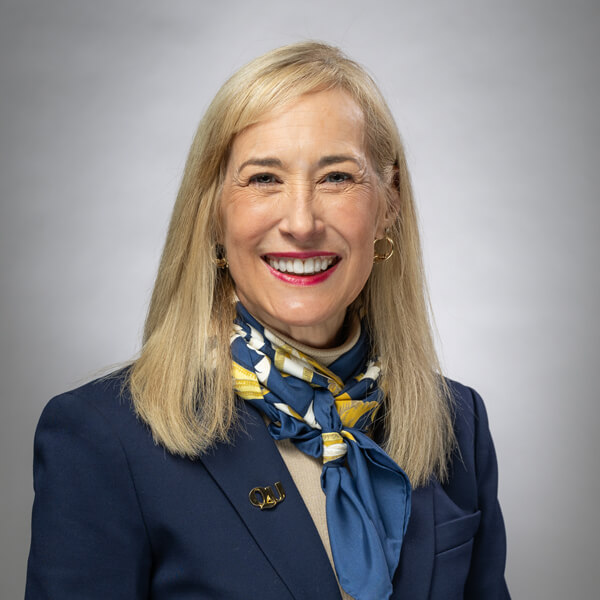
Congratulations to the Class of 2026 as we celebrate you for achieving this transformative milestone. You are well positioned to continue your journey as the leaders and professionals who will impact the workplaces of the future and the communities you call home.
We are confident you will apply your education, your talent and your purpose to make the world a better place. Your values embody all that it means to be a Bobcat. You have been taught and uplifted by a distinguished faculty and a committed staff. Together, they have watched you become the epitome of human flourishing and the stewards of tomorrow.
Please stay connected with us as a member of our Quinnipiac family. Cherish the many memories you have made here. But also remember those who have cheered for you and supported you along the way — your families and friends. They, too, deserve applause and hugs on this most special day.
So enjoy this moment, Class of 2026. Take lots of pictures. Soak it all in. You’ve earned it!
Warmly
Marie C. Hardin, PhD
The mace — a symbol of authority — has antecedents in both Roman and Medieval history. The Roman mace (fasces) was carried by a lictor before the chief magistrate of the city, as well as before the legions. During the Middle Ages, the mace (mateola), a weapon of war, became first a symbol of victory and then a symbol of authority. The mace emblazoned with the Great Seal of England became a symbol of authority in Parliament by the end of the 13th century. It is this form of the mace that was the prototype of those symbols of authority, not only of legislative bodies, but also of cities and universities.
In 1246, following some 20 years of strife, the University of Paris was finally conceded the right to its own common seal. Since then, the use of the seal engraved on the mace has come to symbolize the authority of the academic community. In July 2000, Quinnipiac commissioned the noted sculptor Robert Meyer of Westport, Connecticut, to design and execute a new mace for Quinnipiac University. Cast in bronze, the mace incorporates elements of the university seal.
The medallion (medal of office), like the mace and the seal, is also a symbol of authority. It is possible that its roots may be traced back to the Roman “bulla” (a gold amulet of honor). The obverse of the medallion shows the seal of the office the wearer holds — in our case, the seal of the university. Not infrequently, the reverse would show the personal seal or coat of arms of the bearer. Since the High Middle Ages, the medallion has been worn by such officials as the chancellors of England, mayors of cities, and rectors of universities, and came to signify the high personal position such figures occupied in their respective governments. During the Renaissance, medallion design reached unique artistic heights, and in certain portraits the medallion was given particular prominence. The medallion is worn by the university’s president. The Quinnipiac medal showcases the university seal, sculpted in relief and cast in bronze.


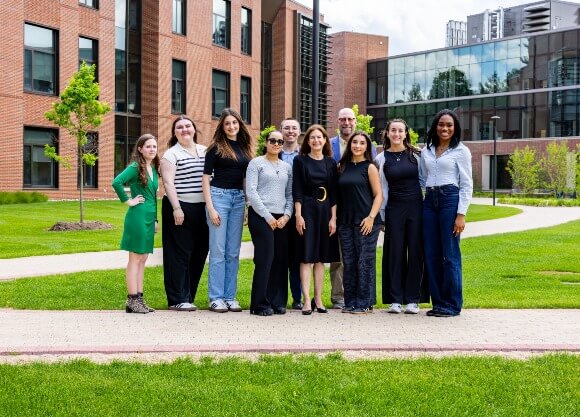
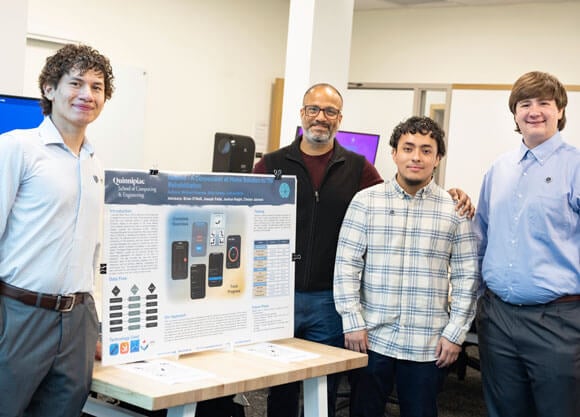



















Quinnipiac Today is your source for what's happening throughout #BobcatNation. Sign up for our weekly email newsletter to be among the first to know about news, events and members of our Bobcat family who are making a positive difference in our world.
Sign Up Now