


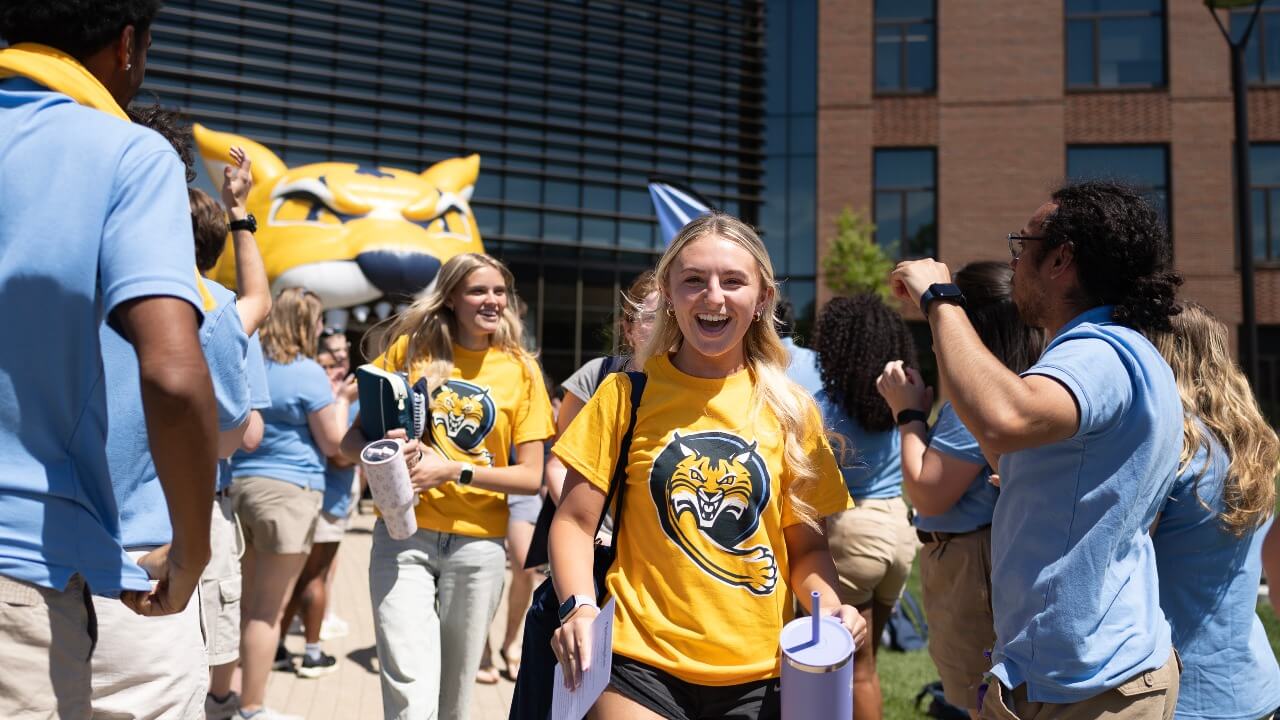
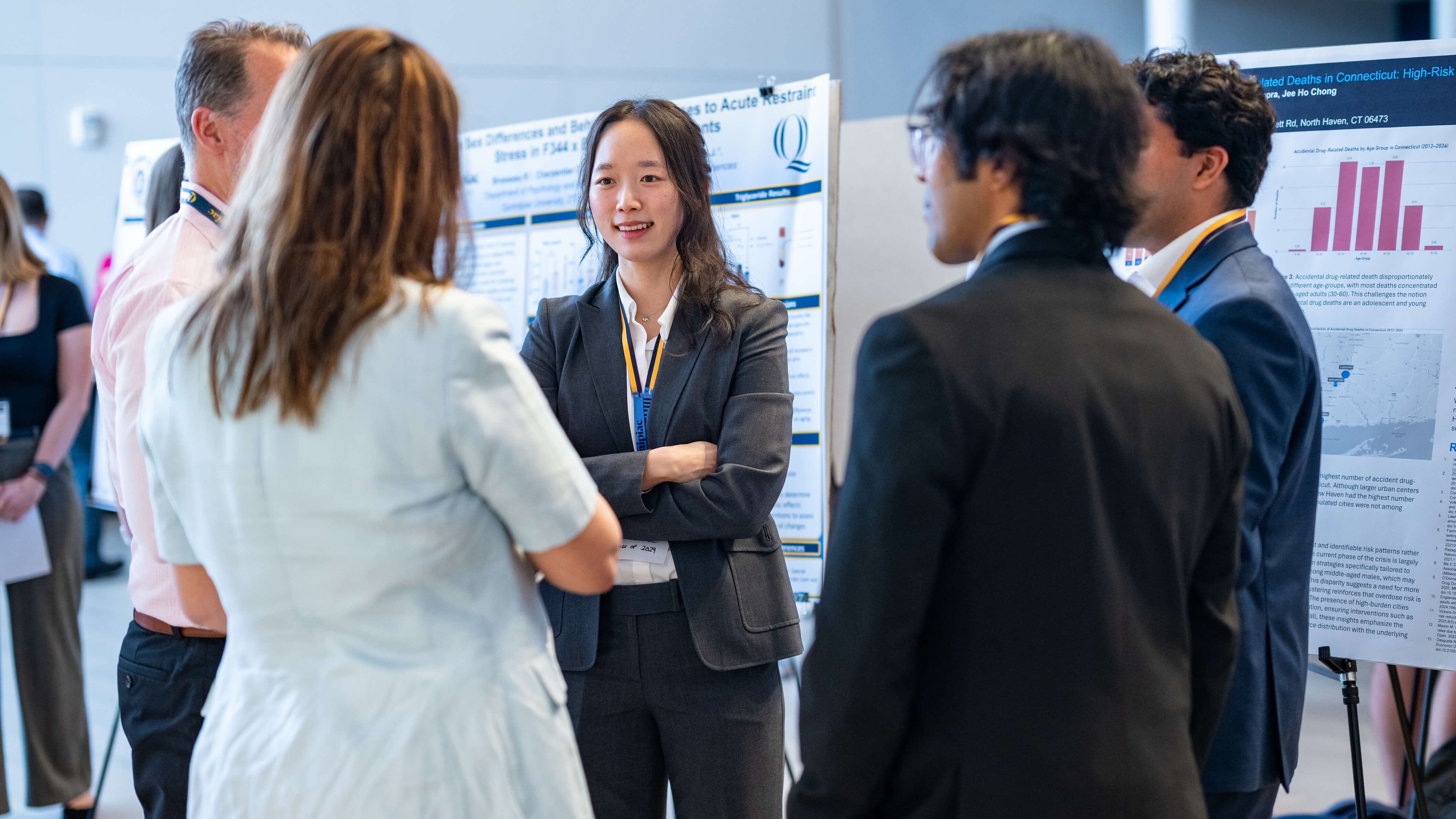
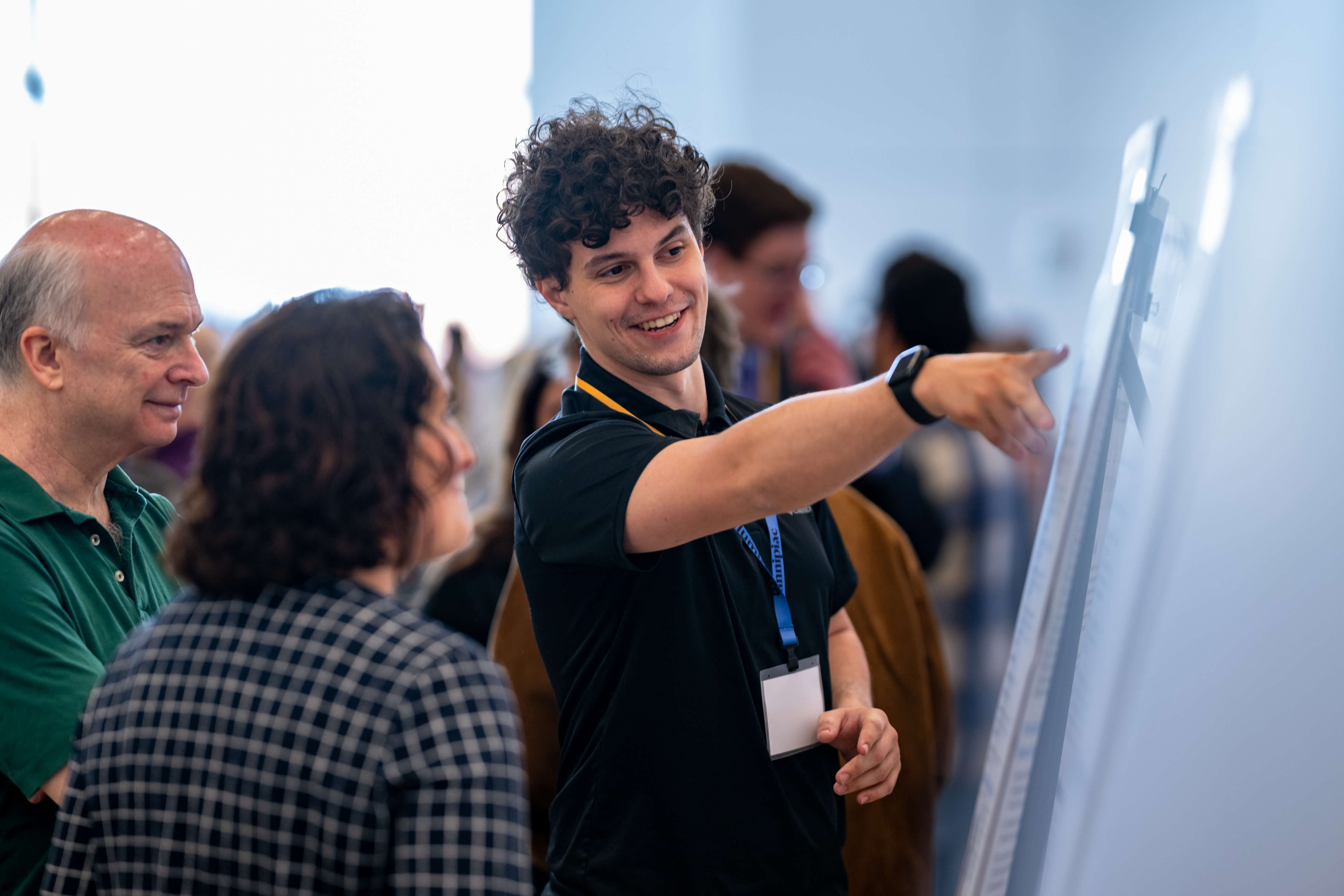
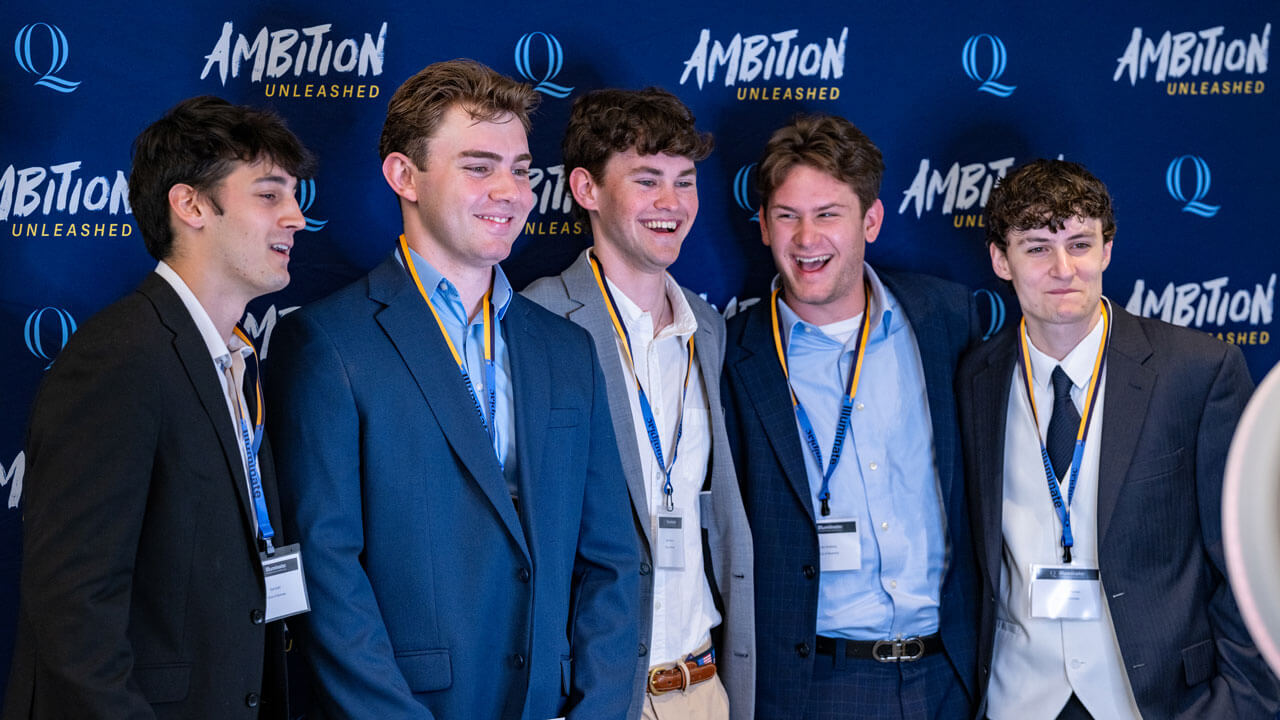
The university-wide event brought together more than 600 students from across nearly every school and discipline to showcase their projects and interests in an interactive, collaborative environment.
“This is an event that celebrates our student achievements and research, scholarship and creative activities,” said organizer Pat Boily, professor of biology and associate dean for administration and finance. “This is a very important part of what we do here at Quinnipiac — involving students in hands-on, high-impact experiences, whether it’s research in the sciences, business or humanities, or creating games, including some that are award-winning. It is remarkable what our students across the university have produced; it’s really top-notch work.”
Spanning all three floors of The SITE, the event featured a diverse array of presentations,
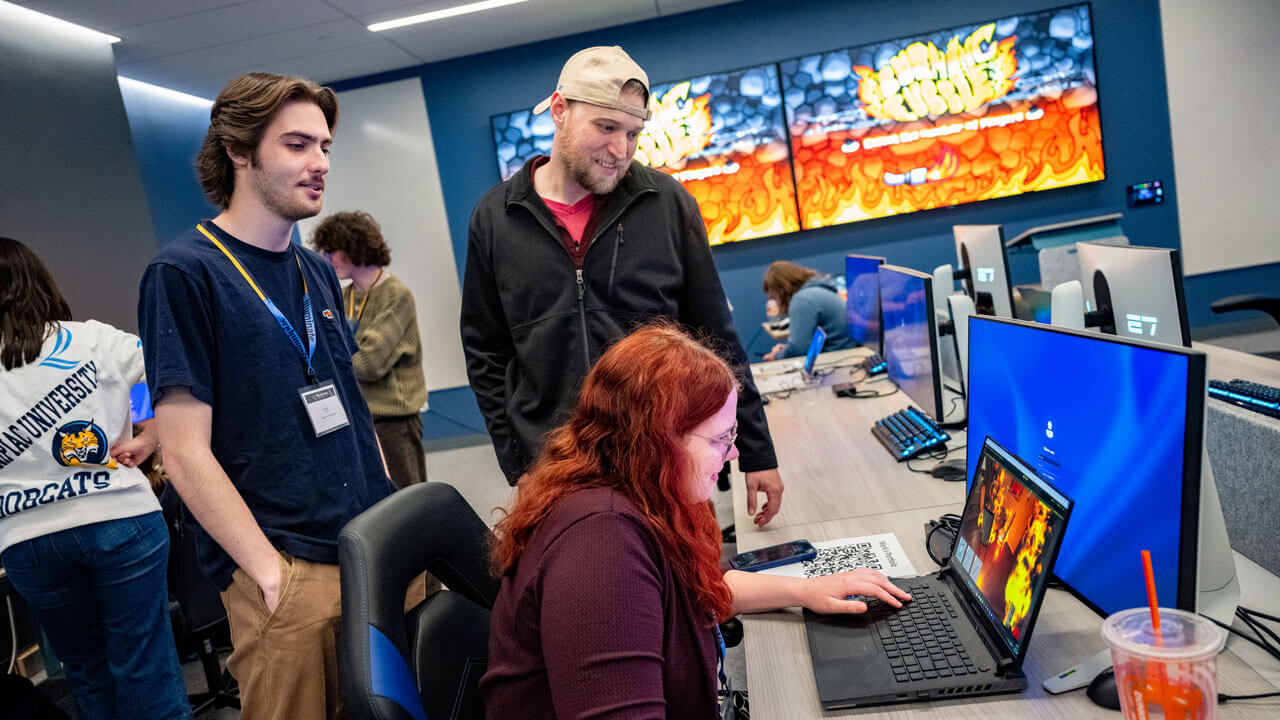
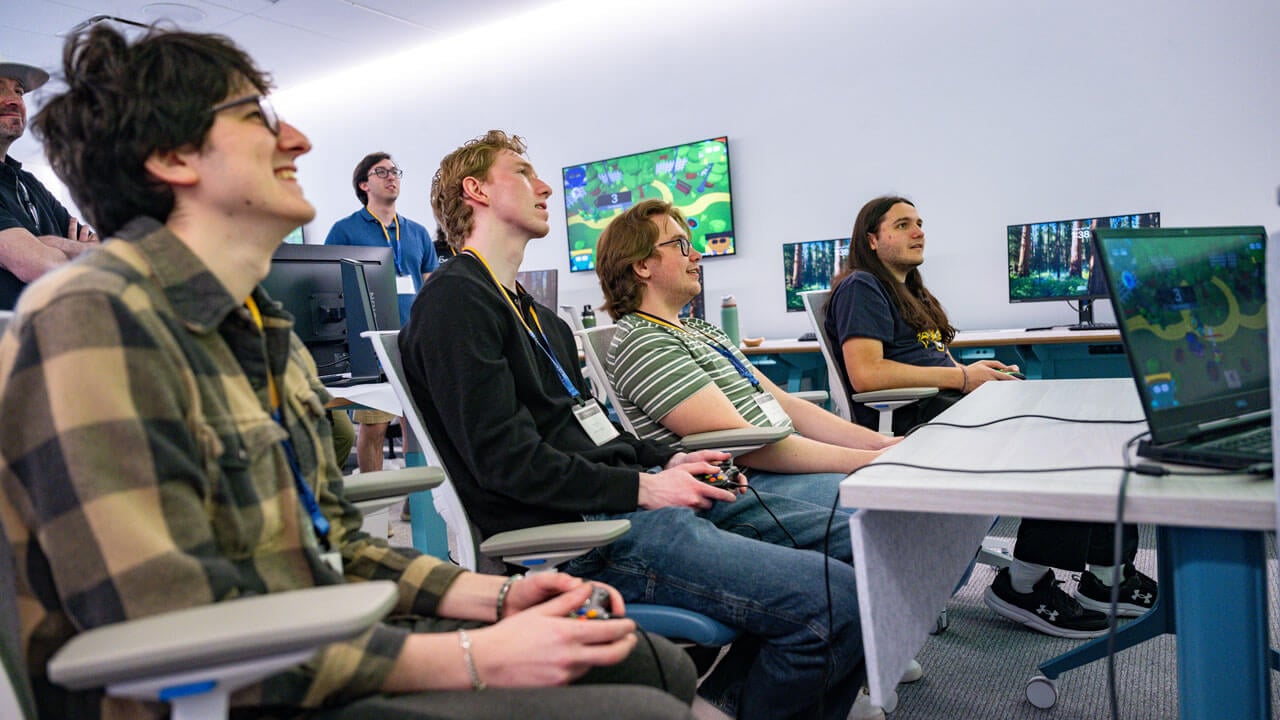
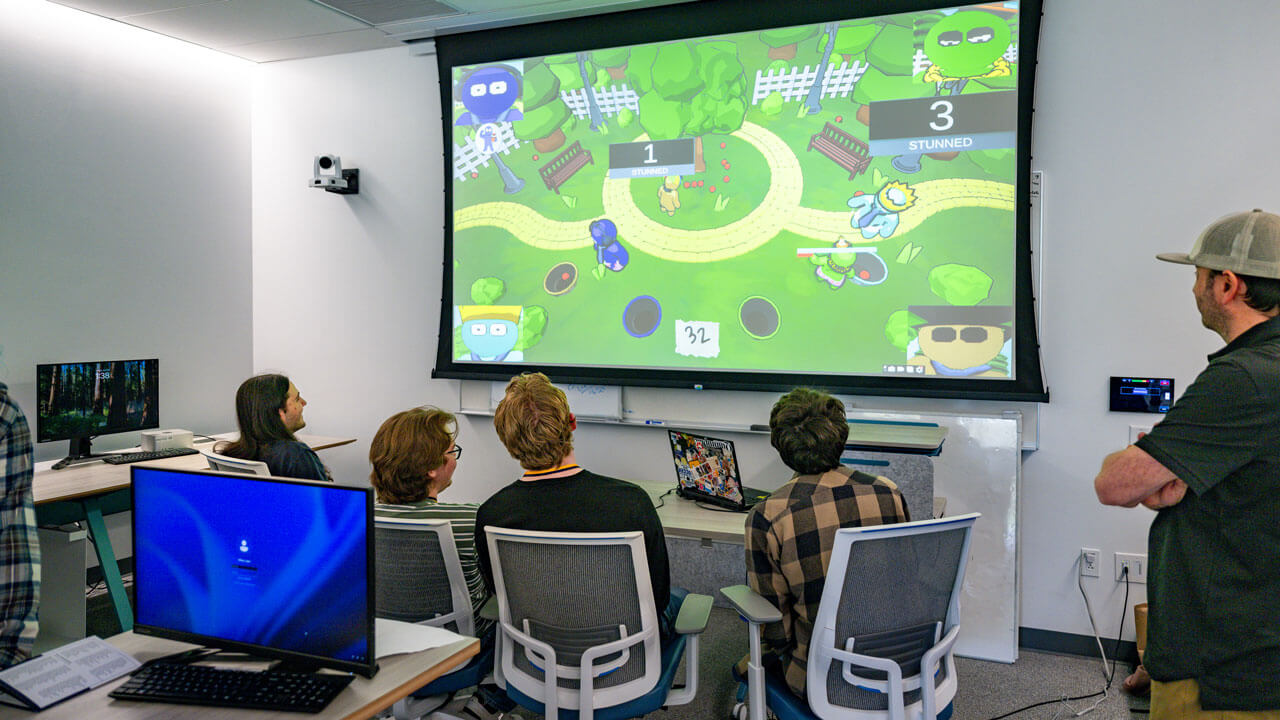
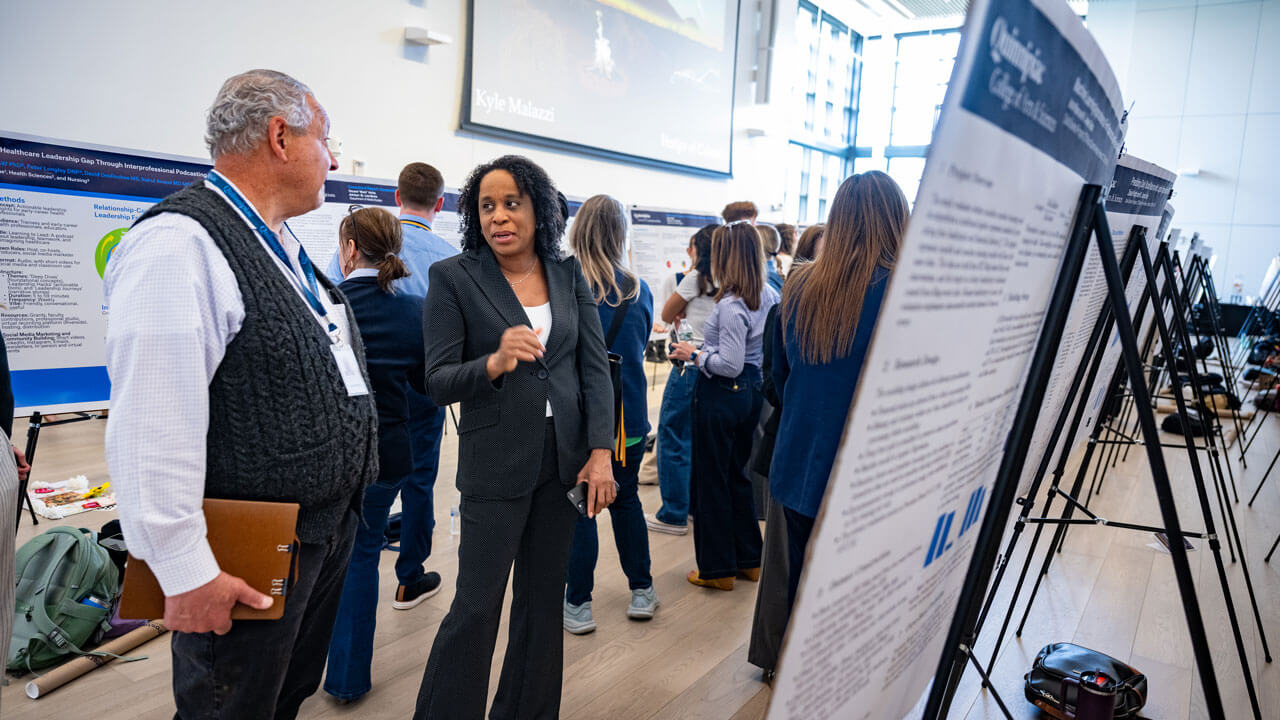
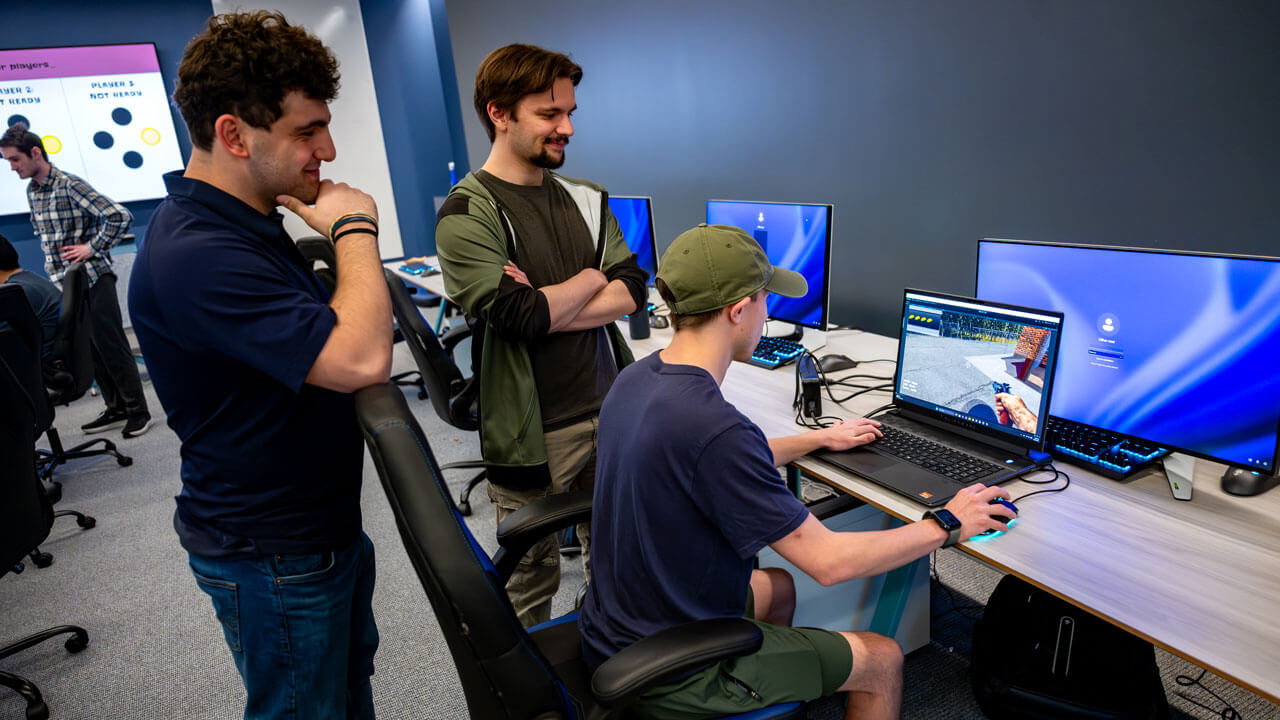
including poster sessions, oral presentations, digital art, game design demonstrations and live music performances. Attendees included faculty, peers, families, prospective employers and visitors who engaged with students and explored projects. Boily added that nearly 40 faculty and staff members were involved in organizing this complex event into the success that it was.
Faculty mentorship also played a critical role in that process. “We have close to 200 posters being presented in various fields, from business, medicine, sociology, biology, chemistry … a very wide range of interests,” said Boily. “We owe a lot of gratitude to the faculty who mentored and supported these students throughout their projects.”
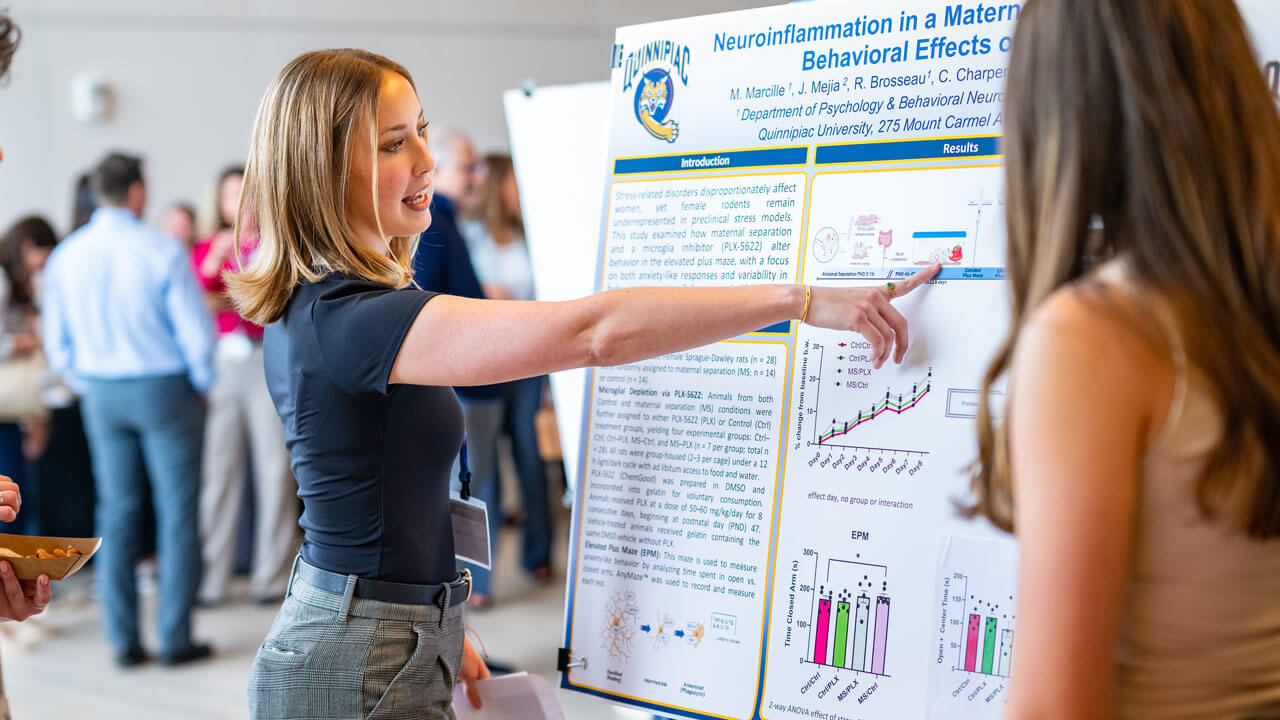
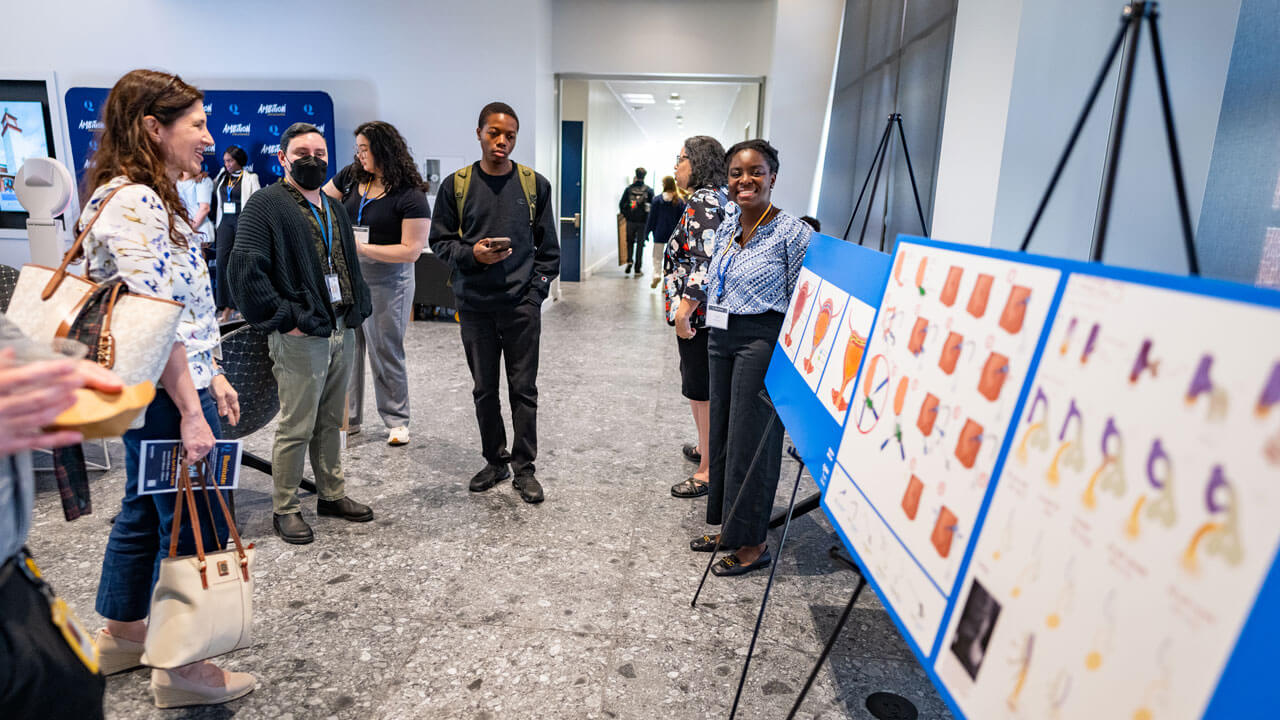
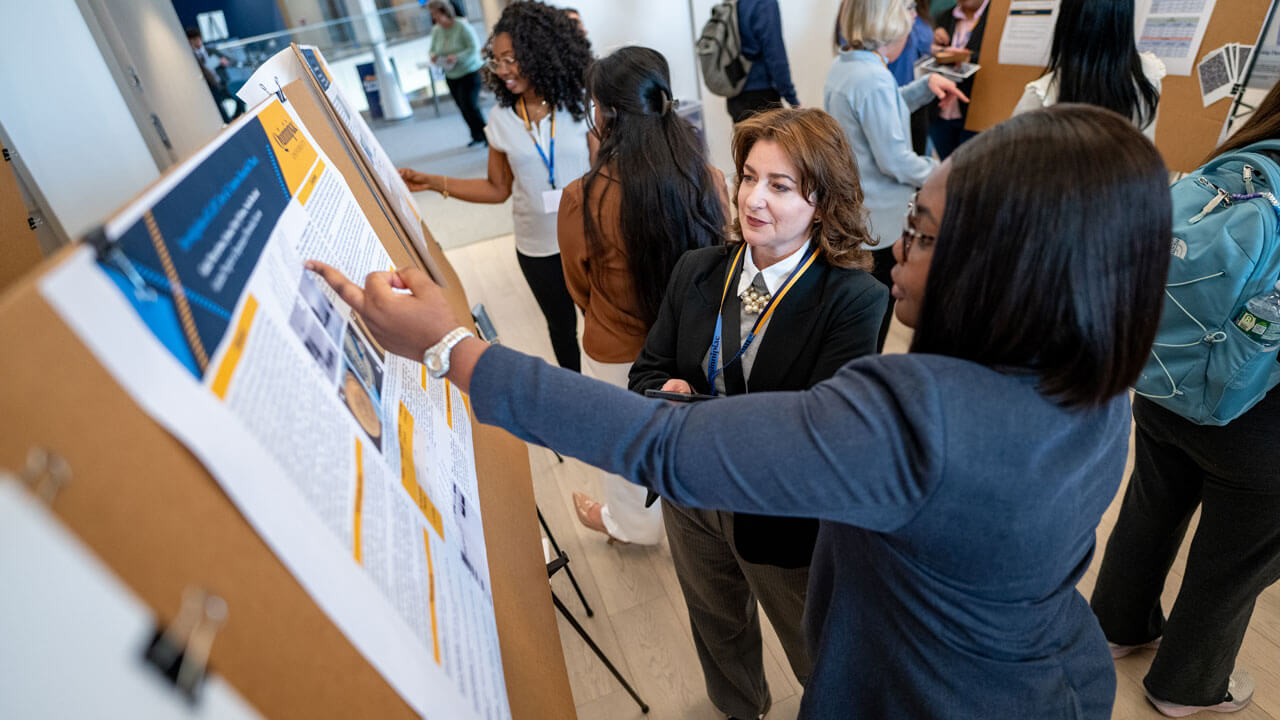
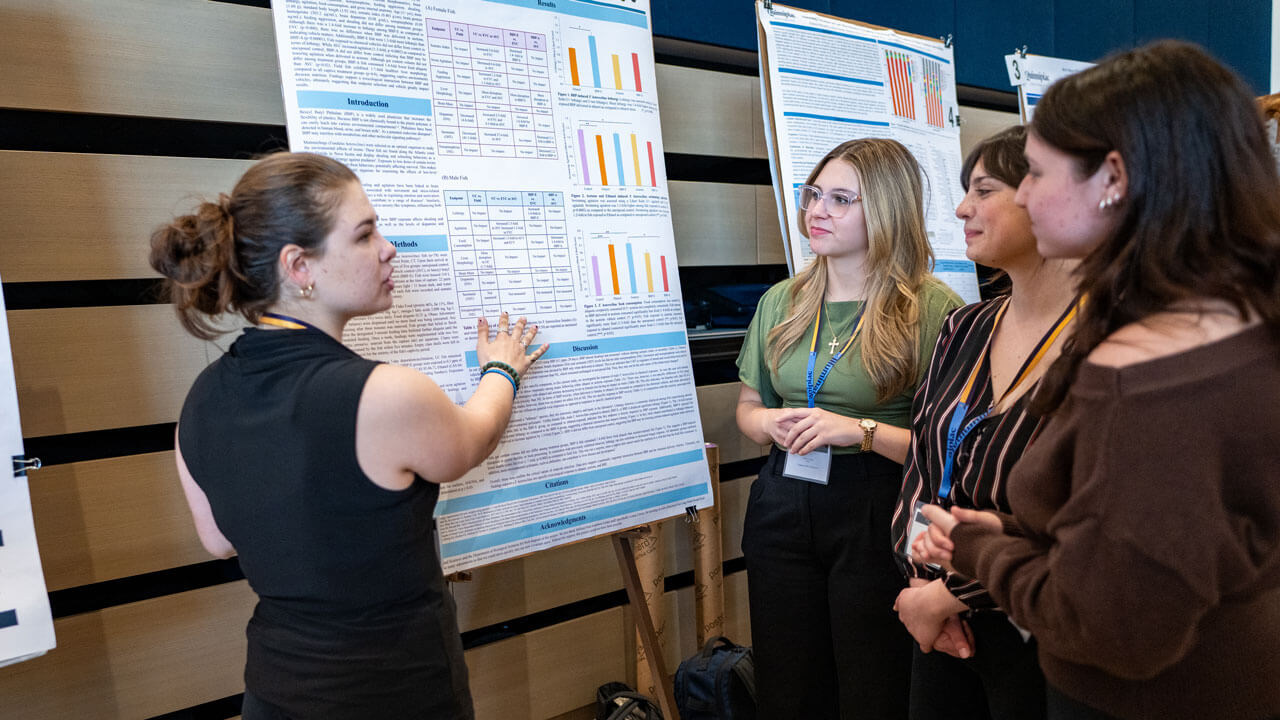
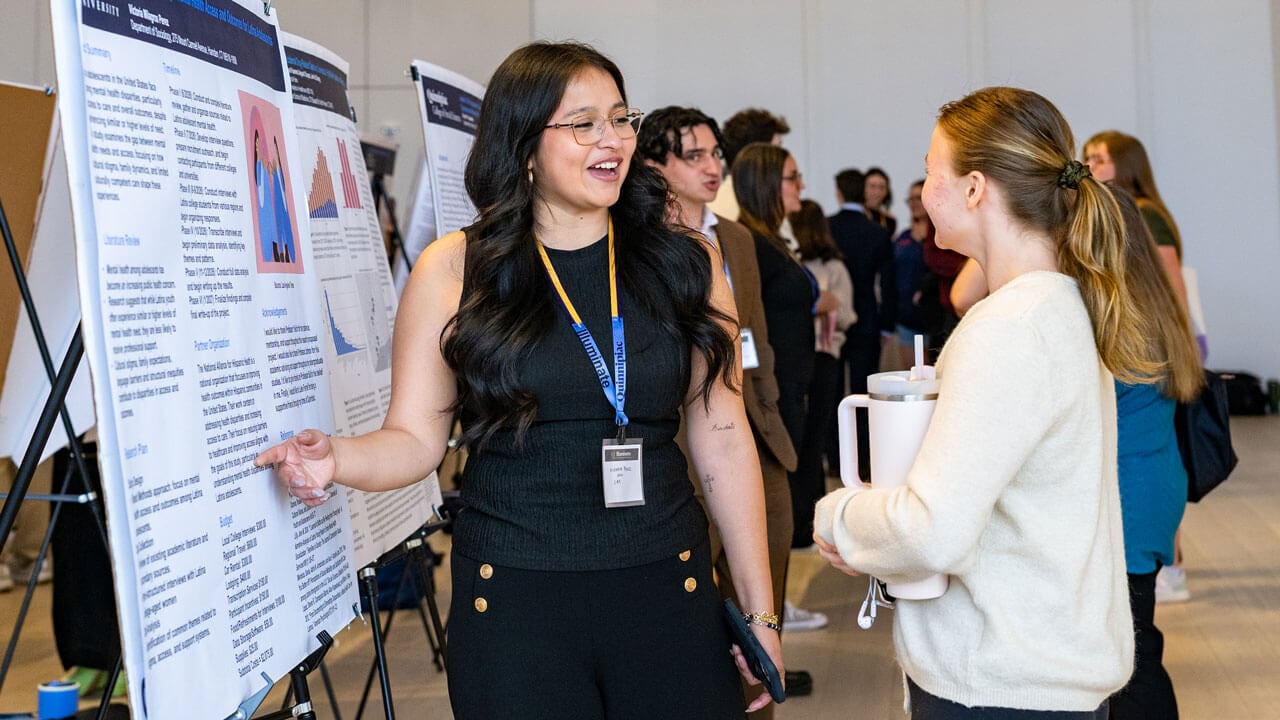
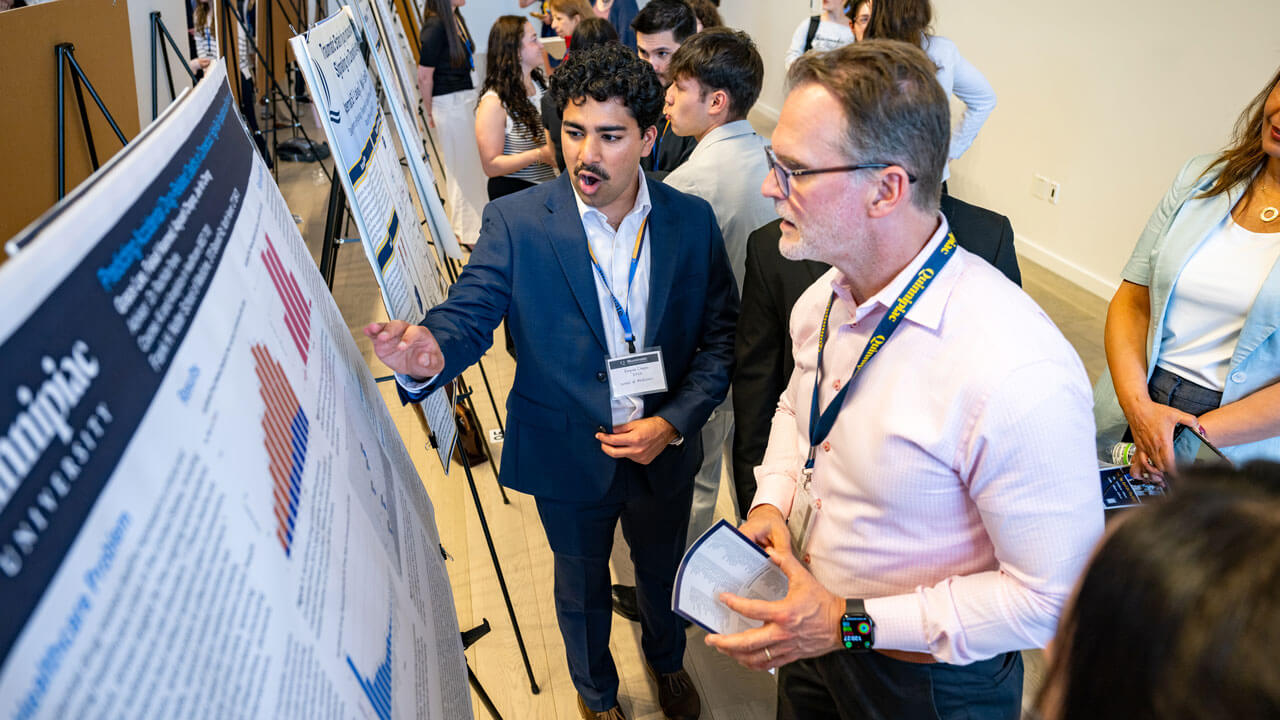
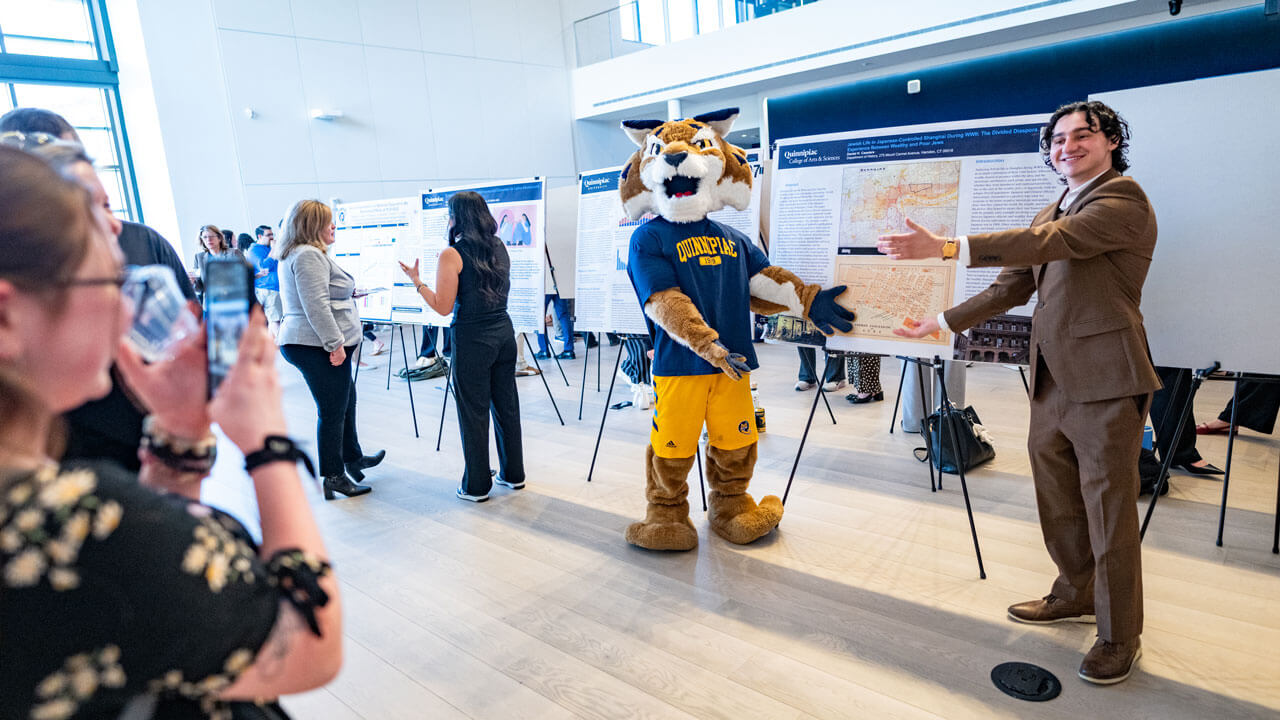
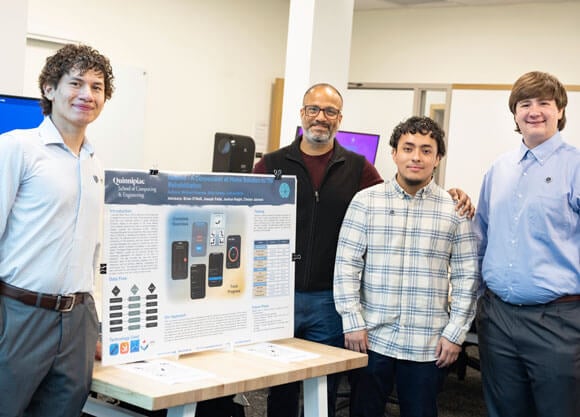
Rows of posters showcasing student research and projects filled The SITE auditorium during two back-to-back sessions. From cancer research and environmental monitoring to mental health studies, communication research and original digital artwork, student projects reflected a broad spectrum of academic and creative expression.
In classrooms throughout The SITE, oral presentations gave students the chance to dive deeper into their work, sharing research and creative projects across areas of study from literature and history to communication and the social sciences.
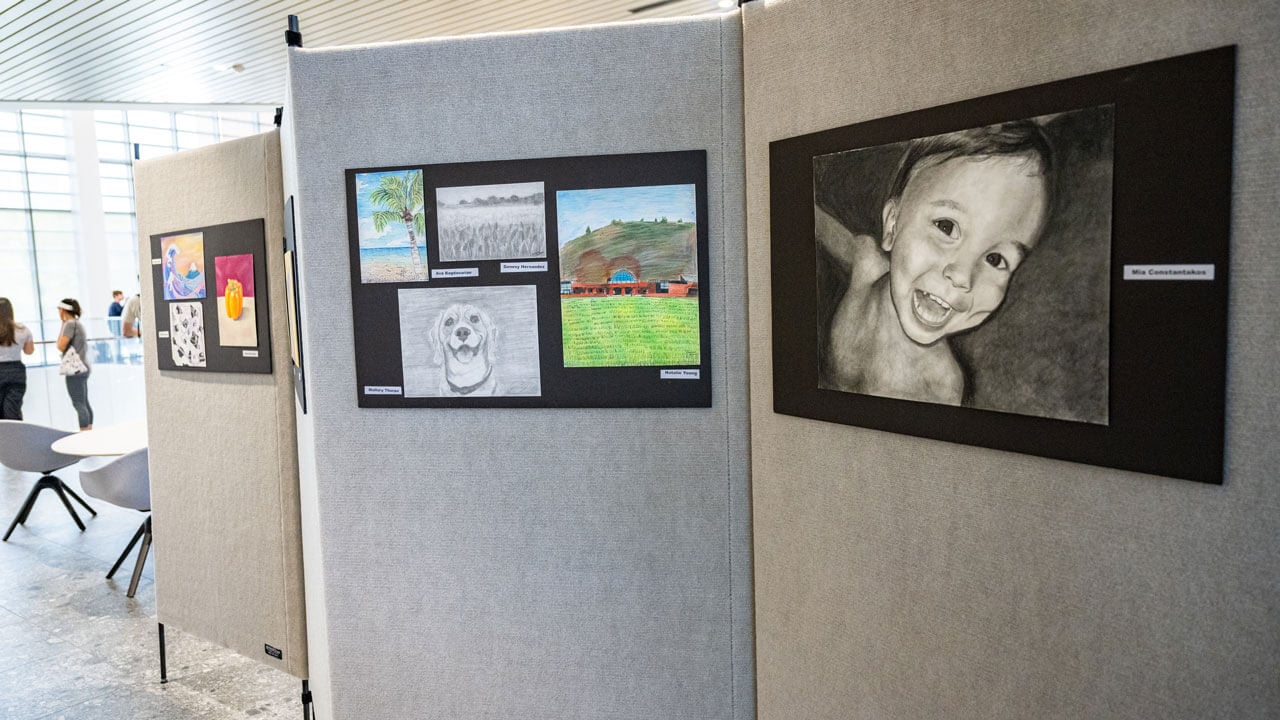
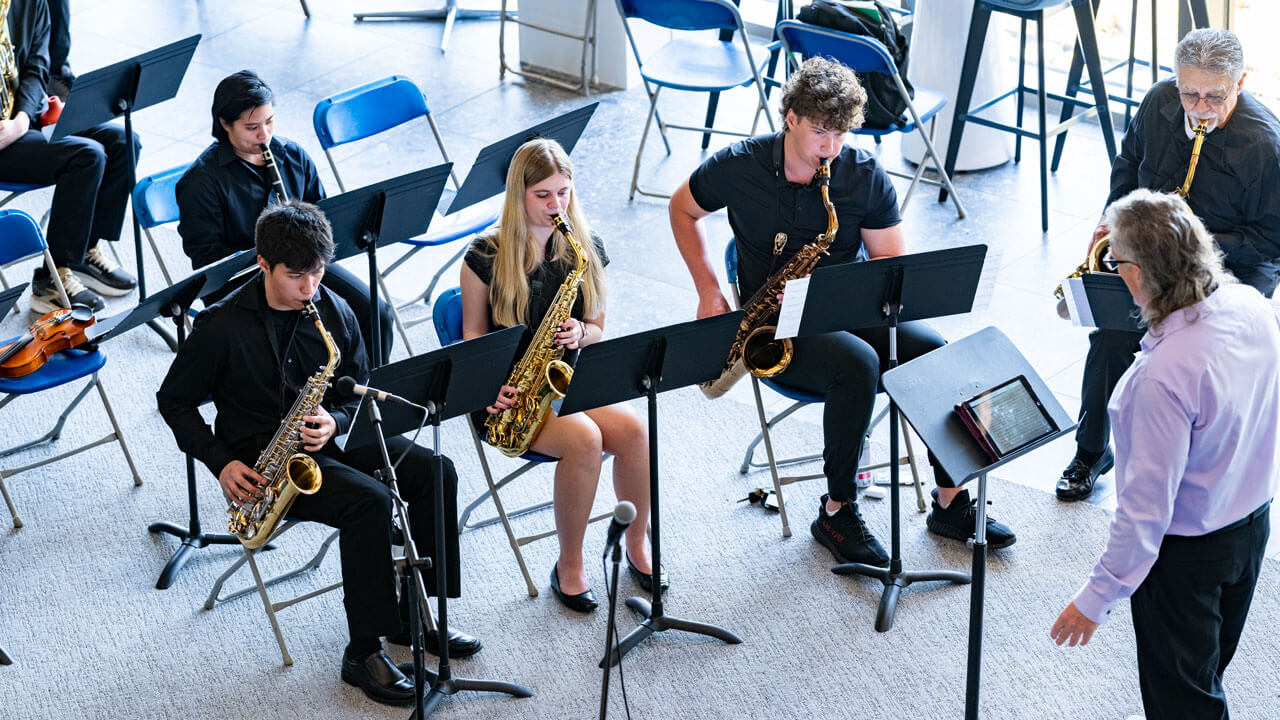
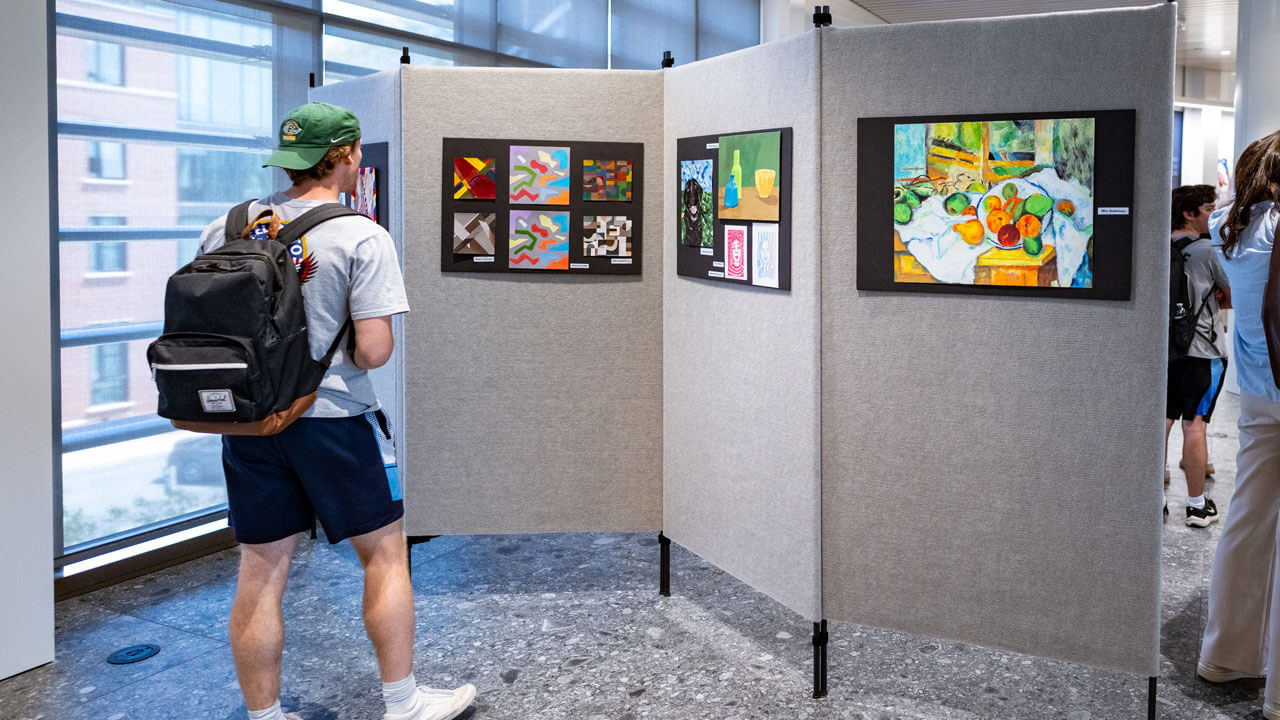
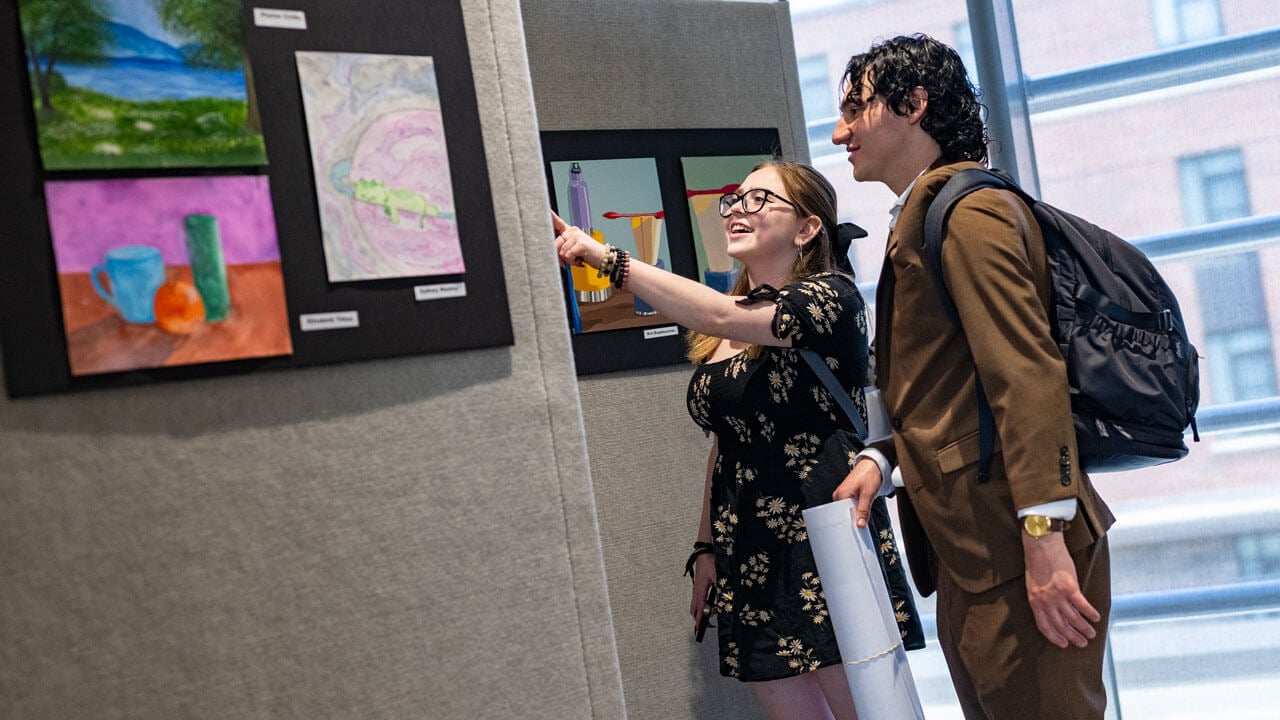
Live music filled the atrium as student performers took the stage, while digital and visual art displays throughout the building highlighted the creative side of student work.
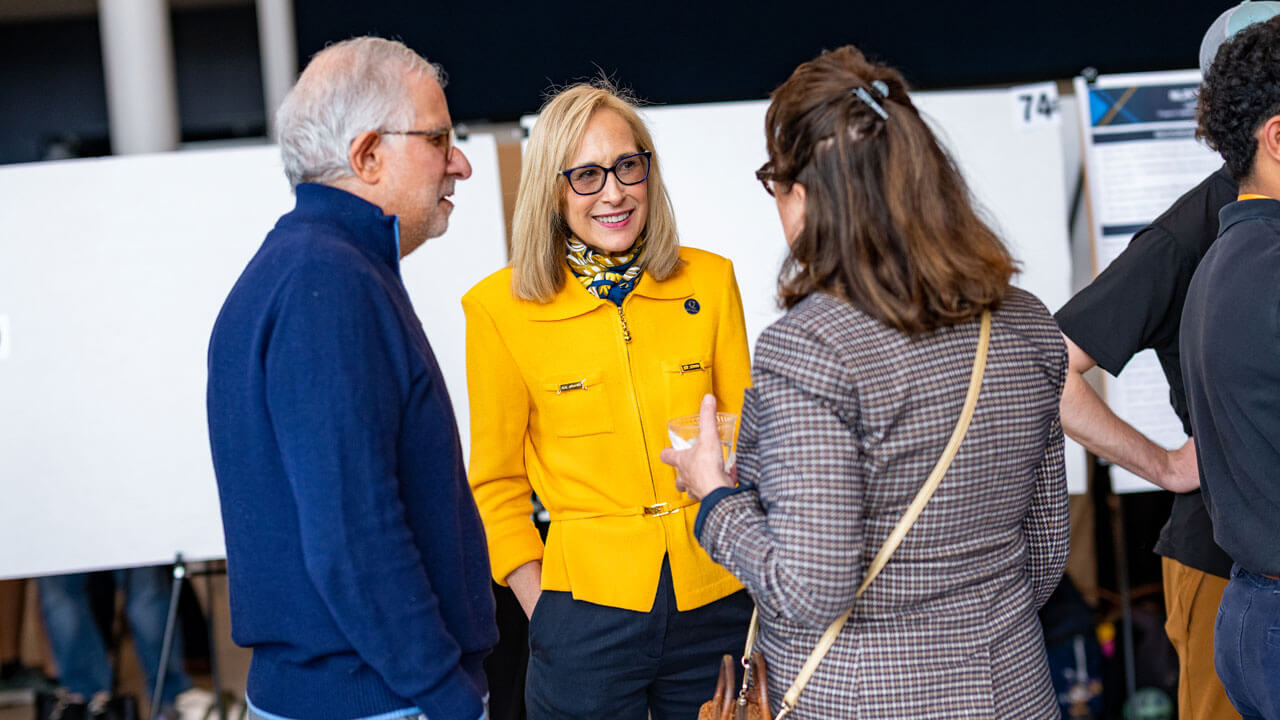
Quinnipiac President Marie Hardin addressed attendees during the event, emphasizing the
growth of Illuminate and the strong sense of community surrounding the initiative.
“I am so excited — this is my first time at Illuminate,” said Hardin. “I want to thank the students for the effort and the dedication and the passion that you are bringing to your projects. I also want to thank the faculty for mentoring these students. What started a few years ago as a College of Arts & Sciences initiative is now a university-wide celebration. Take a look around and see the talent and skill and learning being displayed all over this building.”
Nicole James, visiting assistant professor of digital visual arts, helped organize and showcase student work from the Department of Visual and Performing Arts, ensuring that creative disciplines were fully represented throughout the event.
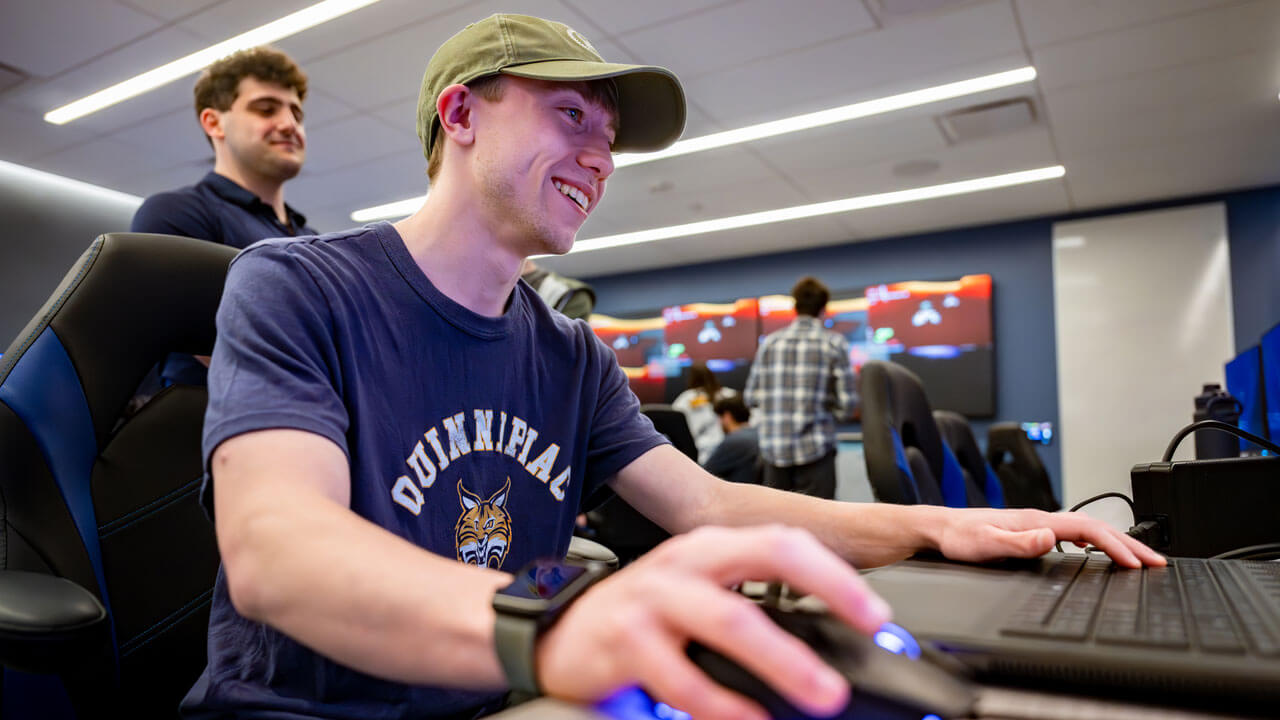
“As visitors explored The SITE, they could hear musical performances throughout the building, interact with game design demos and experience digital artwork on display. The creative energy in The SITE was buzzing in a way I had not seen before,” said James. “When creative research is presented alongside scientific and academic research, connections between ideas and disciplines begin to emerge that might otherwise go unnoticed. It really highlights the complexity of student talent, passion and academic curiosity at Quinnipiac.”
The scale and diversity of the expo also showcased Quinnipiac’s focus on experiential learning, with students applying their knowledge and gaining new skills that help prepare them for future careers.
Among the student presenters was Nicole Wijendra ’26, a biochemistry major with a
microbiology/immunology minor, who investigated an uncharacterized protein from the
pathogen Staphylococcus epidermidis to determine its function. Using a combination of
computational analysis and lab testing, she found that the protein likely helps break down certain types of fats.
By helping to define the roles of “mystery” proteins in the Protein Data Bank, her work could one day contribute to identifying new antibiotic targets.
After graduating this May, Wijendra will be working as a research scientist on the research and development team at EnviroLogix in Portland, Maine, a company where she previously interned for several summers. In this role, she will continue doing hands-on scientific research, building directly on the skills she developed through her time in Quinnipiac’s research labs.
Ava Rose Pellegrino ’29, a double major in law in society and sociology, showcased her study of language preservation and cultural identity during her experience studying abroad in Guatemala. Pellegrino spent 10 days in San Lucas Tolimán this spring, working with local partners to study Maya language and culture.
During her time there, she observed how government policies favoring Spanish contribute to the erosion of Kaqchikel, an Indigenous Maya language spoken in Guatemala, while also witnessing the determination of local communities to preserve their linguistic and cultural heritage.
“The thing that I took away most from it all was that they’re very resilient,” said Pellegrino.“They really care about making sure their language is preserved and passed on to the next generation, that it is still seen and heard today. I think that dedication is really awe inspiring.”
Other students focused on applying data and technology to real-world challenges. Kaitlyn
McVeigh ’26, a data science major with minors in law in society and Irish studies, presented her work focused on improving weather forecasting accuracy using machine learning models. By analyzing two decades of weather data from New York City, she explored how factors such as humidity, pressure and wind patterns can be used to better predict temperature and identify trends over time.
Her research highlights how advanced data modeling can improve forecasting accuracy and potentially help anticipate extreme weather events and natural disasters. Inspired in part by her own experience with Superstorm Sandy in 2012, McVeigh said she hopes to continue using data to better understand and predict environmental changes.
For McVeigh, presenting at Illuminate was just as meaningful as the research itself.
“Today has been amazing,” McVeigh said. “It’s incredible to see so many students presenting their work and passions, and to be able to focus on what we’re interested in and share that with each other. In our classes, we were able to explore topics we’re passionate about and use data science to bring those ideas to life. It has really enhanced my education here.”
Rachel Jasiczek, MS’26, PhD, a graduate student in the special education master’s program, presented research focused on improving reading outcomes for students with SYNGAP1-related disorders and similar rare neurodevelopmental conditions.
Inspired by her own daughter’s diagnosis with SYNGAP1, Jasiczek returned to graduate school to better understand the educational systems already in place and develop strategies to support children with complex learning needs. Her research explored how structured, evidence-based literacy instruction, combined with stronger collaboration between educators and families, can improve reading skills and create more consistent learning experiences across classroom and home environments.
Jasiczek said presenting at Illuminate gave her the opportunity to share her research while also raising awareness about SYNGAP1-related disorders and advocate for students with complex learning needs.
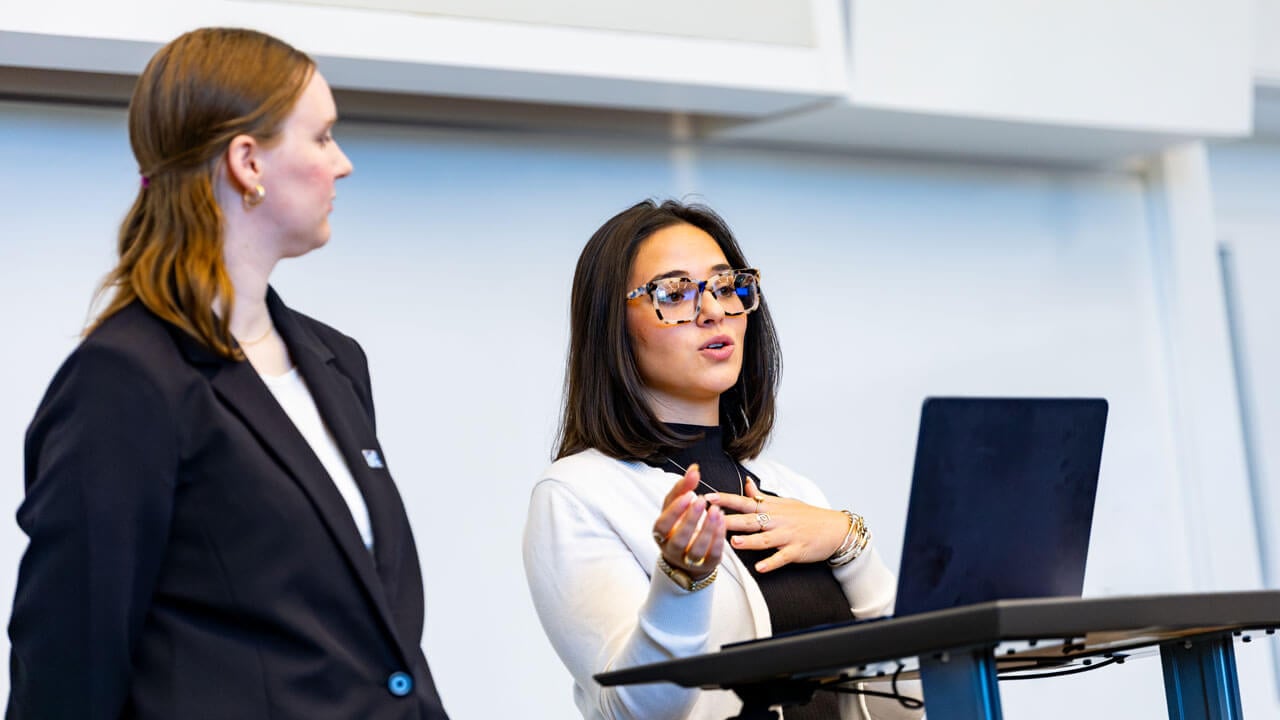
Sara Ottomanelli ’25, MBA ’26, and Lillian David ’25, MBA ’26, both graduate students in the School of Business Accelerated 3+1 MBA program, explored what motivates travelers to pay extra for the growing trend in sustainable tourism options.
Their research project, “When Pricing Meets Social Pressure: Nature Connectedness in
Sustainable Tourism Decisions,” examined how pricing strategies and social norm messaging, whether highlighting what others do or what people are expected to do, influence interest in adding sustainability packages to eco-lodge stays. By pairing these messages with even pricing ($25) and odd pricing ($24.99), they found that both subtle wording and a traveler’s personal connection to nature can shape environmentally conscious decisions.
“We were really interested in whether people choose sustainable options because it makes them ‘look good,’” said Ottomanelli. “And then we wanted to know whether they would continue with that choice if they actually had to pay more for a sustainability package.”
For David, the experience of presenting their research reflected a broader sense of pride shared by many student presenters at Illuminate.
“I think having an event like this is a great way to really show off all of our work,” David said. “Today has really been a testament to the effort we’ve all put in throughout the semester and year.”
In Focus
In this Article
Read This Next




Stay in the Loop
Quinnipiac Today is your source for what's happening throughout #BobcatNation. Sign up for our weekly email newsletter to be among the first to know about news, events and members of our Bobcat family who are making a positive difference in our world.
Sign Up Now