



Interprofessional healthcare education workshop helps Bobcats work together to support students transitioning from high school
April 20, 2026
April 20, 2026
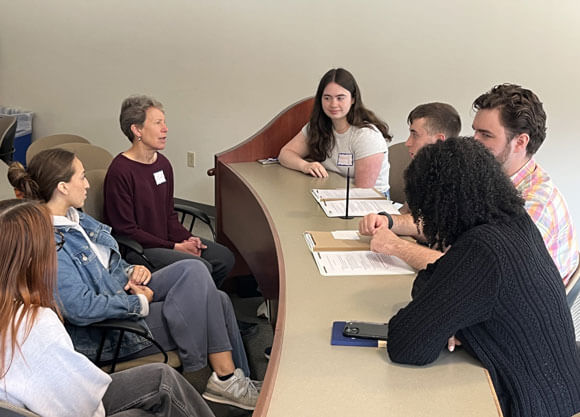
The workshop, “Step-by-Step Transition Planning: Supporting Young Adults with Disabilities Transitioning from High School to Post School Life” was offered as a program of the Center for Interprofessional Healthcare Education (CIHE) at Quinnipiac.
Fifteen Quinnipiac students studying healthcare professions joined the workshop’s five guest participants from the Cheshire-Quinnipiac Transition Collaborative.
As an ongoing partnership between Cheshire Public Schools and Quinnipiac, the collaborative provides young adults with disabilities comprehensive transition services, including independent living, vocational skills and on-campus experiences.
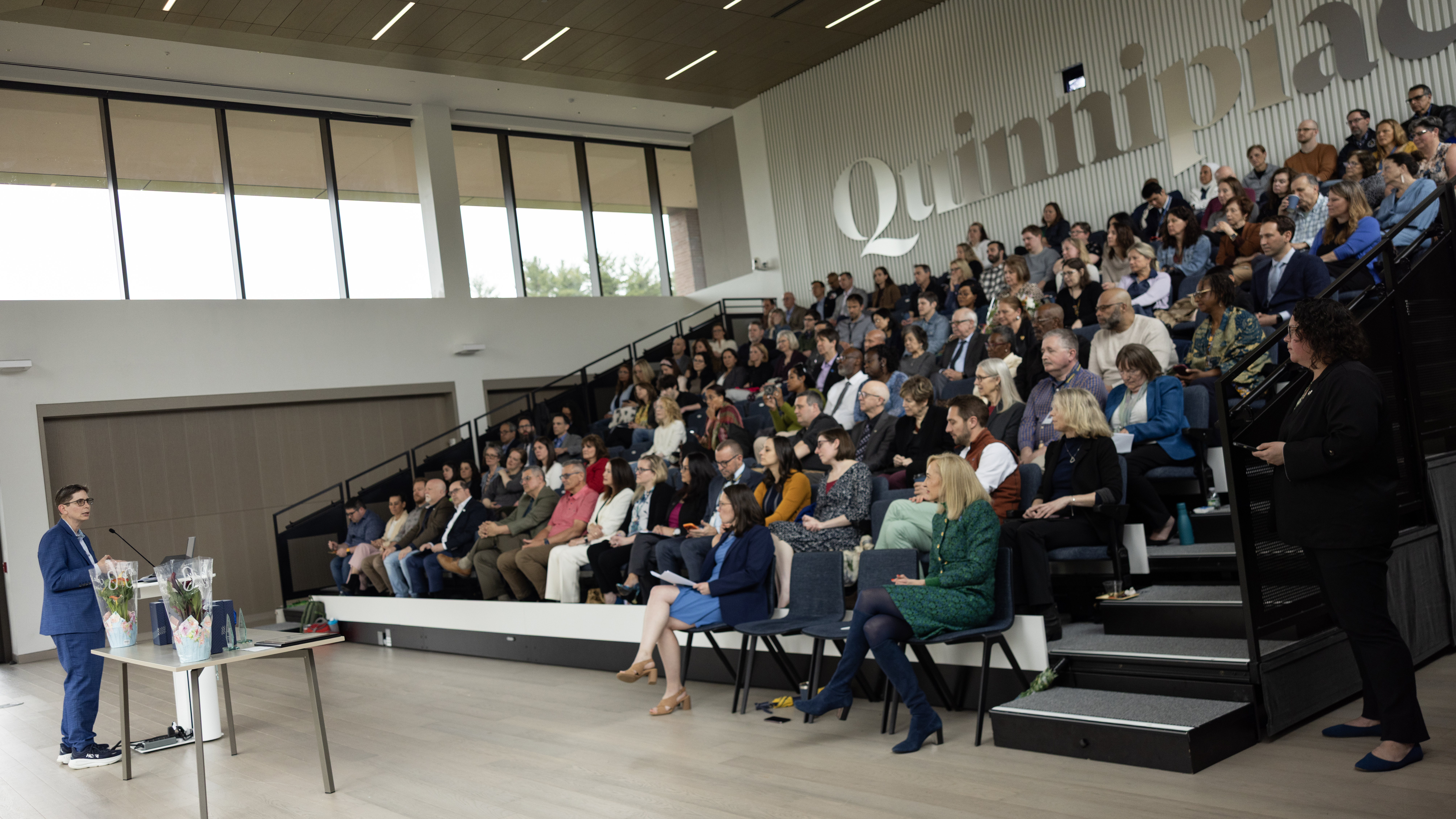
Julie Booth, director of the CIHE and clinical associate professor of physical therapy, facilitated the April 13 workshop at the School of Health Sciences on the North Haven Campus. She was joined by interprofessional Quinnipiac faculty members and special education teachers with the Cheshire Public School system.
Booth noted that interprofessional education occurs when students from two or more professions learn about, from and with each other.
“Whatever profession you’re in, this workshop provides the opportunity for you to really learn about each other and how you’ll work together on a team going forward,” Booth said.
The workshop opened with information on developing Transition Planning and creating an Individualized Education Plan (IEP) as a team.
Presentations were made by Karen Majeski, associate professor of occupational therapy, director of the Post-Professional Doctoral Program, and a co-founder of the Cheshire-Quinnipiac Transition Collaborative Program; Jacqueline Lubin, associate professor of education and director of Special Education Programs, and Brooklyn Mastracchio ’25, MSW ’27. Mastracchio is performing her field placement at the Cheshire-Quinnipiac Collaborative Transition Program.
Booth discussed how interprofessional practice is implemented in schools to improve student outcomes and achieve inclusive education.
The collaborative approach partners different professionals within a school setting to work together to provide the best possible support and services to students by combining their unique expertise and perspective. As team members work together to create an IEP, they also gain an understanding of each other’s roles, engage in mutual problem solving and decision-making and prioritize student needs to create improved outcomes.
When developing a joint-planning goal for an individual, the best practice is when the team comes together around a collaborative goal, said Majeski.
“If a goal is being written together around post-secondary employment, what skills does that person need to be successful at employment? The occupational therapist might come in and help with environmental set-up or assisted technology. The social worker might come in with social skills or emotional regulation. But because we want success at the job, we’re all coming at the same goal from the same place. So this collaborative joint planning and goal writing is very important,” Majeski said.
Next, facilitators joined with Quinnipiac students and Cheshire-Quinnipiac Transition Collaborative students in small groups. They listened to the personal reflections and goals shared by their guest student, discussed the roles and responsibilities of each team member and the teamwork needed to generate effective support, and brainstormed to develop a list of strategies to help meet the goals.
“The Cheshire students are really the teachers and the facilitators in this moment,” said Majeski. “I just appreciate their lived experience to help us all understand the process that they’re going through. They’re the ones that taught us today.”
With input from social work, nursing and occupational therapy students in her group, Samantha Schlottman ’24, OTD ’26, said working together toward the goals of the student guest demonstrated the value of an interprofessional team in transition planning.
“Being able to include our own perspectives based on what career path we’re on, and to provide options and routes you can take to attack one goal, was really important to see,” Schlottman said. “We all bring something unique, even if it’s just to one small task that helps close gaps."
Nursing student Emily Urbanek ’26 said the workshop demonstrated how interprofessional collaboration achieves better outcomes for the transitioning students.
“When you have all the different people coming from different specialties conversing with each other during the planning, you get ideas bouncing off each other. It’s so important to have everyone talk and then figure it out together,” Urbanek said.















Get the latest news and events sent right to your email by subscribing to Quinnipiac Today.
Subscribe