


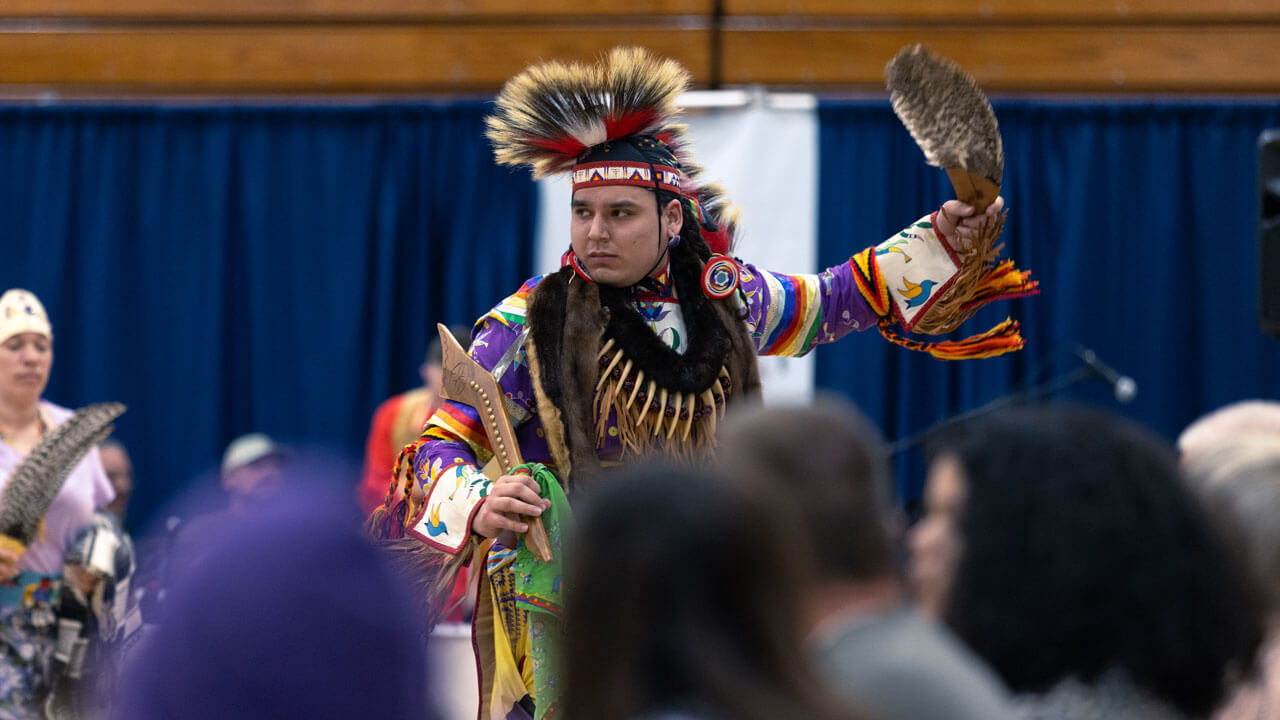
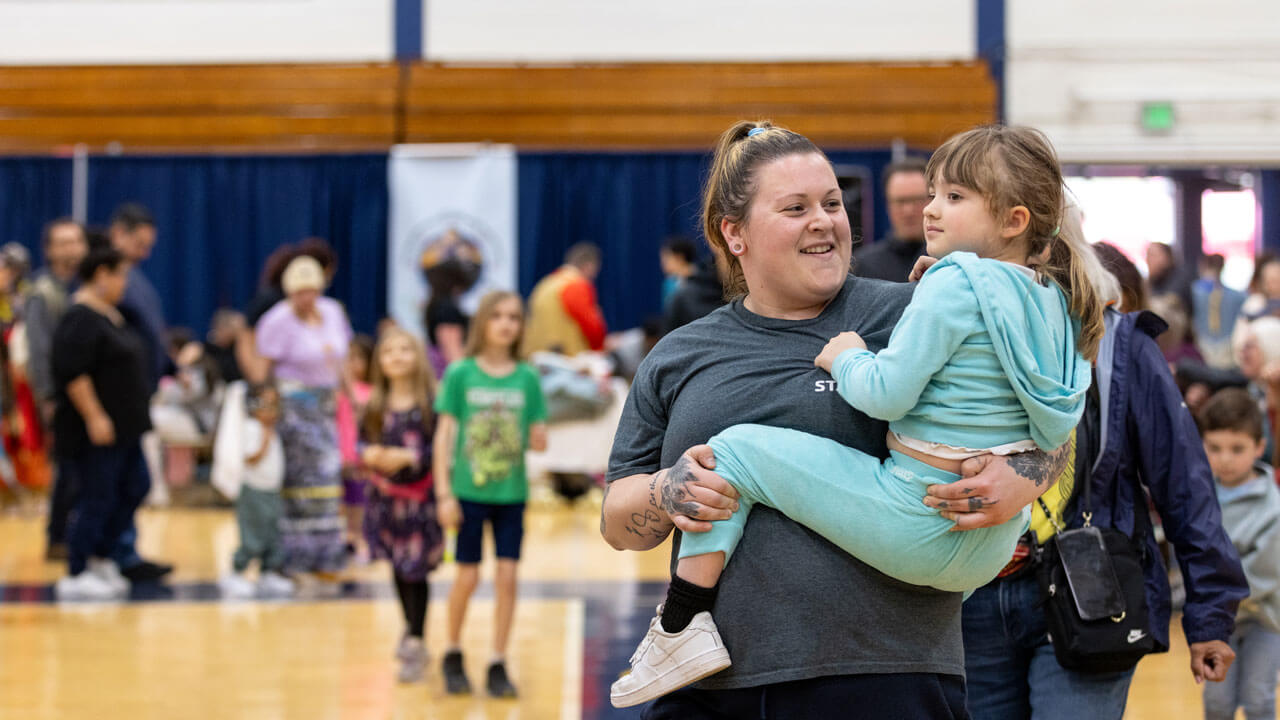
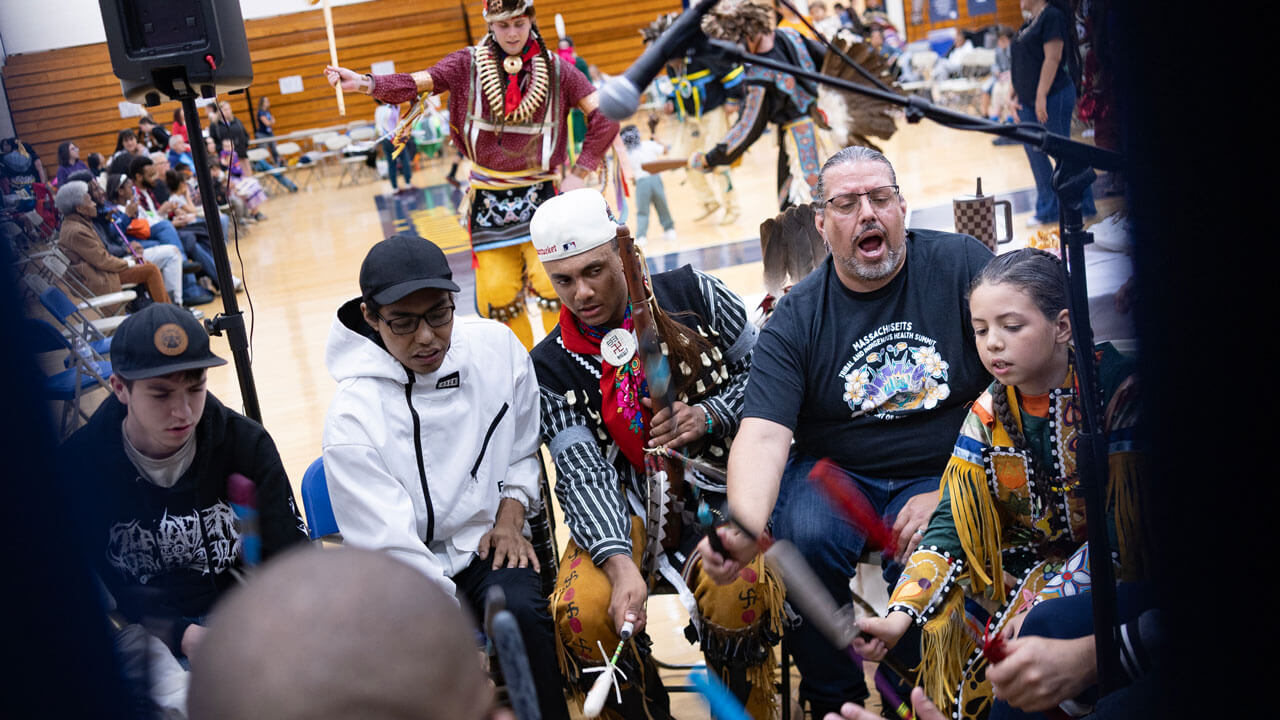
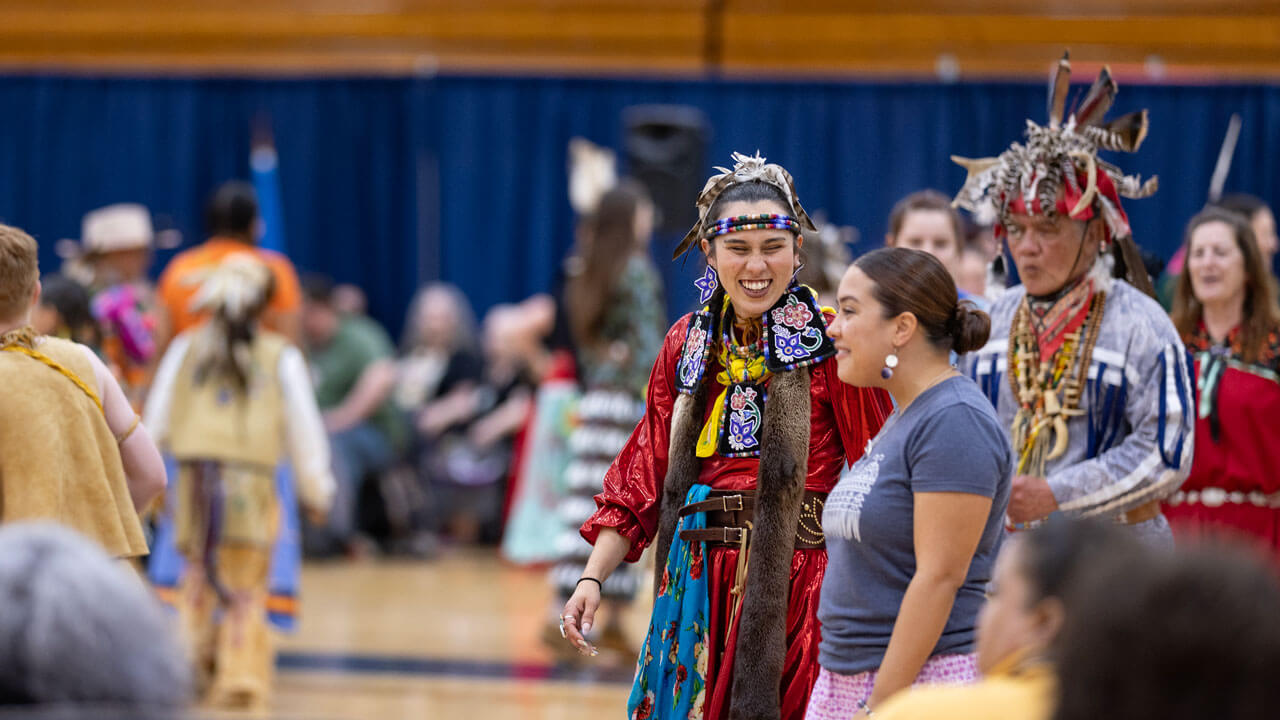
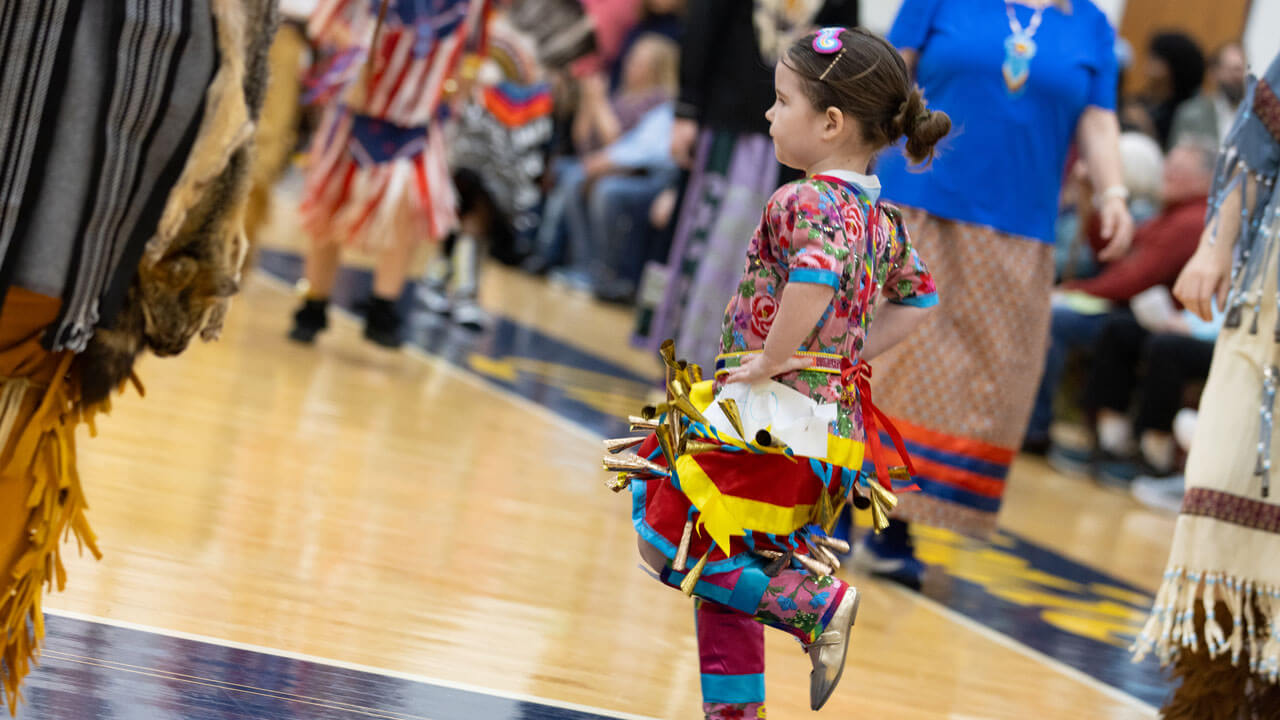
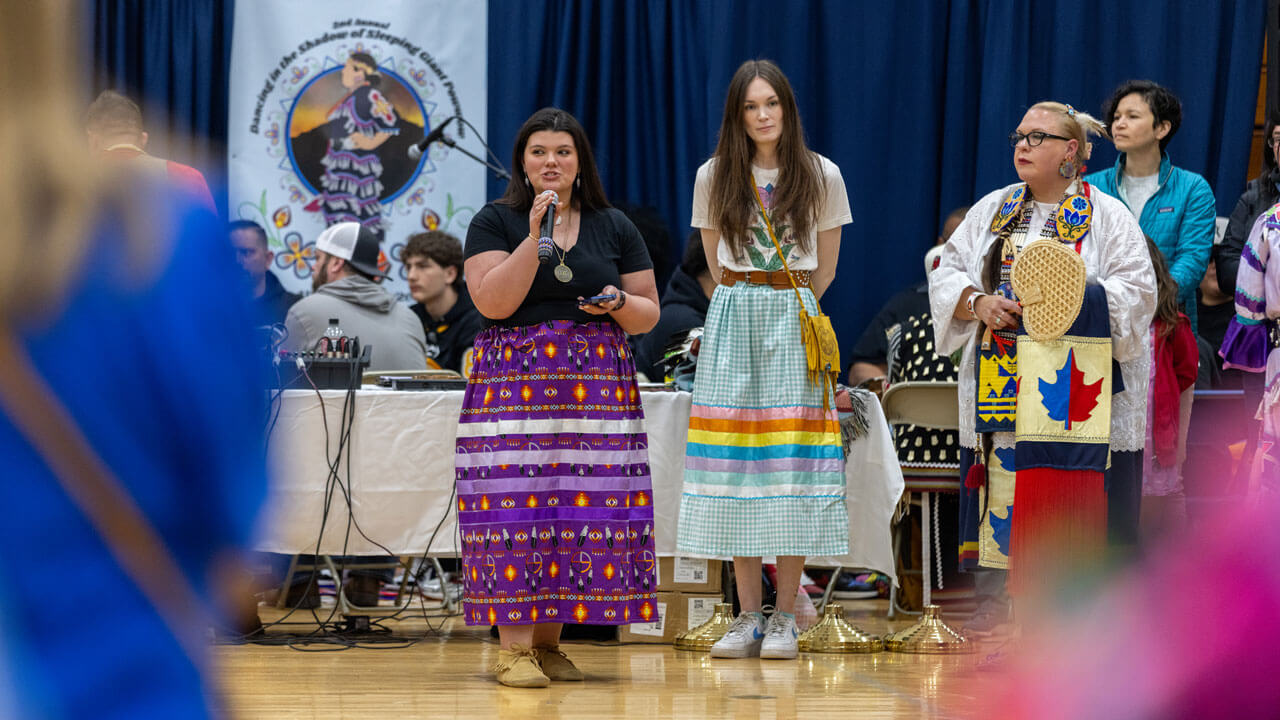
The powwow highlighted drummers and dancers from Connecticut’s five Tribal Nations: Golden Hill Paugussett, Eastern Pequot, Schaghticoke, Mashantucket Pequot and Mohegan.
The powwow was hosted by Quinnipiac’s Indigenous Student Union (ISU), the Office of Inclusive Excellence and the Indigeneity Initiative with additional sponsorship support from Quinnipiac’s Office of the President and Connecticut-based nonprofit Sunrise Healing Community Inc.
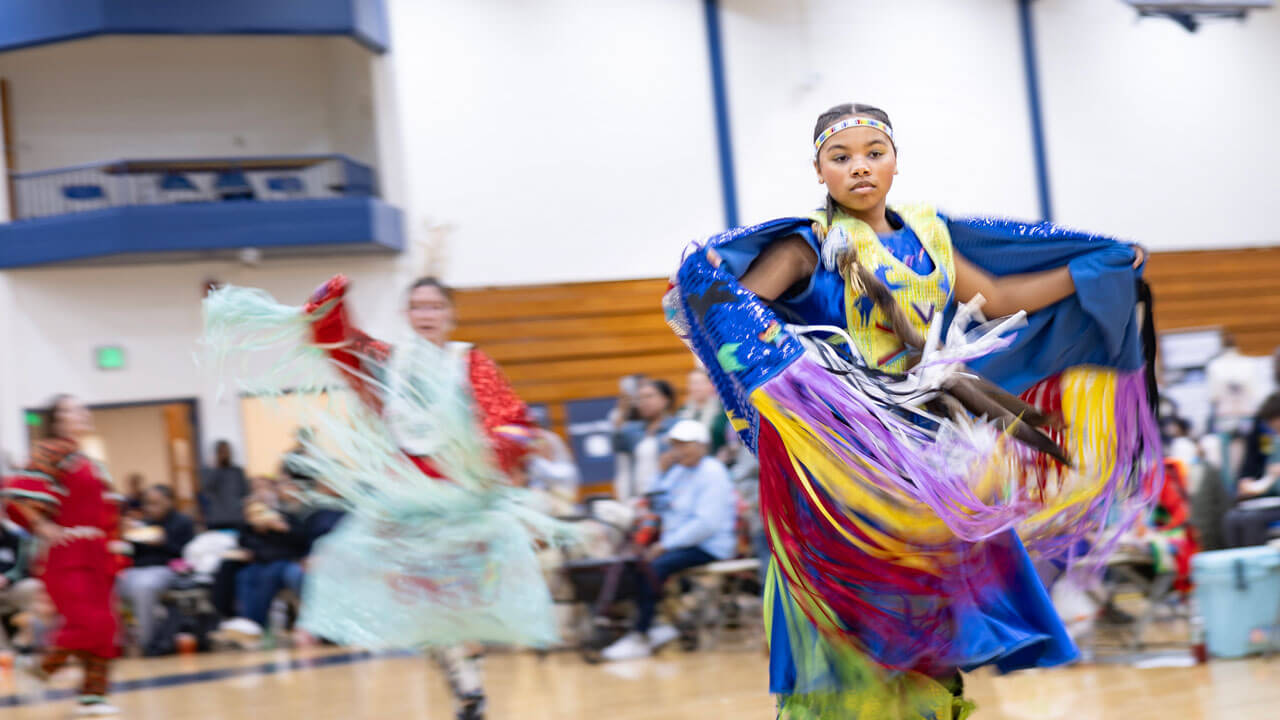
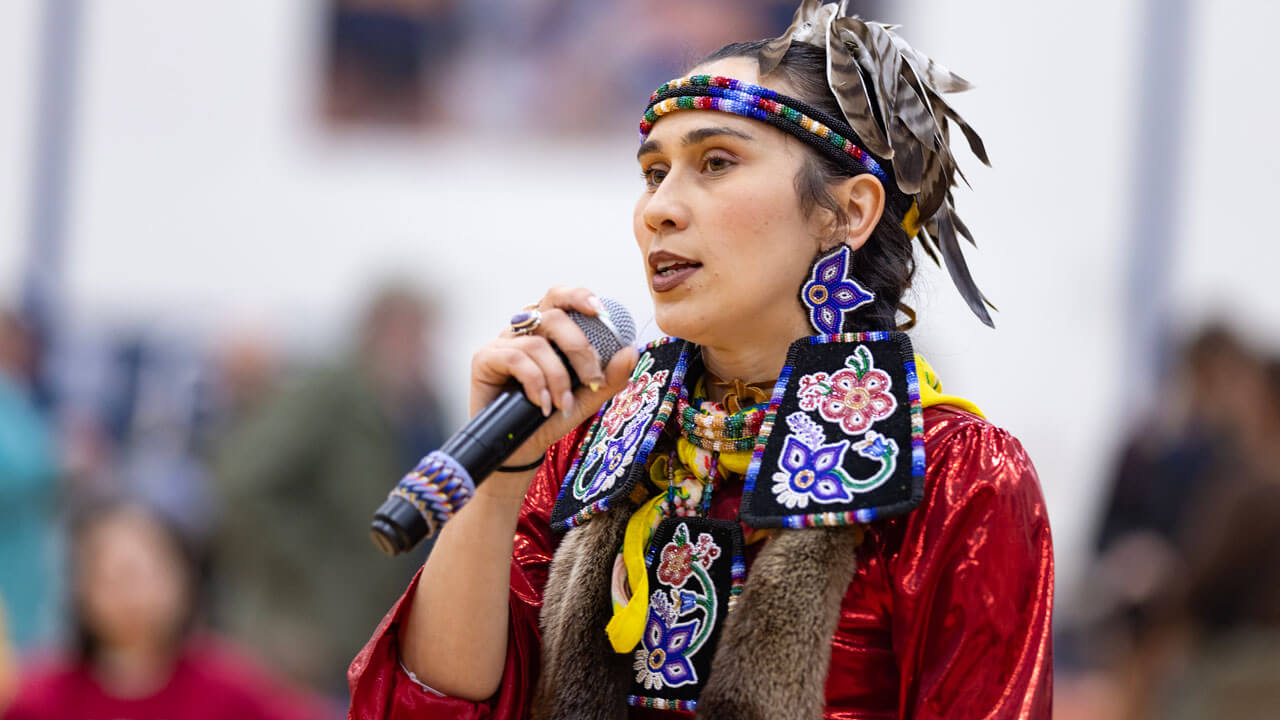
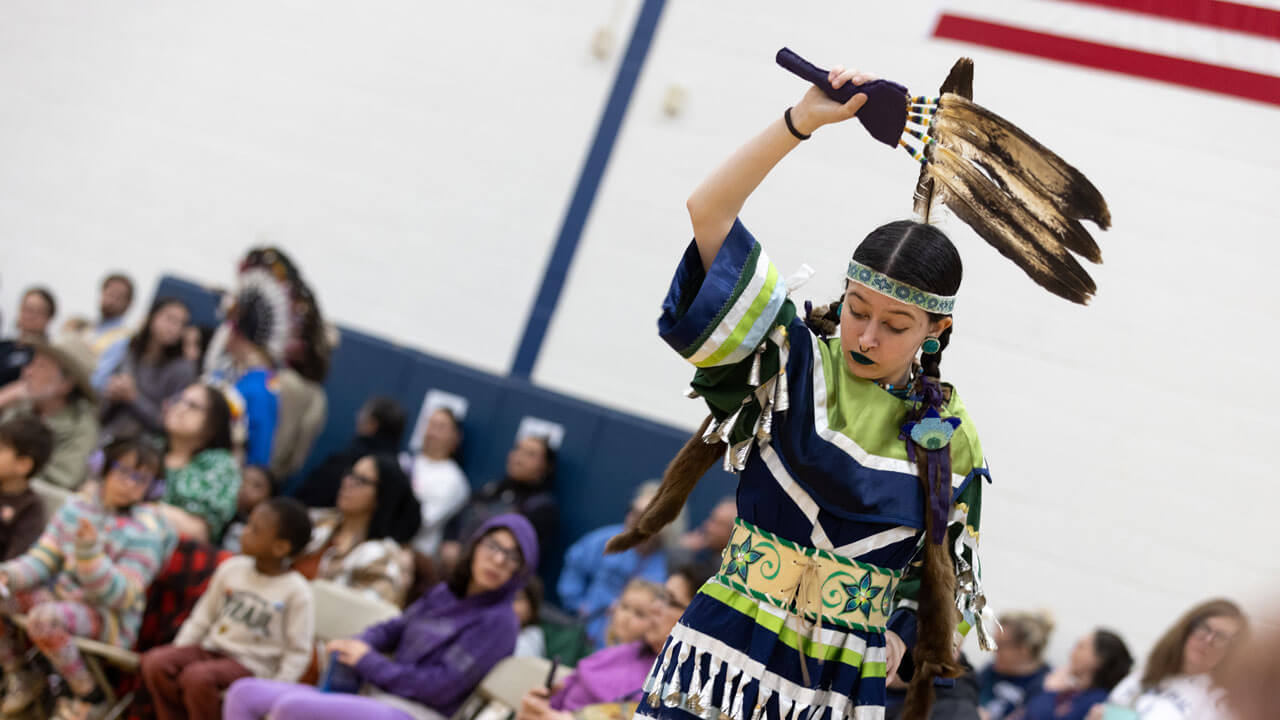
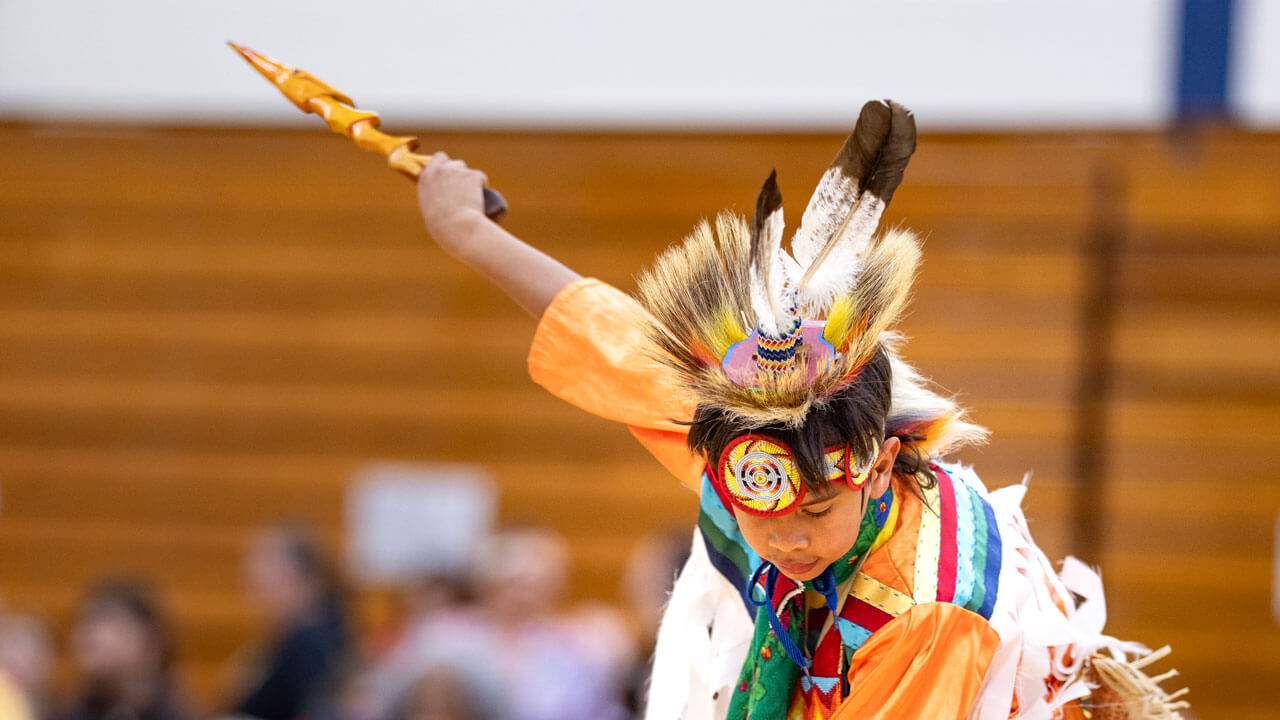
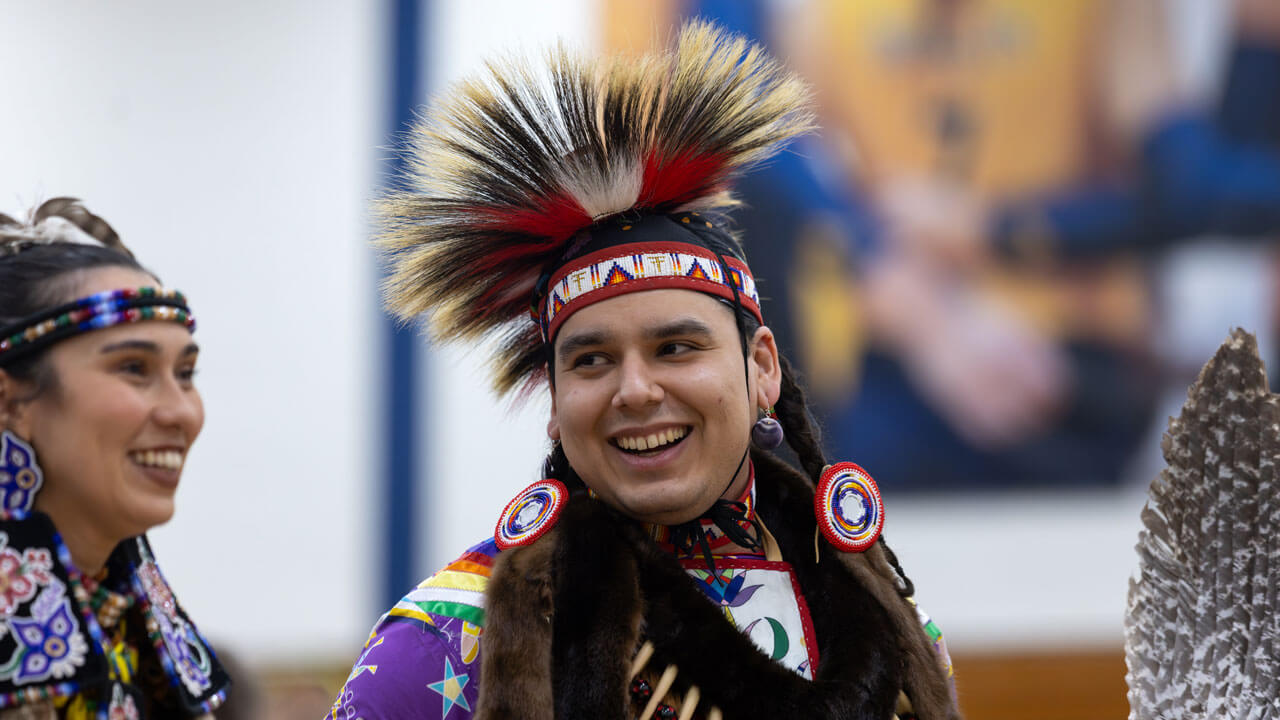
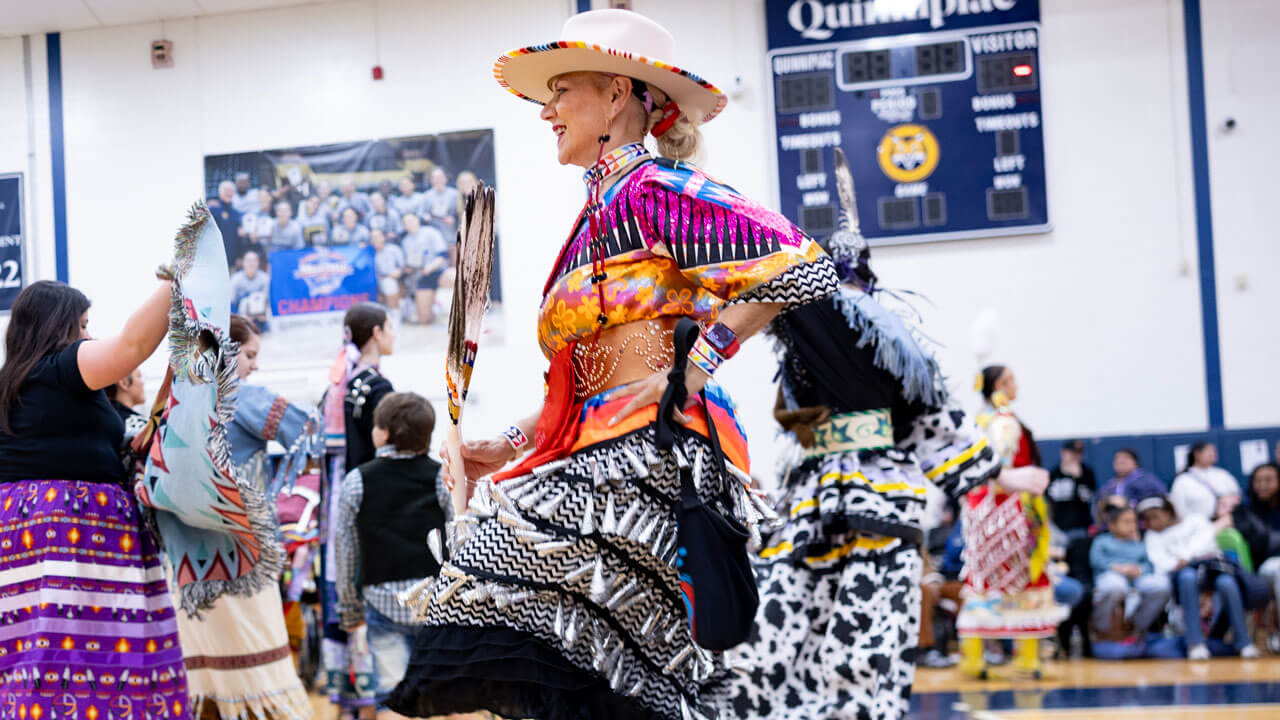
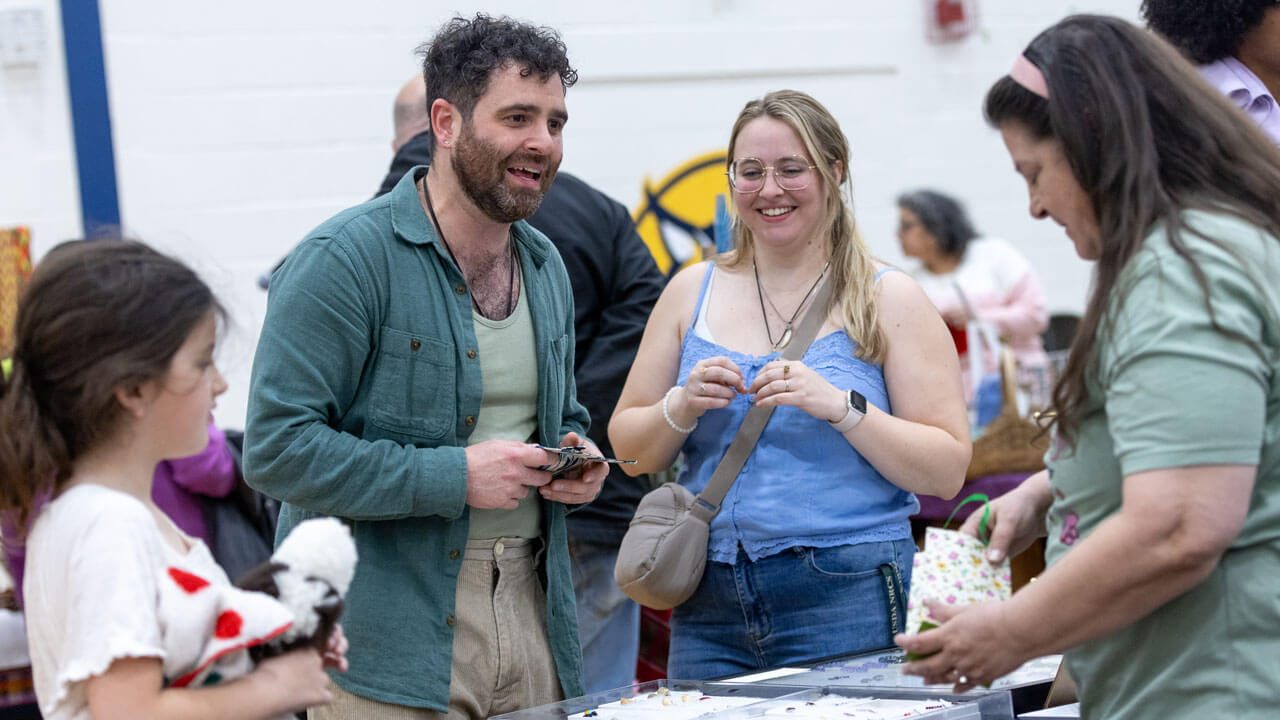
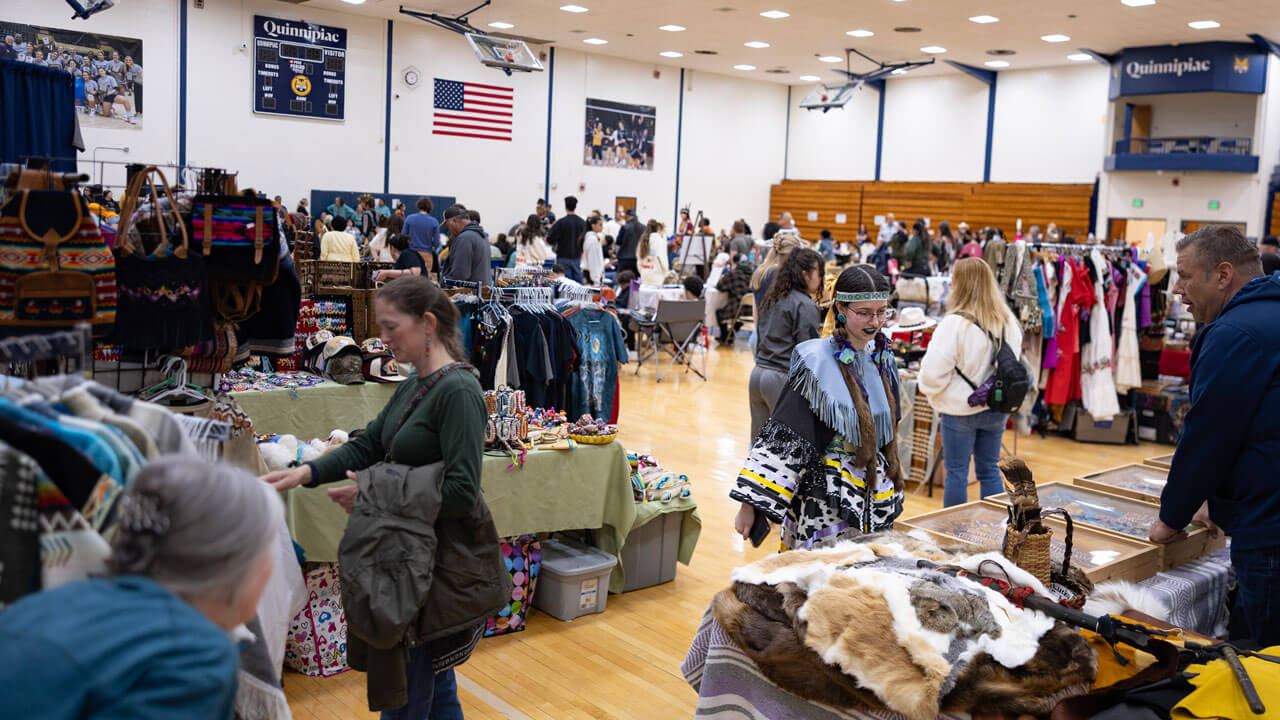
Featuring traditional drumming and singing, the artistry of dancers in colorful regalia, and a gallery of Indigenous arts, crafts and food vendors from across the Northeast, the powwow also offered educational experiences.
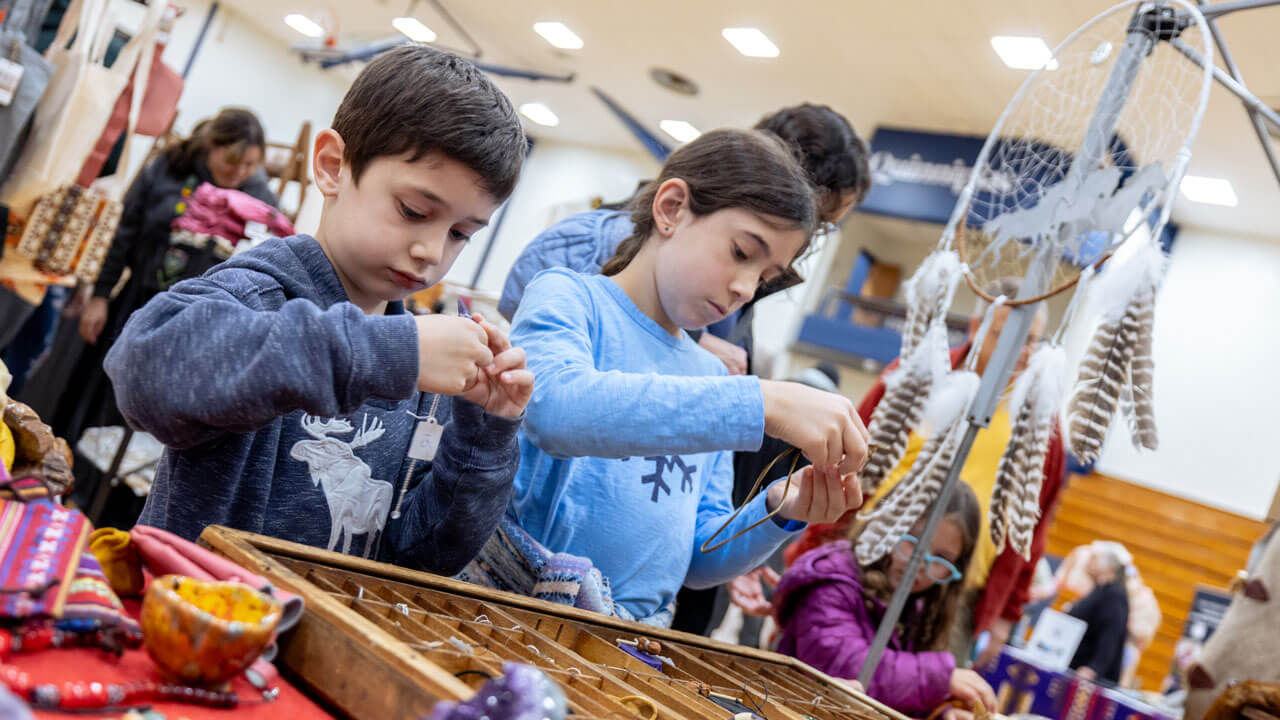
New this year, the Akomawt Educational Initiative Learning Tent was sponsored by the President’s Office, Chief Experience Office, Albert Schweitzer Institute, Office of Career Development and Experiential Learning, College of Arts and Sciences, School of Education, School of Health Sciences, School of Law, and School of Nursing.
“Through their sponsorship, they’ve been able to help us bring a more relational, community-centered component to today’s powwow,” said Powwow Committee member and Indigeneity Initiative member Jennifer Dauphinais, assistant professor of education.
The Akomawt Educational Initiative is dedicated to furthering Native American knowledge and education through innovative learning approaches. Co-founders Chris Newell (Passamaquoddy) and endawnis Spears (Dine/Ojibwe/Choctaw/Chickasaw) showcased traditional Indigenous tools and decorative pieces commissioned by the Indigeneity Initiative for the powwow.
Takeaway materials answered questions about powwow dance styles, etiquette and history.
“We wanted to increase people’s knowledge of powwows and provide a place where they could ask questions and get involved in a hands-on way,” said Newell. “You can learn a lot by watching a powwow and listening to the emcee, but sometimes you may have specific questions about the regalia, the drums, the dancing.”
Following a drum roll call featuring four tribal drumming groups, the powwow opened with a ceremonial grand entrance.
Elders, esteemed guests and dancers entered the arena to the beat of the welcome song, and Golden Hill Paugussett Tribal Nation Clan Mother Shoran Waupatukuay Piper gave the opening prayer. Immediate past ISU president and alumni advisor Aiyana Baker ’25 (Mohegan) asked participants and guests to share a moment of silence to honor ancestors.
“In our culture, the ancestors play such a large role in our lives,” said Baker. “Today, we thank them and honor them for all that they did so that we can be doing this. They continue to guide us through their signs, whether it’s a whisper in the wind, an eagle soaring above your head, the ripple in the river or a leaf falling near you."
Sunrise Healing Community Inc. founder, Quinnipiac ISU founder and alumni adviser Kiara Tanta-Quidgeon ’22 (Mohegan) said she established ISU in 2019 to foster cultural representation and ensure future Indigenous students would find a supportive community at Quinnipiac. What began with the formation of a modest three-person group seven years ago has surpassed even her most ambitious dreams, said Tanta-Quidgeon.
“When you look around at this event, know that this is something that I only ever dreamed we would have at Quinnipiac. This powwow has doubled the size of our event last year. We’re so happy to see so many returning faces but also so many new faces that are here celebrating with us,” said Tanta-Quidgeon.
She also thanked the Indigeneity Initiative for its continued support. Faculty members within the initiative work with the university to uplift knowledge of indigenous history, culture and its meaning across the Quinnipiac community.
“I’m so thankful for all of the faculty that have been supportive throughout the years who have been able to bring us to this point, and I’m thankful for the opportunities we have to continue growing this organization,” Tanta-Quidgeon said.
Current ISU president Alexiyah Hazard ’27 (Mashantucket Pequot), said ISU hosts several informational events and activities during the academic year to help build awareness at the university.
In the lead up to the second annual powwow, ISU hosted its second annual Powwow Dancing Workshop on April 17. The event in the RecWell Center was offered in partnership with Sunrise Healing Community Inc.
Hazard said she’s grateful to see awareness of Native American culture growing at the university with the continued support of Tanta-Quidgeion, Baker, the ISU eboard, the Indigeneity Initiative and Quinnipiac.
“Before coming here my first year, we didn’t have a powwow at all, so I’ve been able to see all of those smaller events through the years turn into bigger events, and now this, our second annual powwow, which is a huge thing for Quinnipiac. It has helped to bring so much more awareness to the school,” said Hazard.
In her remarks, President Marie Hardin recognized the powwow’s cultural significance and importance.
“I can’t tell you what an honor it is to be at this intertribal powwow at Quinnipiac University,” Hardin said. “This is not just an event. This is a living expression of identity, and I am so pleased and honored and grateful to everyone that has made this happen."
Hardin also shared a moving personal story about the regalia she was humbled to wear, gifted by a treasured friend, the late John Sanchez. A member of the Apache Nation and a respected scholar at The Pennsylvania State University, Sanchez founded the annual Penn State powwow. For many years, Hardin had worked closely alongside Sanchez to help organize and support the program. This year, just weeks before the 20th annual Penn State powwow, Sanchez passed away.
“He asked me, over the years, to call him ‘Uncle,’ which I was honored to do. One of the last things he did for me was to give me this regalia, and he asked me to wear this to the first Quinnipiac University intertribal powwow that I attended. So I do this not to center myself, but to keep a promise, joyfully and to acknowledge the meaning, history and relationships that happen through these powwows,” said Hardin.
Hamden Mayor Adam Sendroff underscored the significance of the powwow within the community and highlighted the strong relationship between the Town of Hamden and Quinnipiac University.
“It thrills me to be here today to celebrate and honor Indigenous culture and traditions. I’m particularly happy that we are celebrating on the campus of Quinnipiac here in Hamden, Connecticut at the base of Sleeping Giant,” said Sendroff.
As Hamden celebrates its 240th anniversary and the United States marks its 250th year, Sendroff said these milestones create opportunities to reflect on the past, present and future.
“Honest accounts of history need to be told, discussed and understood. Injustices, past and present, should not be minimized or swept under the rug and neither should stories of courage, achievement and resilience,” said Sendroff.
Aligning with the Indigenous peoples’ deep connection to the land and its ecosystems, Sendroff noted the Town of Hamden, with many partners, is pursuing projects tied to environmental sensitivity and stewardship.
Thanks to the generosity of Quinnipiac, a new outdoor mural honoring the Indigenous Quinnipiac people will soon rise in Hamden, said Sendroff.
“This project represents the partnership and positive relationship between the Town of Hamden and Quinnipiac University for which I am grateful,” said Sendroff.
Created by world-renowned artist ARCY and sponsored by Quinnipiac, the mural will be an homage to the Quinnipiac people and the natural world.
To see the area blossoming with a growing awareness of Native American culture and to see Quinnipiac supporting students, faculty and the Indigenous people through the powwow’s powerful message is gratifying, Newell said.
“As someone who has worked with this university over the years to help improve things for Native students here, just having the powwow is a huge step,” said Newell. “But now we’re seeing it start to grow. You can see the evidence of that by how full this event is. There’s a lot of interest, and this is an opportunity for the Native students to showcase what they can do.”
In Focus
In this Article
Read This Next














Stay in the Loop
Quinnipiac Today is your source for what's happening throughout #BobcatNation. Sign up for our weekly email newsletter to be among the first to know about news, events and members of our Bobcat family who are making a positive difference in our world.
Sign Up Now