


Quinnipiac Law’s 2026 Human Trafficking Awareness Week panel debates state’s need for a Survivors Justice Act
February 23, 2026
February 23, 2026
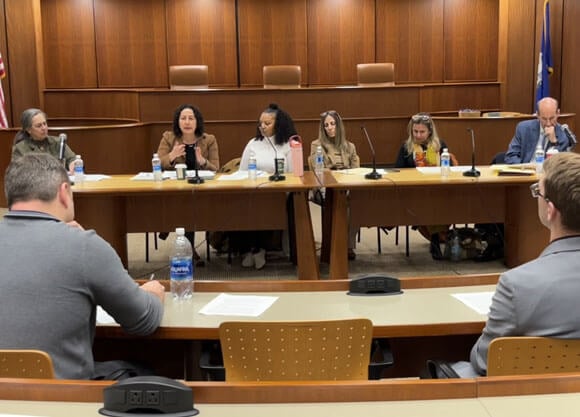
Sponsored by Quinnipiac University School of Law’s Human Trafficking Prevention Project (HTPP) in partnership with the Connecticut Bar Association, Connecticut Bar Foundation, and the James W. Cooper Fellows Program, the week-long series examines the intersection of trafficking and the legal system with a focus on reforms that support victims and prevent exploitation.
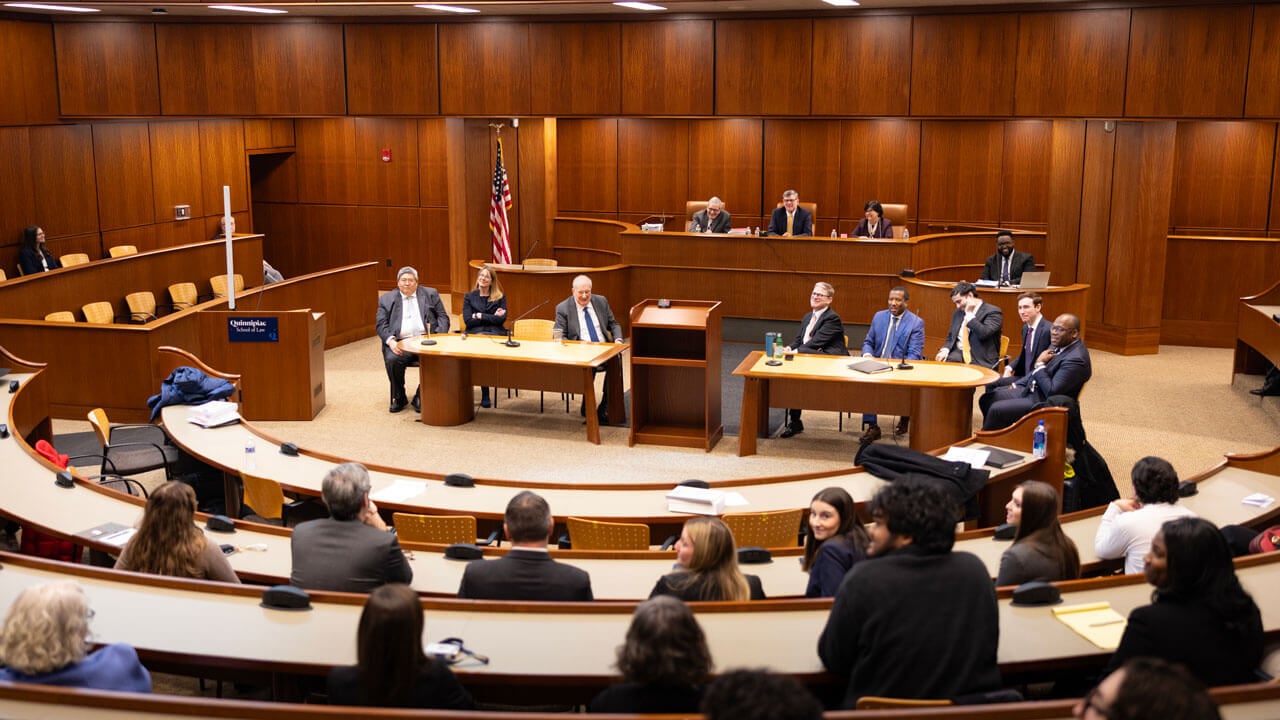
On February 18, the powerful panel discussion centered on the nuances and issues within a proposed Connecticut Domestic Violence Survivors Justice Act (DVSJA). The proposed act is headed for the current state legislative session (February 4 – May 6, 2026). While SJA versions have passed in New York and other states, Connecticut legislators rejected SJA proposals SB-1502 and HB-7236 in the last session.
The proposed DVSJA provides for the possibility of sentencing reduction or relief for criminal offenders who are survivors of domestic violence, sexual assault, stalking, or human trafficking where their victimization was a “significant contributing factor to the commission of the offense.” The act also proposes a sentence reduction table (years of imprisonment) for court use as a basis for imposition of reduced sentencing related to existing law’s sentences.
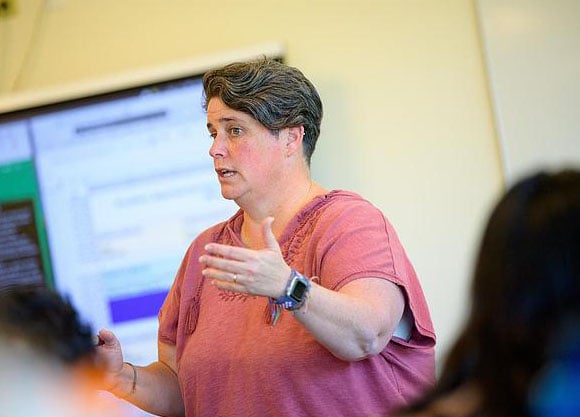
Quinnipiac HTPP faculty advisor and Clinical Professor of Law Sheila Hayre shared with the audience that a significant concept within the panel discussion is thinking about and considering the vulnerabilities that trafficking victim survivors face at various stages in their trafficking and recovery.
“One of things we tried to highlight is why do these victims, these survivors, remain hidden throughout the process? And I hope that today you will gain greater insight into some of those issues,” said Hayre.
The panel was moderated by Hon. Joette Katz, Connecticut Supreme Court Justice (ret.) and Department of Children and Families Commissioner (ret.). In addition to leading panelists in discussion, she explained that the proposed legislation does not exonerate the defendant, nor does it provide excuses for criminal conduct. Its intent is simply to permit courts the opportunity to impose a sentence (or, in cases where a defendant already has been sentenced, to reduce a sentence), in consideration of that defendant’s status as a victim survivor.
Years of professional experience, as well as lived experiences, were represented by the panel. Members were New Haven State's Attorney John P. Doyle, Connecticut Division of Criminal Justice; Audrey A. Felsen, Esq. Partner, Koffsky & Felsen, LLC, (Connecticut); Kate Mogulescu, Professor of Clinical Law and Criminal Defense & Advocacy Clinic Director, Brooklyn Law School (New York); Tammara McCoy, Outreach Specialist, Survivor's Justice Project (New York); Erin Williamson, Chief Program and Strategy Officer, Love 146 (Connecticut), and Hayre.
State’s Attorney Doyle shared the prosecutorial perspective on the issue. As the chief law enforcement officer in the Judicial District of New Haven, he is responsible for the supervision of the prosecutors’ offices at the Part A Judicial Superior Court in New Haven, G.A. No. 23 (New Haven), G.A. No. 7 (Meriden) courts and the Superior Court for Juvenile Matters and Housing Sessions in New Haven. He earned his Juris Doctor Degree from Quinnipiac University School of Law and has been an adjunct instructor at Quinnipiac University since 2001.
With over 25 years of experience devoted to the practice of criminal defense, Felsen represents individuals at every stage of state and federal criminal proceedings, from early investigation through trial, as well as in post-conviction matters and record erasure proceedings. She is admitted to practice in Connecticut and before the United States District Courts for the District of Connecticut and the Southern District of New York, as well as the United States Court of Appeals for the Second Circuit.
Mogulescu discussed similar legislation enacted in New York and outcomes related to its enactment. Her work and scholarship focus largely on gender, sentencing and issues in the criminal legal system, with a focus on gender-based violence, intimate partner abuse, sex work and human trafficking. She served as a public defender at The Legal Aid Society for 14 years and has founded several projects, including the Exploitation Intervention Project (2011), the Survivor Reentry Project (2016) and the Survivors Justice Project (2020), where she currently serves as the Legal & Policy Director.
McCoy is an Outreach Specialist with the Survivors Justice Project and a justice-impacted advocate who was released under New York’s Domestic Violence Survivors Justice Act after serving 16 years of a 25 years-to-life sentence. McCoy shared how her advocacy and community-building work is deeply informed by her lived experience navigating incarceration, resentencing, and reentry.
At Love 146, a statewide service provider dedicated to combating child trafficking and exploitation, Williams has led the development of comprehensive programs including prevention education and survivor care, supporting over 1,000 youth. Her expertise spans social services and criminal justice, with a focus on human trafficking and child sexual exploitation.
One factor brought into focus by the panel discussion are current reasons why a person’s experience of survivorship may be minimized or secured within the criminal justice system. Another important aspect raised for attendees to consider is that many survivors may not recognize their own victimization until many years later, if at all.
On the opposite side of the debate were questions such as whether legislators may realize much of what the proposed act sets out to achieve has already been recognized by the State of Connecticut and in the way law is practiced in the state and in factors taken into account by prosecutors, defense attorneys, and judges. Additionally, imposing a table of reduced sentences could negatively impact crime victims, as well as unfairly treat defendants of similar crimes who may not be able to show victimization qualification for sentence reductions.
The panel also participated in a robust question and answer session with audience members following the close of panel discussion. On behalf of Quinnipiac HTPP, Executive Chair Victoria Caputo JD ’27 thanked the panel and attendees for engaging in the night’s important conversation and for participating in Human Trafficking Awareness Week.
“Your presence here matters. It reflects a willingness not only to learn but to engage with one of the most urgent injustices of our time, one that too often remains hidden in plain sight. Tonight’s event is an opportunity to learn, reflect and recommit ourselves to the values that brought many of us to law school in the first place,” Caputo said.























Quinnipiac Today is your source for what's happening throughout #BobcatNation. Sign up for our weekly email newsletter to be among the first to know about news, events and members of our Bobcat family who are making a positive difference in our world.
Sign Up Now