


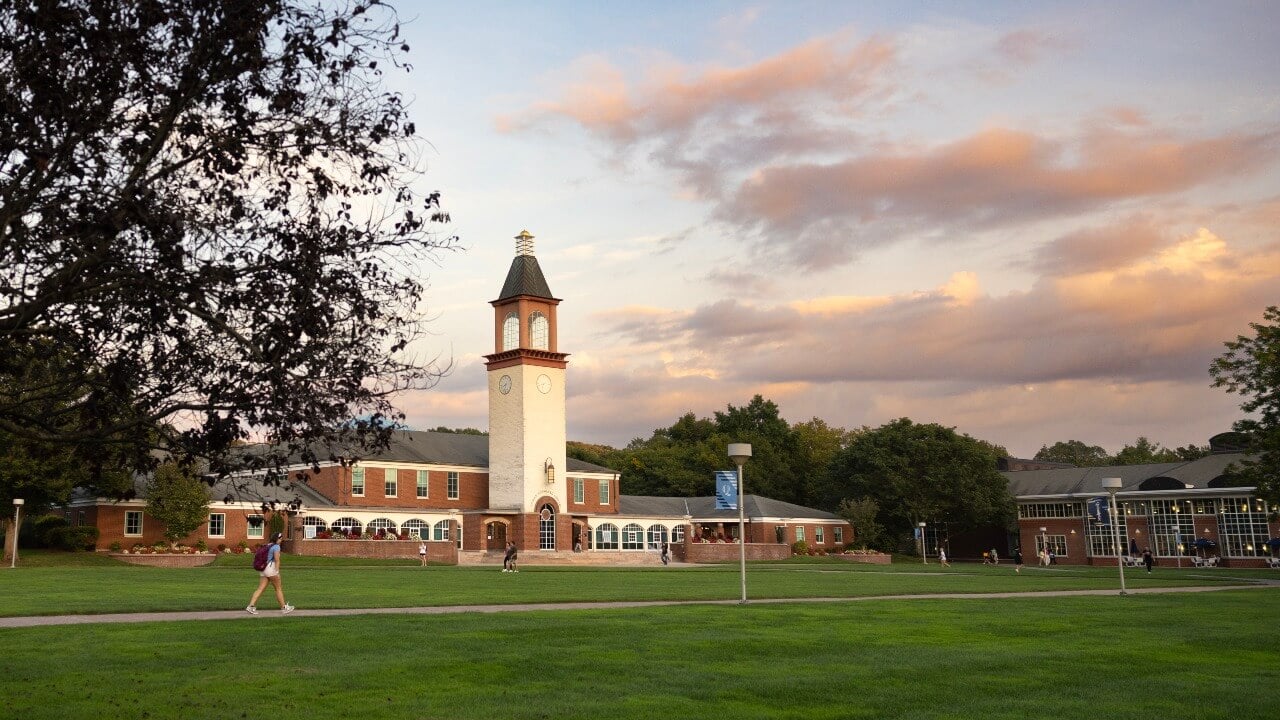
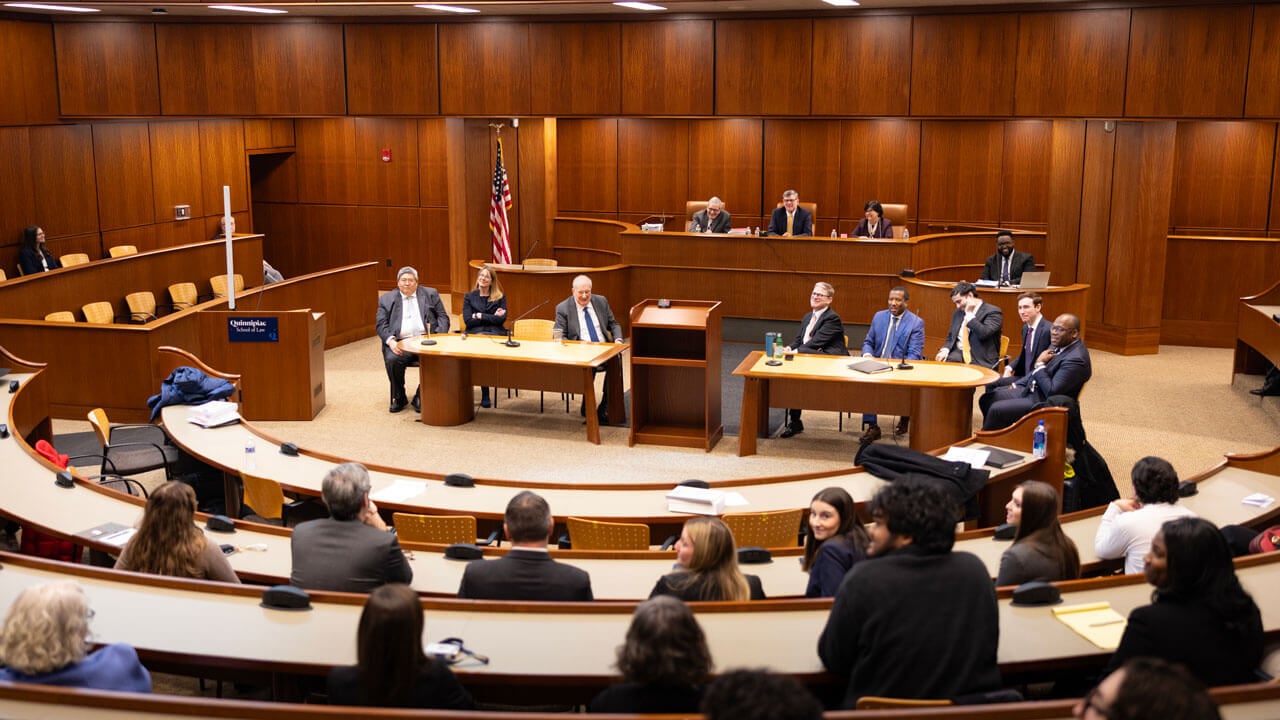
The appearance marked the first time the federal appellate court has selected the university for an “On Circuit” outreach sitting.
While Quinnipiac has hosted judicial programming before, including the Connecticut Appellate Court, the Second Circuit’s presence represented a significant moment in its commitment to experiential learning.
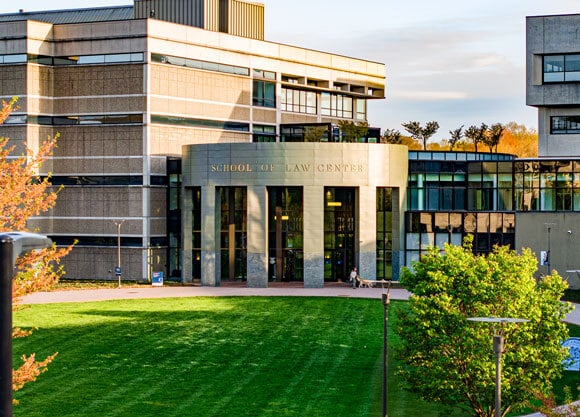
For Brian Gallini, dean of the School of Law, the visit was more than a milestone. It embodied the experiential approach central to Quinnipiac Law’s curriculum.
“Hosting the Court aligns squarely with our commitment to preparing students for practice from day one,” said Gallini. “Experiences like this give students a direct look at how appellate advocacy unfolds in real time, reinforcing the habits of careful analysis, clear writing, and professional communication that we emphasize throughout the curriculum.”
The United States Court of Appeals for the Second Circuit hears appeals from federal district courts across Connecticut, New York, and Vermont. Although the court is based primarily in New York City, it occasionally holds outreach sessions at law schools within its jurisdiction to promote public understanding of the federal judiciary and provide educational opportunities for students.
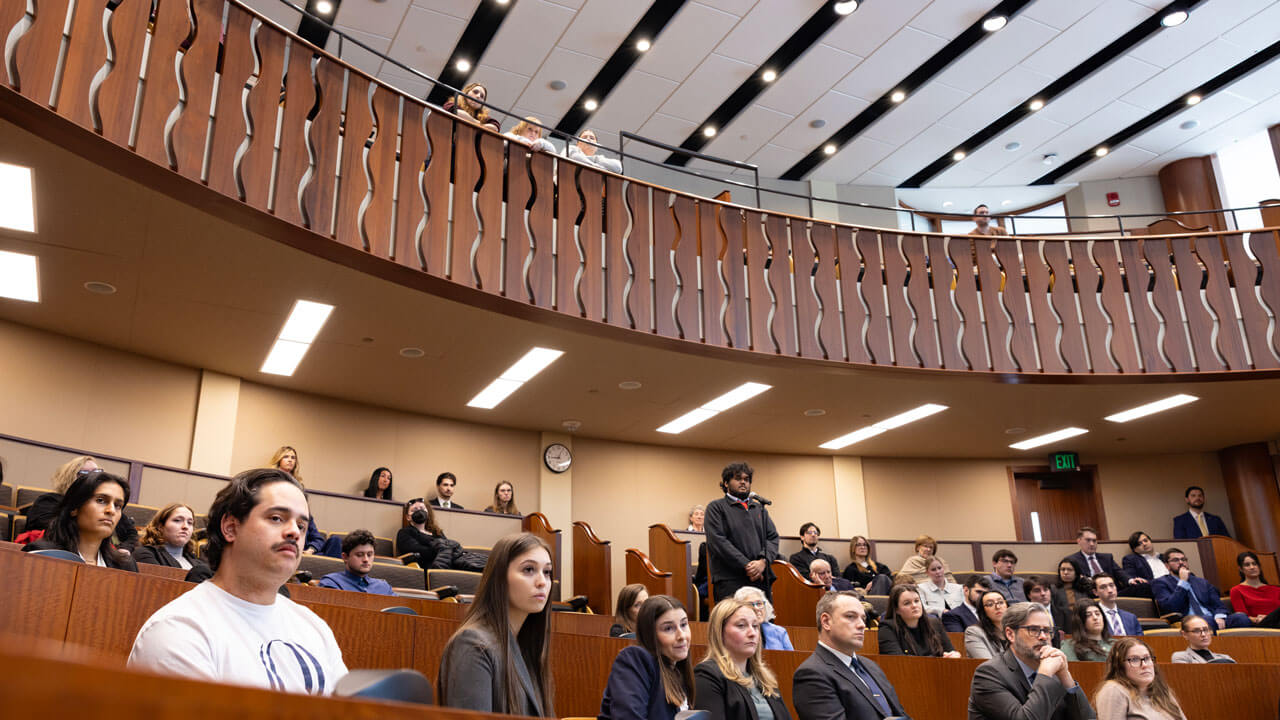
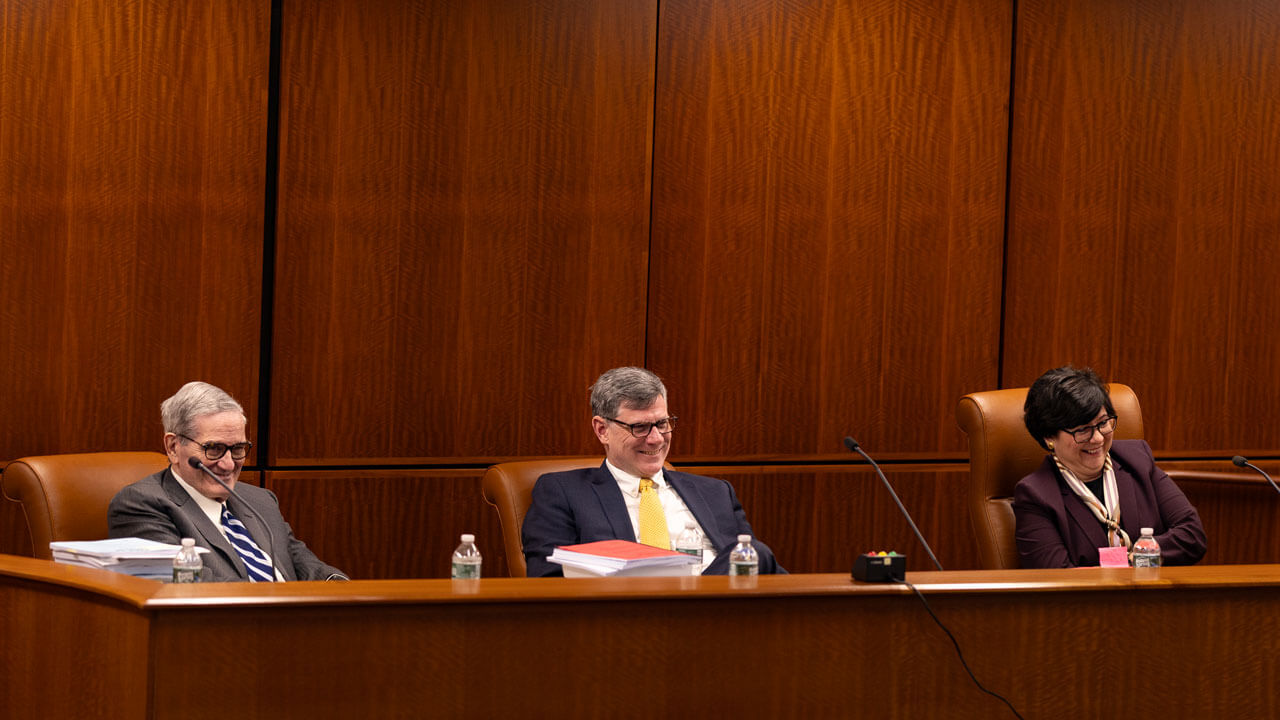
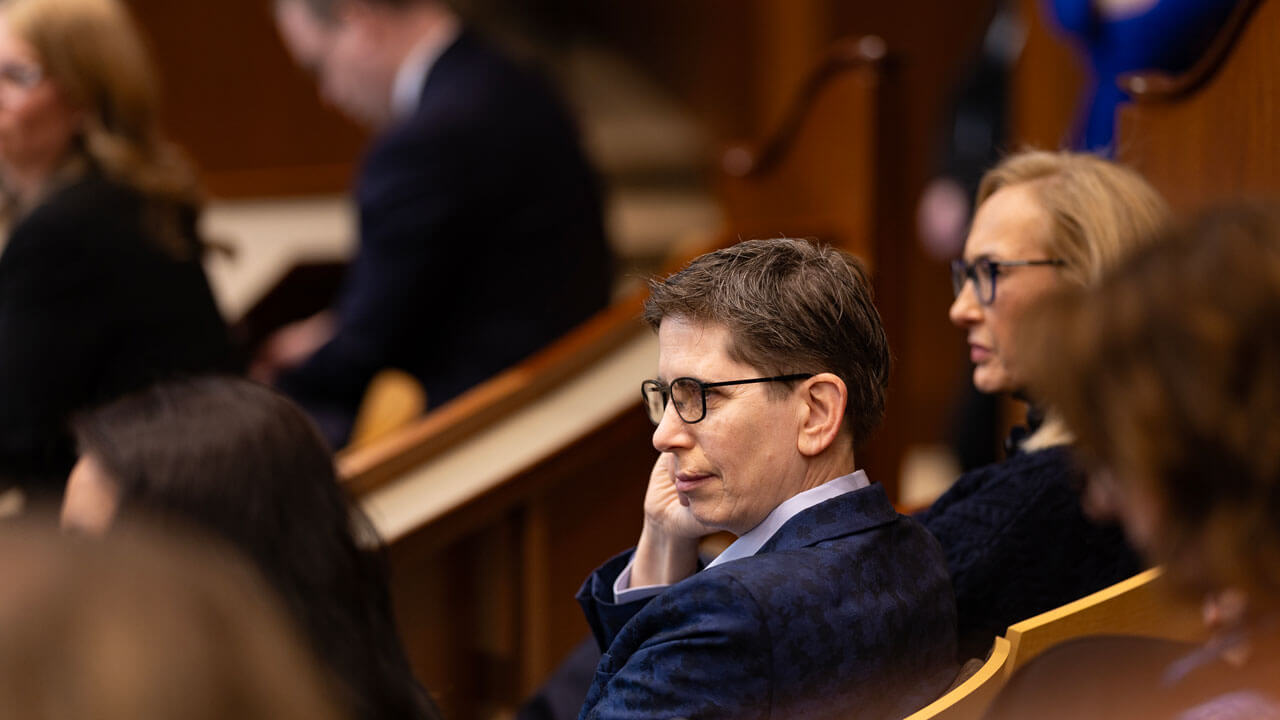
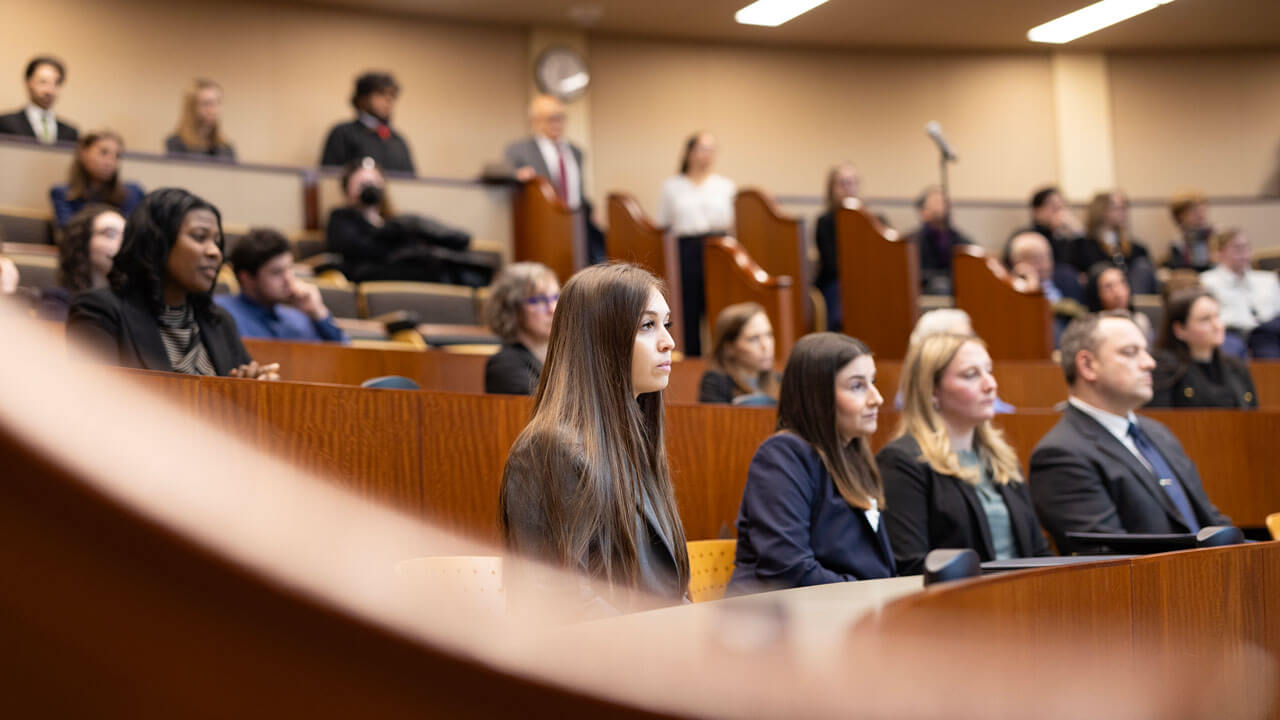
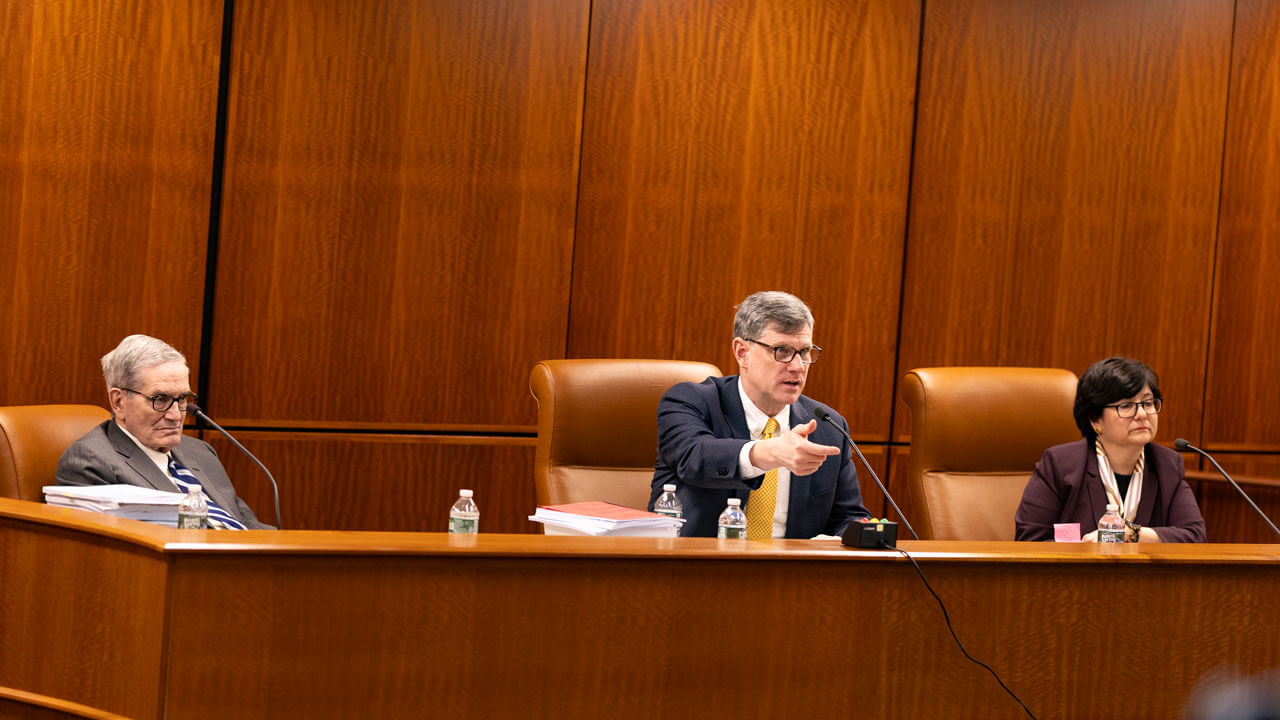
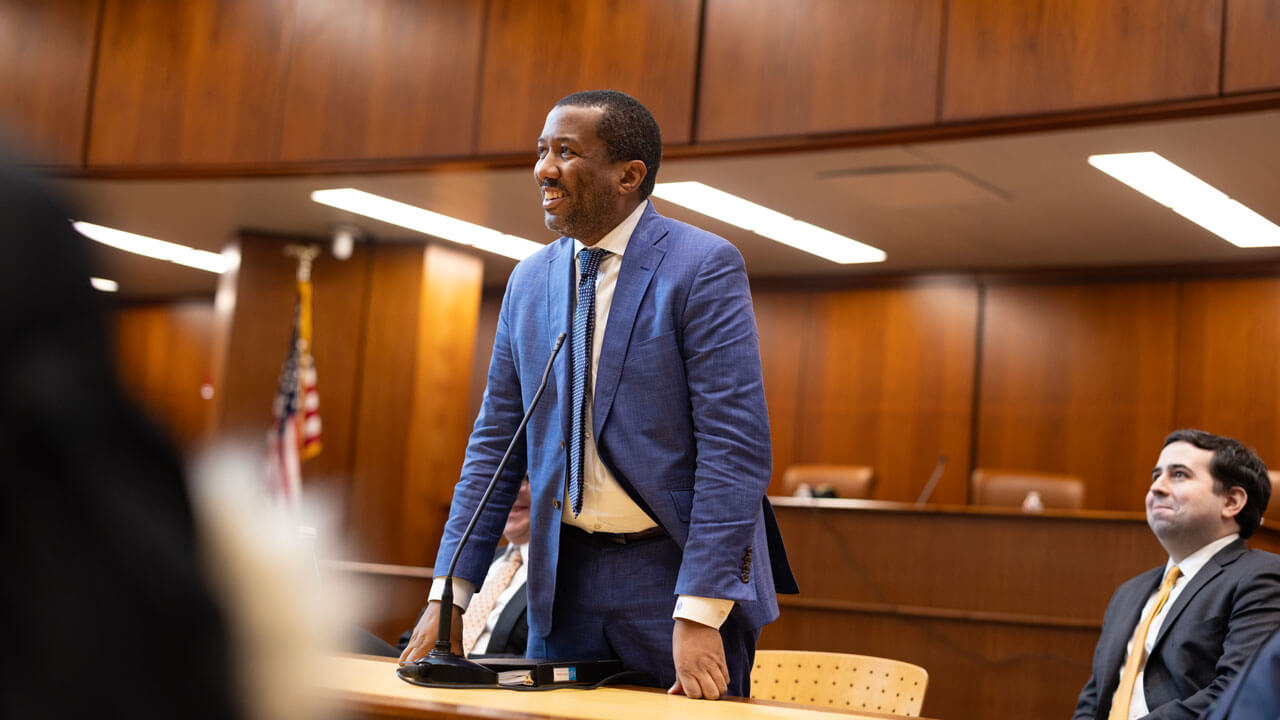
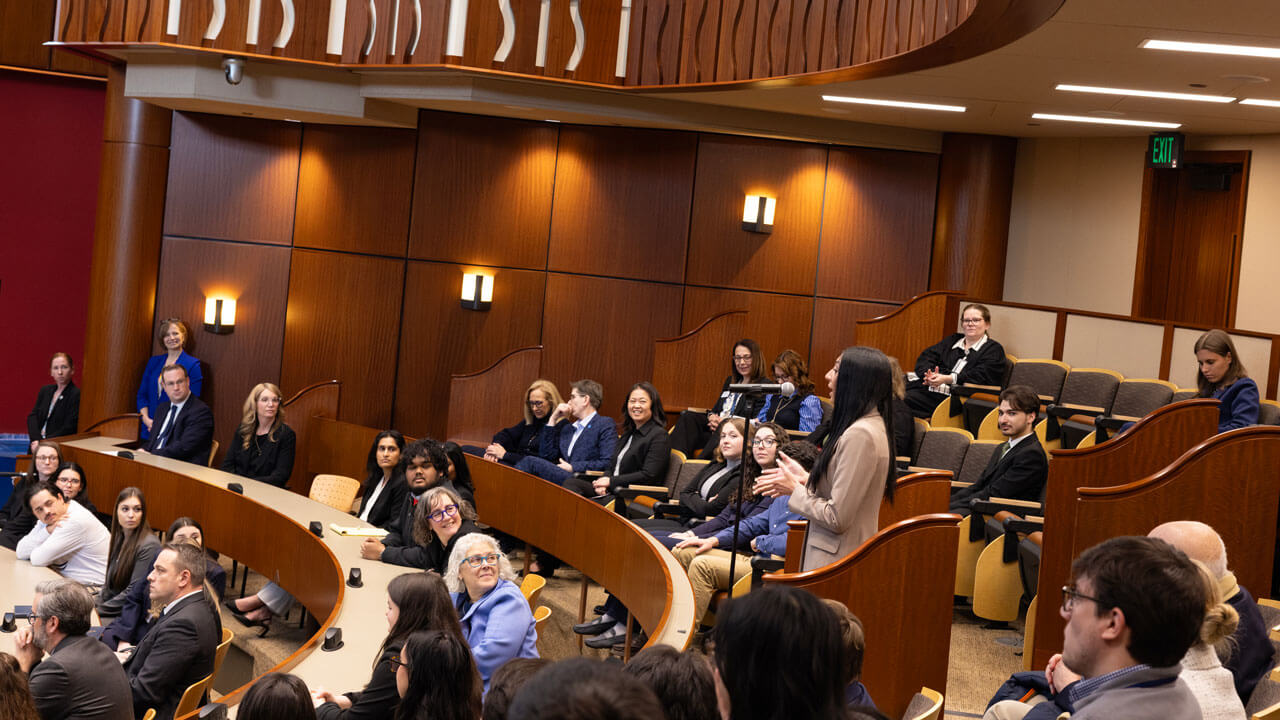
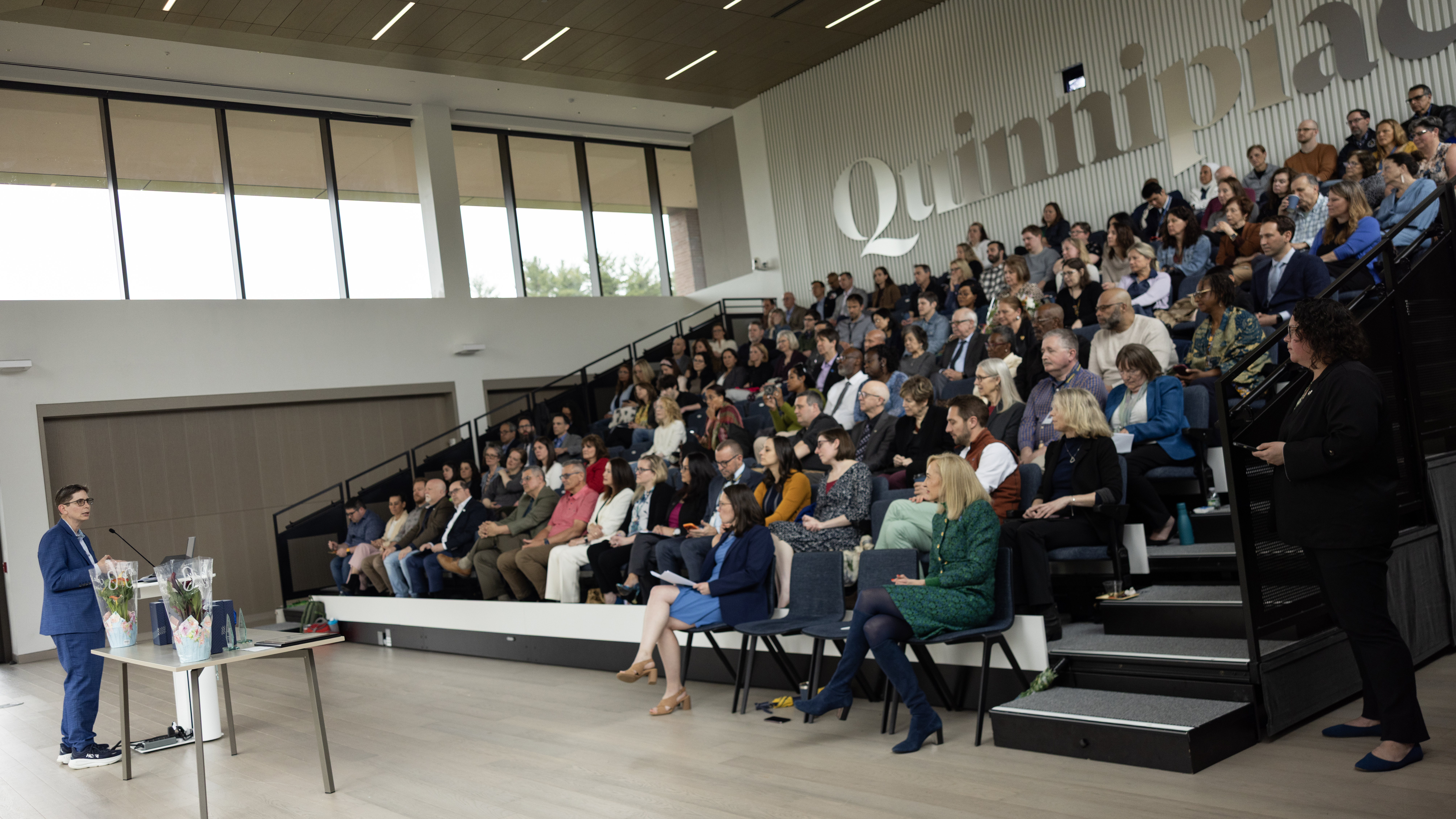
Students, faculty, legal professionals, and community members filled the courtroom to observe live oral arguments before U.S. Circuit Judges José A. Cabranes, William J. Nardini, and Maria Araújo Kahn, offering a rare opportunity to witness federal appellate advocacy one level below the Supreme Court of the United States. During the session, the panel considered three federal cases spanning corporate liability, criminal procedure, and constitutional rights.
“Seeing federal judges engage with advocates, and with each other, offers students a level of insight that simply cannot be replicated in a classroom,” said Gallini. “They witness the precision of argument, the role of judicial questioning, and the dynamics of how legal issues are shaped at the appellate level. It hopefully demystifies the process and makes the work feel more accessible and tangible.”
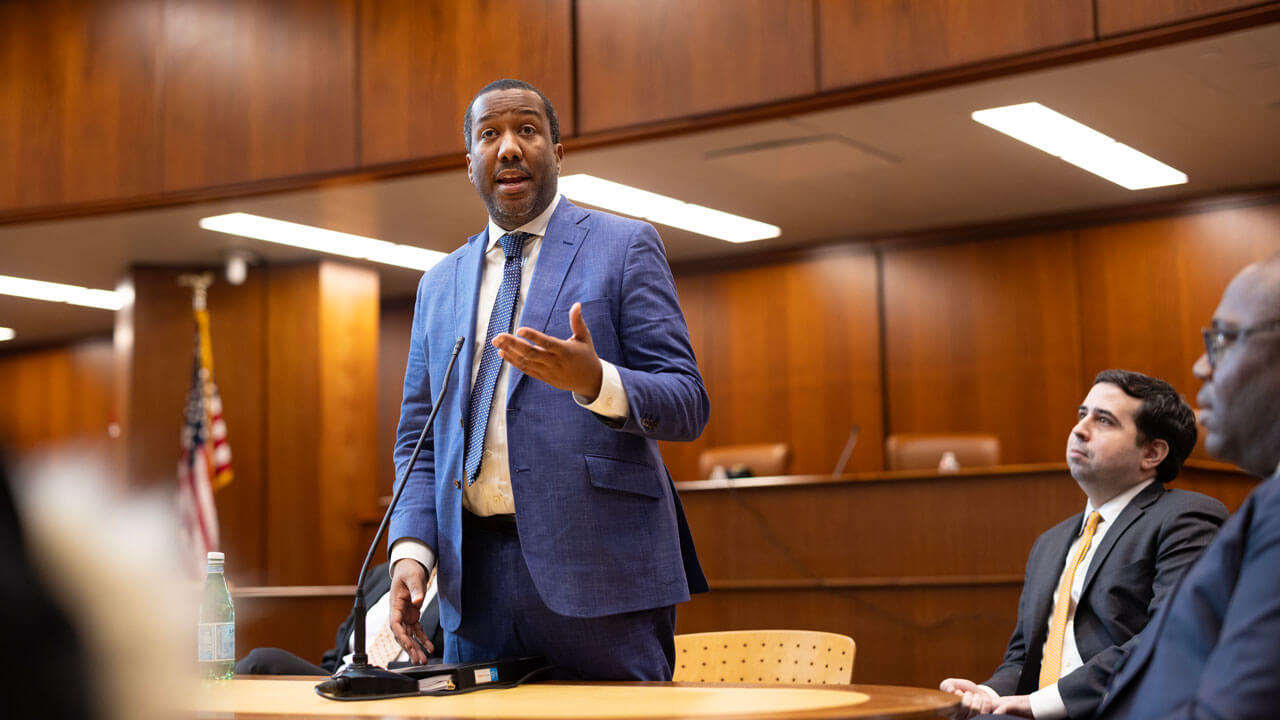
The panel heard arguments in three federal cases highlighting the range of issues often before the court: Mike D. Henig, Henig Furs versus Amazon.com Inc. et al., examined whether Amazon can be held liable under the False Claims Act for alleged customs fraud by third-party sellers using its platform; United States versus Ivanjoel Aryeetey, addressed whether a criminal conviction and 78-month sentence were improper due to late-disclosed DNA evidence; and Darryl Brown versus Letitia James, Anthony J. Annucci et al., considered whether a defendant’s due process rights were violated when a jury was barred from weighing a self-defense claim in a fatal shooting.
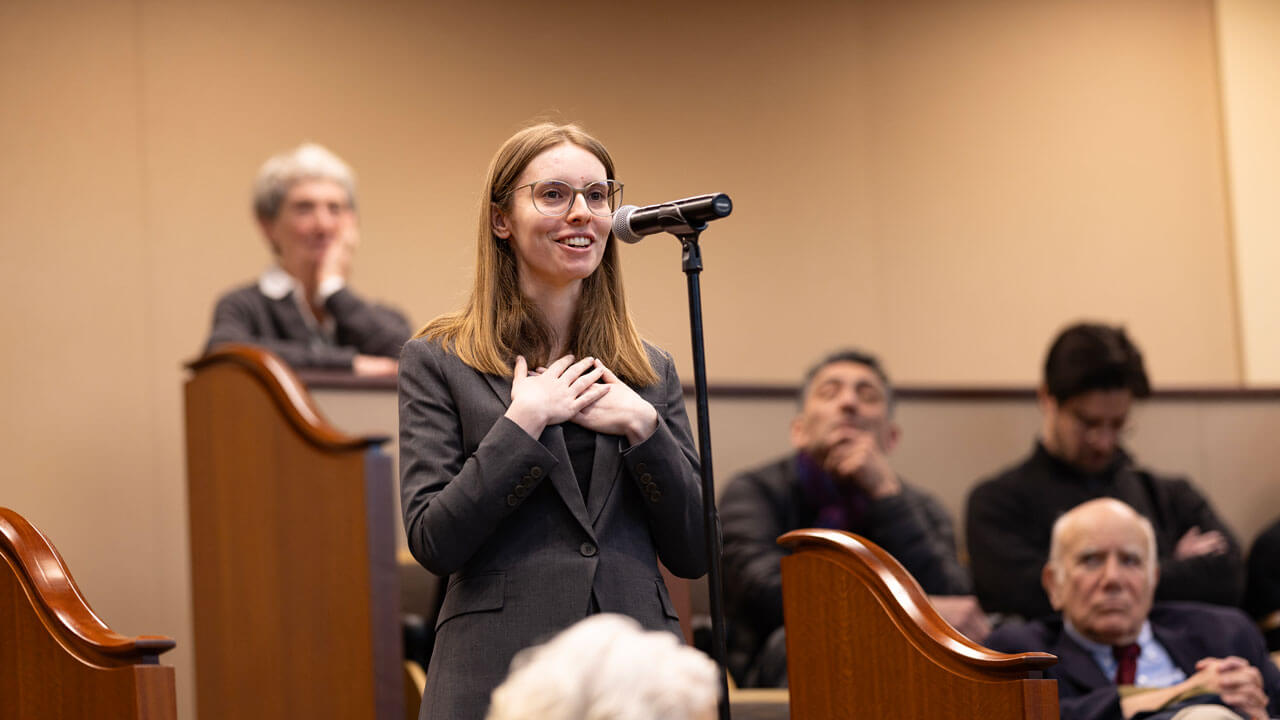
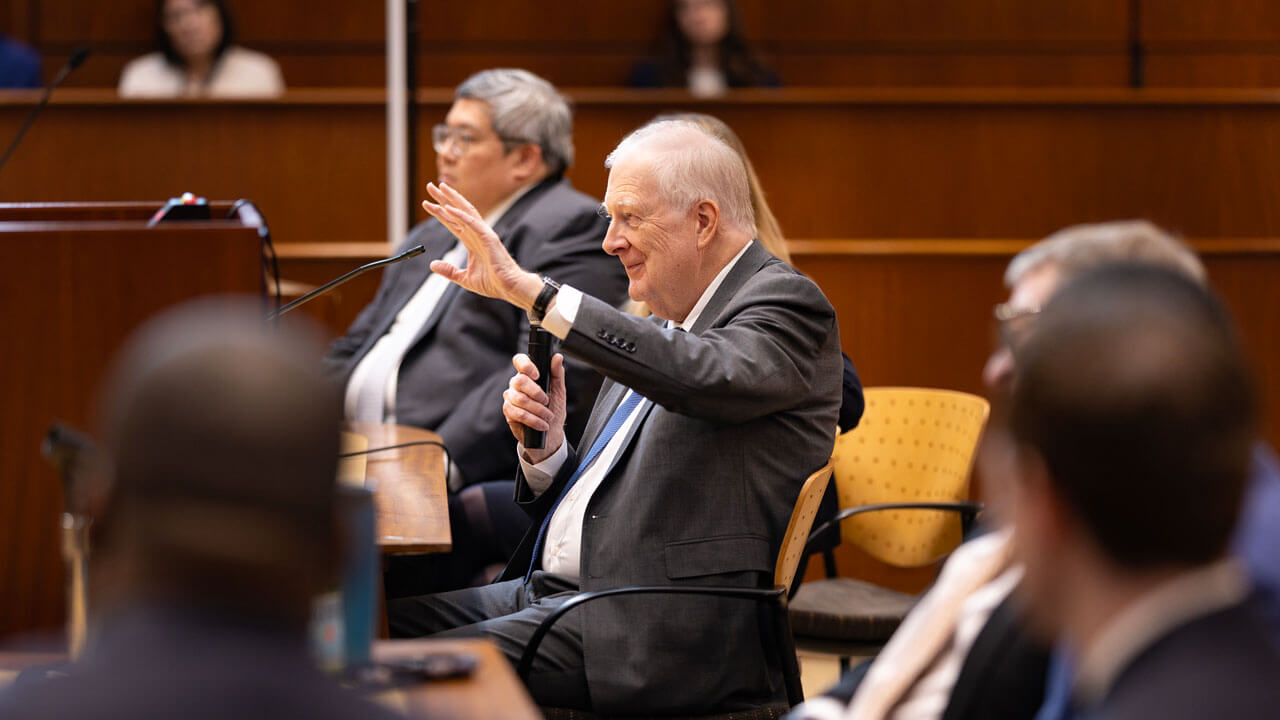
After the court formally adjourned, students participated in a question-and-answer session with judges and attorneys, allowing them to deepen their understanding of appellate strategy and the realities of federal judicial decision-making.
For students like Shianne Taylor, JD ’26, the opportunity to watch federal appellate proceedings brought classroom learning into sharper focus.
“For me, personally, I was really looking forward to seeing the law in action,” said Taylor, who also serves as Student Bar Association president. “Many students only get courtroom experiences through externships or jobs. Being able to see oral arguments before judges, watching them ask questions, and attorneys respond quickly, makes the appellate process tangible for us. I also think having these high-level judges and attorneys come to our school says a lot about our environment and community.”
Following the session, Taylor said seeing appellate advocacy unfold in real time reinforced lessons emphasized in the classroom, particularly the importance of precise language.
“One thing that struck me most was seeing the lessons our writing professors preach actually play out,” Taylor said. “There were moments when judges asked the advocates why they chose a specific word, and it really showed why paying attention to language matters so much.”
She added that observing the judges’ fluency and the dynamic exchanges between the panel and attorneys gave her a new appreciation for the profession.
“It was impressive to see how deeply they know the law. They were going back and forth with analogies so quickly, making it seem more conversational in a rapid-fire exchange,” she said. “There was also humor and a level of confidence that made the arguments feel more relatable while still incredibly rigorous.”
Watching the proceedings live added a new dimension to reading appellate opinions in class, she said. “We read opinions all the time, but seeing the passion of the advocates and how judges pushed both sides respectfully, even redirecting when someone didn’t fully answer, helped me understand the process in a completely different way.”
For alumni and practicing attorneys in attendance, the session also provided a rare opportunity to observe federal appellate advocacy firsthand. Brett Aiello ’08, JD ’11, said he wanted to attend both as a Quinnipiac graduate and as a former state appellate prosecutor.
“It was an incredible opportunity for QU Law to host Second Circuit oral arguments, and I was very excited to attend,” Aiello said. “I’ve argued cases in our state appellate courts, but I had never had the opportunity to get a front-row seat to a federal appellate argument and knew I had to seize the chance.”
Aiello added that seeing the Second Circuit on campus was a point of pride.
“Having high-level advocacy brought directly to students is an invaluable experience,” he said. “Opportunities like this help bridge theory and practice and can inspire students to pursue appellate work themselves.”
Shelley Sadin, associate dean emerita of career development, said observing practicing attorneys respond to the panel’s questioning can be transformative for law students.
“Some of the most valuable teaching moments in our law students’ journey to practice are the occasions when they watch lawyers in action,” said Sadin. “The Court of Appeals’ visit presents a golden opportunity to watch appellate lawyers argue real cases before one of the country’s most prestigious courts.”
Millie VandenBroek, associate dean of career development, emphasized the collective effort behind the event, offering gratitude to both the visiting judges and the Quinnipiac community members who helped bring the experience to life:
“The Court’s visit gave the Quinnipiac community a front-row seat to witness the rule of law in action,” said VandenBroek. “The dignity, professionalism, and expertise of federal appellate arguments are humbling and inspiring to witness firsthand.”
Gallini said he hopes students leave with a deeper understanding of the profession beyond the legal issues themselves.
“More than anything, I hope students walk away with a deeper appreciation for the professionalism, preparation, and disciplined thinking that appellate practice demands,” said Gallini. “Observing a distinguished panel of judges demonstrates the values of civility, intellectual humility, and rigorous engagement with the law—all qualities that will serve our students well, no matter their career path.”
In Focus


In this Article
Read This Next













Stay in the Loop
Quinnipiac Today is your source for what's happening throughout #BobcatNation. Sign up for our weekly email newsletter to be among the first to know about news, events and members of our Bobcat family who are making a positive difference in our world.
Sign Up Now