



Symposium explores reclaiming time and opportunity in women’s sports
April 08, 2026
April 08, 2026
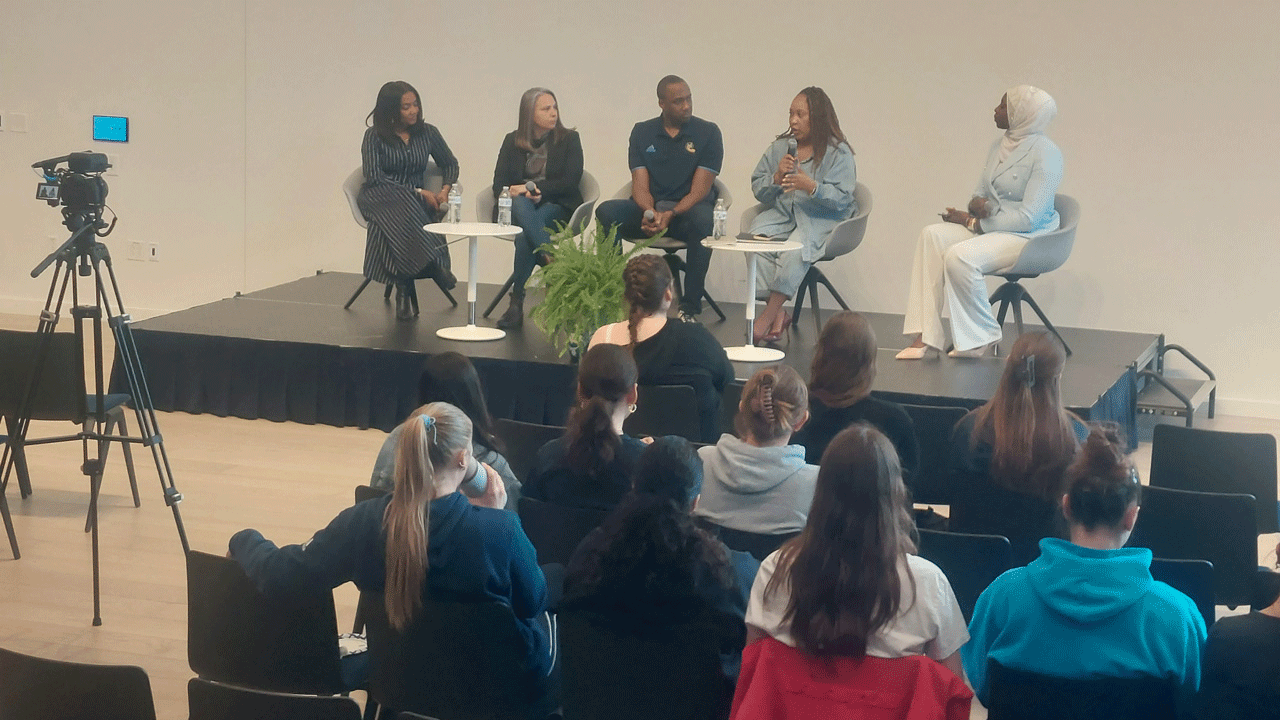
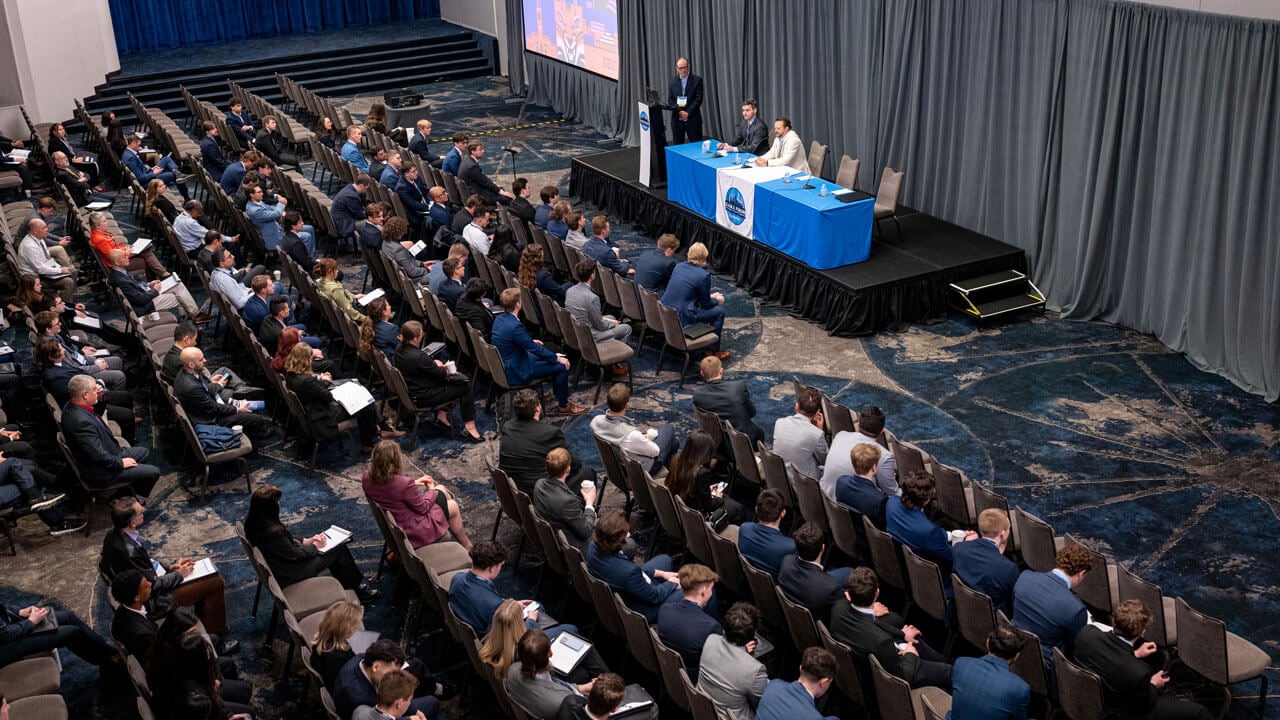
Designed to inspire the next generation, the event brought together students, faculty and visiting high school groups to explore the future of women in athletics. Among those in attendance were students from Hamden High School, Sacred Heart Academy, James Hillhouse High School, Hartford United Athletic District and Hopkins School.
A consistent theme throughout the program was the importance of visibility, representation and intentional investment in women’s sports.
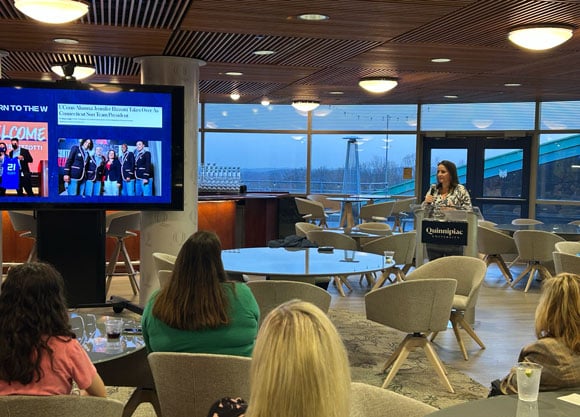
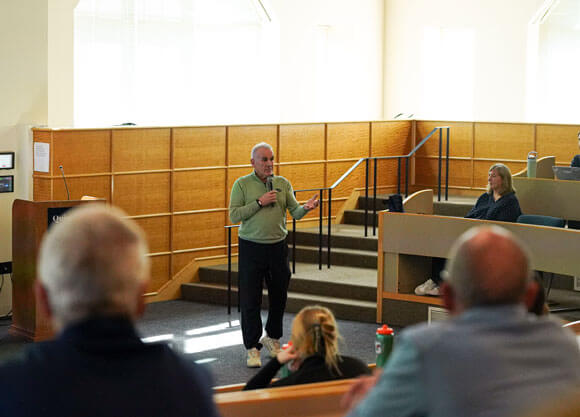
The event opened with remarks from Hillary Haldane, Quinnipiac professor of anthropology, who introduced Quinnipiac President Marie Hardin.
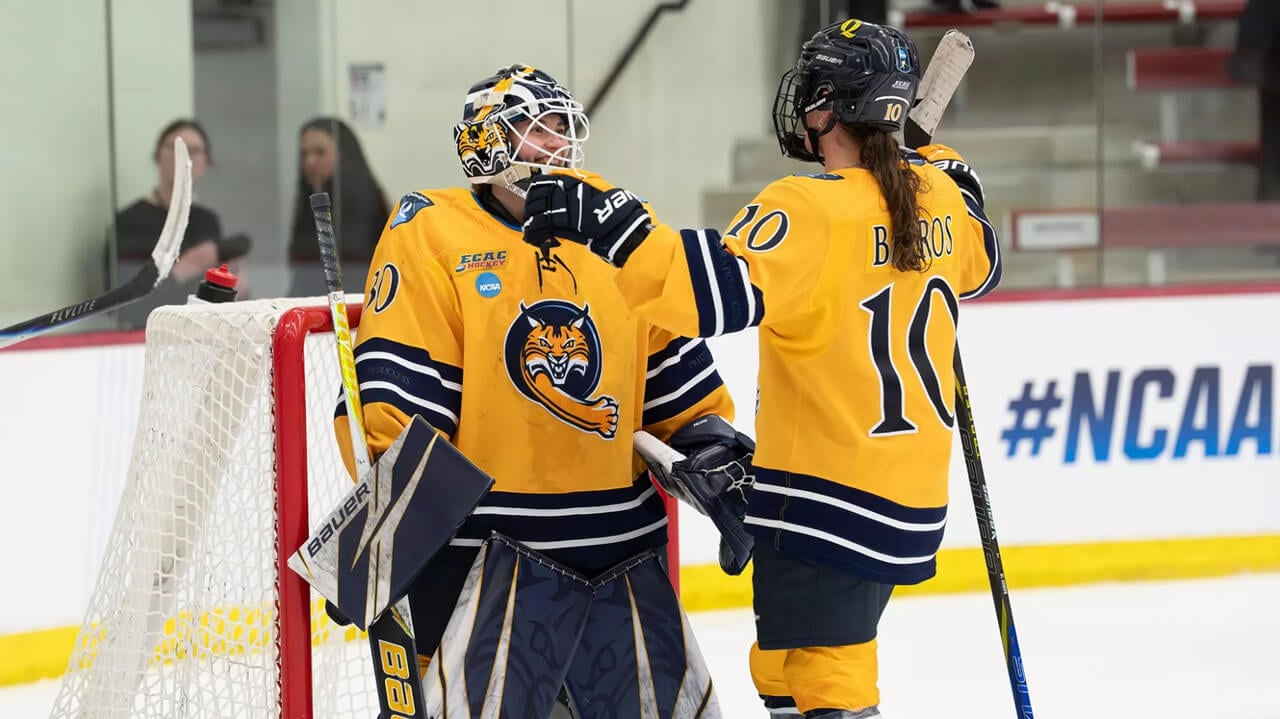
Hardin highlighted the accomplishments of Quinnipiac’s 14 women’s varsity teams, which have earned conference and national titles across sports, including hockey, basketball, cross country, indoor track and field, volleyball, acrobatics and tumbling, softball and tennis. She also connected those achievements to a broader national moment, citing the growing popularity of women’s March Madness and increased visibility in professional leagues such as the WNBA.
At the same time, she emphasized that progress in women’s sports is not without challenges.
“You know, I've done lots of research in this area over the years, and I will tell you, it's always wonderful to celebrate the hard-fought victories for women's sports as a movement,” said Hardin. “I will tell you, though, what we always find is that any period of progress also has its challenges, and so I'm sure you're going to be hearing about some of those today.”
Her remarks set the tone for a program that both celebrated the rise of women’s sports and acknowledged the work that still remains.
Sarah Fraser, Quinnipiac deputy director of athletics and senior woman administrator, expanded on that message by focusing on leadership and opportunity, emphasizing that rapid growth in women’s sports must be matched by increased visibility and representation.
“Today's theme, ‘reclaiming our time,’ really resonated with me. It means recognizing the value of women's contributions, both participants and leaders,” said Fraser. “It means ensuring that women's time is invested in meaningful opportunities, and women's voices are part of important decisions. My hope is that we all leave here not only learning something new, but also seeing new possibilities for ourselves in sports, whether in leadership, individually or collectively.”
Freda Grant, director of civil rights compliance at Sacred Heart University, introduced keynote speaker Batouly Camara, a former UConn basketball standout and founder of the nonprofit Women and Kids Empowerment (WAKE).
The daughter of Guinean immigrants, Camara spoke about her experiences as an athlete from a country where girls are not encouraged to pursue sports. Camara shifted the conversation toward personal agency, challenging attendees to think intentionally about how they use their time, energy and influence.
"We're talking about reclaiming our time. What does that mean? To hold it again, to be intentional about where your energy goes. And today, we know time is money,” said Camara. “Your attention is currency. Everything you do, even a little second, can turn someone average into a mega, right? We've seen it happen so often, and all this is shaping your life in real time.”
She connected that idea to the broader momentum in women’s sports, emphasizing that increased visibility and opportunity are the result of sustained effort.
“We are living in one of the most powerful eras of women's sports … young athletes today have more visibility, more opportunity and more power than ever before,” said Camara. “And that didn't just happen. That came from women showing up, demanding more and refusing to shrink.”
Camara also reflected on her personal journey, emphasizing that success is shaped through consistency and mindset, particularly in moments of uncertainty. Closing her remarks, she encouraged students to embrace their identities and recognize their potential.
“You don't have to be perfect for the world. You just have to show up. Your presence and your energy matter. You can shift the whole room just by being you,” said Camara. “Make good choices, especially when it comes to who you surround yourself with. Please choose people who lift you up, challenge you. Be a light and make every place better than you found it.”
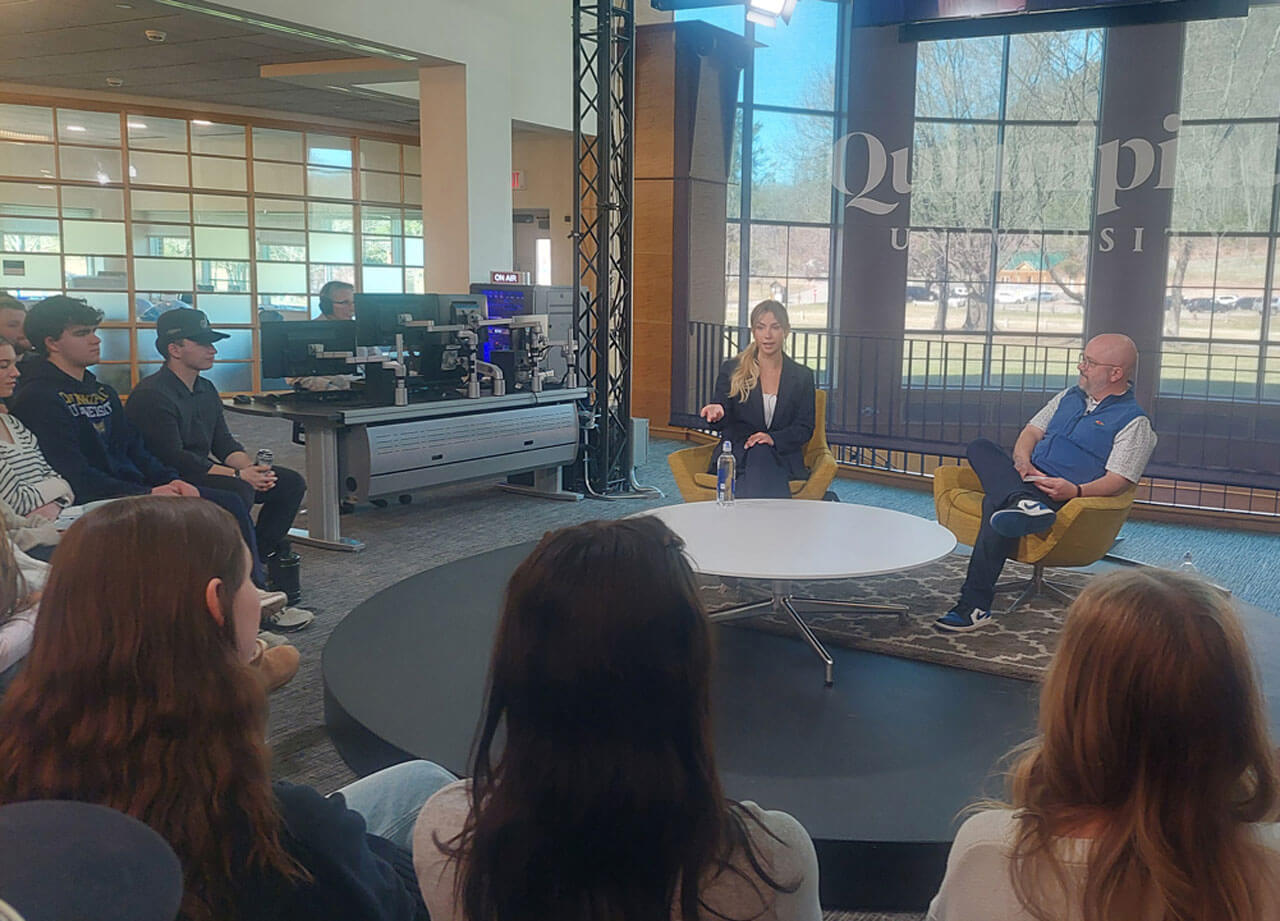
The event concluded with a panel discussion featuring professionals from across the sports industry, offering students insight into career paths that are often nonlinear and unconventional.
Panelists included Ajhanai “AJ” Keaton, former basketball player at Colorado State University and assistant professor of sports management at UMass-Amherst; Ceyda Mumcu, leading researcher in sports marketing and fan behavior at the University of New Haven; Quinnipiac women’s volleyball all-time winningest head coach Kyle Robinson; and Patricia Mays, veteran sports journalist and Quinnipiac visiting instructor of sports communications.
Moderated by Camara and closed by Don McAulay, assistant professor of sport and entertainment management, the discussion explored career pivots, industry trends and practical advice.
The conversation emphasized that setbacks often become defining moments, underscoring the importance of adaptability and self-awareness. Panelists also highlighted the growing role of visibility and storytelling in shaping the future of women’s sports, particularly through digital platforms.
“For our athletes to be able to see people who look like them is huge, and without social media, we don’t have that kind of global connectivity,” said Robinson. “It allows them to tell their own story and be themselves, which is very important. We’re all different, we’re all unique, and you have to be able to tell your story and not have someone else tell it for you.”
Responding to a question about the hard and soft skills needed to succeed in sports careers, Keaton emphasized patience and long-term focus.
"I think delayed gratification is an important skill, and I actually think it's something athletes know very well when you're thinking about that delayed gratification over a season,” said Keaton. “I can start a research project today, and I may not see it in print until maybe fall 2027. And so being able to work on something, being able to be patient, being able to work with your head down is a skill, even though you feel like maybe you’re missing the moment.”
Mumcu pointed to technology and communication as essential skills.
“Everyone needs to be able to use technology. Data skills are necessary if you want to work in the sports industry,” said Mumcu. “It doesn’t mean you need to code, but can you understand the data and make decisions with it? But communication trumps everything. Oral and written communication skills and the ability to carry on a conversation are very, very important today.”
Robinson encouraged students to embrace the process and build experience from the ground up.
“Don't be afraid to start at the bottom and have a great attitude while doing it. Learn whatever field you're in and learn from the ground up,” said Robinson. “Everyone wants to be at the top, but you’ve got to start someplace and learn what it means. Make sure you're humble on the way up and very empathetic once you get to the top. And then once you're there, reach down and help other people.”
Returning to the symposium’s central theme, panelists were asked how young women can protect and advocate for their time.
“It's OK to set boundaries. It's OK,” said Mays. “It doesn't matter how busy your job is. It's OK to carve out time to say this is what I need to do for my emotional and mental health, or just to give me some joy outside of work.”
Mumcu reinforced that message by encouraging confidence and persistence.
“I will suggest remaining persistent. Everybody feels or experiences a hiccup or a setback, but that is the time to remain confident and continue with your credentials, continue with your skills,” said Mumcu. “Rely on yourself, trust yourself, carry yourself with confidence. And, most important, don't ever shrink yourself.”
The event was supported by an interdisciplinary collaboration between faculty in the School of Business, the School of Communications and the College of Arts & Sciences.














Quinnipiac Today is your source for what's happening throughout #BobcatNation. Sign up for our weekly email newsletter to be among the first to know about news, events and members of our Bobcat family who are making a positive difference in our world.
Sign Up Now