



Quinnipiac student uses power of words to share difficult medical news
April 07, 2026
April 07, 2026
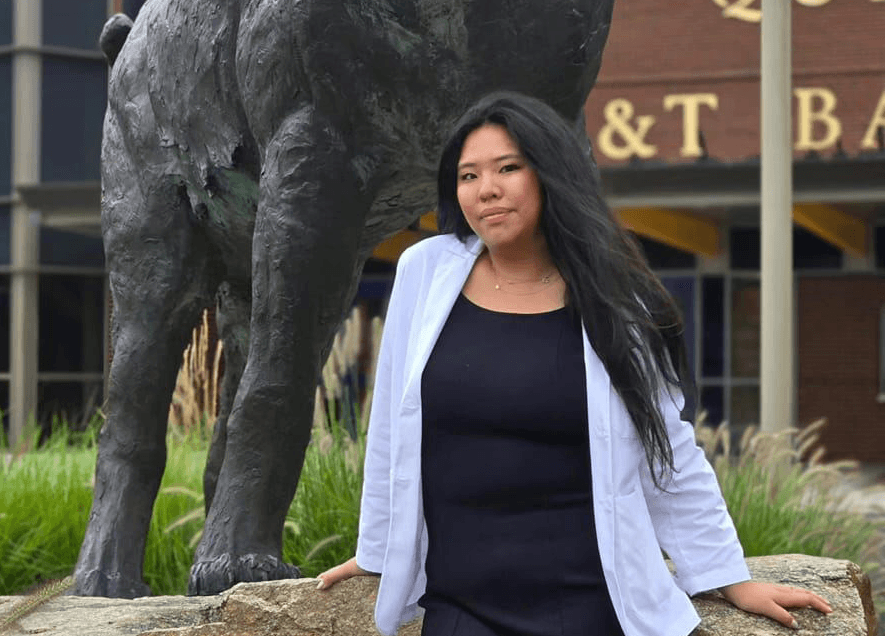
In medicine, a cancer diagnosis will change someone's life in seconds. That's why the way it is delivered matters so much. Dong is exploring how language affects those moments. With a background in linguistics, she is studying how doctors can communicate in ways to reduce fear and build trust.
As a linguistic major before coming to Quinnipiac Netter, she was interested in how language shapes human connection. At the time, medicine wasn't even a thought in her plan. But over time, Dong realized an important fact: “At its core, medicine is a conversation between a doctor and a patient," she said.
Cancer itself is something that brings fear and uncertainty of the future, she said. In those moments, doctors' words carry unfathomable weight beyond the facts a patient hears and may end up furthering their already stressful situation.
“The ability to counsel, comfort and empower patients through dialogue is highly gratifying to me, and those facets of medicine are eventually what drew me to my specialty of interest, oncology," she said.
Even though proper communication is critical, it often gets pushed aside in medical training. Linguistics can feel complicated and hard to learn. On top of that, medical students are already flooded with other information and with no great time to focus on communication skills, she said.
Many only get a short session on how to deliver bad news.
As Dong explains, “our teaching on breaking bad news is isolated to one two-hour session in the second year of medical school, so the time also just isn’t there for us.”
There is also limited research showing exactly which strategies work best, so much ends up never making its way into training.
Dong’s research, supported by mentorship from both the School of Communications and the School of Medicine, focuses on impactful shifts in language.
They studied three techniques: Linguistic mimicry, which means subtly matching how a patient speaks; using connecting words like "because" and "so" to make ideas clearer; and asking open-ended questions instead of simple yes or no ones.
“The School of Communications was essential in helping me identify these tools and implement them in professional-quality recordings,” Dong said. “Dr. Kearston Wesner [in the School of Communications] guided me through refining the scripts and turning these concepts into something tangible that could actually be tested.”
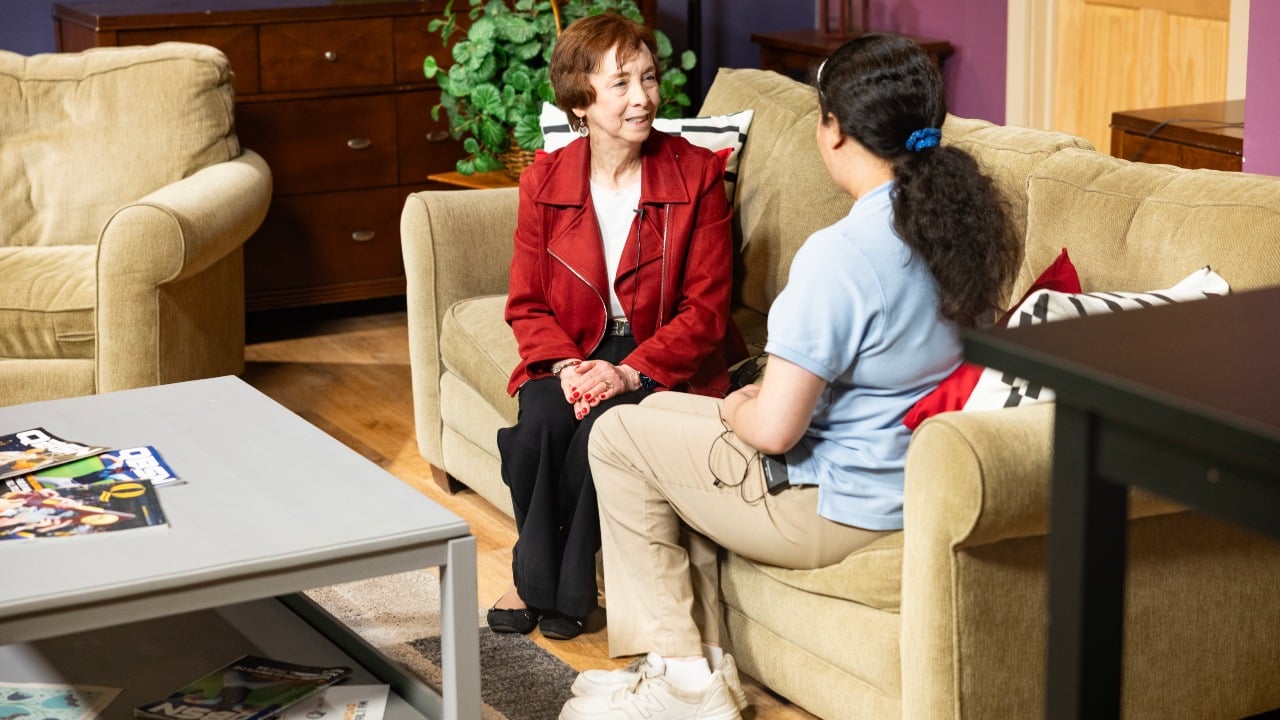
Participants listened to recorded conversations where a doctor delivered a cancer diagnosis. Each version used different language styles, and afterward patients reported their feelings and what they remembered from each session.
One result in particular stood out: Linguistic mimicry had a strong effect on reducing anxiety. When nothing about the medical information presented changed and the diagnosis stayed the same, yet the way it was said made patients feel calmer and more understood.
“I didn’t think that linguistic mimicry went such a long way in reducing anxiety in these patients,” said Dong. “You’re still saying the same thing, but just in a way that may be easier for the patient to digest, and it’s fascinating to see what a small change has in affecting patient wellbeing.”
Wesner’s mentorship helped Dong frame these findings in a way that bridged the gap between linguistics in medicine in an accessible way, helping to provide valuable information for the future of healthcare.
Oftentimes, patients are worried that their doctor is not really listening, Dong noted. The research she has explored suggests that through slight language changes, this concern may be lightnened.
When doctors take time to incorporate traits like mirroring speech patterns and inviting open responses, patients feel included and heard. That sense of connection can lower anxiety and help them remember the important details.
“When we start implementing these linguistic tools, we’re not just sounding nicer, we’re demonstrating to the patient that we care about how they feel and that we want them to feel included in the conversation," she said.
For Dong, this research is personal. They did not always plan to become a doctor, in fact their original plan was to just pursue going into law. Starting medical school without a strong science background brought a lot of doubt, and she questioned whether linguistics even belonged in medicine.
“I was concerned that my background in linguistics had no relevance to my studies in medicine, and that I would need to give that up,” Dong said. “However, this research showed me that medicine has a place for everyone, and there is always going to be a corner of healthcare that will appreciate what you bring to the field.”
Wesner’s mentorship was pivotal in turning that self-doubt into strength and confidence. From literature review to script development, her guidance supported Dong throughout her journey to translate complex linguistic visions into practical medical communication.
The final goal for Dong is simple. To get doctors to not just deliver information to patients but think about the way they deliver it.
“My hope is that physicians start to consider not just what they say, but how they say it,” Dong said. “How can we put ourselves in the patient’s shoes, and show that patient that we’re doing it, while still guiding them through such a difficult moment?”
In the end, her research comes down to something that is deeply human, she said. Medicine is not just about treatment and diagnosis, it is about forming a connection and truly helping those in need.
In life-changing moments such as these, the right words can offer unimaginable comfort to patients and remind them they are not alone.











Quinnipiac Today is your source for what's happening throughout #BobcatNation. Sign up for our weekly email newsletter to be among the first to know about news, events and members of our Bobcat family who are making a positive difference in our world.
Sign Up Now