



Quinnipiac and Ireland’s Great Hunger Museum of Fairfield partnership supports powerful exhibit at Lockwood-Mathews Mansion Museum
March 18, 2026
March 18, 2026
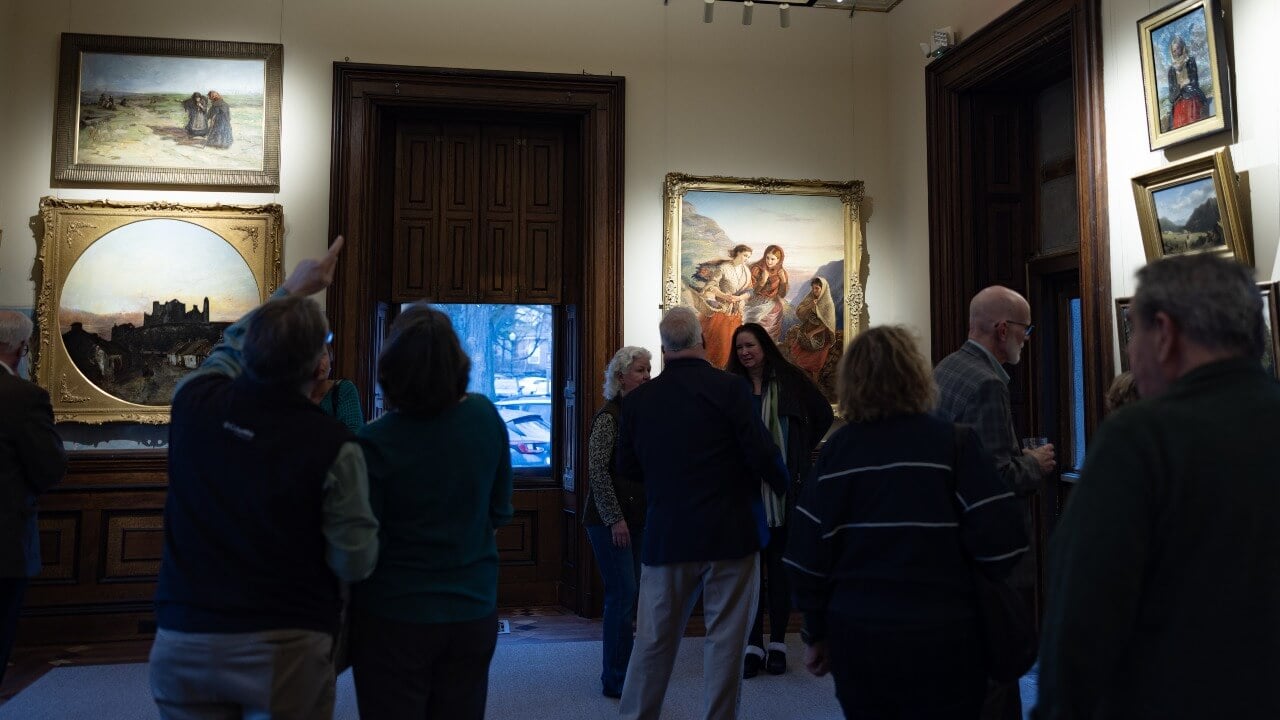
The IGHMF was established by leaders of the Gaelic-American Club of Fairfield and explores the Famine and its lasting impact through art. Quinnipiac University serves as the caretakers and curators of the collection, partnering closely with IGHMF on educational programming and the organization of a series of rotating, temporary exhibits.
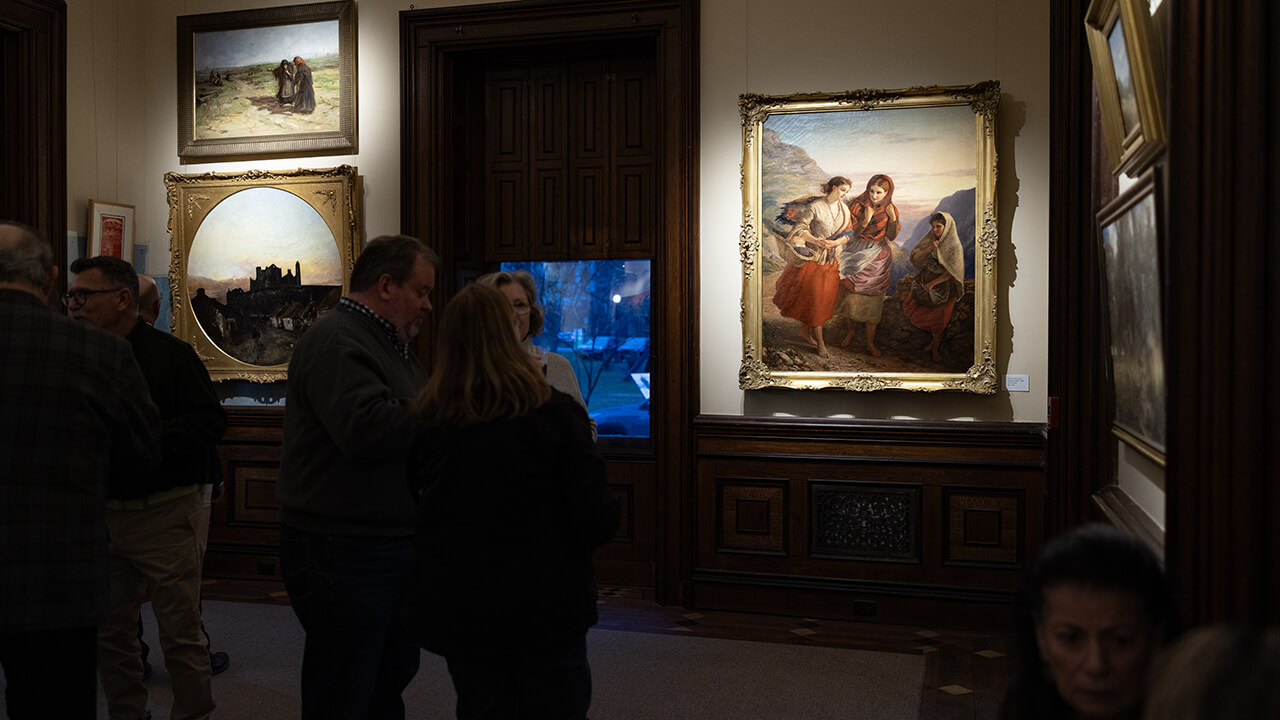
The traveling exhibition interpret the Irish Famine (The Great Hunger) of 1845-1852 and its lasting impact of the Famine visually, thereby allowing artists — both those contemporaneous with the Great Hunger and those working today — to explore the impact of the loss of life, the leeching of the land and the erosions of language and culture. Through its display of outstanding historical and contemporary images, layers of history are peeled back to uncover aspects of the Famine indecipherable by other means.
Together, Quinnipiac and IGHMF share a commitment to honoring and elevating the legacy of the Great Hunger through education, cultural engagement and ongoing public access. Central to this partnership is a shared goal of establishing a new, permanent museum space for the collection. Once IGHMF’s new museum is ready, Quinnipiac will donate its entire collection to IGHMF, ensuring it remains united in Connecticut, widely accessible and deeply connected to the Irish and Irish American community.
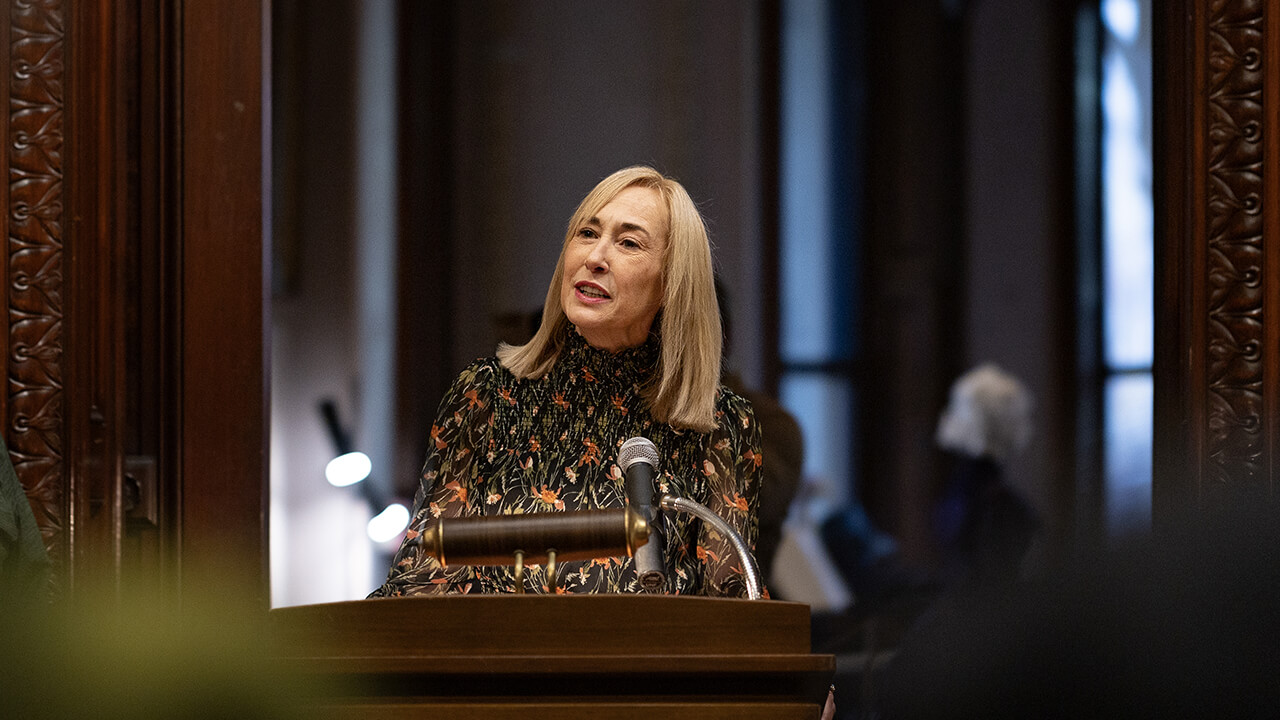
Quinnipiac President Marie Hardin said the university is grateful for the continued support of IGHMF by donors, cultural leaders and members of the Irish and Irish-American communities, and proud to support the vital work of IGHMF to preserve and share the impact of the collection.
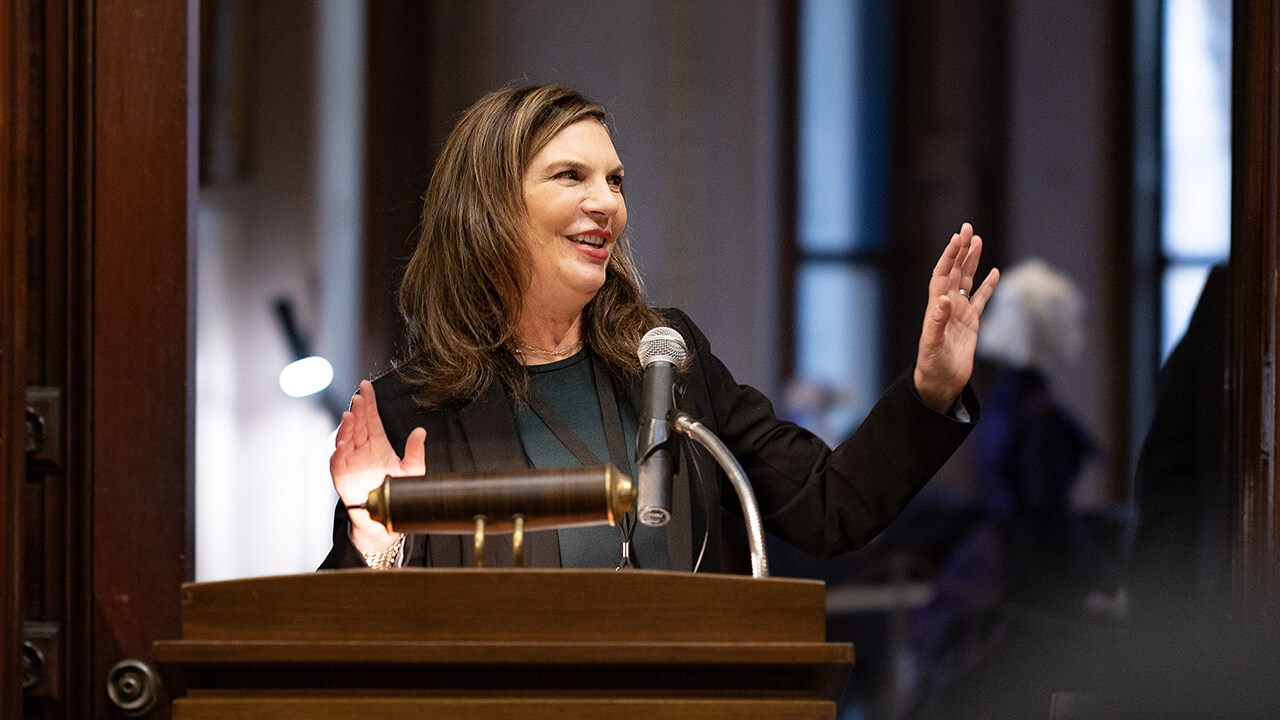
“This partnership ensures the collection is cared for with integrity and made accessible to the communities it was meant to serve,” Hardin said. “We remain committed to helping ensure these powerful stories continue to educate and resonate for generations to come.”
Throughout this period of transition, Quinnipiac continues to safeguard the artworks and artifacts with the highest standard of care, while collaborating closely with IGHMF on a series of thoughtfully curated temporary exhibitions across the region.
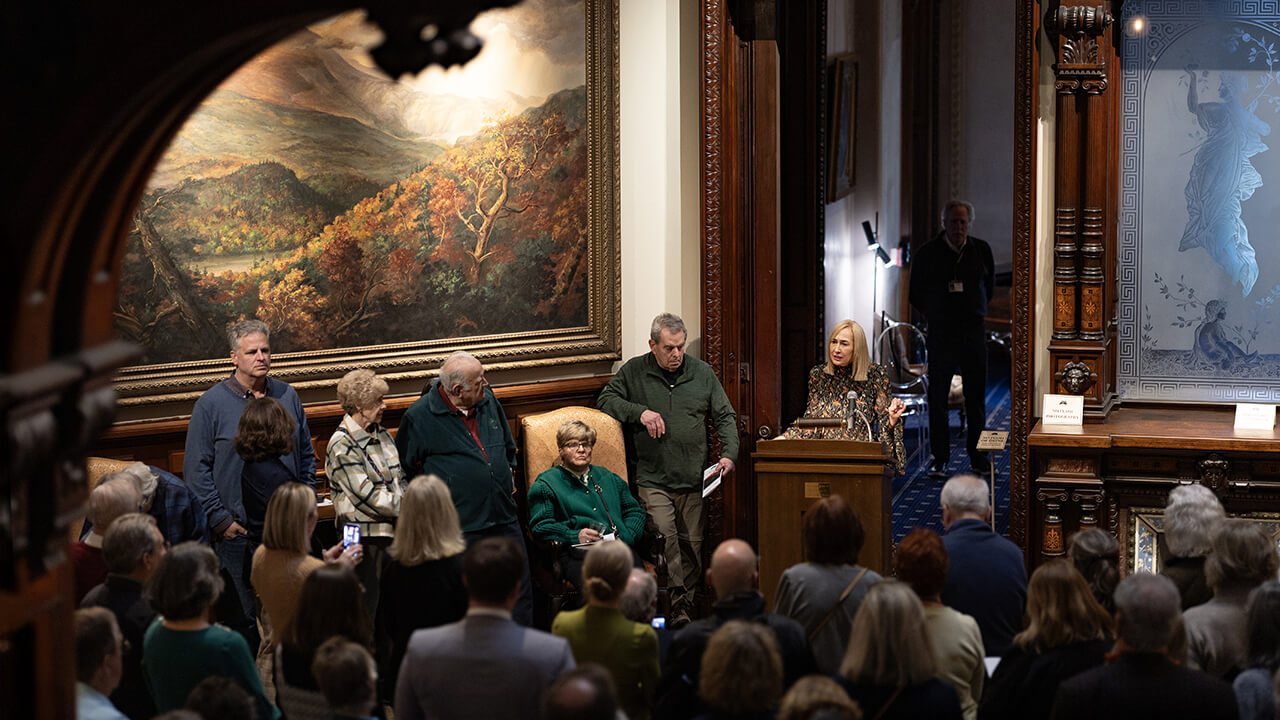
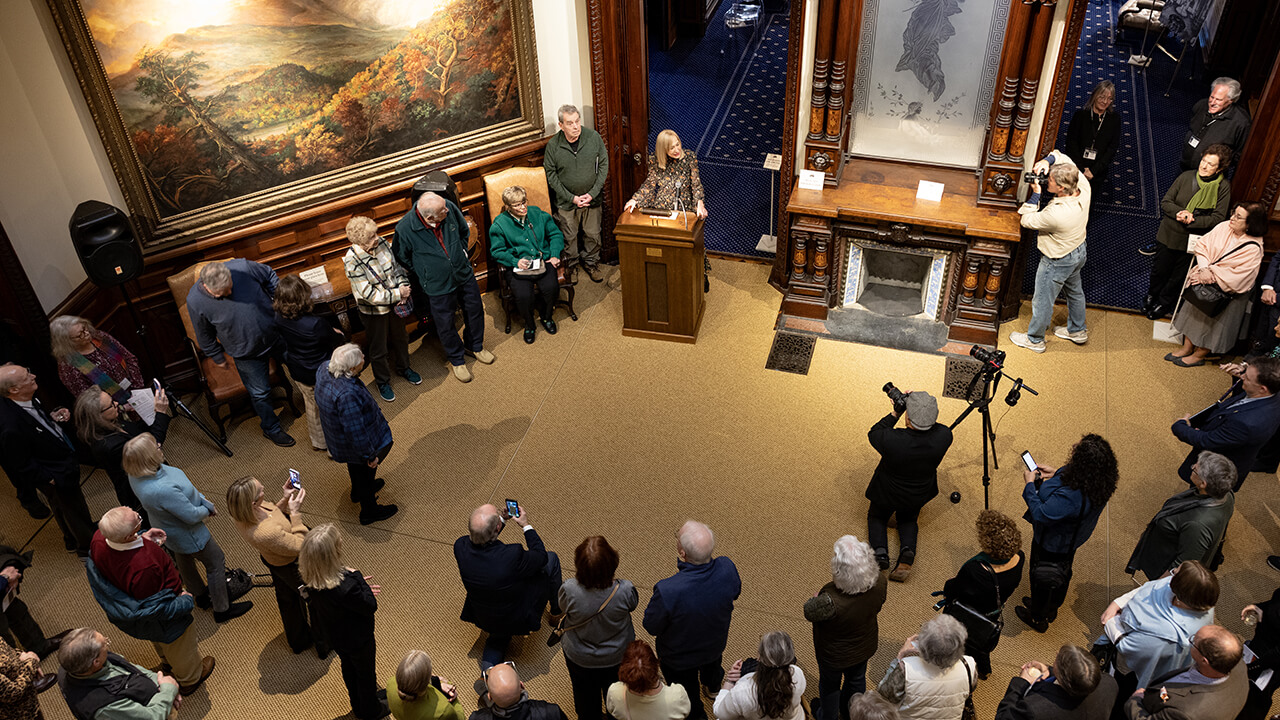
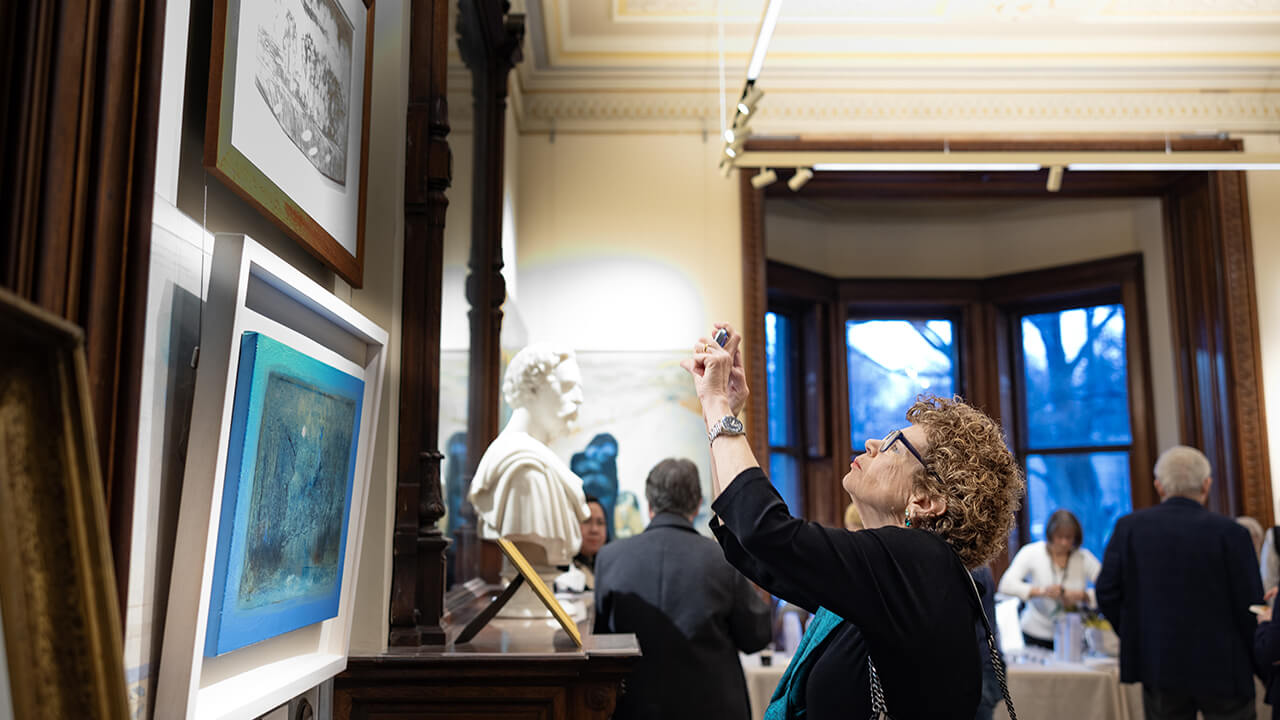
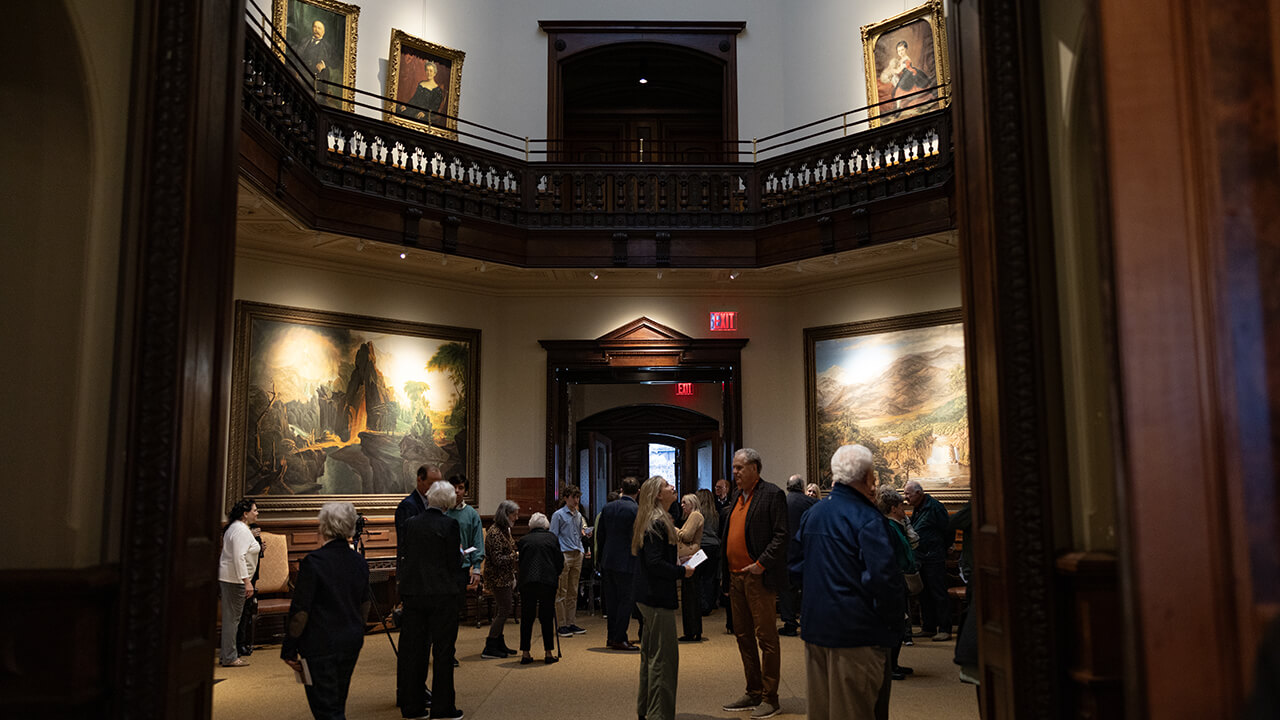
The Lockwood-Mathews Mansion Museum exhibit in Norwalk is a tribute to the commitment of Quinnipiac and IGHMF to provide broad public access and educate future generations about this pivotal moment in history. The exhibit, which highlights 30 works from the collection, is open through May 17.
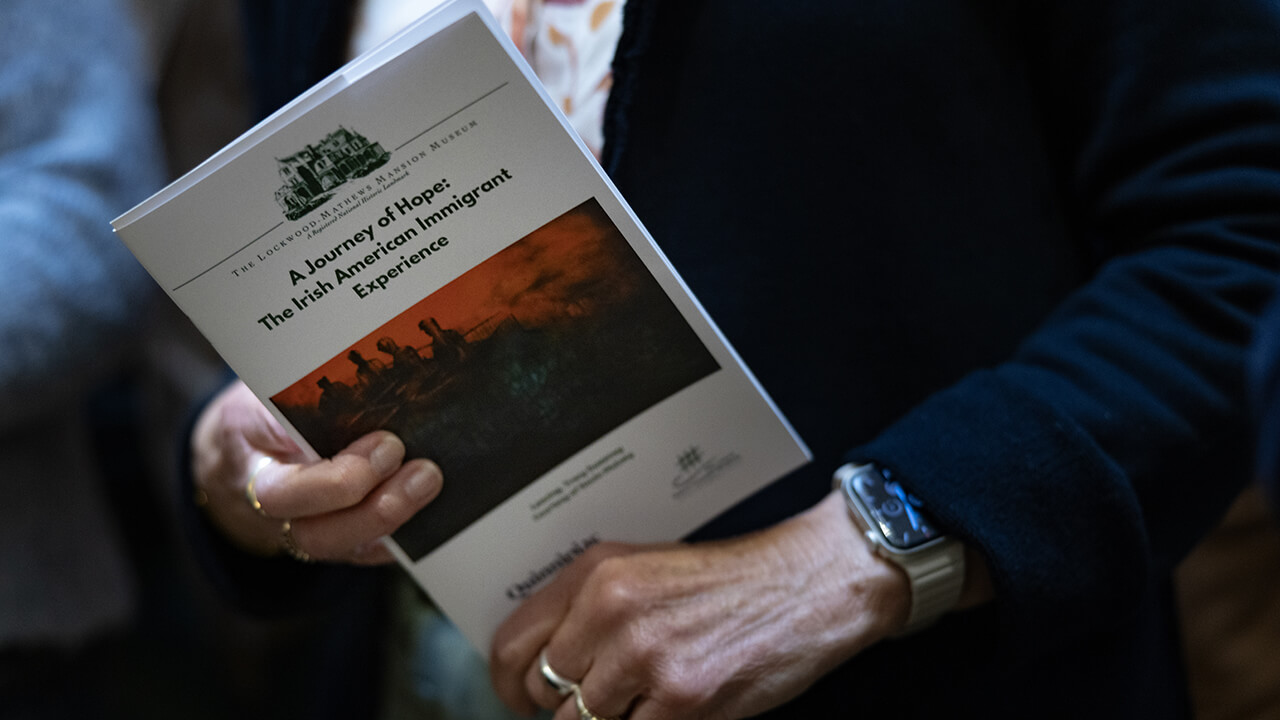
Using art as a visual reference, “A Journey of Hope: The Irish American Immigrant Experience,” focuses on Irish immigration to America that was spurred on by the Great Famine in the 19th century. The exhibit connects directly to the early history of the Mansion, when most of the domestic staff was Irish.
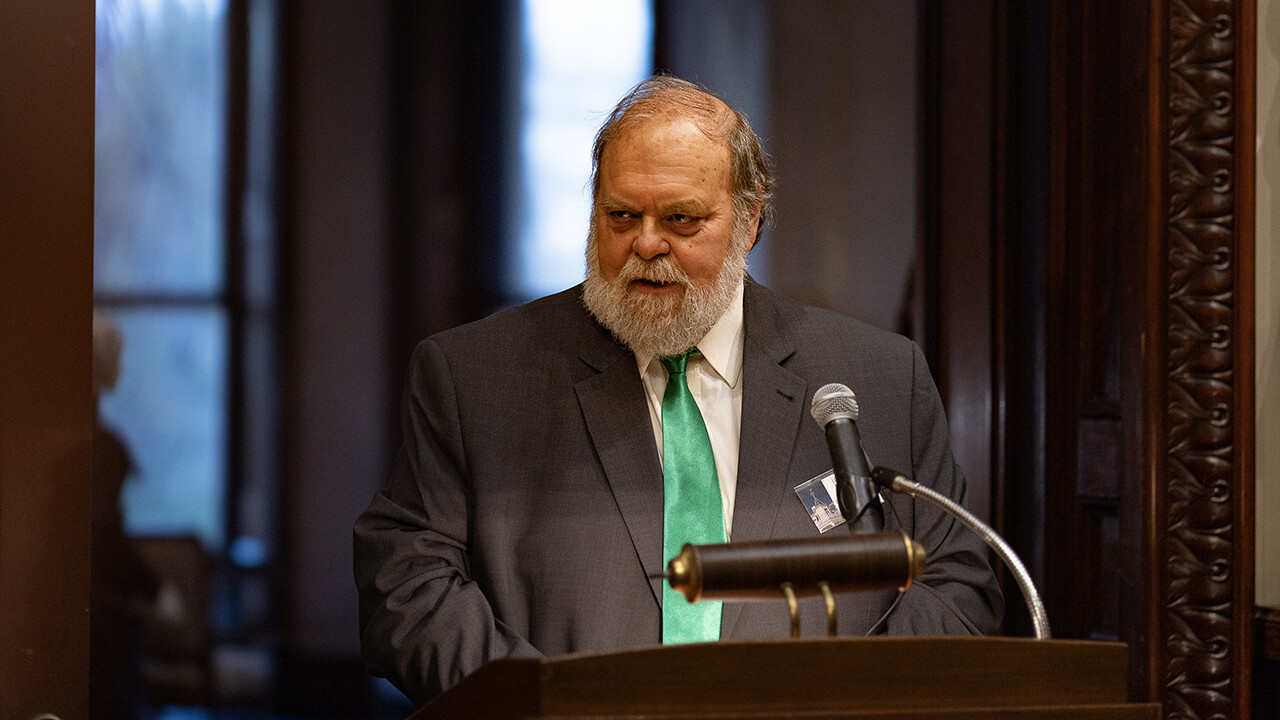
In the Irish tradition of storytelling, the exhibit speaks in many voices, said IGHMF President John Foley.
“Through these works, we encounter stories of resilience and endurance, of lives uprooted and remade, and of how Irish immigrants grew and found opportunity in America,” Foley said. “At the Lockwood-Mathews Mansion, these narratives converge with the stories embedded in the house itself, including those Irish servants who lived and labored here. Together, place and collection create a dialogue where history is not only remembered, but shared.”
Hardin said the cooperative effort to mount “A Journey of Hope: The Irish American Immigrant Experience,” is a powerful reminder of how art can bear witness to tragedy, deepen understanding of the past, and help us to reckon with the enduring impact of famine and displacement.
“It reflects the strength of our collaboration and extends the reach of a story that must never be forgotten,” Hardin said.
Displaying these important works in the mansion’s historic spaces helps visitors reflect on the intersection of art and lived experience, while honoring the Irish American immigrants who helped build the foundation of the country’s communities, said Lockwood-Mathews Mansion Museum Executive Director Susan Gilgore.
“This exhibit serves as a bridge between the tragic history of the Great Hunger and the resilient legacy of those who sought a new life in America,” Gilgore said.
Hardin said the heartening exhibit also demonstrates a shared appreciation and understanding of the power of art to tell stories and help future generations to remember.
“We also share, collectively, an understanding of the need for this story, in particular, to be remembered,” Hardin said. “This artwork helps us to reflect on the past; it helps us to understand some dynamics that we're seeing in the present; and helps us think about how we could shape the future.”
Foley said the exhibit’s extraordinary works of art help to preserve the memory of the Great Hunger, the experience of the Irish, and the birth of a new Irish American identity.
“These artists capture something powerful — not just history, but human emotion,” said Foley. “Their work allows future generations to feel what that moment meant.”
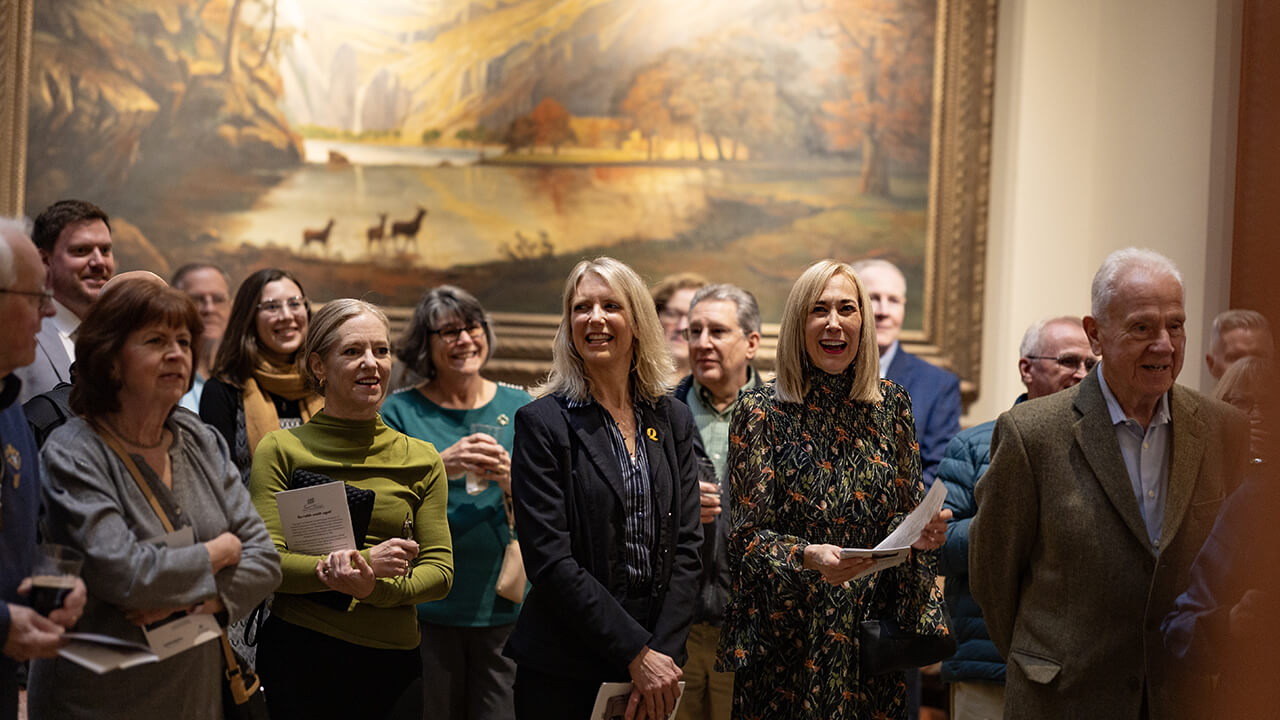
In a letter, Gerald Angley, Consulate General of Ireland, extended warm wishes to those gathered to celebrate the launch of the exhibition on March 12.
“The items in this exhibition bring to life the history of the Irish in America, driven by the seminal event in Irish immigration history – the Great Famine,” Angley noted. “The collective story on display is one of resilience, hard work, and community.”
Ireland’s Great Hunger Museum of Fairfield was established by leaders of the Gaelic-American Club of Fairfield.
Support the Ireland Great Hunger Museum of Fairfield





















Quinnipiac Today is your source for what's happening throughout #BobcatNation. Sign up for our weekly email newsletter to be among the first to know about news, events and members of our Bobcat family who are making a positive difference in our world.
Sign Up Now