


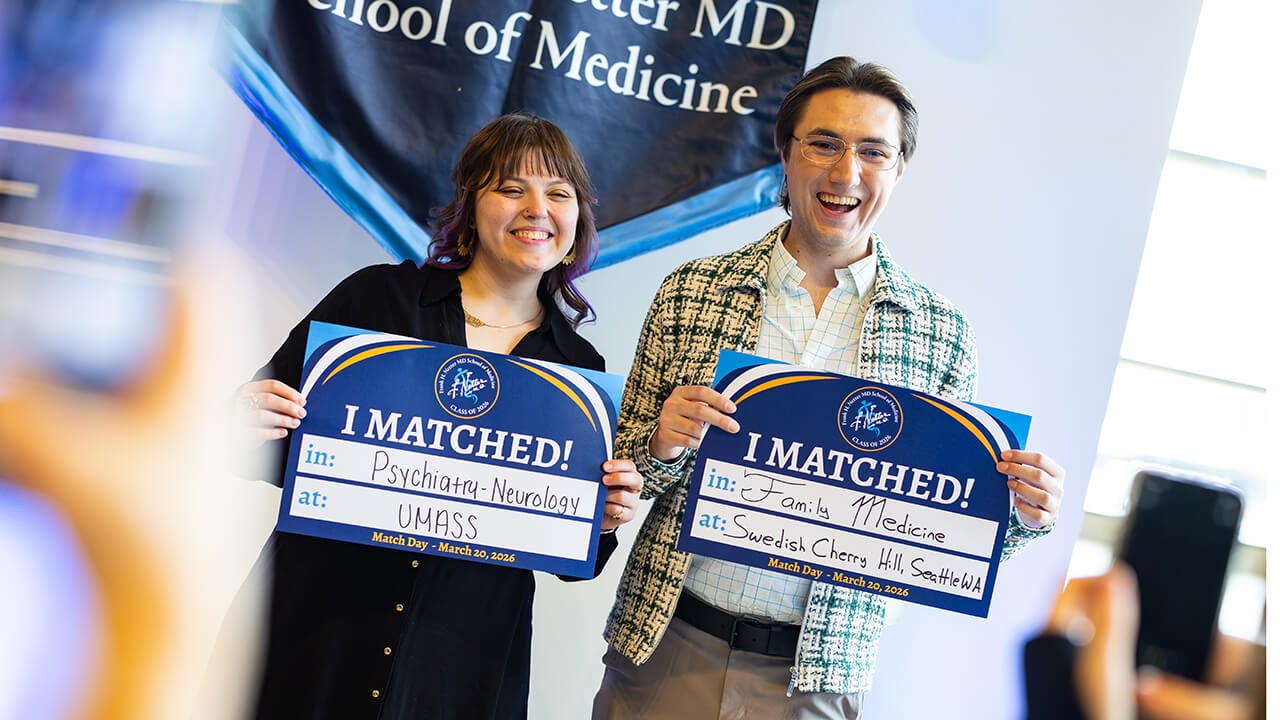
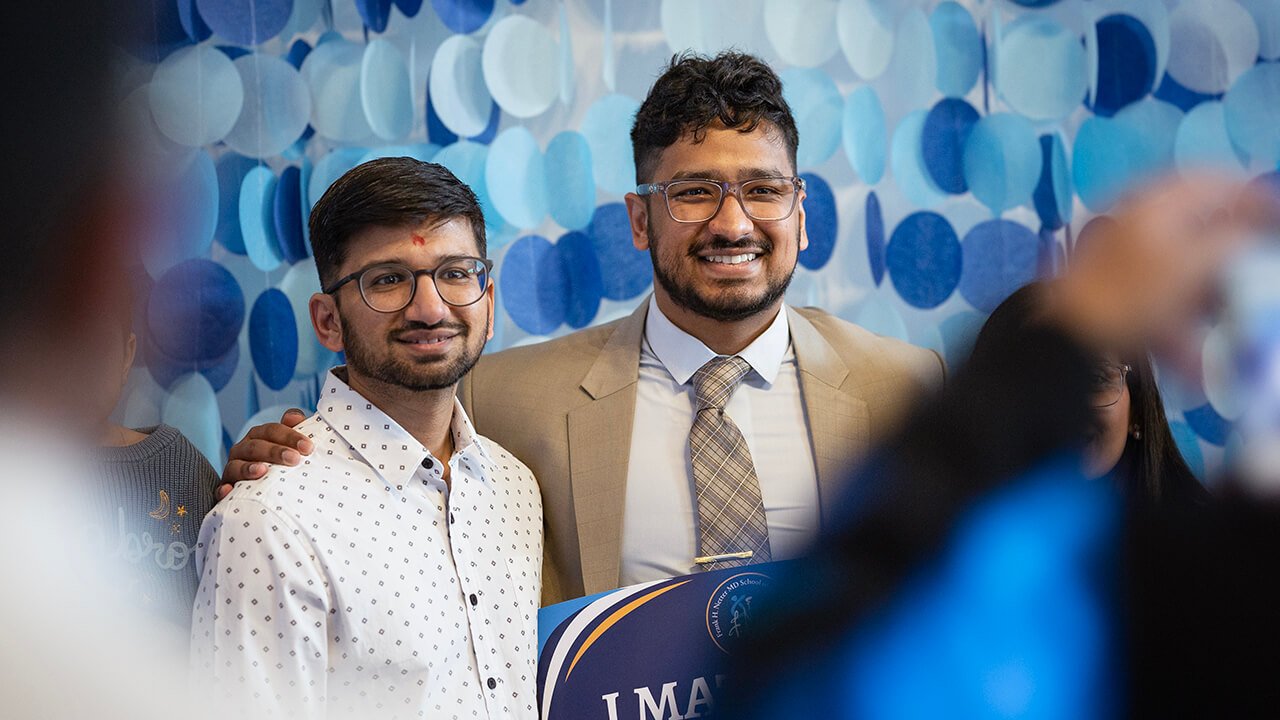
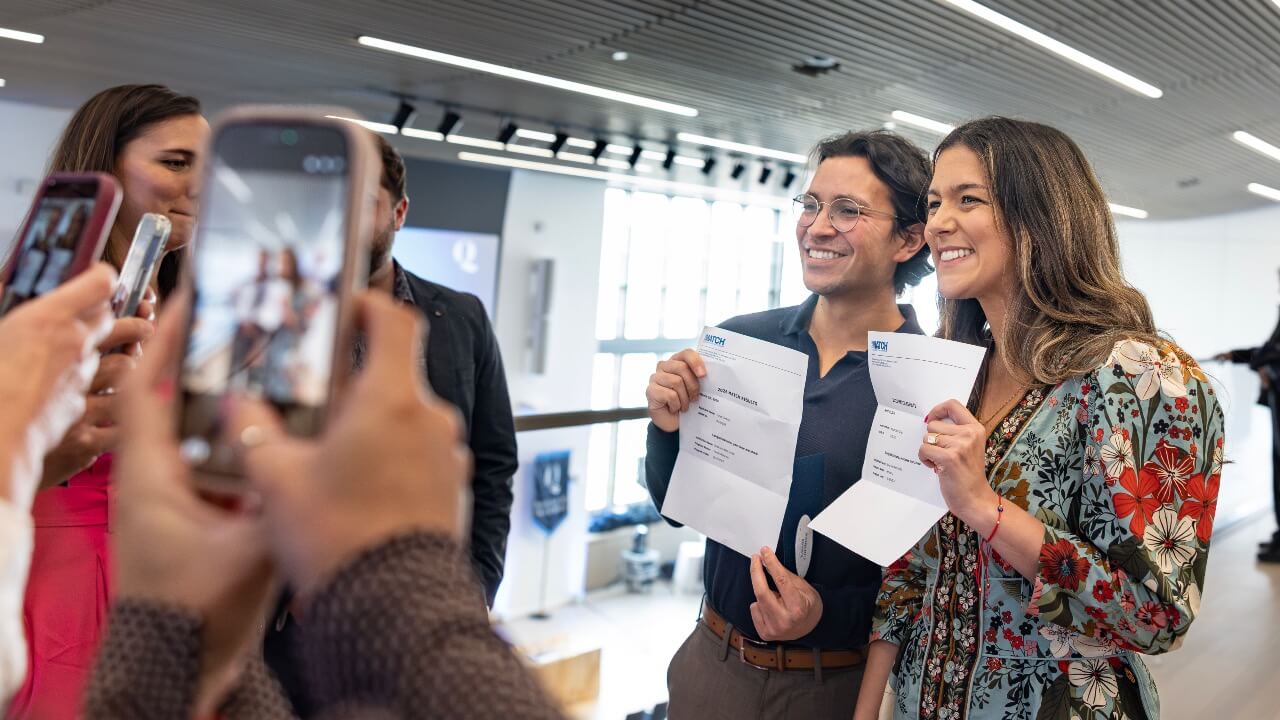
Finally, as the crowd shouted “One!” in unison, Cordova and Cortes opened their Match Day envelopes.
First, their eyes and smiles grew wide, maybe wider than they ever had before. And then came the tears. It wasn’t until they showed their Match Day letters to each other — both with Duke University Medical Center written across them — that time stopped, if only for this moment.
“It’s just surreal. We’ve been together for so long, just working toward this one goal,” Cordova said. “I can’t believe it.”
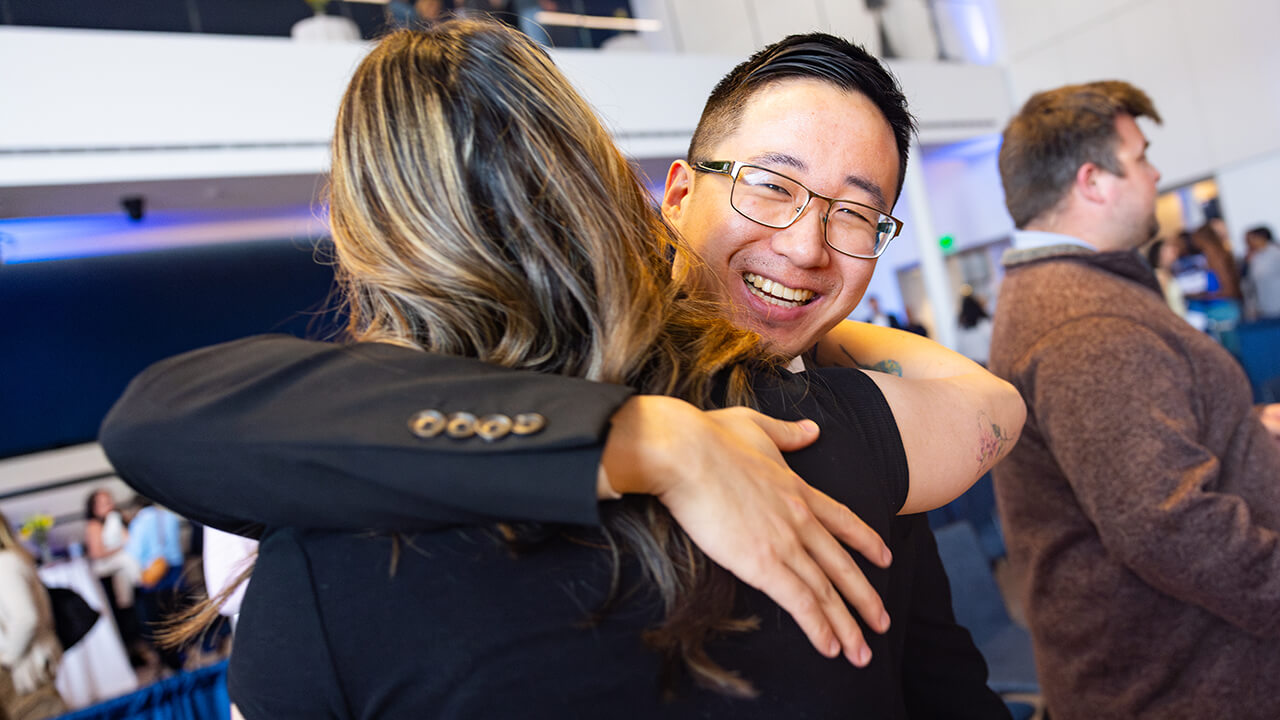
For Cortes, jumping up and down and hugging Cordova, it was the dream that finally came true.
“We just spent so much time preparing for this day,” she said, her voice cracking with unfettered joy. “There’s just no words for how happy I am right now.”
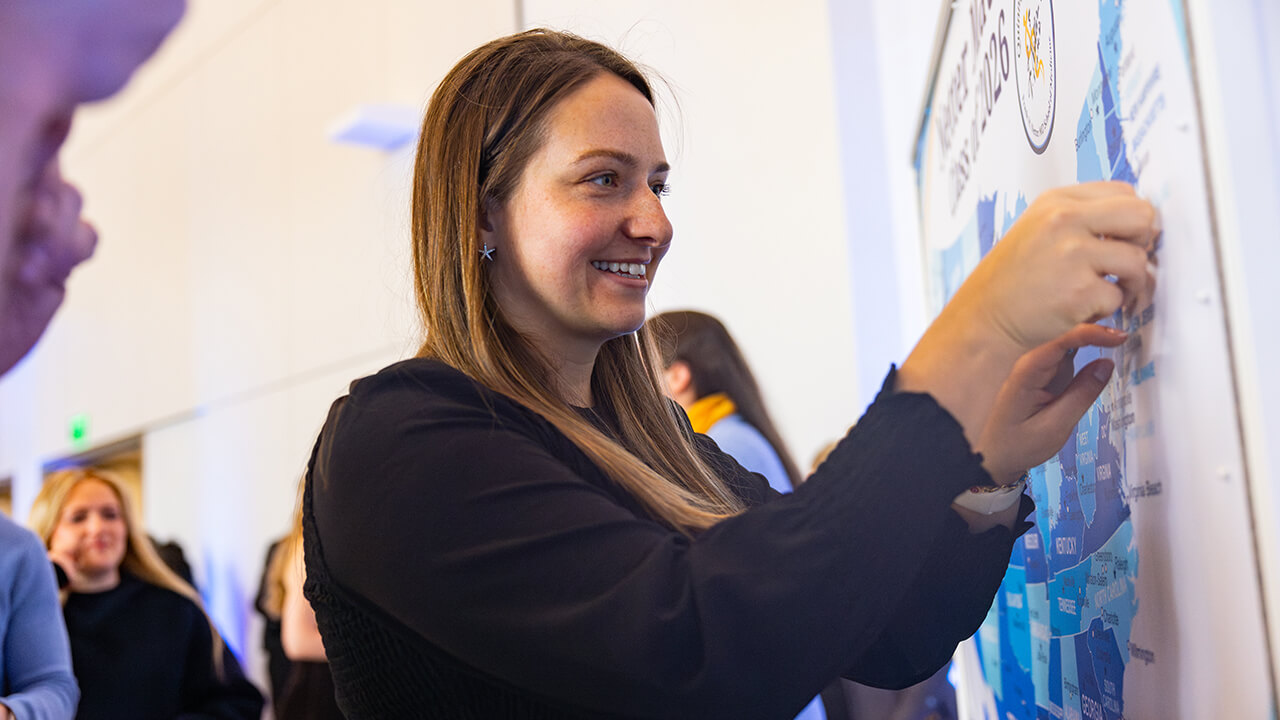
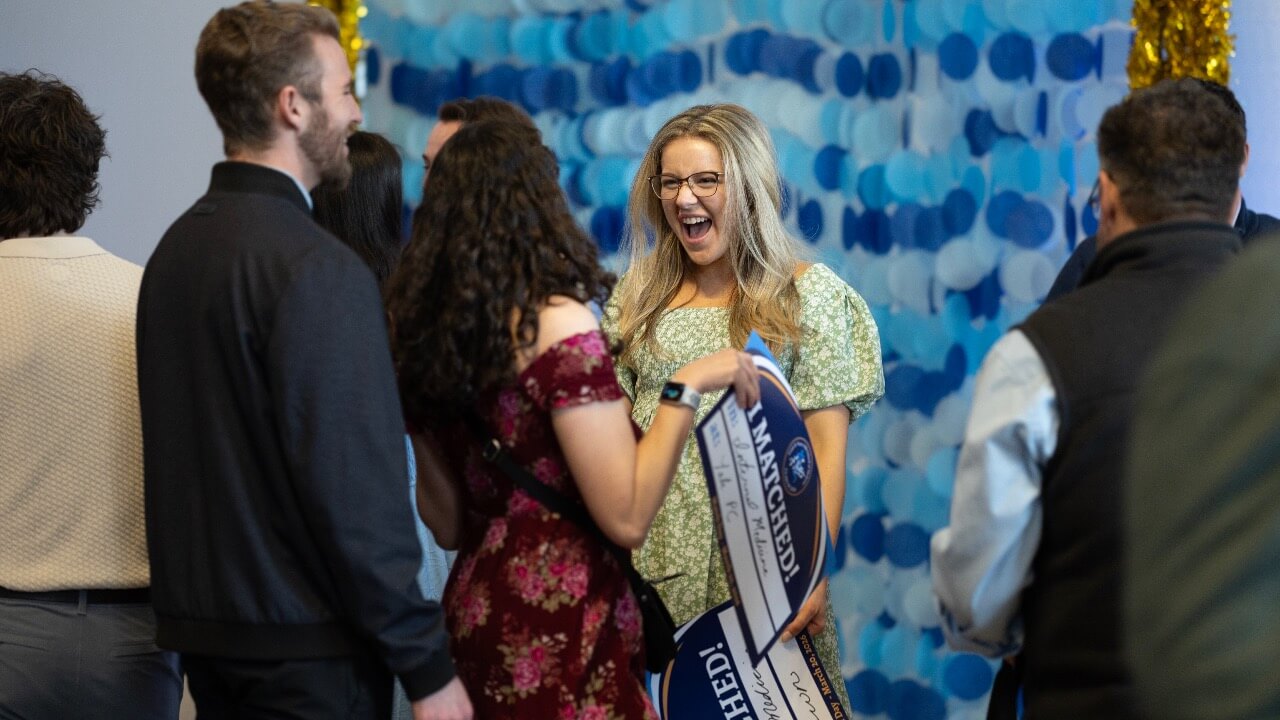
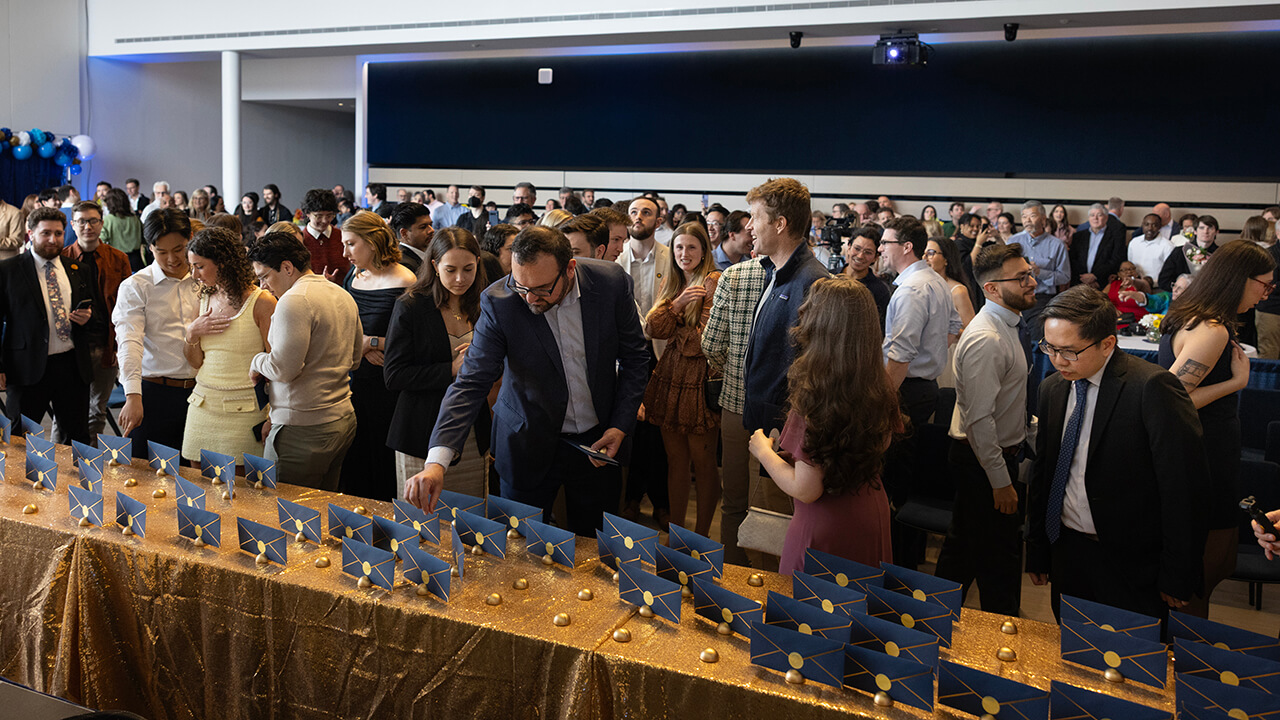
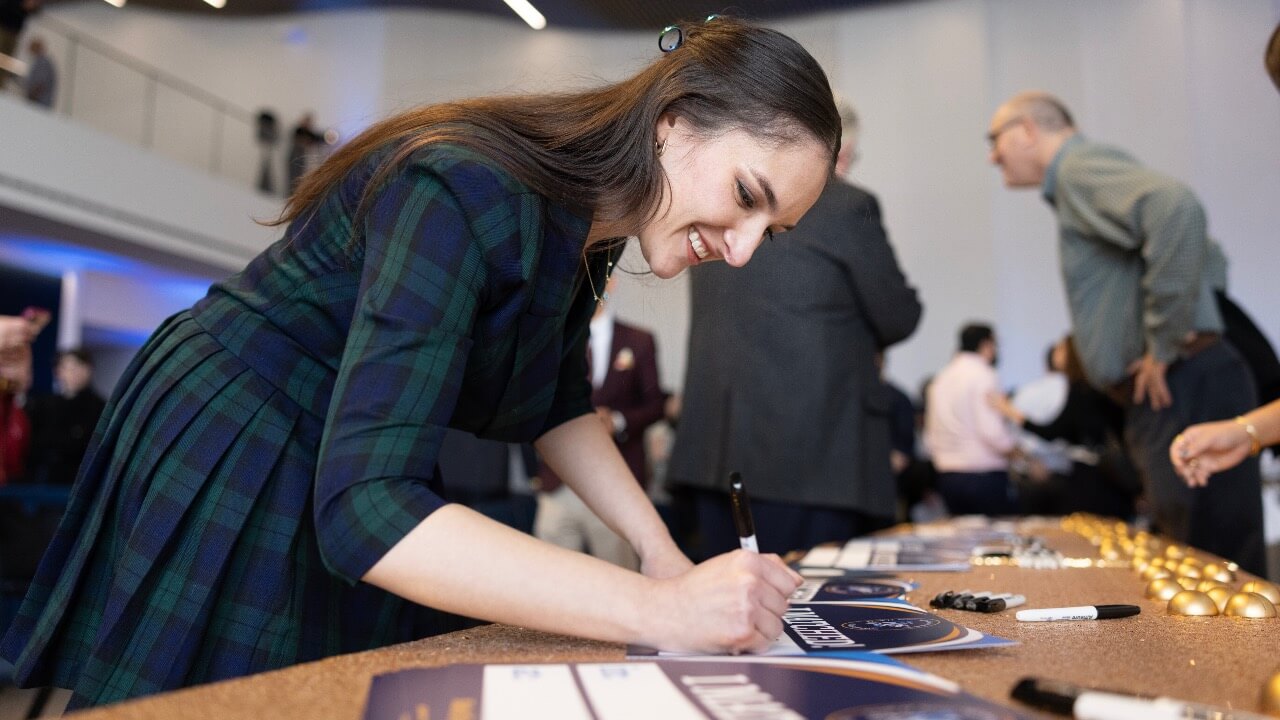
Welcome to Match Day at The Site on Quinnipiac University’s South Quad.
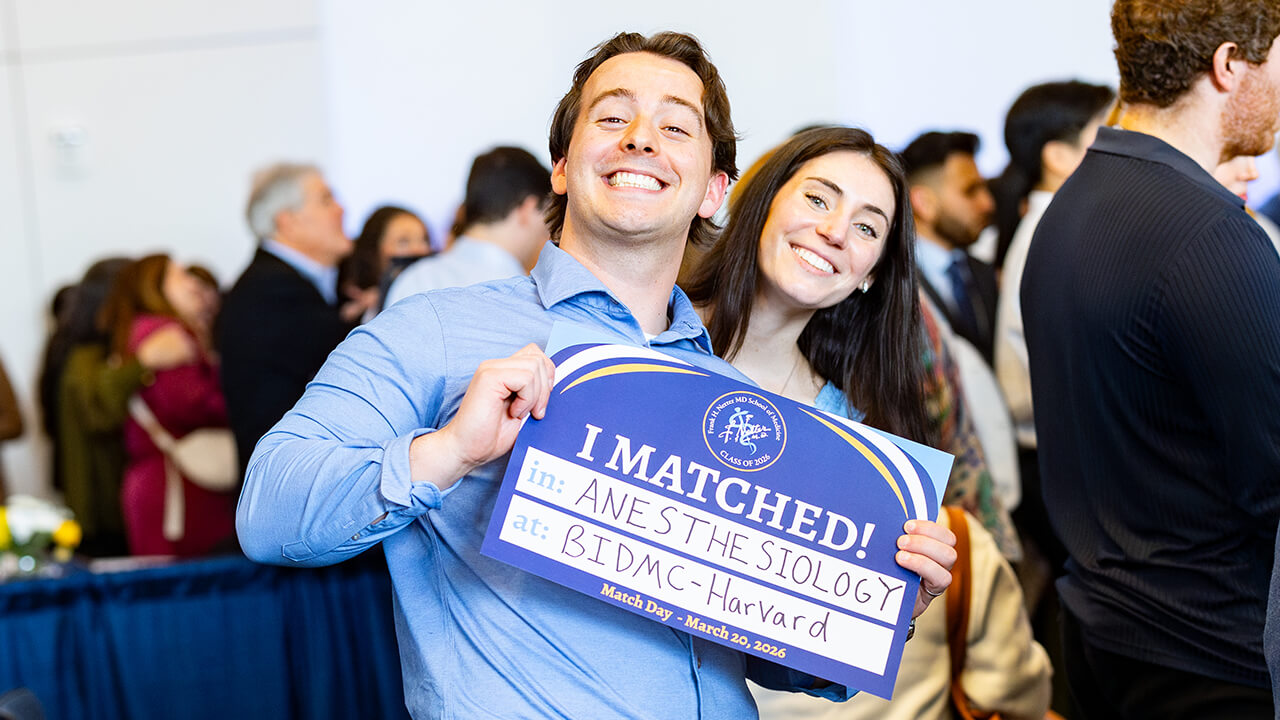
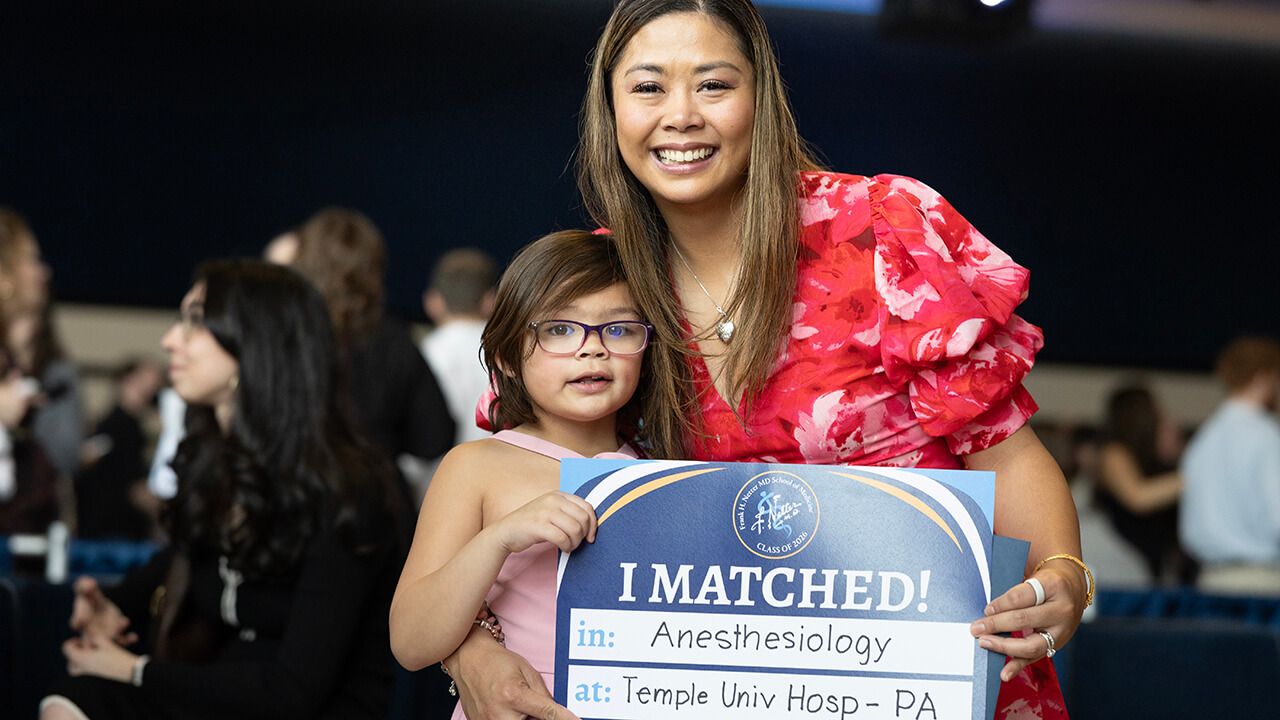
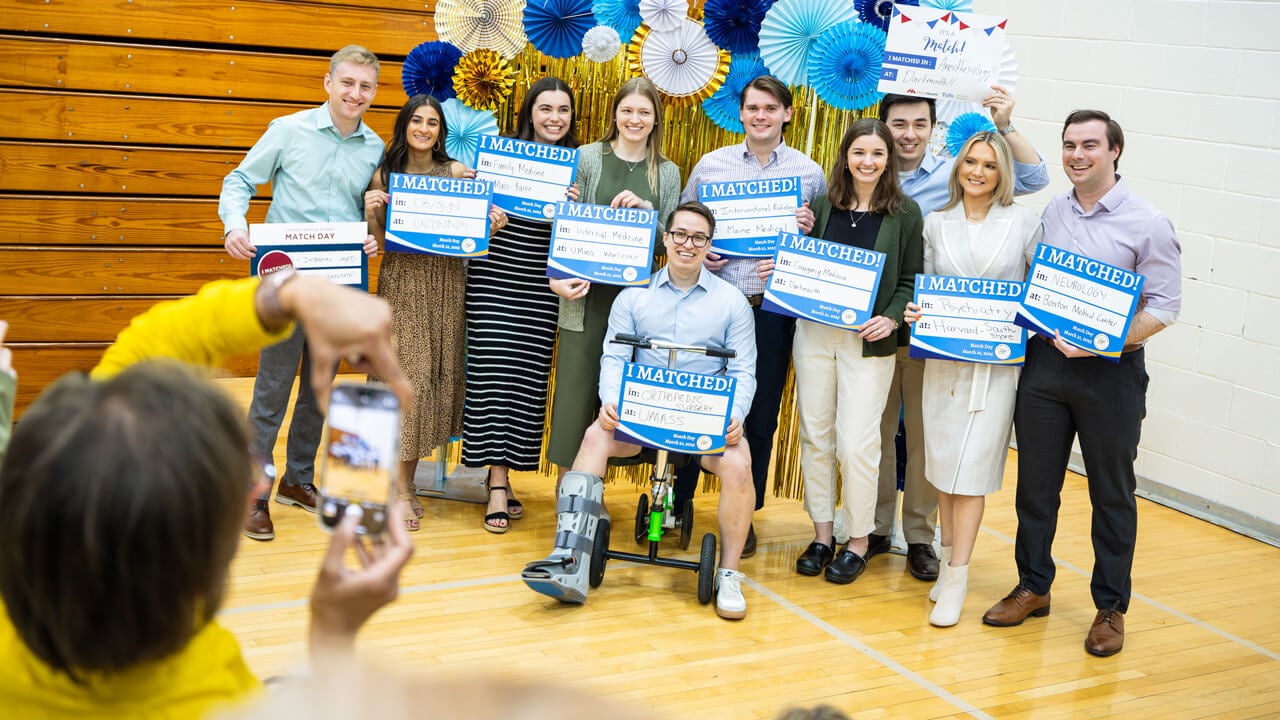
Cordova, Cortes and the Class of 2026 learned of their residency placements on Friday through the National Resident Matching Program. The 95 students who matched from the Class of 2026 were among the 48,050 candidates applying for 44,344 residencies in The Match, which uses a computer algorithm to produce a destination and a discipline for the next three or more years.
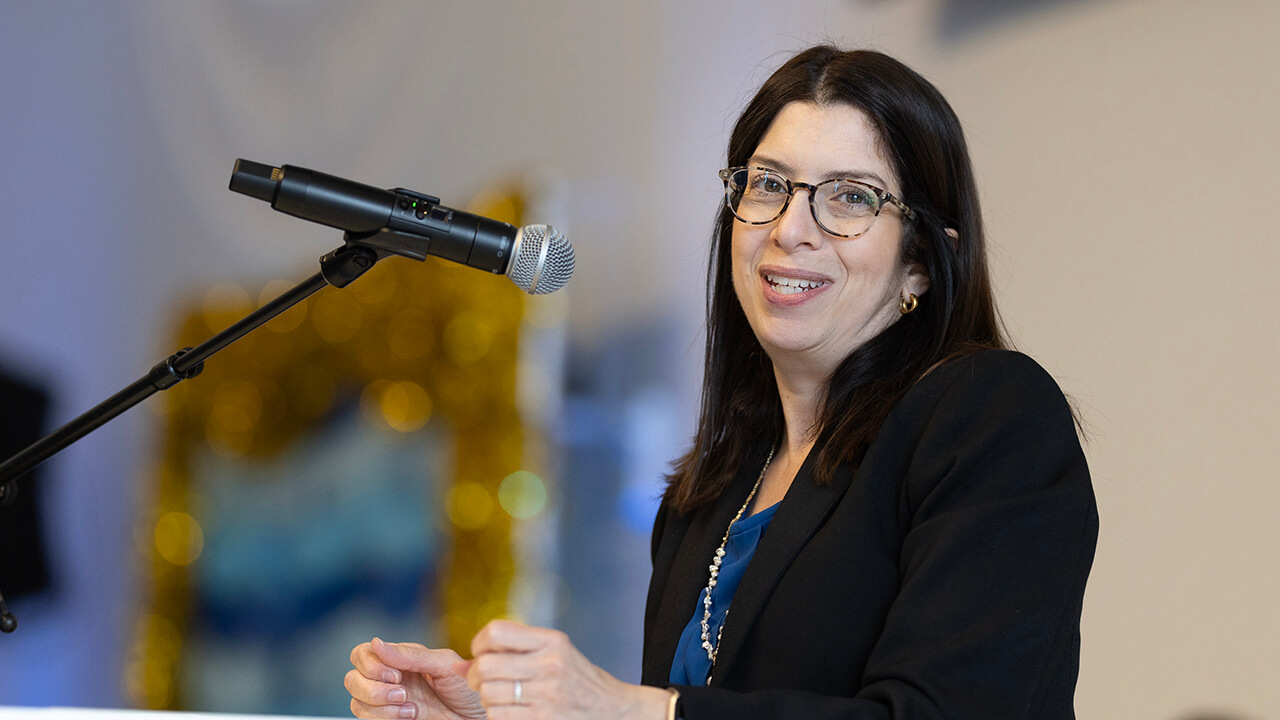
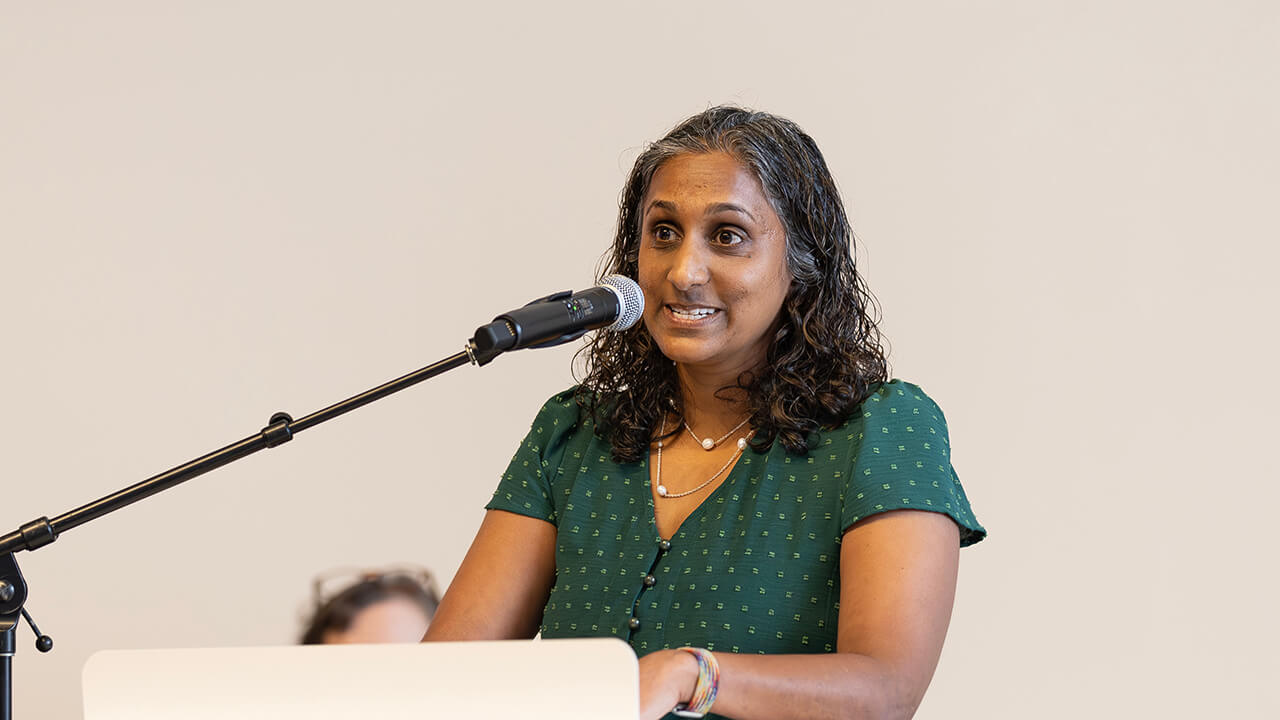
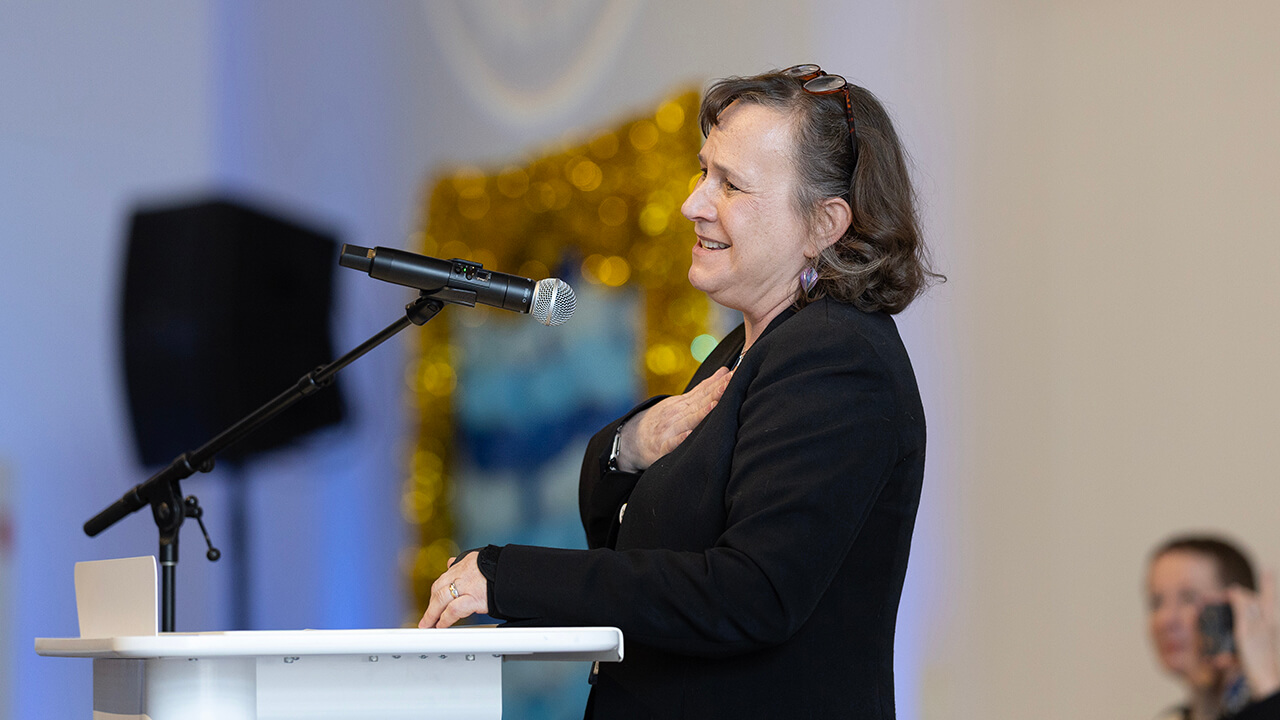
For first-year Dean Lisa Coplit, MD, it was a moment to remember and reflect, but also to celebrate the journey — the one just completed and the one that lies ahead.
“Wherever your journey takes you next, walk forward with confidence because the most important part of your story is not where you start, but how you choose to grow,” Coplit said. “Today, you should celebrate.
“Celebrate with your classmates who have shared this journey with you. Celebrate with the family members and friends who supported you along the way,” she said. “And celebrate the beginning of the next adventure in your life as physicians. We are so proud of you, and we cannot wait to see the impact you will have on the patients and communities you will serve.”
Quinnipiac Netter students matched with residency programs all across the country, including the school’s first graduate to match with the Quinnipiac Rural Family Medicine Residency.
Other matches included Brown University-Rhode Island Hospital, Duke University Medical Center, Dartmouth-Hitchcock Medical Center, Johns Hopkins Hospital, NYU Grossman School of Medicine, Stanford Health Care, University of Chicago Medical Center and Case Western Reserve.
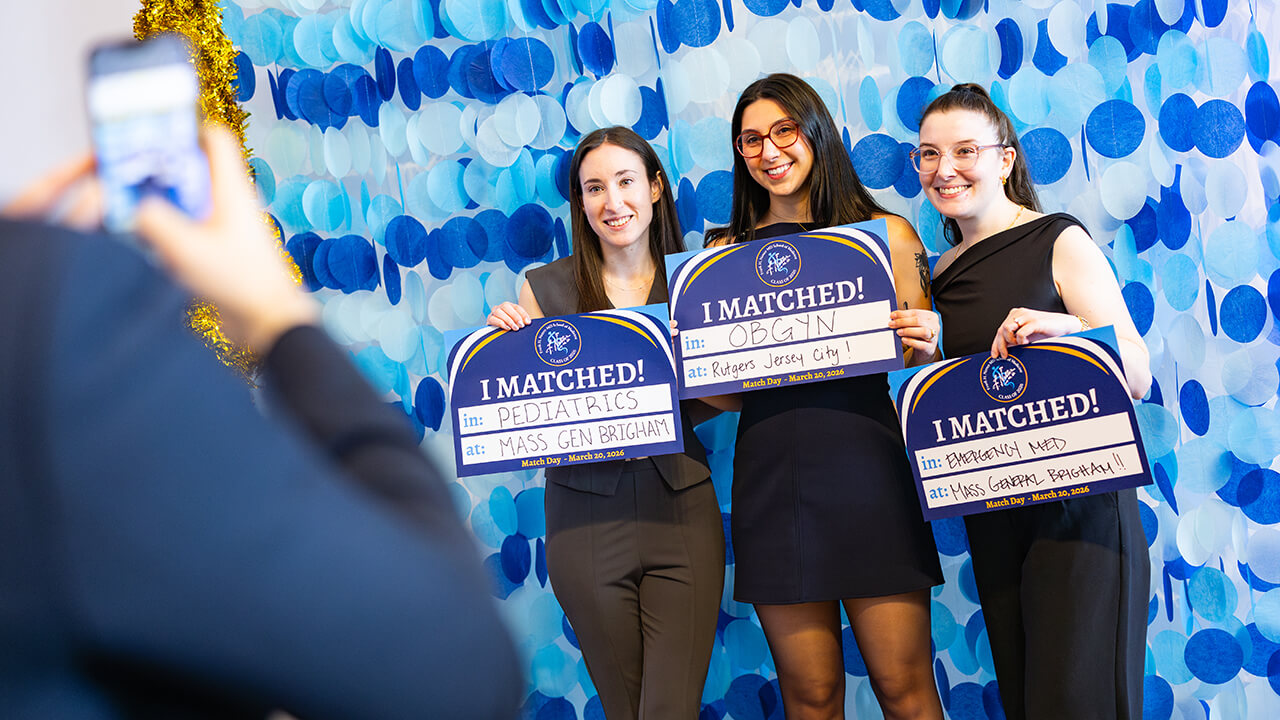
Quinnipiac Netter students matched in 21 different specialties and subspecialties, including anesthesiology, emergency medicine, family medicine, general surgery, obstetrics-gynecology, pediatrics and urology.
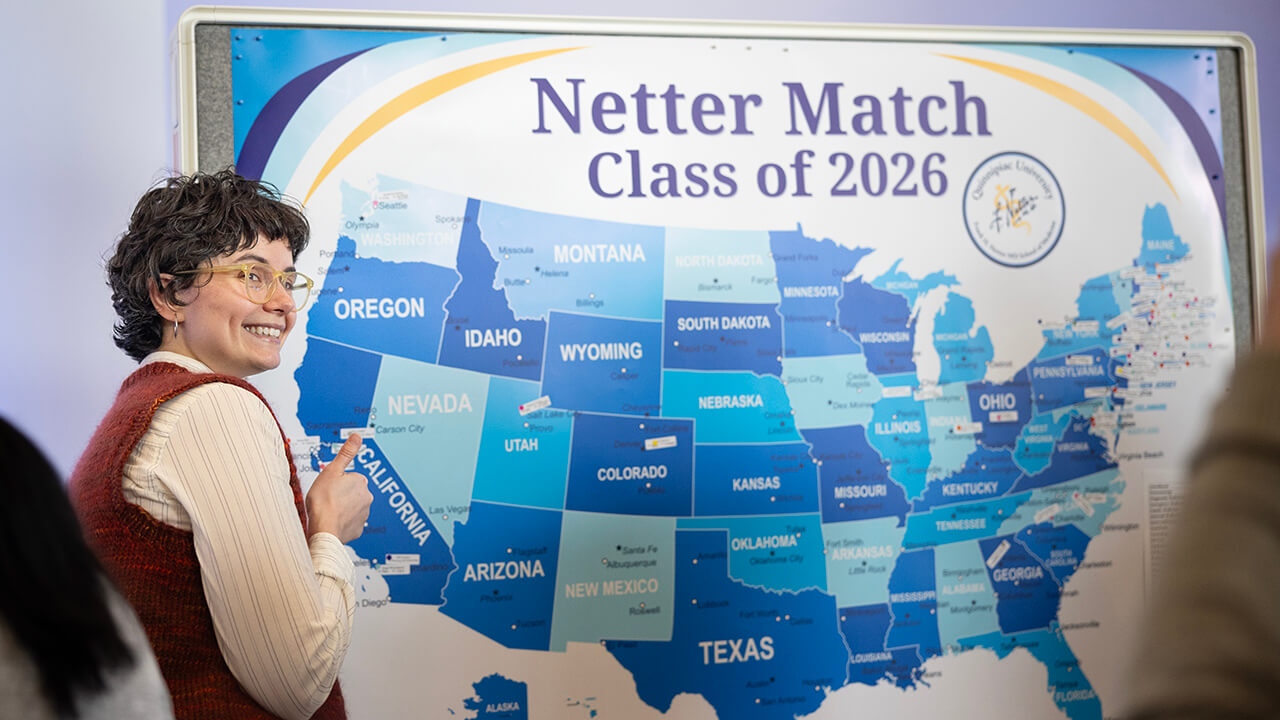
The residencies span 22 states and the District of Columbia.
Overall, 42% of Quinnipiac Netter’s students matched in primary care, while 20 graduates matched with programs in Connecticut, including Yale New Haven Hospital and the University of Connecticut School of Medicine.
A future surgeon shaped by art, advocacy and hands-on care
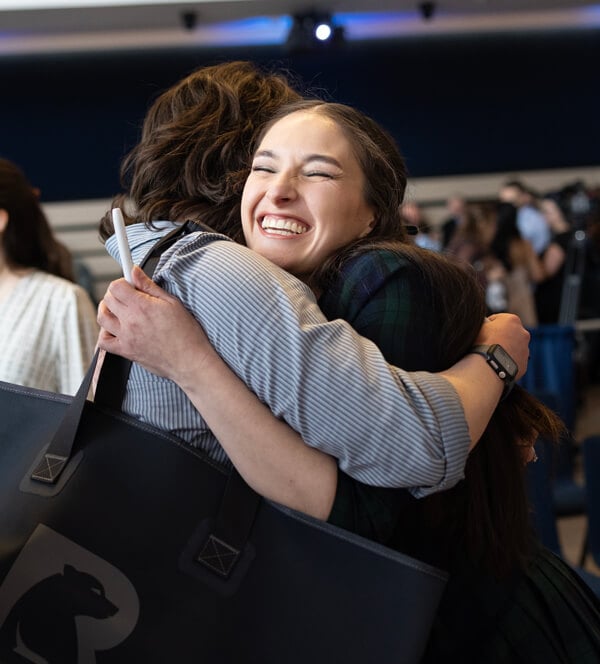
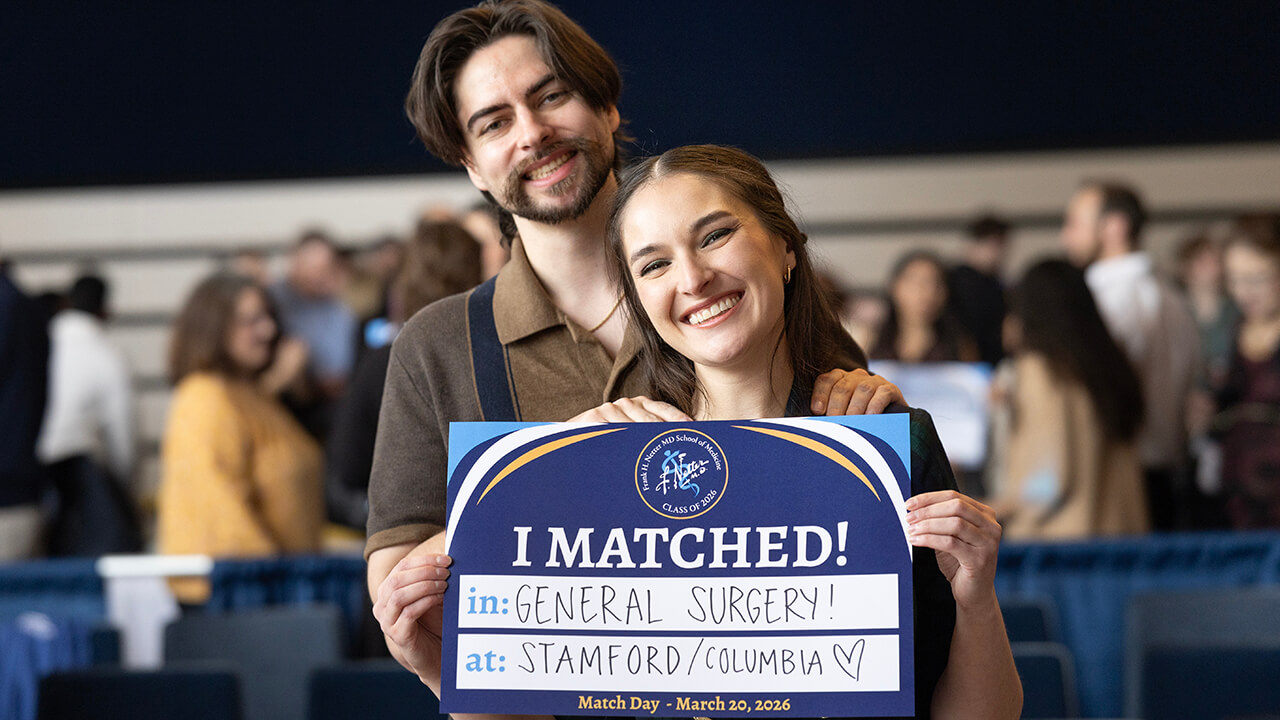
On Match Day, surrounded by her partner and parents who traveled from Mexico and California, Paulina Naser-Saravia, MD ’26, prepared to open the envelope that would determine where she would spend the next several years training in general surgery. It was a moment years in the making, rooted in a childhood spent climbing mountains in rural Mexico and guided by a belief that surgery is “the epitome of art in medicine.”
Her envelope revealed she’d matched at Stamford Hospital/Columbia, in Connecticut, where she will begin her training in general surgery, a culmination of years of work and sacrifice shared with those closest to her.
Naser-Saravia grew up in northern Mexico, in the rural state of Durango, with two younger sisters and parents who encouraged curiosity and hard work.
“We were outside kids,” she said, spending long days exploring the mountains, climbing to caves and coming home with scratches and cuts. She jokingly calls her “elementary wound care” her first introduction to medicine, but even then, healing and working with her hands felt natural.
At 14, she moved with her family to Southern California, a transition that reinforced the value of education and persistence. At 15, she first stepped into an operating room while shadowing a surgeon and says that the experience helped to shape her path.
“The passage of time in the operating room just felt different,” she said. “It was incredibly focused, almost like a studio, where precision, teamwork and attention to detail matter as much as the outcome.”
That early exposure was made possible by a mentor, Dr. Mario Ramirez Bonilla, who introduced her to surgical care at a young age and continued to encourage her path. “When someone you admire believes in your dreams, it amplifies your belief in yourself.”
At the University of California, Santa Barbara, Naser-Saravia majored in microbiology and gravitated toward hands-on work. She supported herself throughout college as a medical assistant in primary care and addiction medicine, where she also began interpreting for Spanish-speaking patients. Fluent in both language and medical terminology, she pursued formal training in translation studies.
“In the operating room or trauma bay, you don’t always have time to wait for an interpreter,” she said. “Even something as simple as saying, ‘Scoot over’ or making a quick joke in their own language can change how safe and seen they feel.”
Art has been a constant thread through her life. Naser-Saravia knits, paints and works with ceramics, describing herself as “a little bit of a hobby collector.” When choosing a medical school, she was drawn to the Frank H. Netter MD School of Medicine through its namesake, whose artwork she had long admired.
A scholarship from Quinnipiac Netter has been a crucial part of her journey, not just logistically but emotionally. With rising costs and limits on loans, she’s acutely aware that without that support, her path might have been impossible.
“It made me feel like the institution believed in me,” she said. It also deepened her desire to give back, supporting future students from under-resourced backgrounds when she is able.
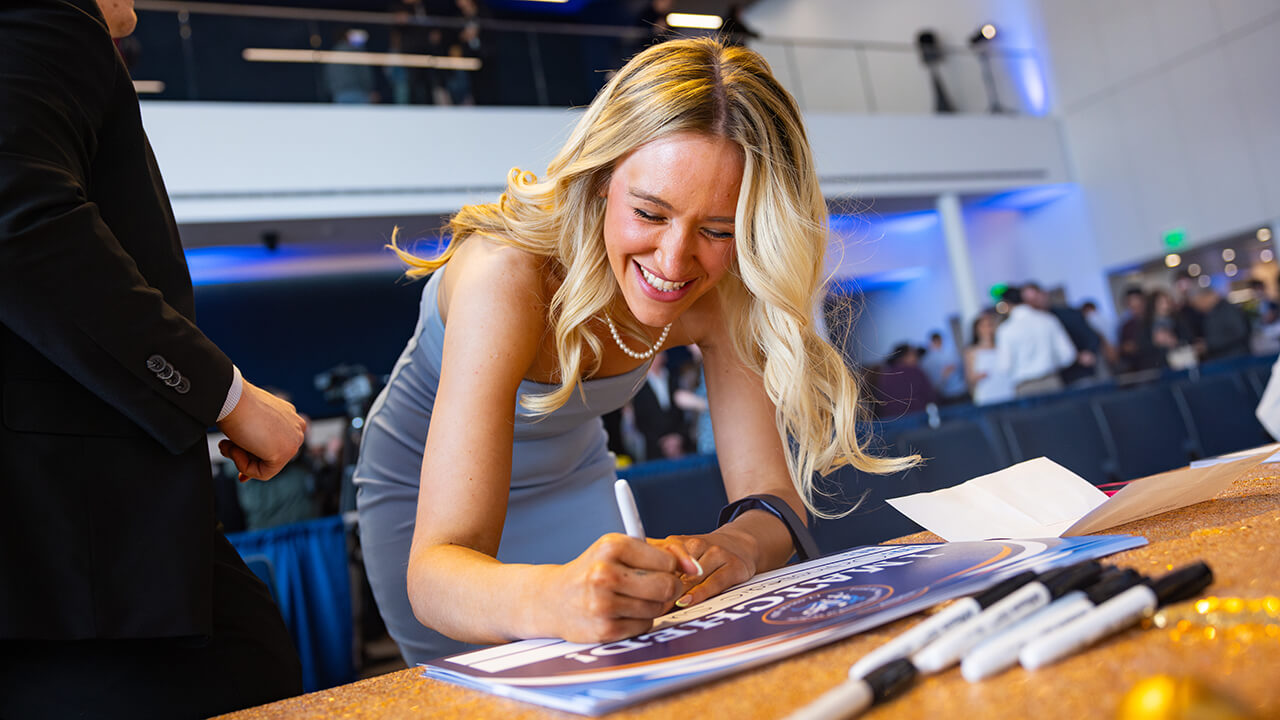
At Quinnipiac Netter, art and medicine began to merge. She contributed to projects like making a sign honoring anatomical donors and increasingly incorporated medical themes into her work.
“I tried to keep my art separate from medicine,” she said. “But the more I fought it, the more it showed up in my work.”
She sees anatomy as a form of art, using drawing to understand structures, visualize surgical planes and appreciate the body’s complexity.
Naser-Saravia commitment to language and equity extended into her work with the Bobcat Community Healthcare Alliance, where she helped create a Qualified Bilingual Provider certification pathway, securing funding and tying certification to clinic volunteering, resulting in full interpreter coverage and a sustainable model for future students.
“Whatever my next steps, I know I’ll be happy,” she said. “I’ll keep bringing all of myself — my art, my language, my story — into how I care for patients.”
A call to serve
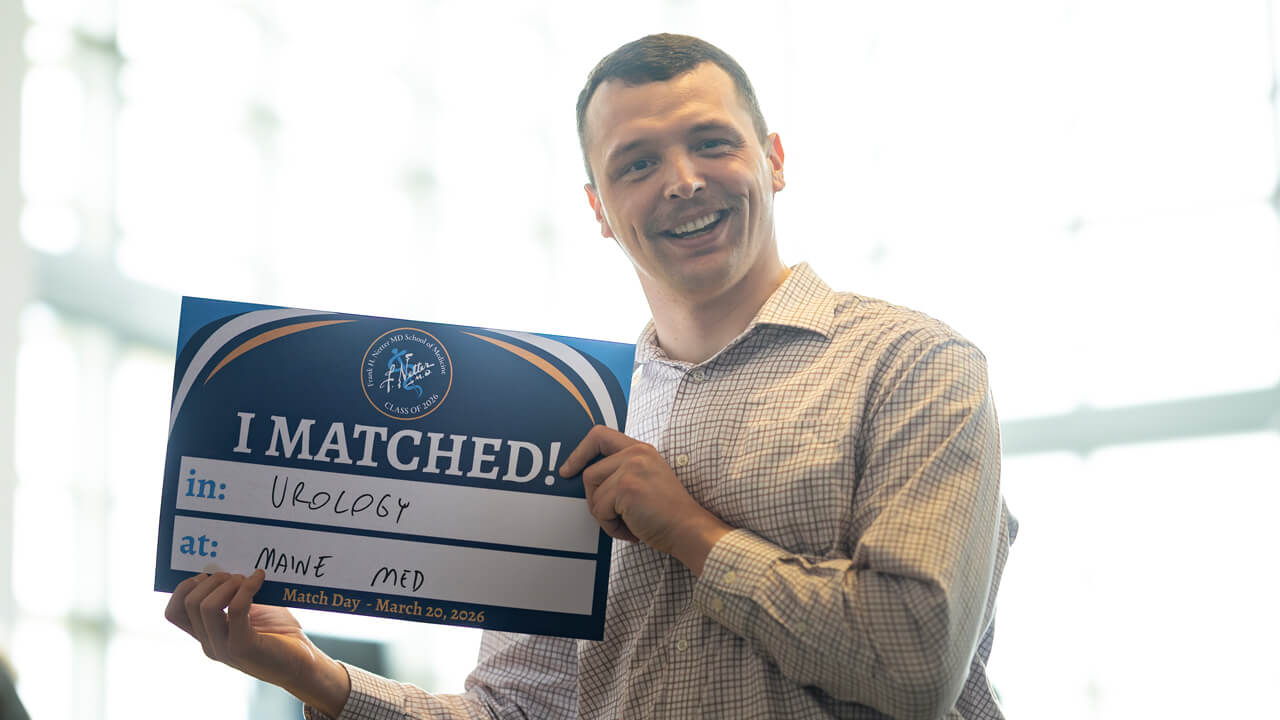
During his five years in the U.S. Navy, Andrew Kehm, MD ’26, saw the world, but he also saw patients — lots of them.
From Naval Medical Center San Diego and the USNS Mercy hospital ship in Hawaii to a NATO training exercise across Bulgaria, Romania, the Republic of Georgia and Norway, he soaked up every port, every lesson.
“I first became interested in urology as a Navy medic,” Kehm said. “I grew up going to the doctor every year and taking charge of my health, but a lot of men aren’t so great about being proactive with their health.
“I started to wonder why that was? And I started to learn more about men’s health, and adjacently to that, becoming interested in fertility and other issues,” he said. “I thought becoming a urologist would be a good way to help some of these men, and at the same time be like, ‘Hey, since you’re here, maybe we should look at other parts of your health, not just the genitourinary (reproductive and urinary organs).’ It just made sense to me.”
And soon, it will make sense to his patients.
Earlier this year, Kehm learned he was accepted into a urology residency at MaineHealth Maine Medical Center. It marked the culmination of an intense journey from the U.S. Navy to Portland, Maine.
After he was discharged in 2017 as an E5 — a Hospital Corpsman Second Class — Kehm searched for his next step, the one that would take him from sailor to student. This time, it took him from a local community college to the University of Wisconsin in Madison for his undergraduate degree in microbiology.
With a choice between pursuing a career in microbial science or medicine, Kehm chose medicine. It didn’t take long for the interviews and acceptances to follow.
But one institution stood out among the rest — the Frank H. Netter MD School of Medicine at Quinnipiac.
“I came to Netter because I loved my interview. Everyone was super friendly during my interview,” he said. “Other schools had this approach of, ‘Why should we let you into our medical school?’ With Netter, it was, ‘We want you. We like you.’ It just felt completely different. I felt respected.
“I've been preaching this since I got here, to be honest. My number one thing about this whole place is that it fosters collaboration not competition,” Kehm said. “Netter does a really good job building that environment. If I had gone to another medical school, I don't think I would have been as successful.”
Kehm said he found his stride at Quinnipiac Netter as an M3, a third-year medical student training to become a urologist.
“Things just really started to blossom, and it started to embolden my passion more and more. And then finally, I got to participate in some stone surgeries and other procedures,” Kehm said. “I was just like, ‘This is absolutely incredible. I get to use lasers. I get to use robots.’ I saw that you can do everything from improving the quality of lives to saving lives. It's miraculous.”
These are the moments Kehm will remember. They’ll be filed next to the nights with his peers in study rooms fueled by caffeine, candy, unwavering support and the occasional, yet perfectly timed release of stress-reducing laughter.
“I got a really good education here, but I think the biggest thing about Netter is they did a bang-up job at selecting my peer group,” Kehm said. “I’m really thankful for my peers more than anything. I've been so happy to rely on them and work with them these last four years. I think that’s what really makes Netter great.”
It takes a village
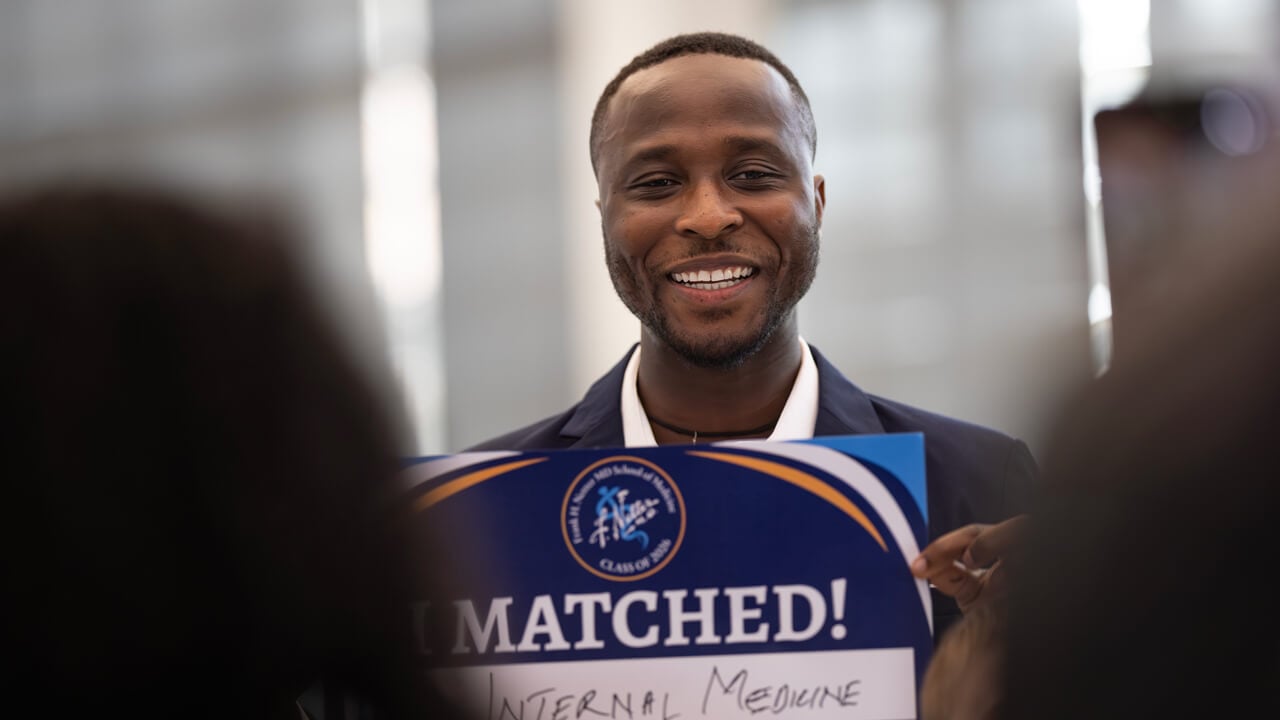
Physicians embody the adage “it takes a village.” Support systems grow. New family members are found in unexpected places. The journey to becoming a doctor is anything but a solo act.
For Enock Arthur, MD ’26, the foundation was set at home in Ghana, where his mother and two of his four sisters embarked on nursing careers. Then, after moving to the United States at 18 to pursue an undergraduate degree in New Jersey, his dream of studying medicine was reinforced by the family of a 1-year-old boy he met working in a childcare facility.
Amid the earliest and most chaotic days of the pandemic, the boy’s family took Arthur in and treated him like a son of their own.
“I have two families, which is unusual for a lot of people,” Arthur said. “I don’t think I could have gotten this far without all of their support.”
Arthur’s two families became one on Friday, wrapping him in a warm embrace after he learned where his next chapter will be written. An internal medicine residency awaits at Brown University/Rhode Island Hospital, which will allow him to visit his infant nephew in nearby New Jersey while keeping tabs on “little brother” Bennett, who’s now 8.
Babysitting for Bennett spurred Arthur’s interest in pediatrics before internal medicine became a calling. When patients are dealing with chronic pain or illness of unknown origin, clear, concise communication is at its most vital, Arthur said. He prides himself on being the kind of doctor who can read a patient’s emotions and illuminate the path to recovery in moments of darkness.
“What I love about internal medicine so much is just the ability to put people at ease,” Arthur said. “I think back to being a kid and not knowing what was going on with my own body. Being able to talk to somebody, walk them through what’s going on and working together to find a solution has always been very fascinating to me.
“I’m passionate about having that curiosity and working to help someone get to the finish line when they’re feeling sick and vulnerable,” he said. “And I would add that preventative care is so important — just being able to give someone the guidance so that they can stay out of the hospital.”
On a recent trip to his native country for a rotation clerkship, Arthur got to put those observational skills into practice. A woman had been newly diagnosed with diabetes was dealing with dangerous complications, so Arthur went the extra mile in explaining a treatment plan.
“When people are in a state of shock or trying to process serious information related to their health, they may be nodding, but that doesn’t necessarily mean they’re able to understand everything they’re being told,” Arthur said. “I could sense some panic. So I came back into the room to ask her if she understood everything she was being told."
“I just wanted to break it down for her and make sure she understood it, step by step. This is a person who is now going to need insulin,” he said. “This is how your life is going to look now. It doesn’t have to mean your life is in danger, but it does mean that we can work towards getting you to a stable point.”
A calling rooted in community, carried into medicine
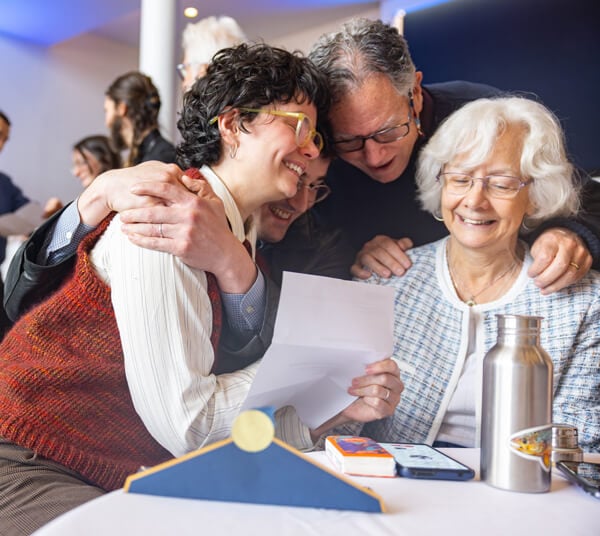
When Rose Lassalle-Klein, MD ’26, talks about the patients who shaped their path to medicine, one patient in particular stays with them.
During the height of the COVID-19 pandemic, Lassalle-Klein was working as a case manager in a FEMA isolation shelter in the San Francisco Bay Area for people experiencing homelessness. One patient, a middle-aged woman with Type 2 diabetes and a profound fear of needles, relied on her partner to administer insulin. Again and again, Lassalle-Klein was called to respond to dangerous swings in her blood sugar.
They could see that their patient needed an insulin pump to manage her diabetes safely and independently, but insurance barriers stood in the way.
“I just felt like I needed more training to be a better advocate,” Lassalle-Klein said. “Without the clinical expertise, I couldn’t make the case for why this was medically necessary, not just for her diabetes, but for her life.”
That frustration became a turning point. It pushed Lassalle-Klein, a nontraditional student with years of caregiving and outreach experience, toward medical school and ultimately to Quinnipiac’s Frank H. Netter MD School of Medicine, where they will graduate this spring and pursue pediatrics.
Lassalle-Klein grew up in Oakland and Alameda, California, in a family deeply involved in community organizing, where they learned to see work as a vocation shaped by both personal strengths and community need.
At Seattle University, where they studied biology and Spanish, Lassalle-Klein initially pursued research before shifting to patient-facing roles, including hospice caregiving on a rural island in Washington. There, they saw the impact of holistic care and the importance of understanding patients and families over time.
Lassalle-Klein later joined the nonprofit Abode Services, working with Alameda County Health Care for the Homeless in isolation shelters and on a street health outreach team. Walking through encampments with a backpack of supplies, they helped deliver care in communities often disrupted by displacement and instability.
“I really fell in love with the street health model,” they said. “You meet people where they are, and you stay with them.”
When applying to medical school, Lassalle-Klein sought a program that prioritized primary care, strong clinical training and service to underserved communities. Quinnipiac’s Primary Care Fellowship aligned with those goals.
“I knew I really liked working with people and thinking critically about illness, but it was my skills in building rapport and trust with patients who need long-term, complex care that drew me to primary care,” said Lassalle-Klein. “I applied broadly for scholarships and funding, and I ended up receiving Quinnipiac’s Primary Care Fellowship for my year. That was a big draw for me, because I knew I wanted to work with a patient population where income wasn’t my priority.”
At Quinnipiac, they continued their commitment to community-based care. As a leader in the Bobcat Community Health Alliance, Lassalle-Klein helped run street outreach programs in New Haven and expand language access by developing training for bilingual providers. Lassalle-Klein was also active in the School of Medicine Pride Alliance, organizing workshops on care for trans and gender-diverse patients and contributing to research to improve care for this population.
Across their work with people experiencing homelessness, Spanish-speaking families and LGBTQ+ youth, a consistent theme has been their commitment to improving access, dignity and quality of care.
In pediatrics, Lassalle-Klein has found a natural fit. The specialty’s focus on children within the context of family and community allows them to integrate their interests in social context, language and identity. Their ability to communicate with parents in Spanish and children in English helps bridge gaps in care.
On Match Day, surrounded by their family, partner and close friends, Lassalle-Klein opened their envelope and matched at UCSF Benioff Children's Hospital in California, where they will continue their training in pediatrics.
Shared lives, shared dreams
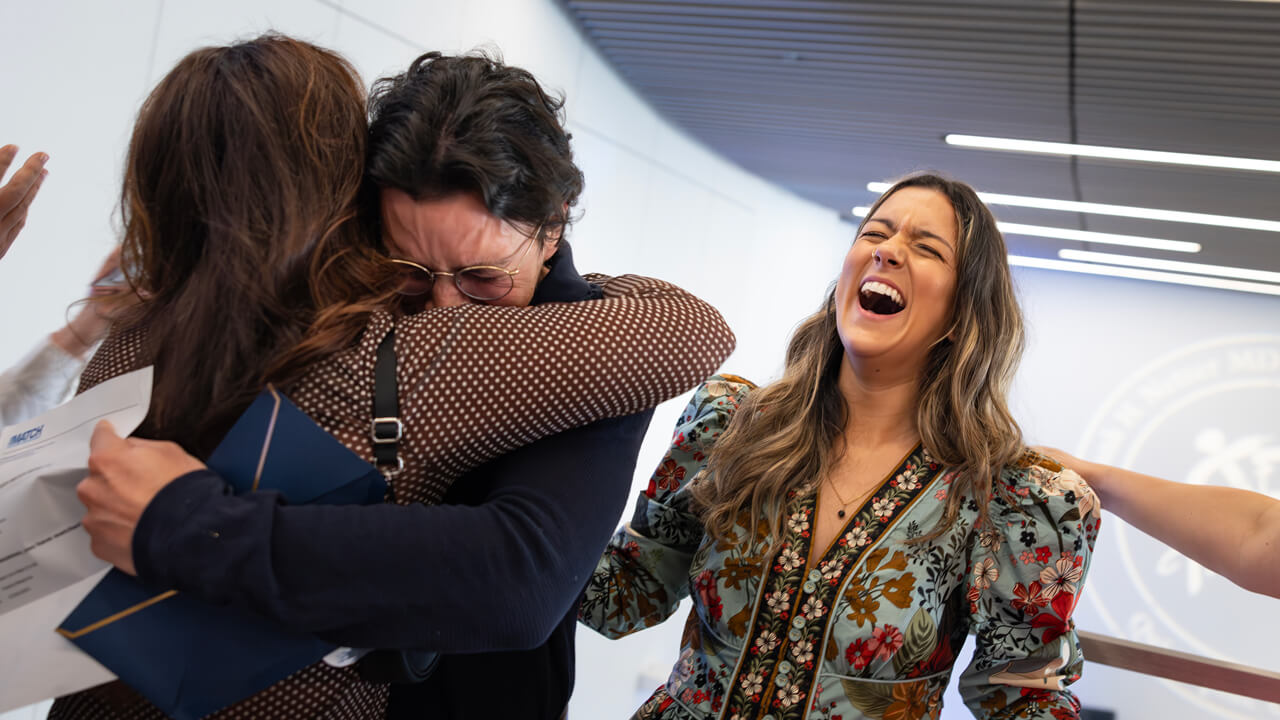
For nearly eight years, Megan Cortes, MD ’26, and Lucas Cordova, MD ’26, have shared a dream to practice medicine. After meeting as first-year undergraduate students in Florida, they soon bonded over building a life together as physicians and partners.
In fact, they’re getting married next month.
On Friday, as part of the Couples Match, Cortes and Cordova opened their envelopes to discover the next stops on their professional journeys.
Surrounded by their parents, who took the same flight up from Florida to share this moment, the smiles were unmistakable.
The couple matched at Duke University Medical Center, with Cortes entering a pediatrics residency and Cordova a family medicine residency.
After spending the last four years learning and training at the Frank H. Netter MD School of Medicine, they were ready — and well prepared — to provide compassionate and inspired care to patients at their residency assignments.
“When I think about how I grew into a more empathetic person, especially in a healthcare setting, I think Netter did such a good job. I have a much greater understanding of how to really help people,” Cordova said. “I feel like once we were on the hospital floors every day, I was really able to better reflect on what I could do.”
For Cortes, it was precisely these shared experiences that deepened their connection to medicine and each other.
“We’ve always been really supportive of one another in our goals, ever since we first met,” Cortes said. “So when it came time for us to apply to medical school, it was a culmination of everything we had worked so hard together to achieve.”
Although they were accepted at other medical schools, Quinnipiac Netter and former Dean of Admissions Mark Yeckel, stood out. It wasn’t just the institutional belief that Cortes and Cordova would thrive at Quinnipiac Netter. It was also the commitment of scholarship funding.
Yeckel made it clear to Cortes and Cordova that they were exactly the type of students Quinnipiac Netter wanted for its community.
“We both received a phone call from Dr. Yeckel. I still remember that call, and I still think about it,” Cortes grinned. “He said, ‘We believe in you guys, and we believe in your story.’ Dr. Yeckel and the admissions team saw that in us, and they continued to support us all throughout the residency application process as well.”
While it wasn’t always easy to juggle classes, clinicals and studying, Cordova and Cortes made it work. They supported each other. They found time to laugh. They found time to be together in the moment because, after all, that mattered most.
“There were definitely times when it was a struggle. I remember specifically when Lucas was on OB/GYN and I was on surgery. We were really like two ships passing in the night,” Cortes said. “But the big thing was, we both recognized that sometimes, I might have a hard day, but Lucas might have a little bit of a harder day.
“For us, it works because you have someone who truly understands what you’re going through,” Cortes said. “Dr. (Adam) Weinstein has been a big help to me with the match process. He told me that matches are for dreamers. Lucas and I are dreamers. When I think about us, our dream is always to be together.”
In Focus
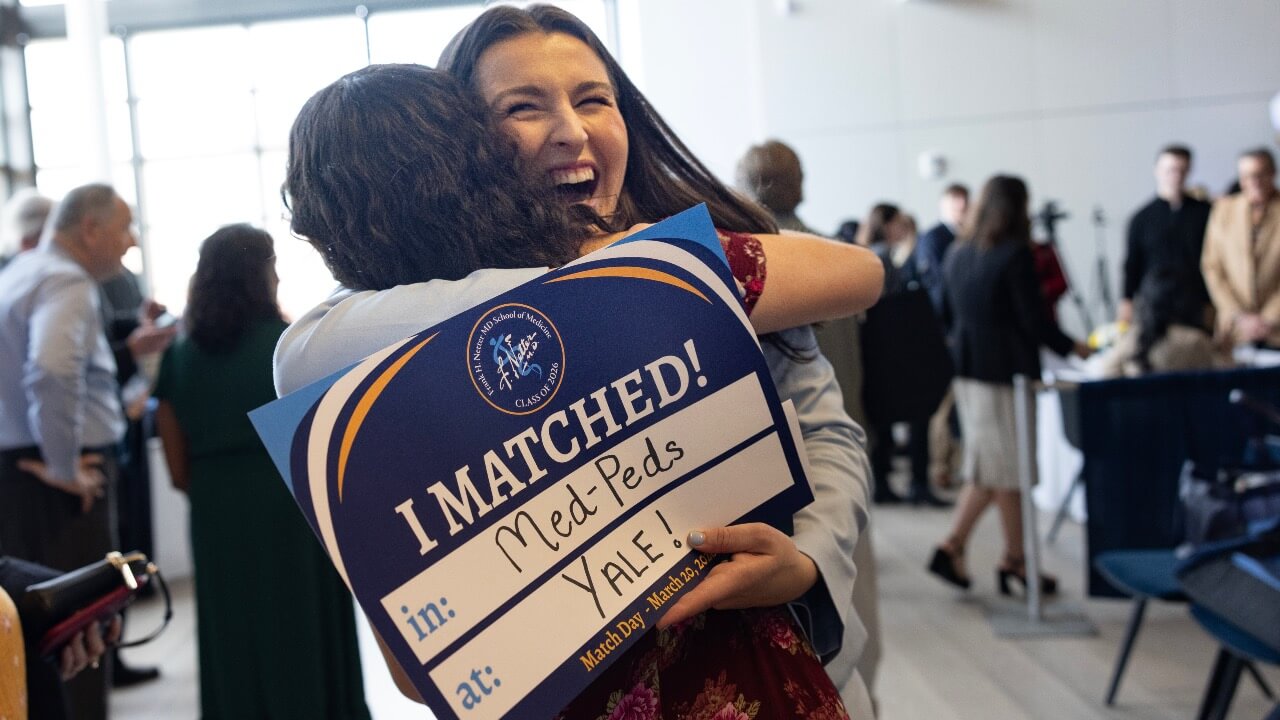
In this Article
Where the Class of 2026 Matched
The Class of 2026 matched with residency programs across the nation.
-
Beth Israel Deaconess Medical Center - MA*^
-
Brown University/Rhode Island Hospital - RI^
-
Dartmouth-Hitchcock Medical Center - NH
-
Emory University School of Medicine - GA
-
Hospital of the University of Pennsylvania - PA
-
Temple University Hospital - PA
-
UC Davis Medical Center - CA^
-
University of Connecticut School of Medicine - CT*^
-
Yale New Haven Hospital - CT^
-
Boston University Medical Center - MA
-
Brown University/Rhode Island Hospital - RI
-
ISMMS Mount Sinai Hospital Morningside-West - NY^
-
Johns Hopkins Hospital - MD
-
Kent Hospital - RI
-
Mass General Brigham - MA
-
NYP Hospital/Columbia & Cornell - NY^
-
NYU Grossman School of Medicine - NY
-
UMass Chan Medical School - MA^
-
University of Connecticut School of Medicine - CT^
-
University of Utah Health - UT
-
Valley Health Systems - NV
-
Yale New Haven Hospital - CT^
-
Atrium Health Cabarrus - NC
-
Duke Univ Medical Center - NC
-
Kaiser Permanente - Napa/Solano - CA
-
Middlesex Hospital - CT^
-
The Ohio State University Medical Center - OH
-
Quinnipiac University Frank H. Netter MD School of Medicine - CT
-
Portsmouth Regional Hospital - NH
-
Swedish Medical Center - WA
-
UMass Chan Medical School - MA
-
Lehigh Valley Hospital - PA
-
Loma Linda University - CA
-
New York Medical College at Metropolitan Hospital Center - NY^Stamford
-
Stamford Hospital/Columbia - CT
-
UMass Chan - Baystate - MA
-
UMass Chan Medical School - MA
-
University of Connecticut School of Medicine^
-
Waterbury Hospital - CT
-
Zucker School of Medicine Northwell Staten Island - NY
-
Boston University Medical Center - MA^
-
Brown University/Rhode Island Hospital - RI*^
-
Case Western Reserve - University Hospitals Cleveland Medical Center - OH
-
George Washington University School of Medicine - DC^
-
Jefferson Health - Jefferson Einstein Philadelphia - PA
-
Kaiser Permanente/San Francisco - CA
-
Maine Medical Center - ME^
-
MGB-Brigham & Women’s Hospital - MA
-
NYU Grossman Long Island School of Medicine - NY^
-
Tufts Medical Center - MA
-
University of Arizona College of Medicine, Tucson - AZ^
-
University of Rochester Medical Center - NY
-
University of Utah Health - UT
-
Zucker School of Medicine-Northwell Danbury Hospital - CT
-
Zucker School of Medicine-Northwell Lenox Hill - NY
-
ISMMS Mount Sinai Hospital - NY
-
Indiana University School of Medicine - IN
-
Yale New Haven Hospital - CT*^
-
Maine Medical Center - ME^
-
University of Miami/Jackson Health System - FL
-
University of Vermont Medical Center - VT
-
Rutgers University -Jersey City Medical Center - NJ
-
UMass Chan Medical School/Baystate Health - MA^
-
University of Colorado School of Medicine - Denver - CO
-
University of Connecticut School of Medicine - CT^*
-
UMass Chan Medical School - MA
-
SUNY Upstate Medical University - NY
-
Mass General Brigham - MA
-
Children’s Hospital Los Angeles - CA^
-
Duke University Medical Center - NC
-
MGB-Massachusetts General Hospital - MA^
-
Northwestern McGaw/Lurie Childrens Hospital - IL
-
New York Presbyterian Hospital Columbia University Medical Center – NY^
-
University of Connecticut School of Medicine^
-
UCSF Benioff Childrens Hospital - CA
-
University of Connecticut School of Medicine - CT
-
Albany Medical Center - NY
-
Boston University Medical Center - MA^
-
Dartmouth-Hitchcock Medical Center – NH^
-
One Brooklyn Health-Brookdale University Hospital Medical Center - NY
-
Rutgers Robert Wood Johnson Medical School - NJ^
-
UMass Chan Medical School - MA*
-
UMass Chan Medical School - MA
-
University of Rochester Medical Center - NY
-
ISMMS Mount Sinai Hospital Morningside-West - NY
-
Maimonides Medical Center - NY
-
MedStar Georgetown University Hospital - DC
-
Rochester Regional Health - NY
-
Stanford Health Care - CA
-
University of Chicago Medical Center - IL
-
Yale New Haven Hospital - CT^
-
Maine Medical Center - ME
-
Indiana University School of Medicine - IN
* Indicates more than one student matched at this institution in this specialty
^ Indicates a Frank H. Netter MD School of Medicine alumnus has matched at this program and specialty previously

Watch the recording of the 2026 Frank H. Netter MD School of Medicine Match Day Ceremony.
Read This Next


Stay in the Loop
Quinnipiac Today is your source for what's happening throughout #BobcatNation. Sign up for our weekly email newsletter to be among the first to know about news, events and members of our Bobcat family who are making a positive difference in our world.
Sign Up Now