


Innovating for Inclusive Excellence: Highlights from the Fifth Annual PEARLS Symposium
January 27, 2026
January 27, 2026
“At its heart, PEARLS reflects something deeply aligned with who we are as physicians, as educators and as medical learners,” said School of Medicine Dean Dr. Lisa Coplit. “And that is a commitment to building a learning community where everybody belongs, where differences are valued, and where improving outcomes for all people and all patients is not just an aspiration but a shared responsibility.”
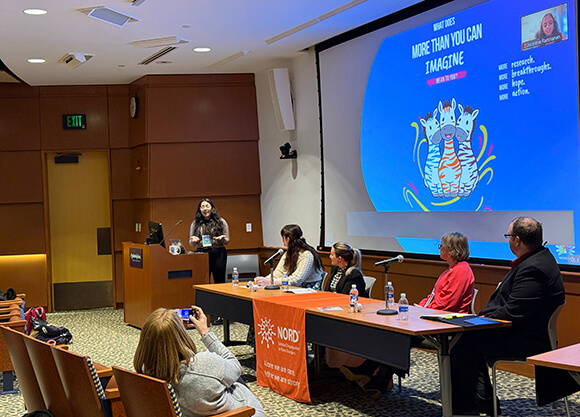
Guided by the principles of awareness, inspiration and action, this year’s symposium introduced a new format with a three-part series designed to increase participation while sustaining its core mission. The event was co-sponsored by the Netter Office of Inclusive Excellence.
This year, four student-driven projects were awarded seed grants and took center stage on Friday, January 16, to share their work, each team exemplifying creative solutions to address disparities and strengthen community bonds.
Second-year medical student Lynn Freimanis, along with team members Azeen Keihani, Alan Chai, Manav Jain, Alina Malloy and Reynoldo Zamora contributed to the creation of a project aimed at enhancing clinical and empathetic skills in caring for individuals with intellectual and developmental disabilities (IDD).
“Currently, there is a lack of standardized, longitudinal and formally evaluated training in working with this population, and that's true for most medical and health programs, health professions programs,” said Freimanis. “This lack of healthcare training really contributes to the widespread misunderstanding of these encounters and inadequate care delivery."
The team collaborated to help address communication issues that may lead adults with IDD to experience higher rates of hospitalizations, longer rehabilitation schedules, and the need for long-term services and support. The initiative utilizes immersive, interprofessional experiences with standardized patients from the IDD community, combining evidence-based practice with real voices.
“We really want this to be a continuously growing event that integrates well with the past curriculum and eventually becomes self-standing,” said Freimanis. “It is a curriculum model that we’re hoping to share with other programs and institutions as a very short, effective intervention.”
Project authors and second-year medical students Sarah Tarantino, Jack Herbster and Kit Ferguson introduced a Photovoice project to amplify the perspectives of transgender and gender non-conforming individuals navigating healthcare systems. Research has shown that 47% of transgender individuals and 56% of gender nonconforming individuals report having
unmet healthcare needs.
The project aims to amplify the voices and experiences of transgender and gender non-conforming individuals regarding gender-affirming healthcare, utilizing the Photovoice methodology. Participants, recruited in collaboration with local organizations, will submit photos and narratives that illustrate their healthcare journeys. Their stories will then be analyzed for common themes and presented in a public gallery, engaging both medical professionals and the wider New Haven community to promote understanding and advocate
for policy change.
“What makes Photovoice unique is that it allows the participants to identify issues that they find most important from their perspective. So, this allows us as researchers to get a deeper community-based insight into the issues that we are investigating,” said Ferguson. “It also allows participants to convey ideas and emotions that may be challenging to articulate in words alone.”
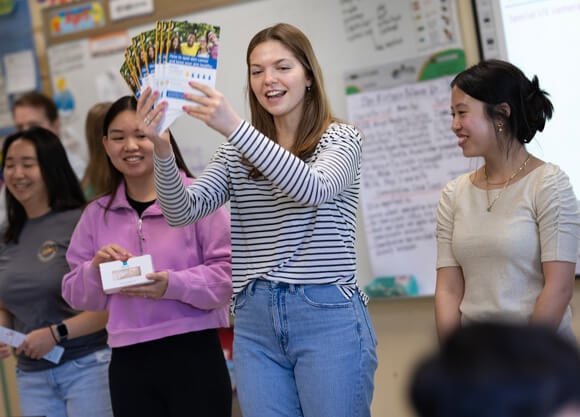
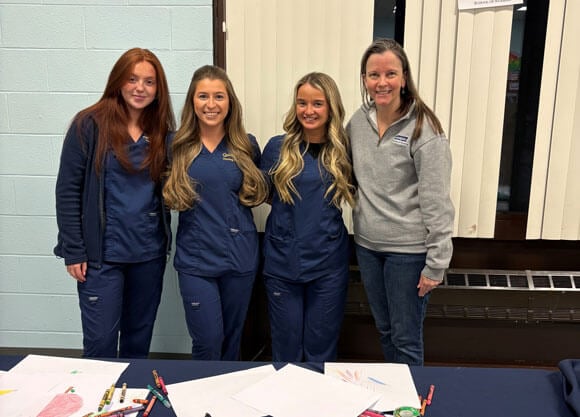
Second-year medical students Camilla Lee, Ishani Rao and Daphne Ying shared their expanding work on their Sun Protection Outreach Teaching by Students (SPOTS) initiative to provide education on sun-safety and skin-cancer prevention for middle and high school students and their families.
“SPOTS is a free, educational, interactive and comprehensive one-hour presentation focusing on the prevention of skin cancer,” said Ying. “We've been delivering this presentation so far to 14 middle school classes, and we've been able to reach over 350 students."
Through interactive presentations, hands-on tools like the UV analyzer, and take-home pamphlets (with future plans for Spanish versions), the team tackles prevalent misconceptions about skin cancer risks and preventative practices in diverse populations.
“Later stage, melanoma diagnoses are more frequent in Black and Hispanic populations where there is lower awareness of skin cancer risks among people of color, as well as limited representation of diverse skin tones in medical training and in dermatological resources,” said Rao. “There are a lot of misconceptions that if you have a darker skin tone, that you have melanin and that's enough to protect you, and you might not burn, but you still have
a risk for skin cancer.”
Second-year medical student team of Ellie O’Brien and Shruthi Manjunath presented their “Finding Our Voice” initiative, which equips students with tangible advocacy skills and policy knowledge through a regularly distributed newsletter, embedded QR codes for quick policy action, and an upcoming advocacy event.
“We want to educate students, first and foremost, on the questions, policy and research topics that are currently happening right now,” said Manjunath. “We wanted to provide action-related efforts, very tangible ways to do so for us as medical students, but also the broader Quinnipiac community.”
O’Brien added, “We also wanted to support students to be involved with local and national organizations… connecting students with these local and national organizations that are advocating for policy on the ground level.”
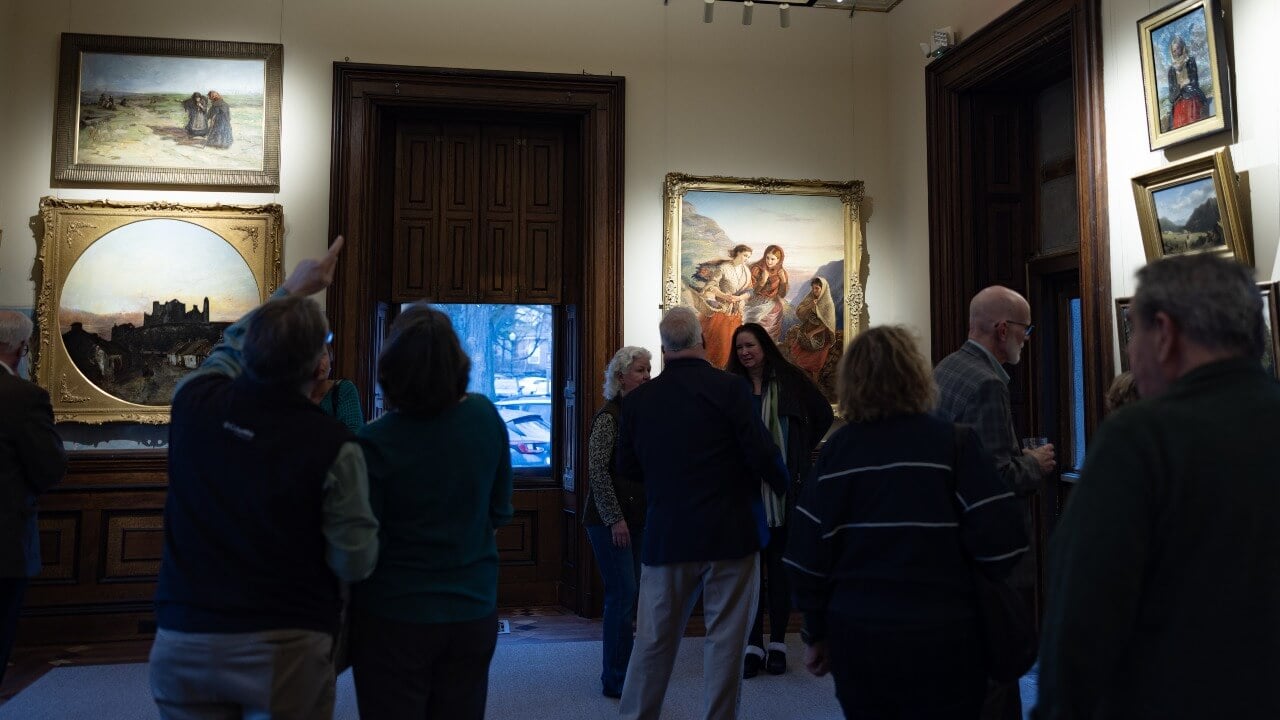
Looking ahead, the community is invited to join the upcoming PEARLS Perspectives Art Exhibit on March 5 at noon and the final component of the series, Change Agents, on April 17, from 3 to 4:30 p.m.
“It’s really all about community, and it is important because it brings people together and encourages mutual support. Being part of a community gives individuals a sense of belonging and identity, which can strengthen confidence and emotional well-being,” said Charles Collier, assistant dean for inclusive excellence. “When people work together, they can create safer environments, support those in need, and accomplish goals that would be
difficult to achieve alone. PEARLS exemplifies that spirit.”





Get the latest news and events sent right to your email by subscribing to Quinnipiac Today.
Subscribe