



Computer science students and professor present ransomware research at Las Vegas conference
January 29, 2026
January 29, 2026
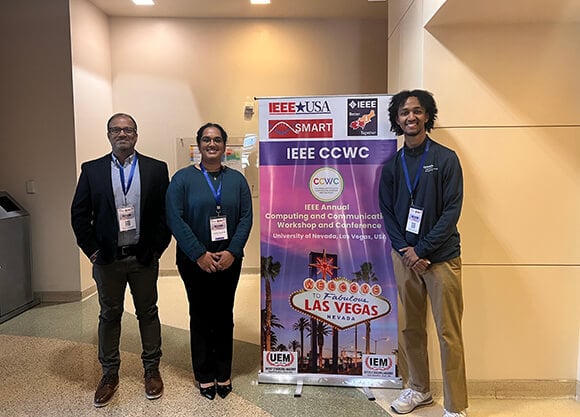
The IEEE Computing and Communication Workshop and Conference brings together researchers, professionals, and students from around the world to contribute to ongoing discussions of cybersecurity research.
The students’ project, “Ransom Sentinel (RaSe): A Study Towards Defense Against Ransomware,” proposes a baseline framework designed to safeguard core systems during ransomware attacks by prioritizing data durability, data availability and loss prevention.
Specifically, their work analyzed ransomware behavior to improve early detection and system resilience, helping protect patient data and critical healthcare systems.
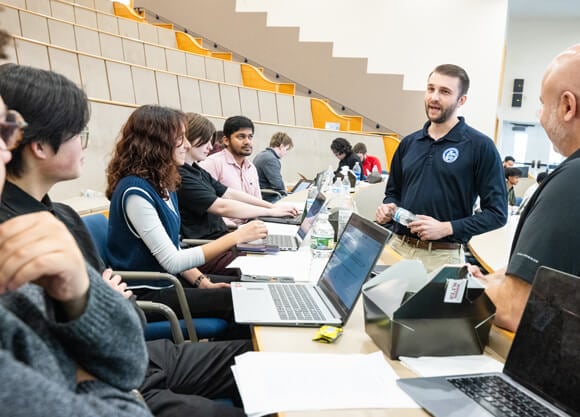
The students were inspired by Quinnipiac’s ransomware tabletop exercise, conducted in partnership with Hartford HealthCare, where they worked directly with industry leaders to understand the vulnerabilities facing critical infrastructures — especially within healthcare systems. The experience motivated them to develop a practical, research-driven solution to a growing national threat.
The students presented their work before answering questions from scholarships and colleagues.
The acceptance of this work at the IEEE conference underscores Quinnipiac’s strong emphasis on applied learning, industry collaboration and real-world problem solving. It also highlights the School of Computing and Engineering’s commitment to preparing students to address urgent cybersecurity challenges through hands-on research and innovation.
Theodore reflected on how Quinnipiac prepared her to publish and present the research.
“Quinnipiac provided strong faculty mentorship, funding, research resources, and an environment that encourages undergraduate research. The support from the School of Computing and Engineering department allowed us to explore advanced topics, ask difficult questions, and pursue publication-quality work as undergraduate students,” said Theodore.
Theodore and Kasy completed the research as mentees of Dr. Chetan Jaiswal, associate professor of computer science and associate chair of computing, whose guidance helped shape the project’s development. The work was supported through a grant Jaiswal received from The Glenn W. Bailey Foundation, enabling the students to pursue advanced, hands-on research in cybersecurity.
“I have been supporting students with research for many years across my academic career, working consistently with students on applied, evidence-based research projects spanning AI, machine learning, computing, cybersecurity, healthcare technology, and systems research,” said Jaiswal.
The professor saw significant growth in the students throughout the research process.
“Rather than positioning students as assistants, I treat them as researchers, guiding them while encouraging independent thinking and decision-making,” said Jaiswal. “It’s especially rewarding to watch them move from uncertainty to confidence, from waiting for instructions to taking ownership of their ideas.”
The students benefitted greatly from the mentorship and support of Dr. Jaiswal.
“His mentorship helped refine our ideas, strengthen our methodology, and push the project to publication-quality results. As this was our first research experience, his constant encouragement and ability to help us reorganize our thinking kept us moving forward, even during challenging moments,” said Theodore.
Kasy also felt supported throughout the research process by collaborating with other groups.
“Our team also met regularly with other research groups on campus, where we shared progress updates and discussed challenges. These meetings kept us accountable, motivated, and helped us improve our work through feedback and collaboration,” said Kasy.
The work of these students has also helped them feel prepared for their careers after Quinnipiac.
“This research aligns with my career goals by providing hands-on experience analyzing system risks and resilience, reinforcing my interest in using technology to support and protect my community,” said Theodore.
Kasy also felt that this experience was pivotal in his career preparation.
“This research gave me hands-on experience building systems with reliability and security in mind. Working on ransomware prevention exposed me to real-world security threats, data integrity challenges, and recovery strategies,” said Kasy.
Both students reflect on this experience with gratitude and excitement for their future.
“Representing Quinnipiac at an international conference and being published by IEEE has been an incredible opportunity. I’m extremely grateful, and the experience has helped me grow both academically and professionally as an undergraduate student,” said Theodore.









Quinnipiac Today is your source for what's happening throughout #BobcatNation. Sign up for our weekly email newsletter to be among the first to know about news, events and members of our Bobcat family who are making a positive difference in our world.
Sign Up Now